
Title
The Science and Art of Surgery
Author
John Erichsen
Image
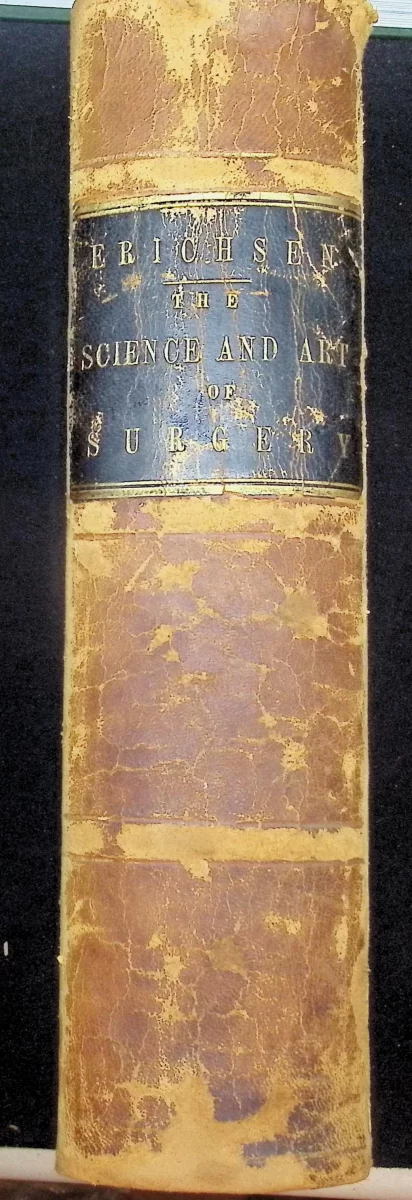
Description
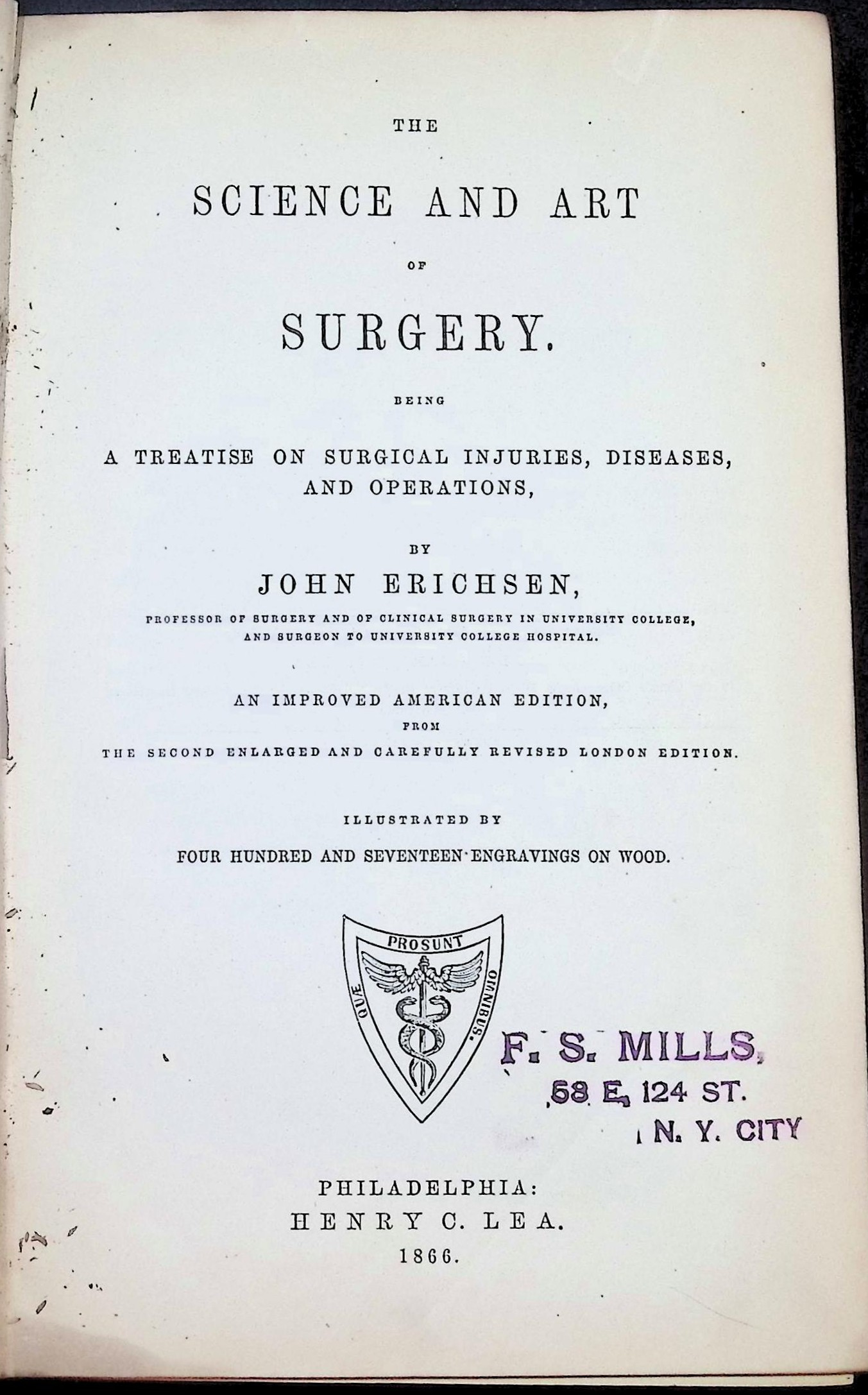
This copy of The Science and Art of Surgery is an 1866 Philadelphia edition of John Erichsen’s major nineteenth-century surgical text, published by Henry C. Lea. The title page identifies it as an “Improved American Edition” from the “Second Enlarged and Carefully Revised London Edition,” and notes that it is illustrated with four hundred and seventeen engravings on wood. The work is a substantial surgical treatise covering injuries, diseases, operations, operative principles, vascular conditions, and venereal disease, reflecting the broad scope expected of a serious surgical manual in the pre-antiseptic and early modern period.
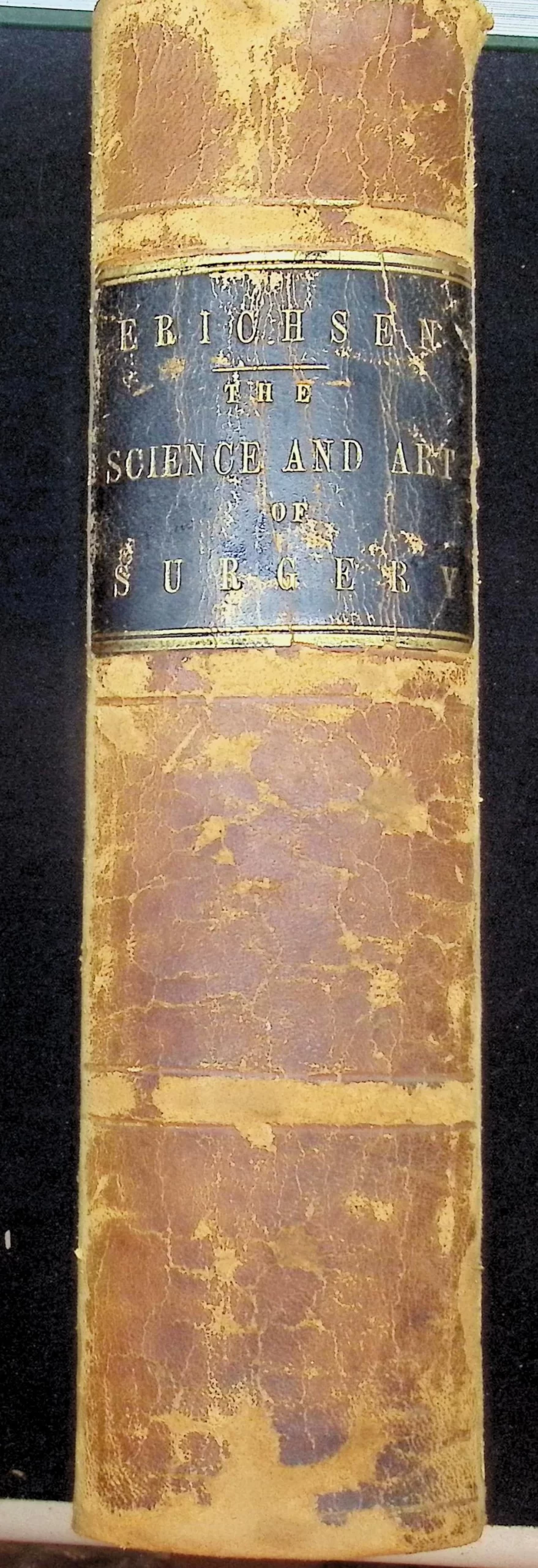
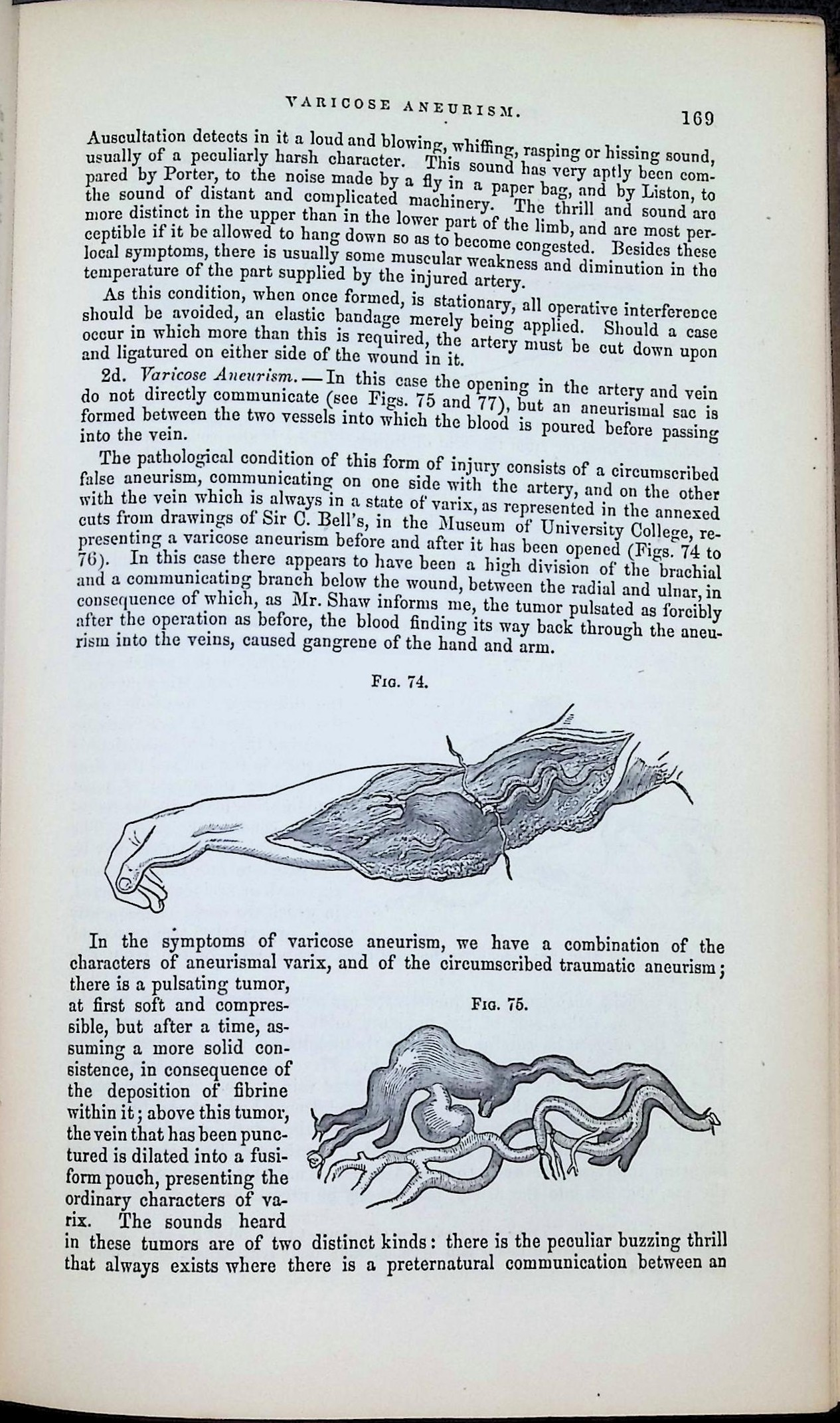
The volume has an immediately impressive shelf presence. The spine retains its black label with gilt lettering, but the leather is heavily worn, crazed, and rubbed, giving it exactly the kind of hard-used nineteenth-century professional look that collectors either respect or fear depending on whether they are romantics or cowards. Internally, the pages shown are clean and legible, with the expected age toning and occasional spotting. The illustrations are one of the book’s major strengths, combining practical teaching value with the wonderful grim charm that old surgical books do so well.
Condition
Original leather binding with heavy rubbing, cracking, surface loss, and general age wear to the spine and boards. Spine label present and readable. Interior pages shown are clean, complete-looking, and structurally sound with light scattered foxing or spotting. A period ownership stamp for F. S. Mills, 58 E. 124 St., N.Y. City appears on the title page. Overall condition is good, worn antique condition: rough outside, better inside, which is often how these survivors limp into the present.
Gallery
Historical context
Mid-nineteenth-century surgery was a brutal transitional world. Anesthesia had entered practice, but antisepsis had not yet become standard in 1866. That makes books like this especially important: they sit in the narrow historical window where surgical confidence and technical ambition were expanding faster than infection control. Erichsen’s text was meant to train surgeons not just in cutting, but in judgment, case selection, anatomy, complications, and aftercare. It is exactly the kind of book that would have shaped a generation of surgeons working at the edge of what medicine could accomplish before modern sterile technique changed the whole game.
Curious Facts, Ephemera, and Trivia
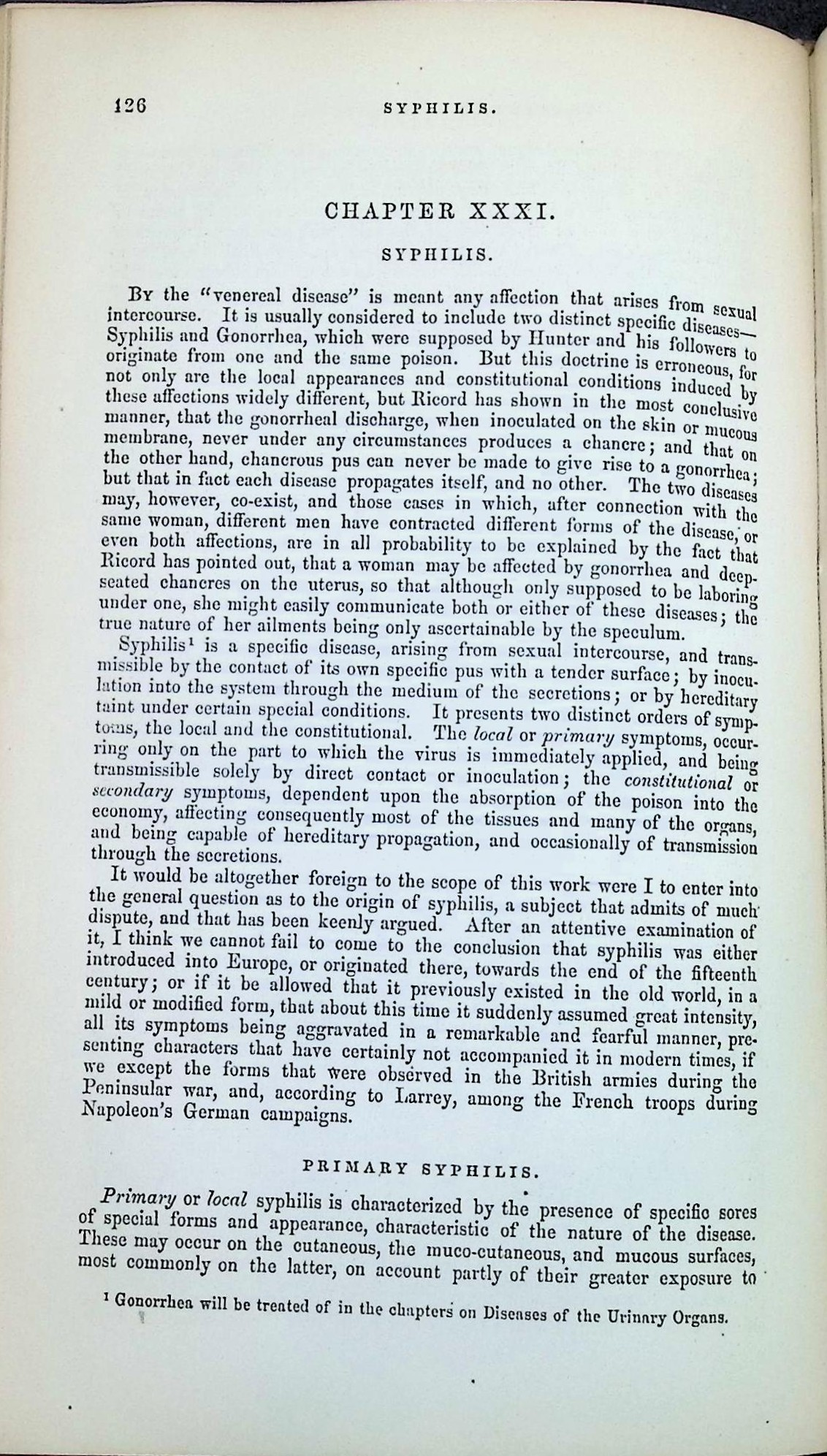
This book is packed with wood engravings, which gave nineteenth-century medical publishers a way to teach visually long before photography took over textbook illustration. The sampled pages show just how broad the content really is: operative principles, vascular pathology, and syphilis all live under one roof. That was standard for the era—surgery was not yet carved into the many subspecialty silos we now take for granted. The owner stamp also gives the book a traceable human footprint, which is half the fun with antique medical books: somebody used this thing, and probably used it hard.
Excerpt
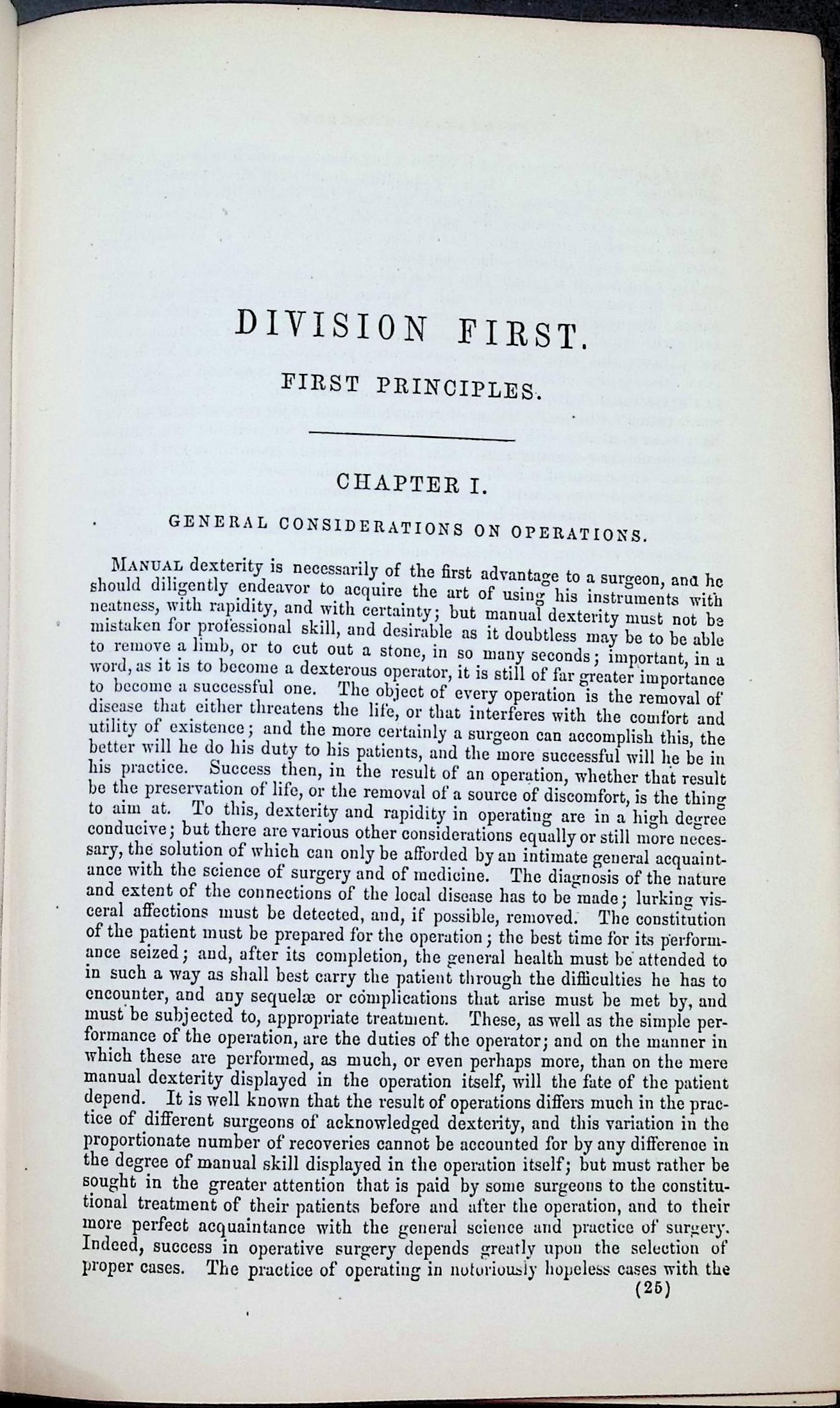
“Manual dexterity is necessarily of the first advantage to a surgeon…”
That opening sentiment from the “General Considerations on Operations” chapter says a lot about the era. Even so, the passage goes on to stress that speed with instruments alone is not enough; judgment, diagnosis, preparation, and management matter just as much. Underneath the old prose is a surprisingly modern truth.
Why it is in the Cabinet
This belongs in the Cabinet because it represents real working surgery, not decorative medicine. It is worn, serious, unapologetically practical, and full of period illustrations that show exactly how nineteenth-century surgeons were taught to think. It is the kind of book that bridges scholarship and atmosphere—equally at home in a research collection or sitting on a shelf looking like it has seen things no modern textbook should ever have to witness.
Erichsen’s Science and Art of Surgery became one of the most influential surgical textbooks of the nineteenth century and was widely used in both Britain and the United States. Numerous revised editions appeared between the 1850s and 1870s, often expanded and reorganized as surgical practice evolved.
Digital Copy
A digitized edition of The Science and Art of Surgery has been downloaded from Archive.org and is provided here for reference. The available scan corresponds to an earlier 1854 edition of the work. While the pagination and arrangement differ somewhat from this 1866 American printing, the text and illustrations represent the same foundational surgical treatise by John Erichsen. A copy of the digital edition is available for viewing and download directly from this site.
Support Dr. Bebout’s Cabinet of Medical Curiosities
If you enjoy the history, the oddities, and the effort, help keep this cabinet open. Every little bit helps preserve and share the strange wonders of medicine's past.
Buy Me a Ko-fi ☕ Buy Me a Coffee ☕ Tip via PayPal 💵