
Title
Trioxymethylene (Paraformaldehyde)
Author
Merck & Co., Inc.
Image
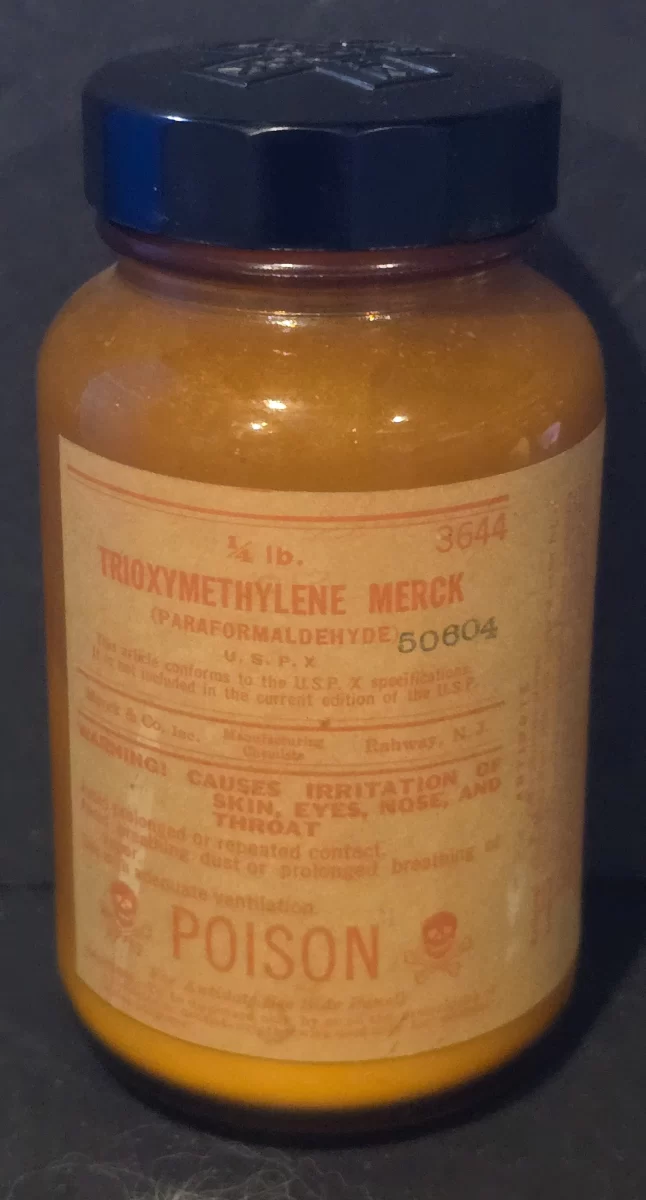
Description
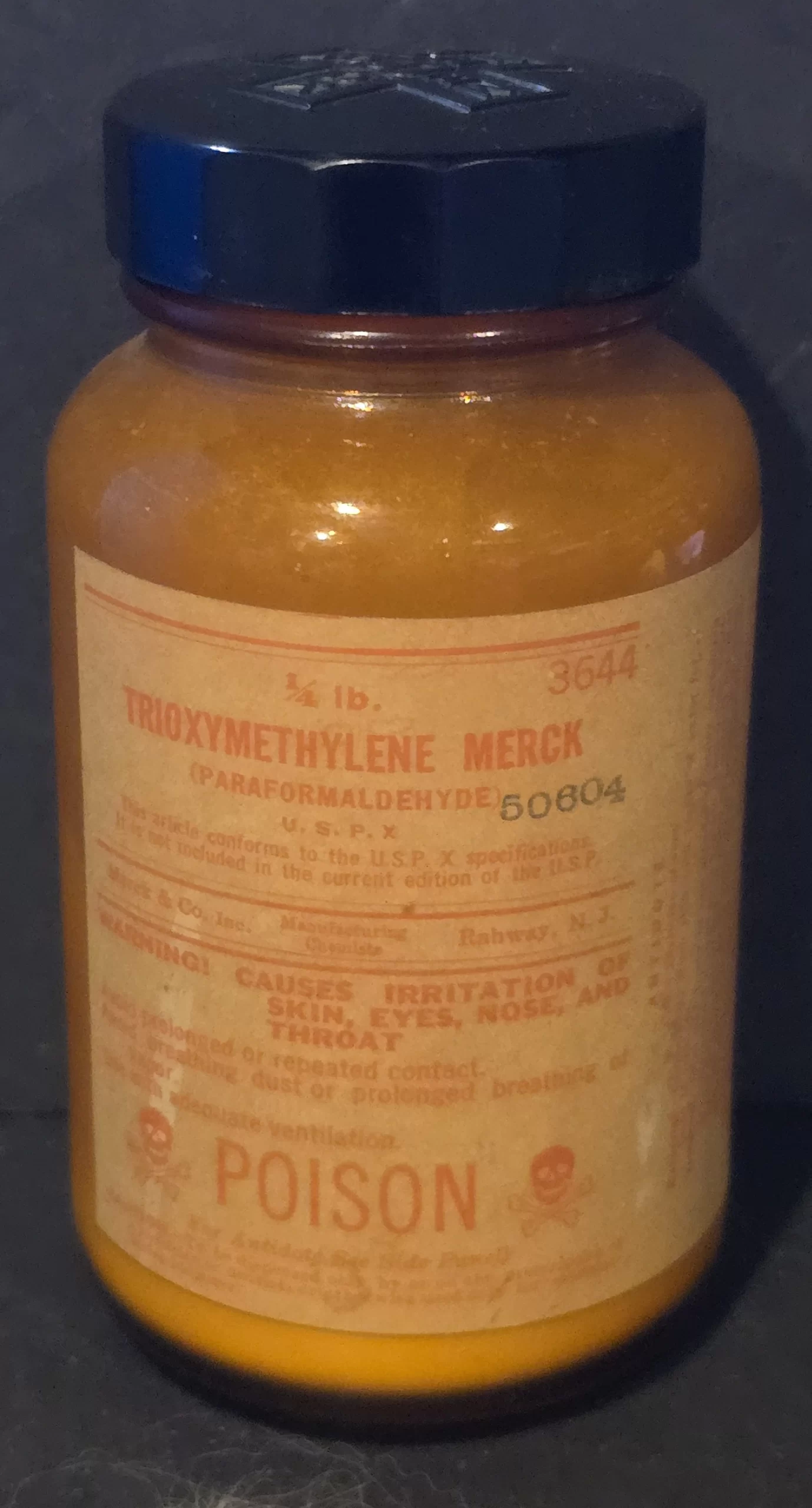
This amber glass laboratory reagent bottle originally contained trioxymethylene, commonly known as paraformaldehyde, a polymerized form of formaldehyde widely used in laboratories and medical settings. The label identifies the chemical as “Trioxymethylene Merck (Paraformaldehyde) U.S.P. X”, indicating compliance with the United States Pharmacopeia, Tenth Revision, a standard used during the early-to-mid twentieth century.
Paraformaldehyde was widely used as a disinfectant, preservative, fumigant, and laboratory reagent, particularly in pathology and histology laboratories for tissue fixation and sterilization procedures. Before modern buffered formalin solutions became standard, paraformaldehyde compounds were frequently used for fumigating rooms, disinfecting surgical areas, and preserving biological specimens.
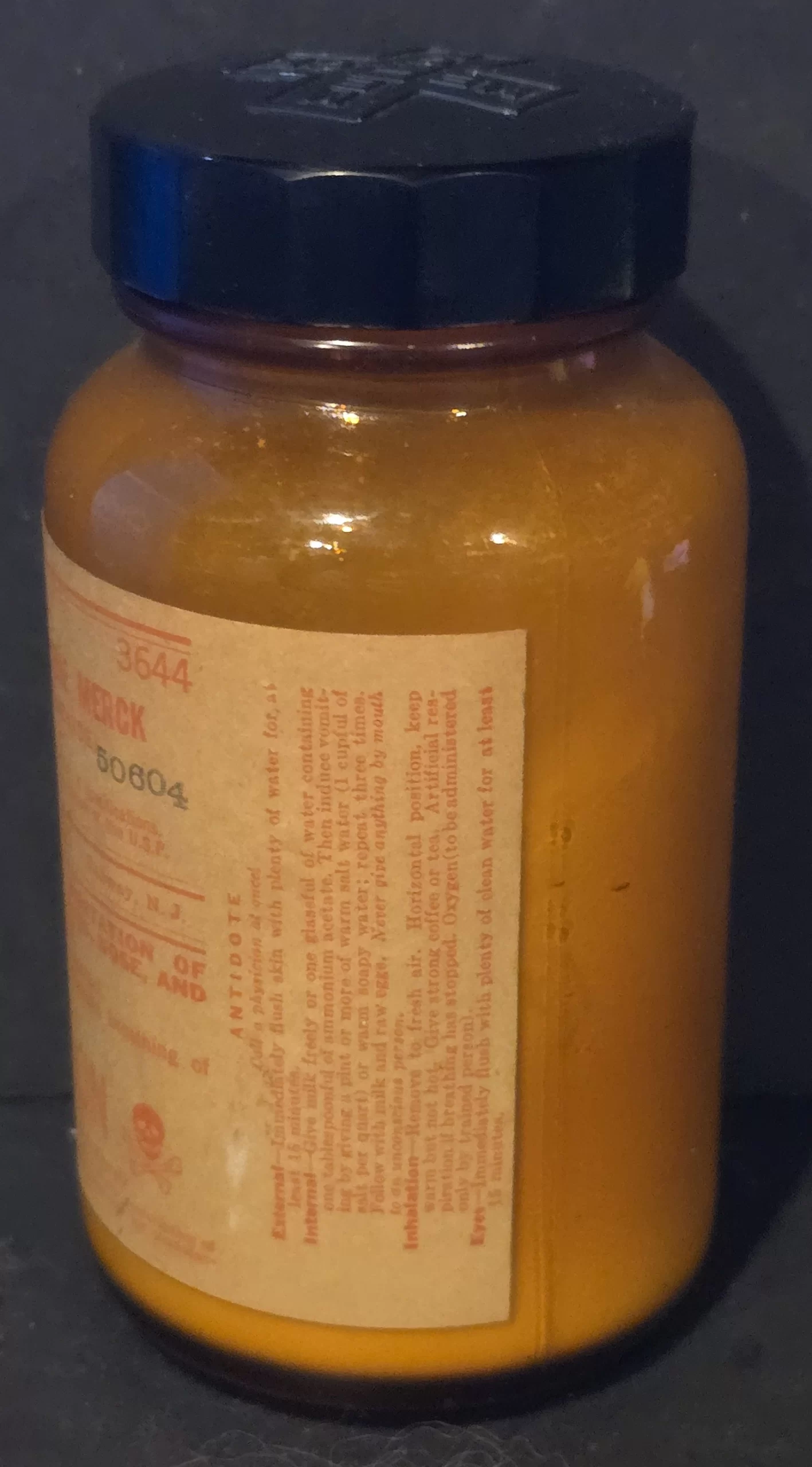
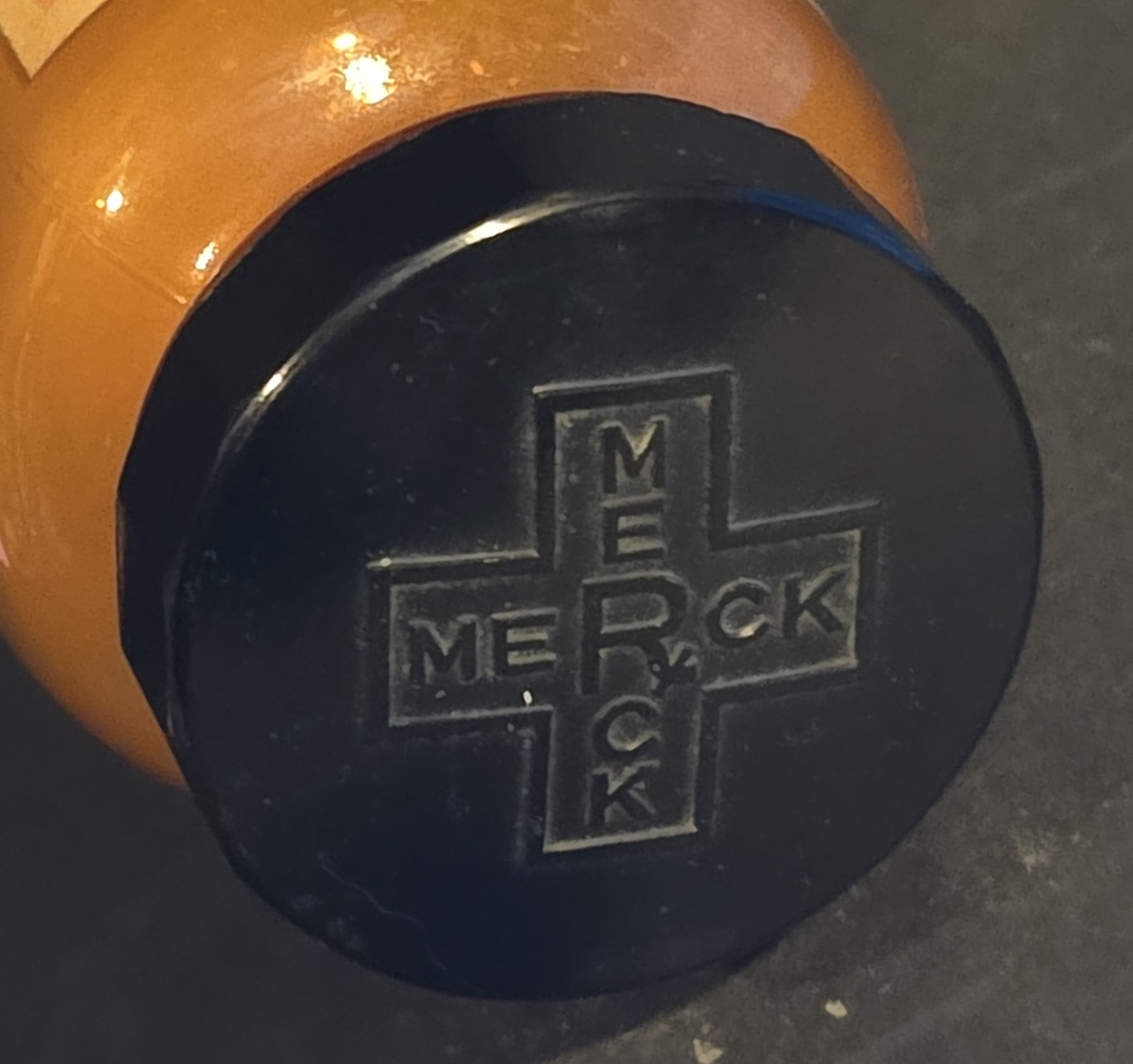
The bottle itself reflects typical pharmaceutical and laboratory packaging from the period. The amber glass protected light-sensitive chemicals, while the molded Merck cross logo on the screw cap identifies the manufacturer as Merck & Co., a major American pharmaceutical and chemical company based in Rahway, New Jersey. The label prominently features poison warnings and hazard instructions, illustrating the growing emphasis on chemical safety labeling in laboratory supply distribution during the twentieth century.
Condition
Amber glass reagent bottle with original Merck cross-marked screw cap and intact printed label. The label shows moderate age toning and wear but remains legible. Bottle appears intact with normal handling wear consistent with laboratory use.
Gallery
Historical context
During the early twentieth century, pharmaceutical companies such as Merck supplied hospitals, laboratories, and physicians with standardized chemical reagents. Paraformaldehyde was commonly used in medical laboratories as a source of formaldehyde gas for sterilization and specimen preservation. These reagents played an important role in pathology, bacteriology, and anatomical research before the development of many modern laboratory preservatives and sterilization methods.
Curious Facts, Ephemera, and Trivia
Paraformaldehyde slowly releases formaldehyde gas when heated or exposed to moisture, which made it useful for fumigation and sterilization procedures. Because of its irritating fumes and toxicity, laboratory bottles such as this one often carried bold poison warnings and skull-and-crossbones imagery. The Merck cross logo molded into the cap was part of the company’s recognizable packaging used across many of its pharmaceutical and laboratory chemical products.
Excerpt
“WARNING: Causes irritation of skin, eyes, nose and throat.”
(Excerpt from the bottle’s original hazard label)
Why it is in the Cabinet
This bottle represents the everyday materials used in medical and laboratory practice during the early twentieth century. While surgical instruments and textbooks often receive attention, the chemicals used in laboratories were equally important in advancing pathology, bacteriology, and specimen preservation.
Support Dr. Bebout’s Cabinet of Medical Curiosities
If you enjoy the history, the oddities, and the effort, help keep this cabinet open. Every little bit helps preserve and share the strange wonders of medicine's past.
Buy Me a Ko-fi ☕ Buy Me a Coffee ☕ Tip via PayPal 💵