
Title
Calomel, Rhubarb and Colocynth Compound Tablets (Massengill Pharmacy Stock Bottles)
Author
The S. E. Massengill Company, Bristol, Tennessee
Image
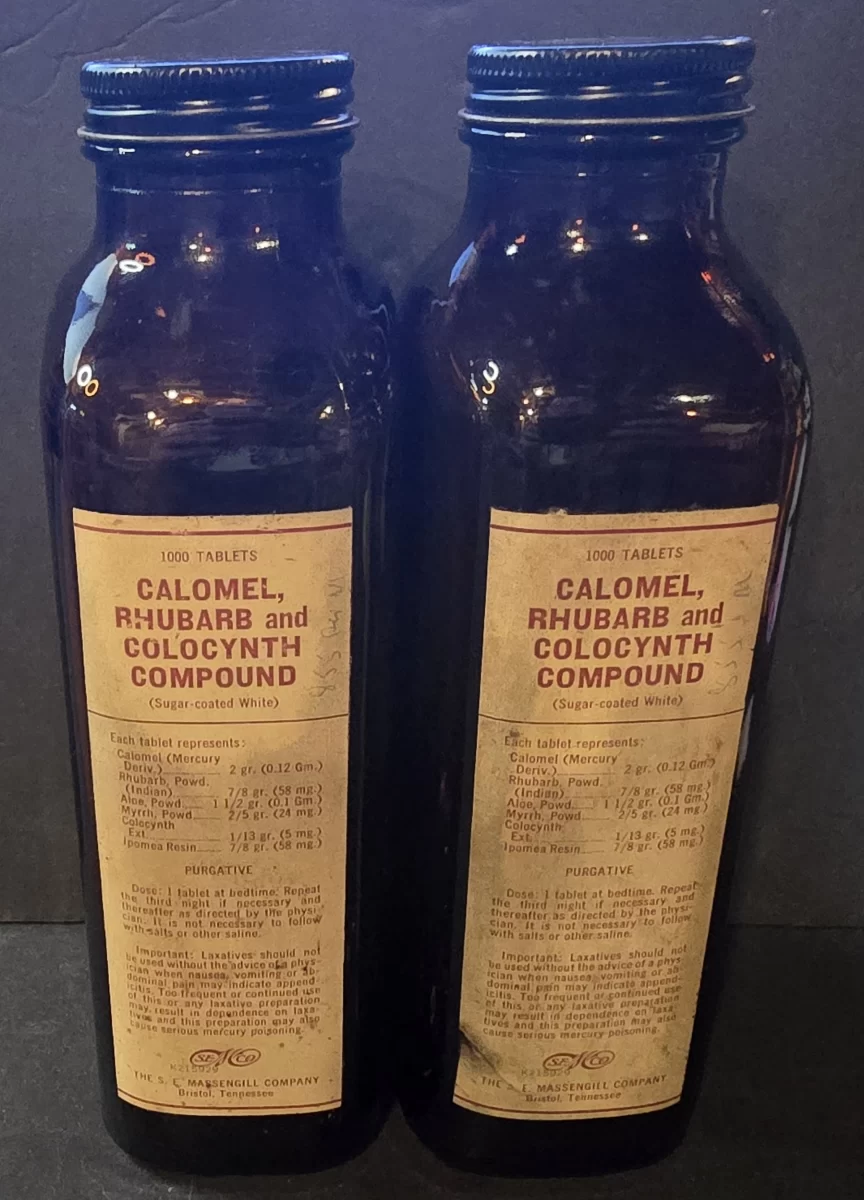
Description
These large pharmacy stock bottles contain Calomel, Rhubarb and Colocynth Compound tablets, a purgative medication manufactured by The S. E. Massengill Company of Bristol, Tennessee. Each bottle originally contained 1,000 sugar-coated white tablets, intended for dispensing by physicians and pharmacists.
The formulation represents a typical early twentieth-century compound laxative. Each tablet contained calomel (a mercury compound) combined with several botanical purgatives including rhubarb, aloe, colocynth extract, myrrh, and ipomoea resin. The preparation was designed to stimulate the bowels aggressively and was prescribed for constipation, digestive complaints, and the vague diagnosis historically referred to as “biliousness.”
Calomel (mercurous chloride) had been widely used in Western medicine since the eighteenth century and was once considered one of the most reliable therapeutic agents available to physicians. By the early twentieth century, however, its toxicity was increasingly recognized. Mercury compounds were known to cause excessive salivation, gum destruction, neurological symptoms, and other signs of mercury poisoning when used chronically.
The label on these bottles reflects the growing awareness of these risks. It includes a warning that prolonged use of laxatives—particularly those containing mercury—could lead to dependency or mercury poisoning. Such cautionary language became increasingly common after early federal drug regulation began requiring more transparent labeling of pharmaceutical ingredients.
These bottles illustrate a transitional period in American pharmaceutical history, when traditional mercury-based remedies were still widely available but were gradually being phased out as modern pharmacology developed safer alternatives.
Condition
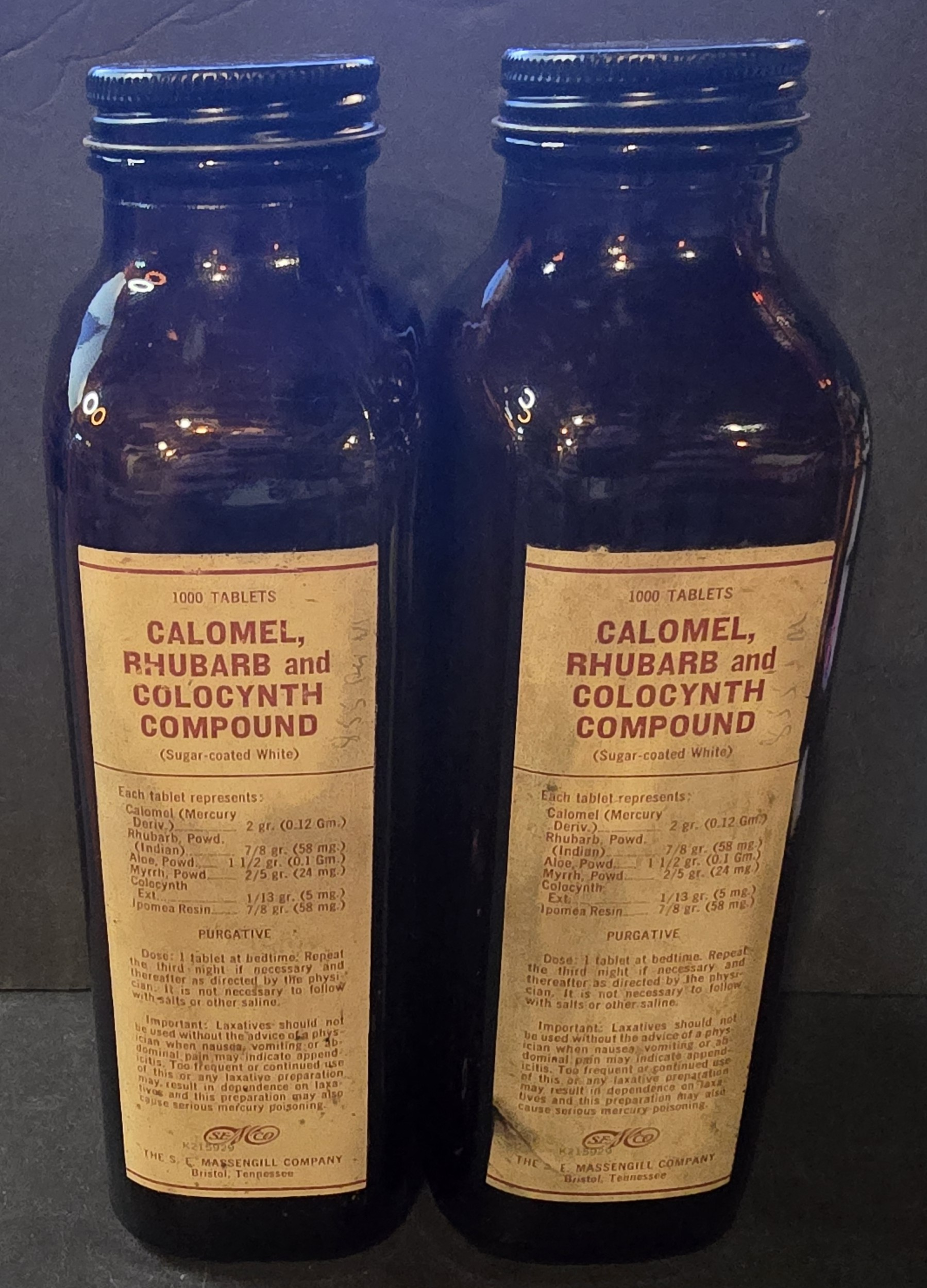
Two matching amber pharmacy bottles with original paper labels intact. Labels show moderate age toning and handling wear consistent with age. Bottles appear structurally intact with no major cracks or chips visible in the photographed example. Original screw caps present.
Gallery
Historical context
Calomel was one of the most frequently prescribed medications in the eighteenth and nineteenth centuries. Physicians used it as a laxative, antisyphilitic agent, and general remedy for a wide variety of illnesses. Its purgative action aligned with the prevailing medical belief that disease resulted from internal impurities that needed to be expelled from the body.
By the early twentieth century, advances in pharmacology and toxicology revealed the dangers of mercury exposure. As regulatory oversight increased and new medications became available, calomel preparations gradually disappeared from mainstream medical practice. Bottles such as these represent the closing years of a drug that once dominated Western therapeutics.
Curious Facts, Ephemera, and Trivia
Calomel therapy often produced a condition known historically as “ptyalism,” characterized by excessive salivation and gum damage. Physicians sometimes considered this reaction evidence that the medication was “working.”
The manufacturer of these tablets, The S. E. Massengill Company, later became historically notable due to the 1937 Elixir Sulfanilamide disaster, a tragedy that led directly to the passage of the 1938 Federal Food, Drug, and Cosmetic Act, greatly strengthening drug safety regulation in the United States.
Excerpt
“Important: Laxatives should not be used without the advice of a physician… Too frequent or continued use of this or any laxative preparation may result in dependence on laxatives and this preparation may also cause serious mercury poisoning.”
— Label warning from the bottle
Why it is in the Cabinet
These bottles represent a striking example of how dramatically medical practice has changed over the past century. A medication containing mercury—once routinely prescribed for constipation and digestive complaints—now stands as a reminder of the trial-and-error nature of medical progress. Items like this help illustrate both the ingenuity and the hazards of early pharmaceutical practice.
Support Dr. Bebout’s Cabinet of Medical Curiosities
If you enjoy the history, the oddities, and the effort, help keep this cabinet open. Every little bit helps preserve and share the strange wonders of medicine's past.
Buy Me a Ko-fi ☕ Buy Me a Coffee ☕ Tip via PayPal 💵