
Title
Antique Metal Clyster Syringe (Mechanical Enema Pump), c. 1880–1910
Unknown manufacturer
Image
Description
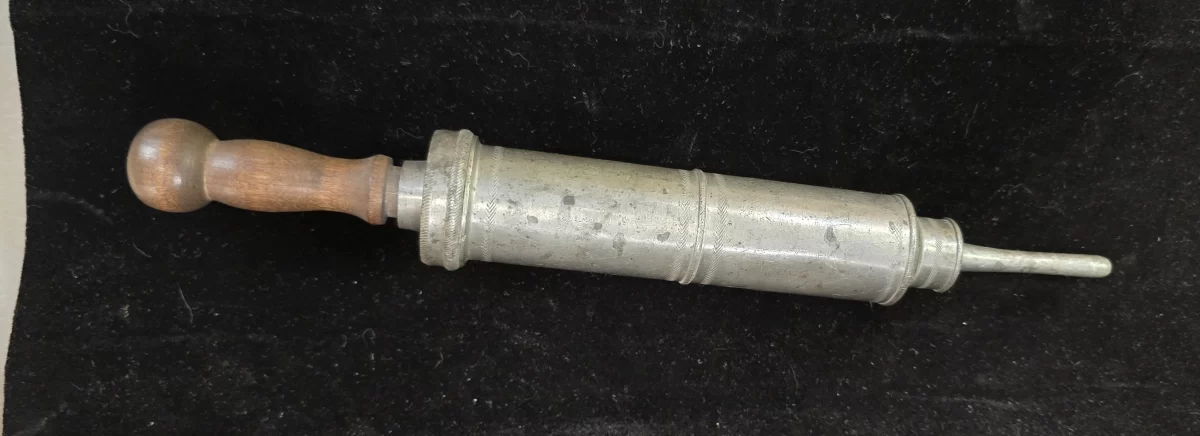
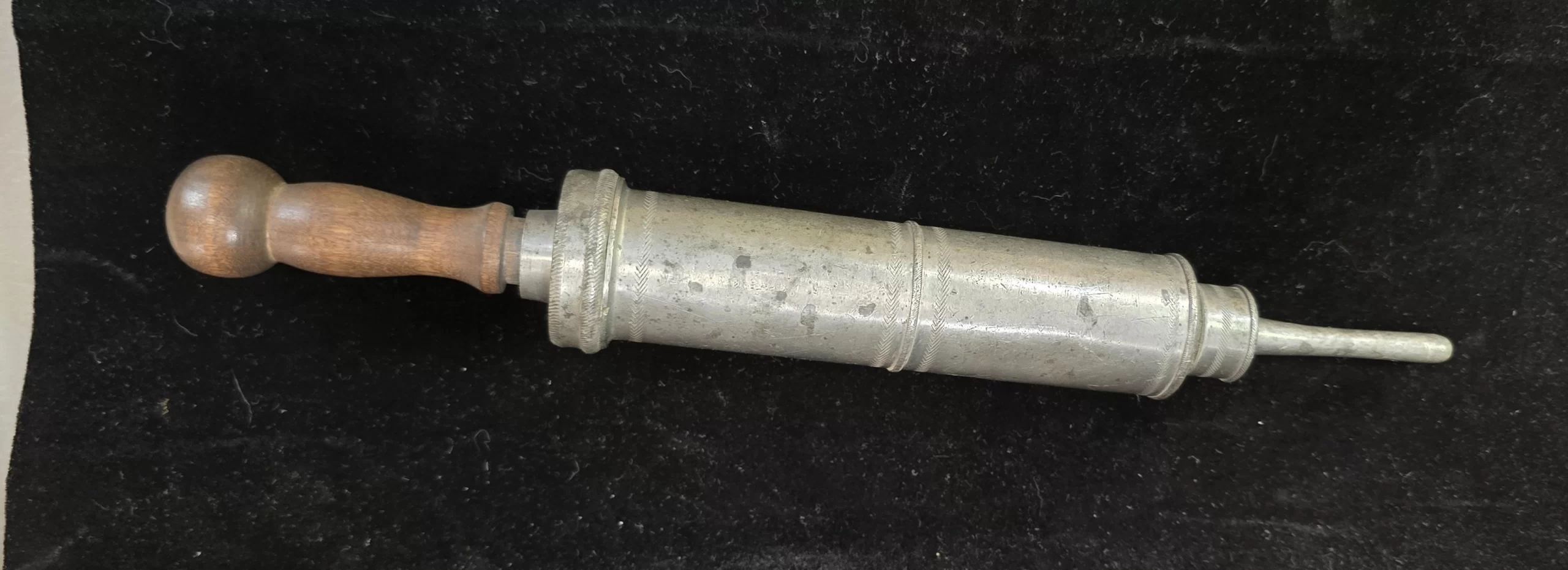
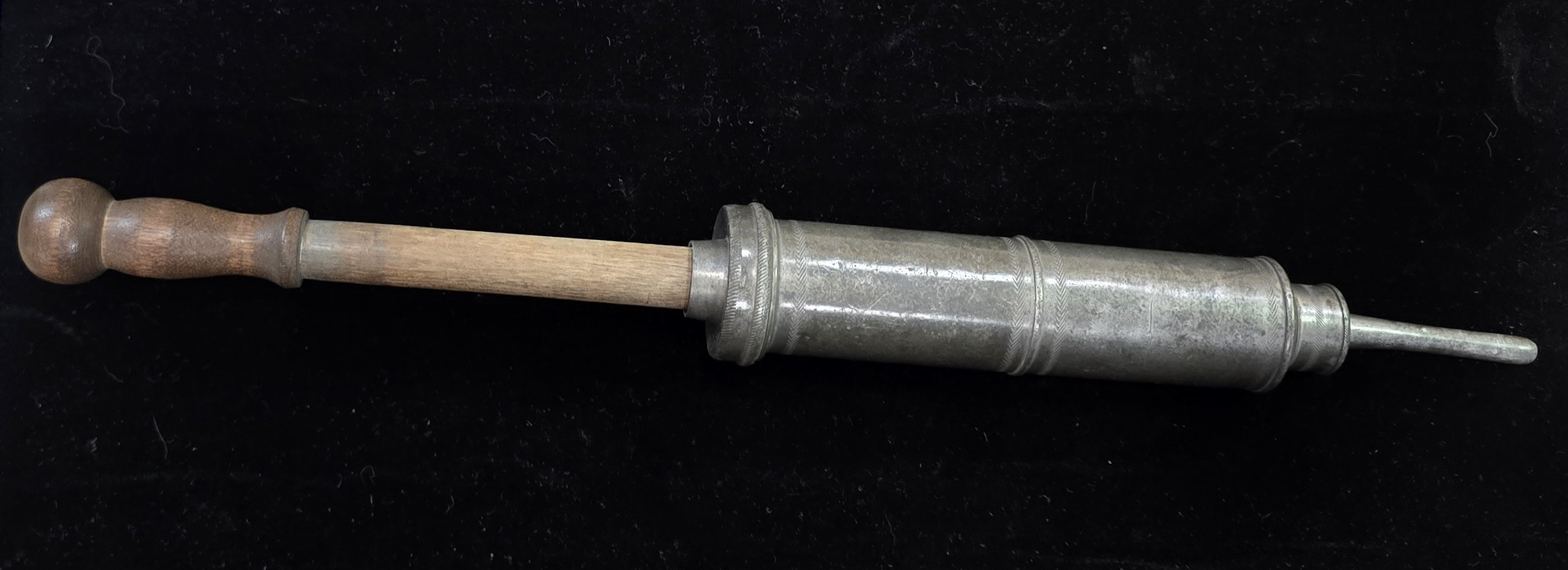
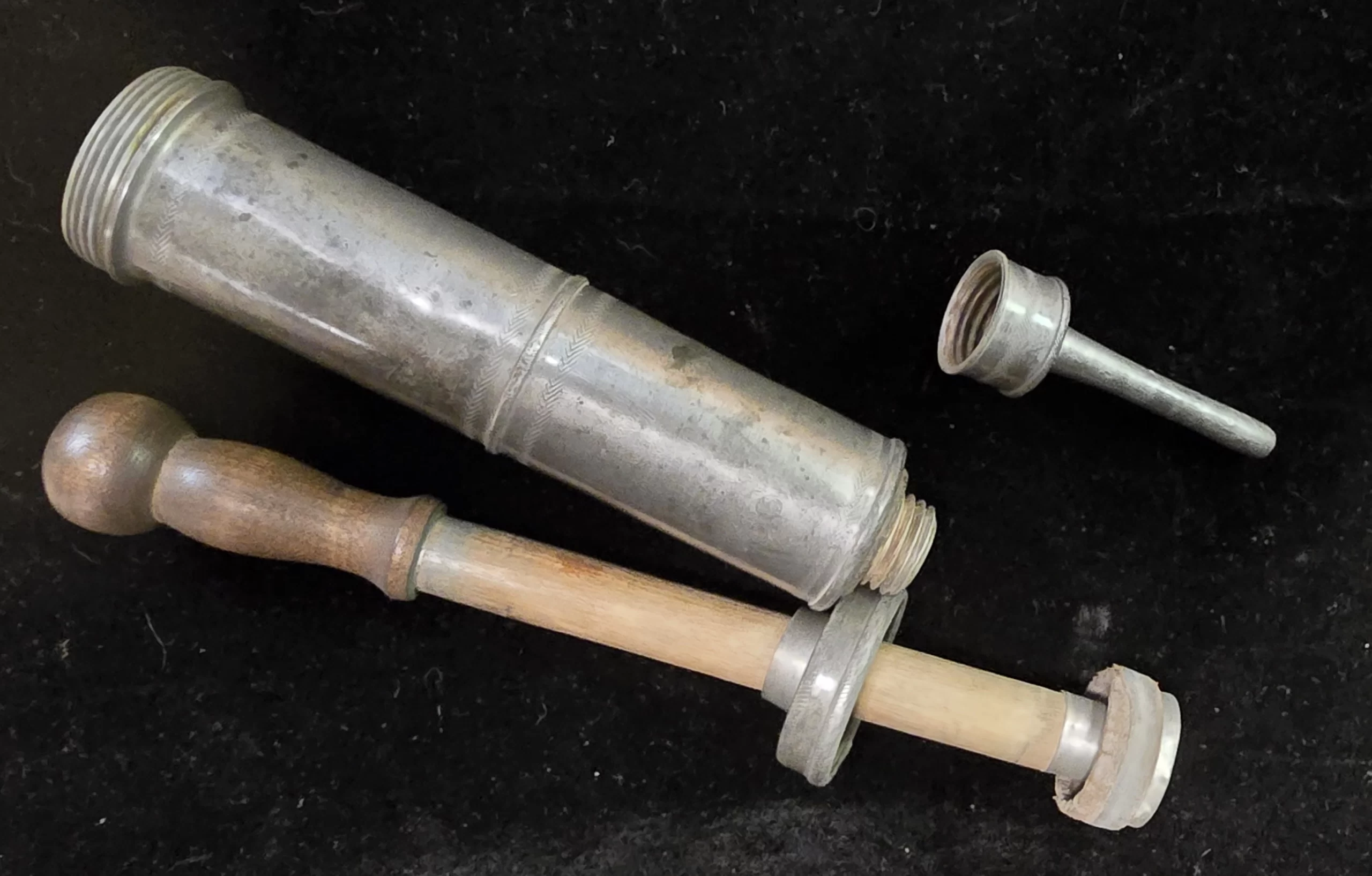
This is a late 19th to early 20th century mechanical clyster syringe, a manually operated medical device used for the administration of enemas and fluid-based treatments. Constructed of nickel-plated metal with a turned wooden plunger handle, the device consists of a cylindrical reservoir, threaded end caps for disassembly and cleaning, and a detachable tapered nozzle for rectal insertion.
Unlike later rubber bulb syringes, this form represents an earlier, more durable and forceful delivery system. The plunger mechanism allowed for controlled pressure and volume, making it suitable for both simple evacuative enemas and the administration of medicated solutions. The presence of a plunger stop collar indicates an attempt at regulating insertion depth and preventing excessive force.
Devices of this type were commonly found in both medical practices and home care kits during a period when enemas were widely prescribed for a broad range of conditions, including constipation, “autointoxication,” fevers, and systemic illnesses.
Condition
Good antique condition. The metal body shows expected age-related patina, spotting, and surface wear consistent with use. Threads appear intact and functional. The wooden handle is stable with no major cracking. The nozzle is present and complete. Internal sealing components show wear and are unlikely to be fluid-tight. Display quality is excellent.
Gallery
Historical context
During the late 19th and early 20th centuries, enemas were considered a routine and often essential part of medical treatment. The prevailing theory of “autointoxication” held that toxins originating in the intestines were responsible for many systemic diseases. As a result, physicians frequently prescribed bowel cleansing as both a preventative and therapeutic measure.
Mechanical clyster syringes such as this were widely used prior to the dominance of rubber bulb and bag-based systems. Their durable construction made them reusable and suitable for repeated use in both clinical and domestic settings.
Curious Facts, Ephemera, and Trivia
- Enemas were once prescribed for conditions ranging from headaches to mental illness.
- Early hospital kits often included devices like this alongside surgical instruments.
- Some medicated enemas contained opium, turpentine, or herbal extracts.
- The term “clyster” originates from the Greek klyzein, meaning “to wash out.”
Excerpt
“Enemata are employed not only for the evacuation of the bowels, but also for the introduction of nourishment and medicinal agents when other routes are impracticable.”
— Common teaching in late 19th century medical texts
Why it is in the Cabinet
This piece represents a direct, mechanical approach to treatment that reflects the mindset of its era—intervention-focused, practical, and often aggressive. It is a tangible example of how everyday medical care once relied on reusable, manually operated instruments that blurred the line between clinical and home use. Its construction, completeness, and visual impact make it a strong representative of early procedural medicine.
Support Dr. Bebout’s Cabinet of Medical Curiosities
If you enjoy the history, the oddities, and the effort, help keep this cabinet open. Every little bit helps preserve and share the strange wonders of medicine's past.
Buy Me a Ko-fi ☕ Buy Me a Coffee ☕ Tip via PayPal 💵