
Title
Antikamnia Pocket Medicine Wallet (c. 1890s–1910s)
Author
The Antikamnia Chemical Company, St. Louis, Missouri
Image
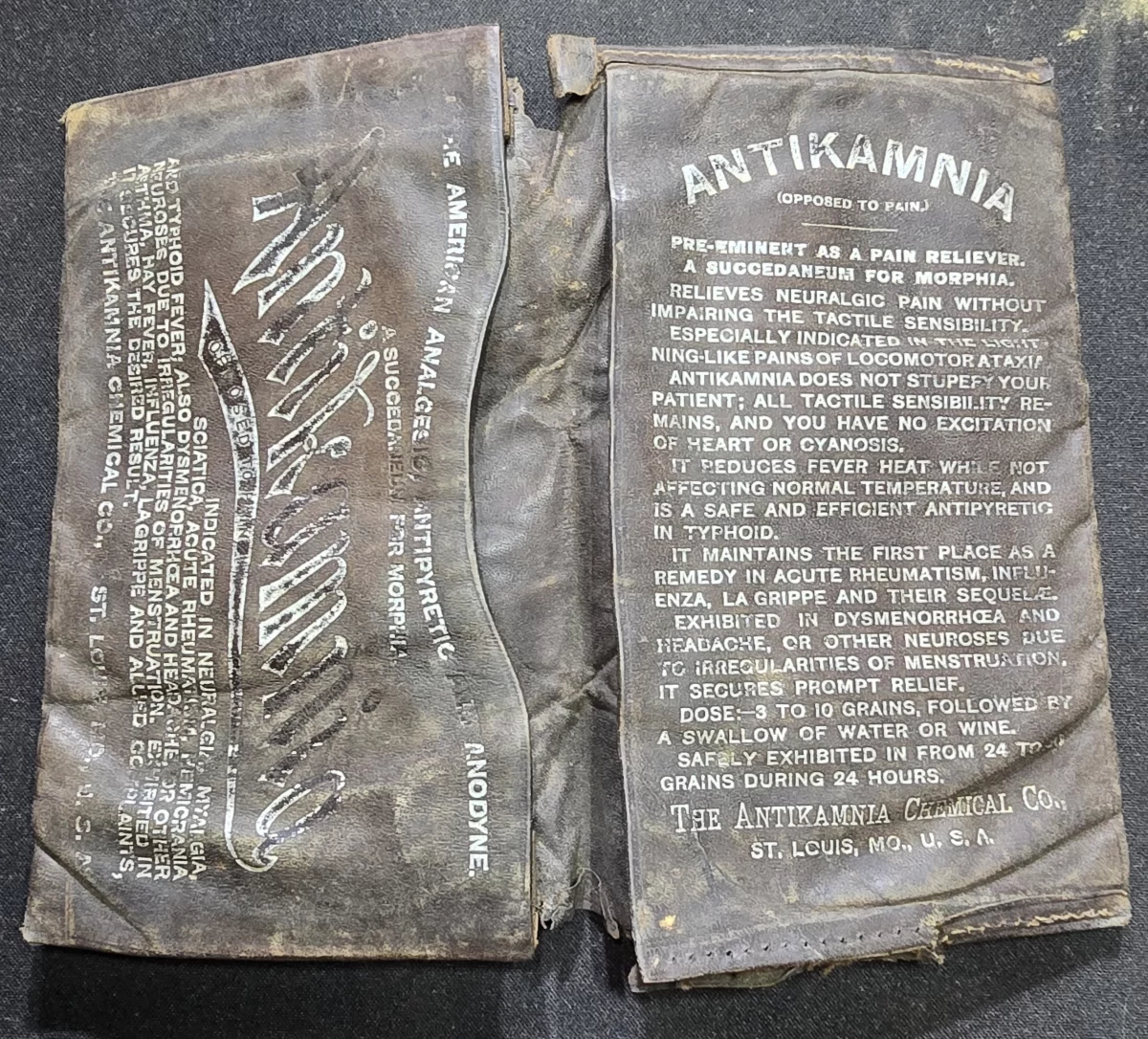
Description
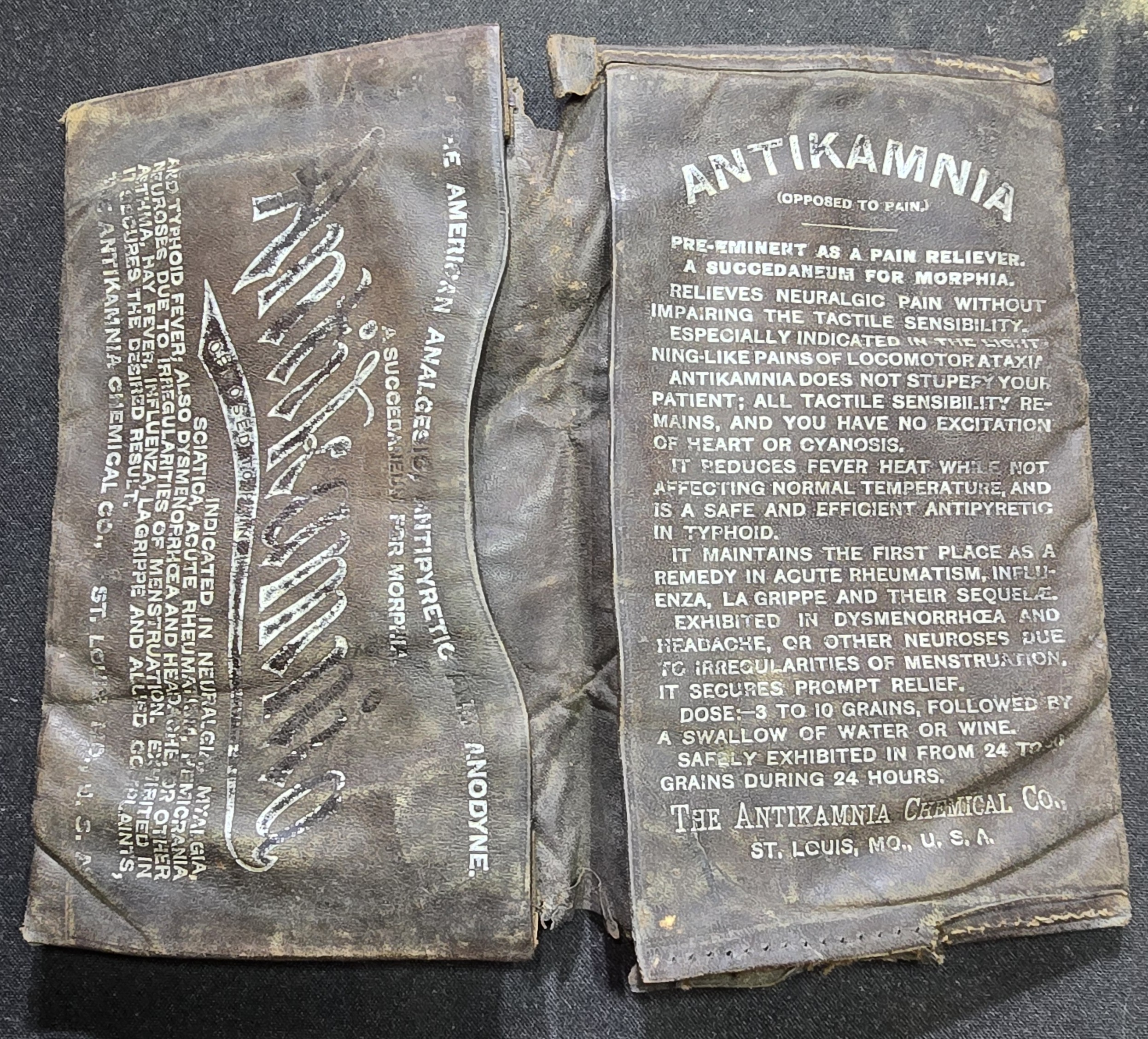
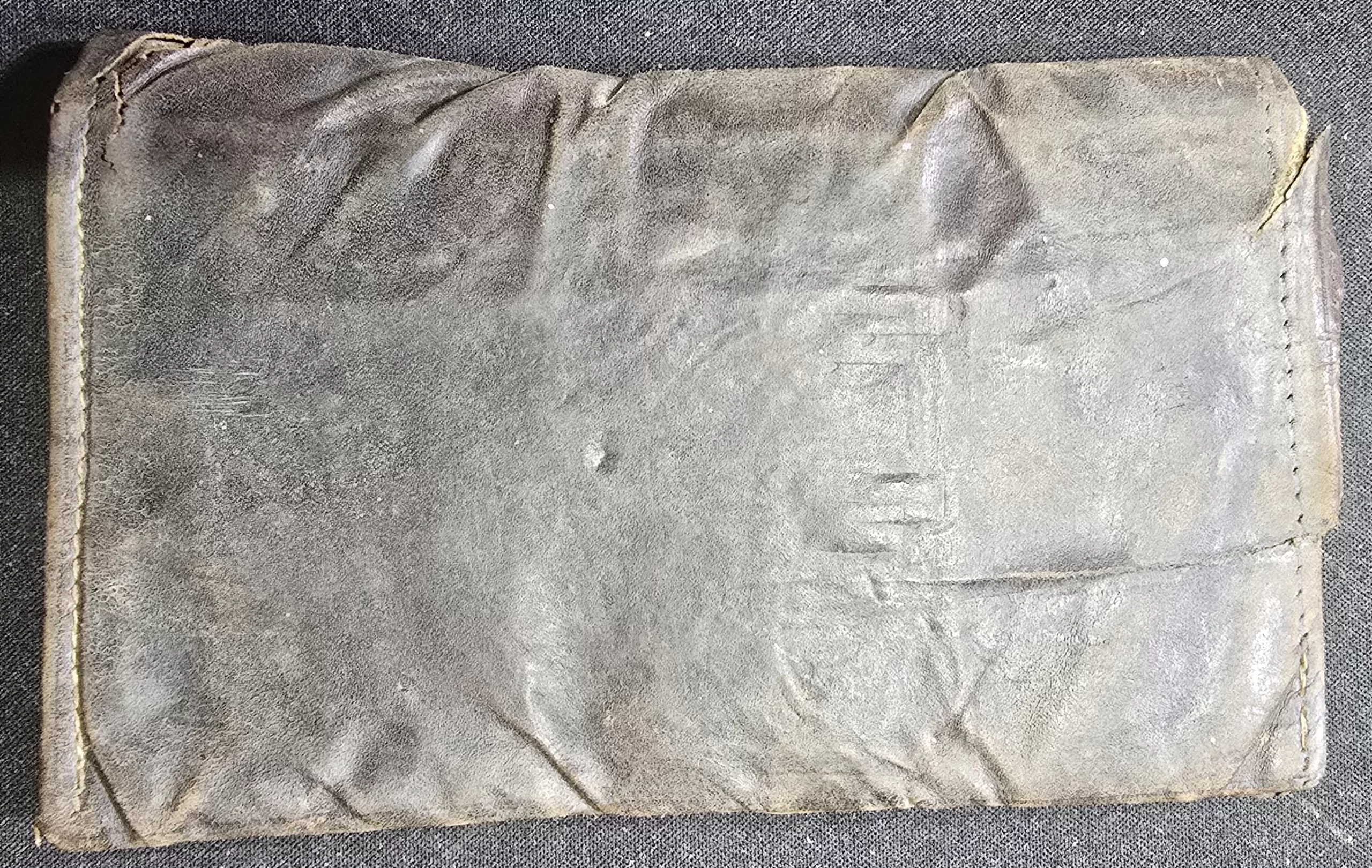
This is a rare example of a portable Antikamnia medicine wallet, produced by The Antikamnia Chemical Company of St. Louis, Missouri in the late 19th to early 20th century. Constructed of thin leather or leatherette, the wallet was designed to hold Antikamnia tablets and serve as both a carrying case and an advertisement.
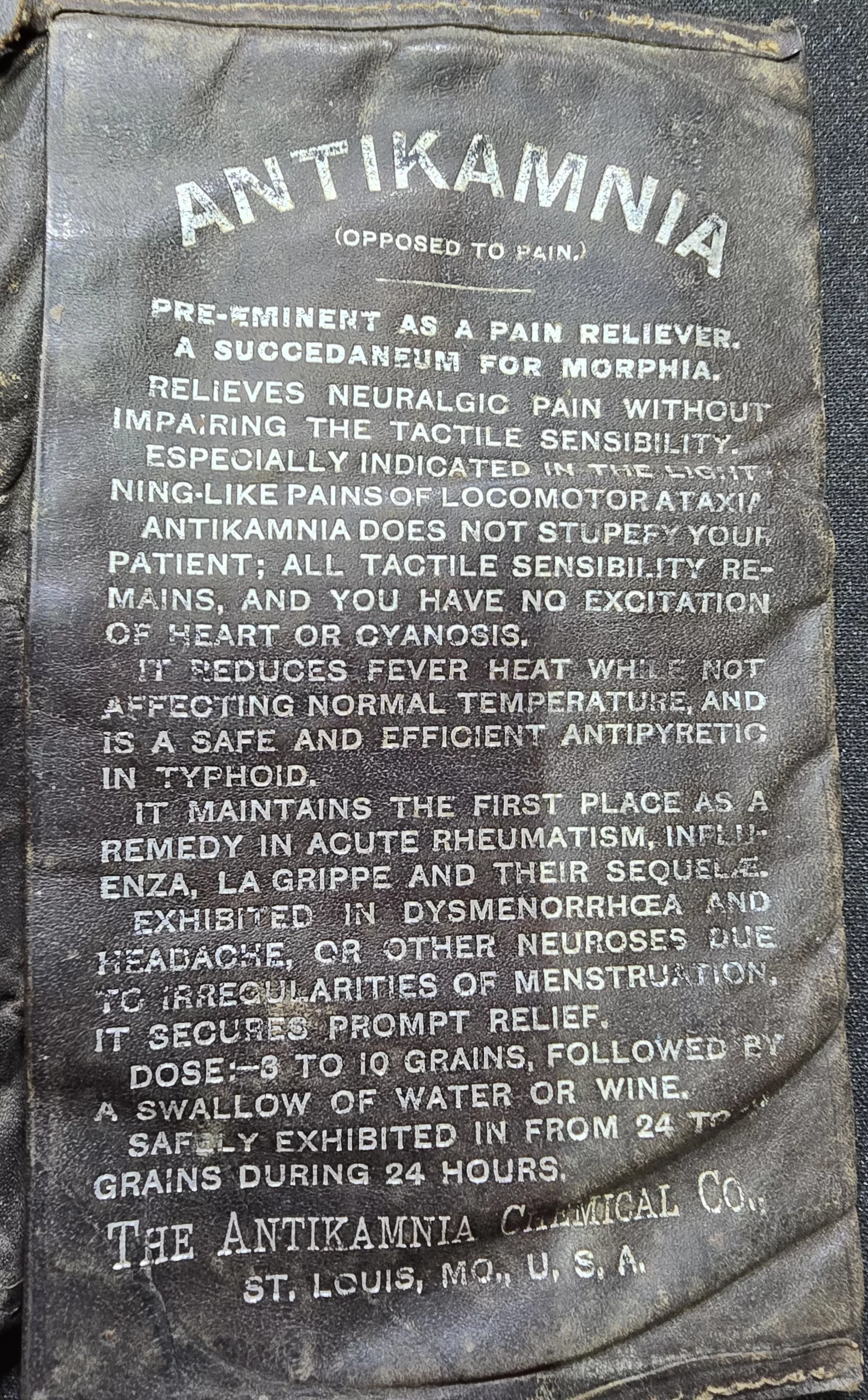
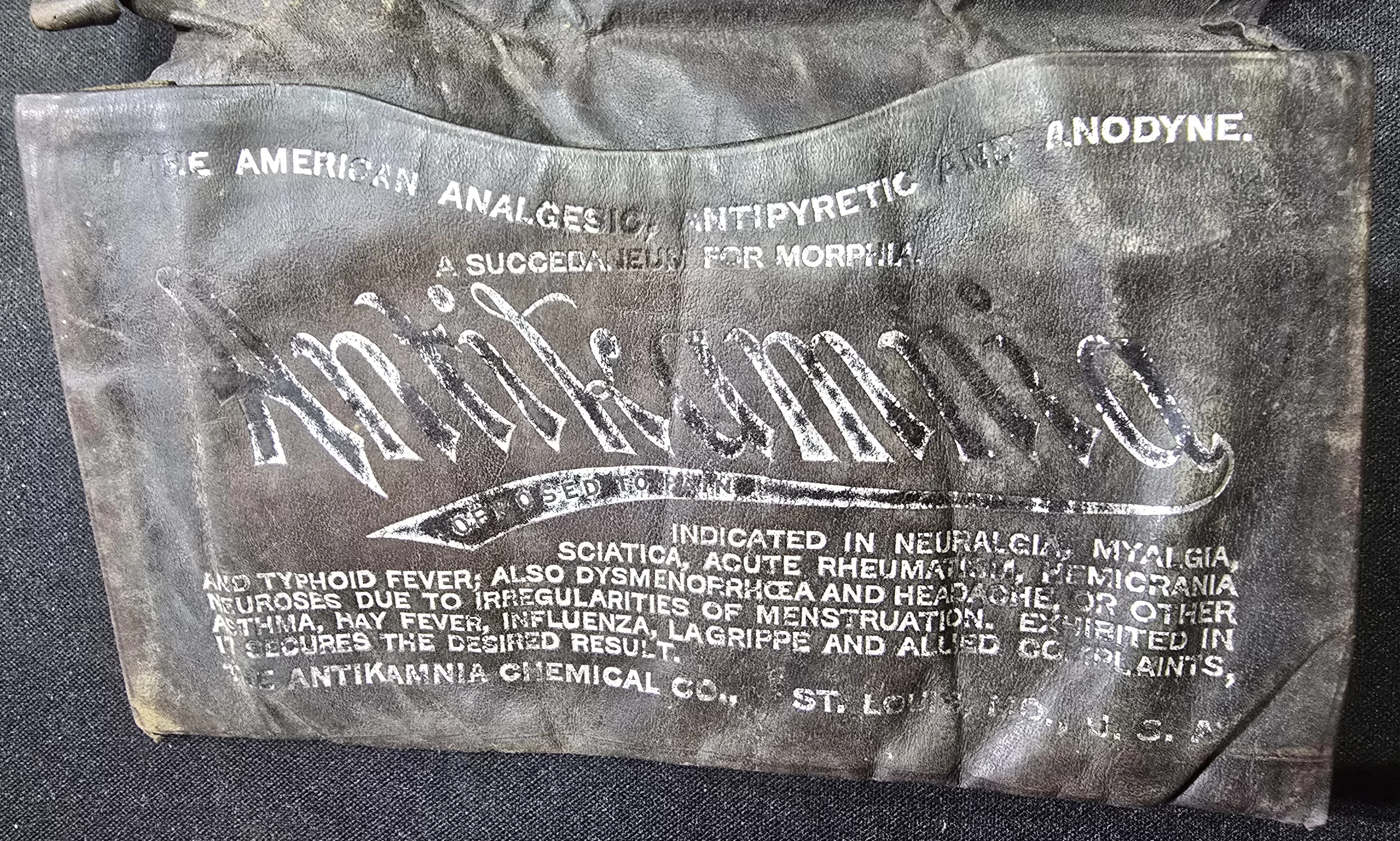
The exterior prominently displays the Antikamnia name along with the slogan: “The American Analgesic, Antipyretic and Anodyne – A Succedaneum for Morphia,” positioning the drug as a safer alternative to morphine. The interior is densely printed with indications, dosing instructions, and promotional claims, effectively turning the object into a portable medical reference.
Conditions listed include neuralgia, sciatica, rheumatism, influenza (“la grippe”), dysmenorrhea, and various neuroses. The dosing instructions recommend 3 to 10 grains, repeated up to 24 grains in a 24-hour period, with administration suggested alongside water or wine.
This object represents an intersection of pharmaceutical marketing, portability, and patient self-treatment during a period when over-the-counter analgesics were aggressively promoted with minimal regulatory oversight.
Condition
Heavily worn with significant surface wear, creasing, and edge deterioration. Printed text remains largely legible despite fading. Material shows cracking and age-related degradation consistent with prolonged use. Structural integrity is intact, though fragile.
Gallery
Historical context
Antikamnia, introduced in the late 1880s, was one of the first widely marketed synthetic analgesics. Its primary ingredient, acetanilide, was later found to carry significant risks, including methemoglobinemia and cardiovascular complications.
During this period, pharmaceutical companies frequently marketed products directly to both physicians and the public, often emphasizing safety compared to morphine while downplaying potential toxicity. Portable promotional items like this wallet reflect a time when medications were commonly carried on one’s person and self-administered with minimal medical supervision.
Curious Facts, Ephemera, and Trivia
Antikamnia’s marketing heavily emphasized that it did not cause “stupefaction” or cyanosis, claims that are now historically ironic given the drug’s known adverse effects on oxygen transport.
The term “succedaneum for morphia” highlights the transitional period in medicine when manufacturers sought alternatives to opiates but often replaced them with substances that carried their own risks.
The inclusion of dosing instructions inside the wallet suggests it was intended for repeated personal use rather than simple storage, effectively functioning as both container and guide.
Excerpt
“Pre-eminent as a pain reliever… a succedaneum for morphia… Antikamnia does not stupefy your patient… all tactile sensibility remains… and you have no excitation of heart or cyanosis.”
Why it is in the Cabinet
This piece represents more than a pharmaceutical product—it reflects how medicine was carried, marketed, and trusted in everyday life. Unlike bottles or tins, this wallet shows direct patient interaction with the drug, turning treatment into something personal and portable. It captures a moment in medical history where confidence in new “safer” drugs outpaced understanding of their risks.
Support Dr. Bebout’s Cabinet of Medical Curiosities
If you enjoy the history, the oddities, and the effort, help keep this cabinet open. Every little bit helps preserve and share the strange wonders of medicine's past.
Buy Me a Ko-fi ☕ Buy Me a Coffee ☕ Tip via PayPal 💵