
Title
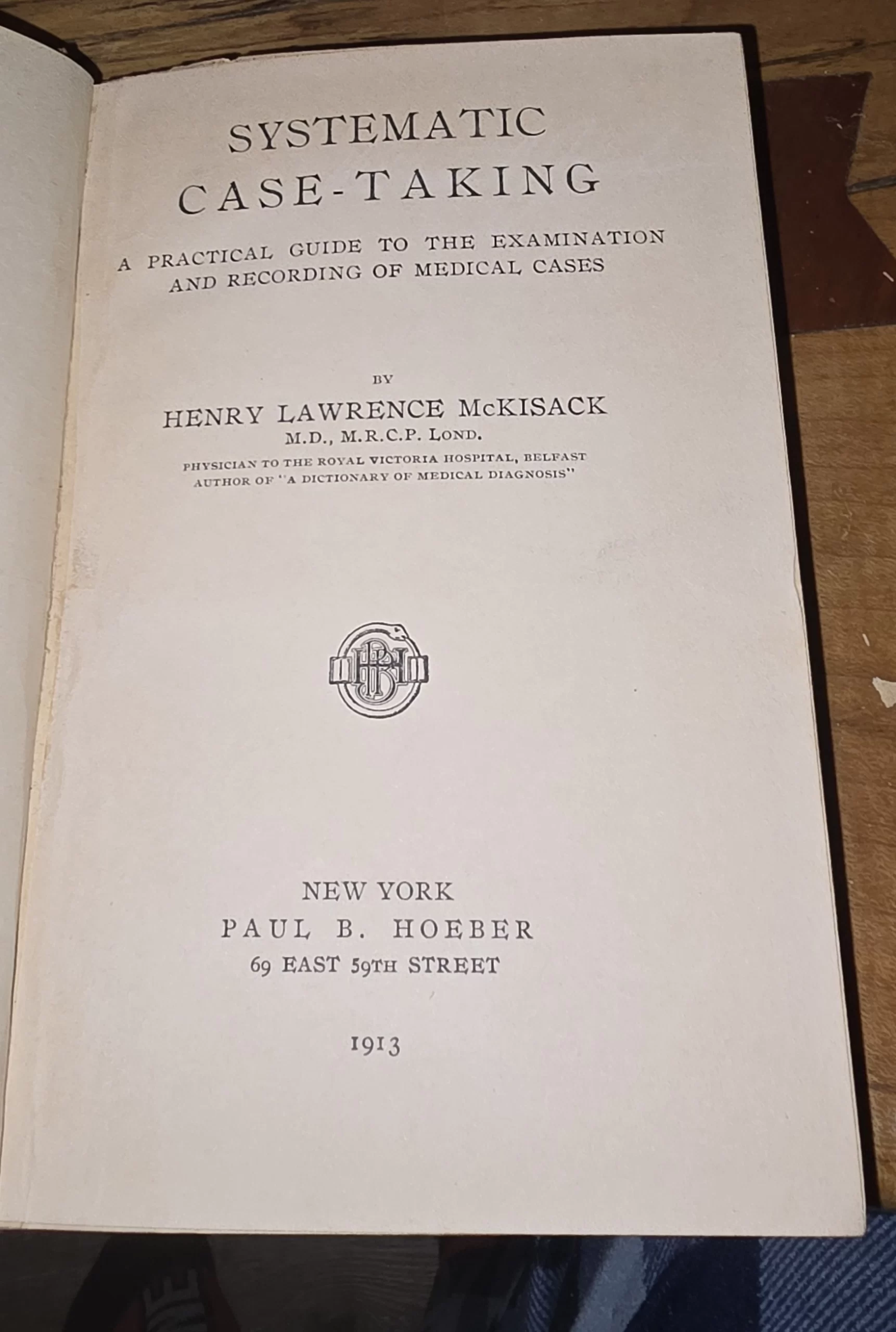
Systematic Case-Taking: A Practical Guide to the Examination and Recording of Medical Cases
Author
By Henry Lawrence McKisack, M.D., M.R.C.P. Lond.
Published by Paul B. Hoeber, New York, 1913
Image
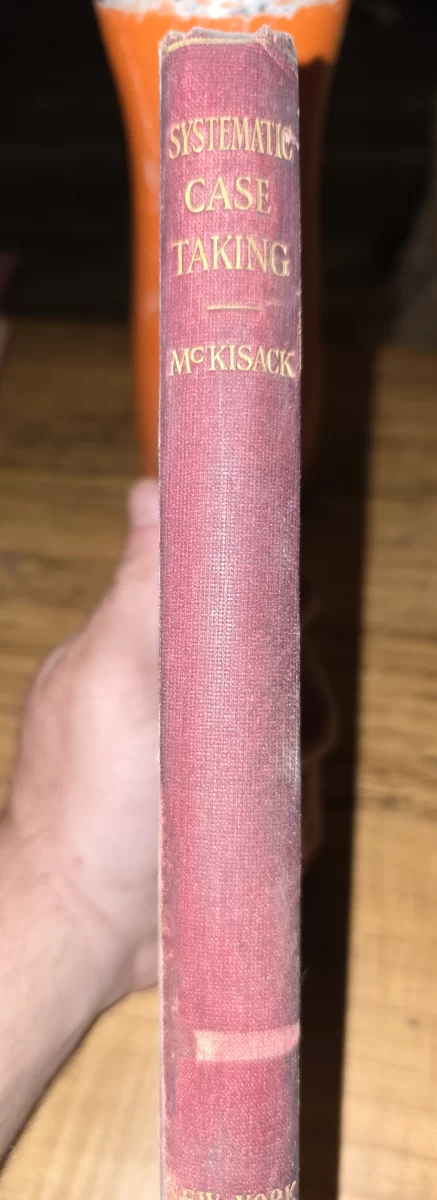
Description
This compact 1913 volume is a practical guide for medical students and early-career physicians on how to systematically and efficiently gather clinical information. Long before templates, EMRs, or SOAP notes, McKisack emphasized a methodical bedside approach rooted in observation, detailed history-taking, and respectful inquiry. The book likely served as a bedside staple for an era in which diagnosis relied almost entirely on the clinician’s memory, perception, and pen.
Condition
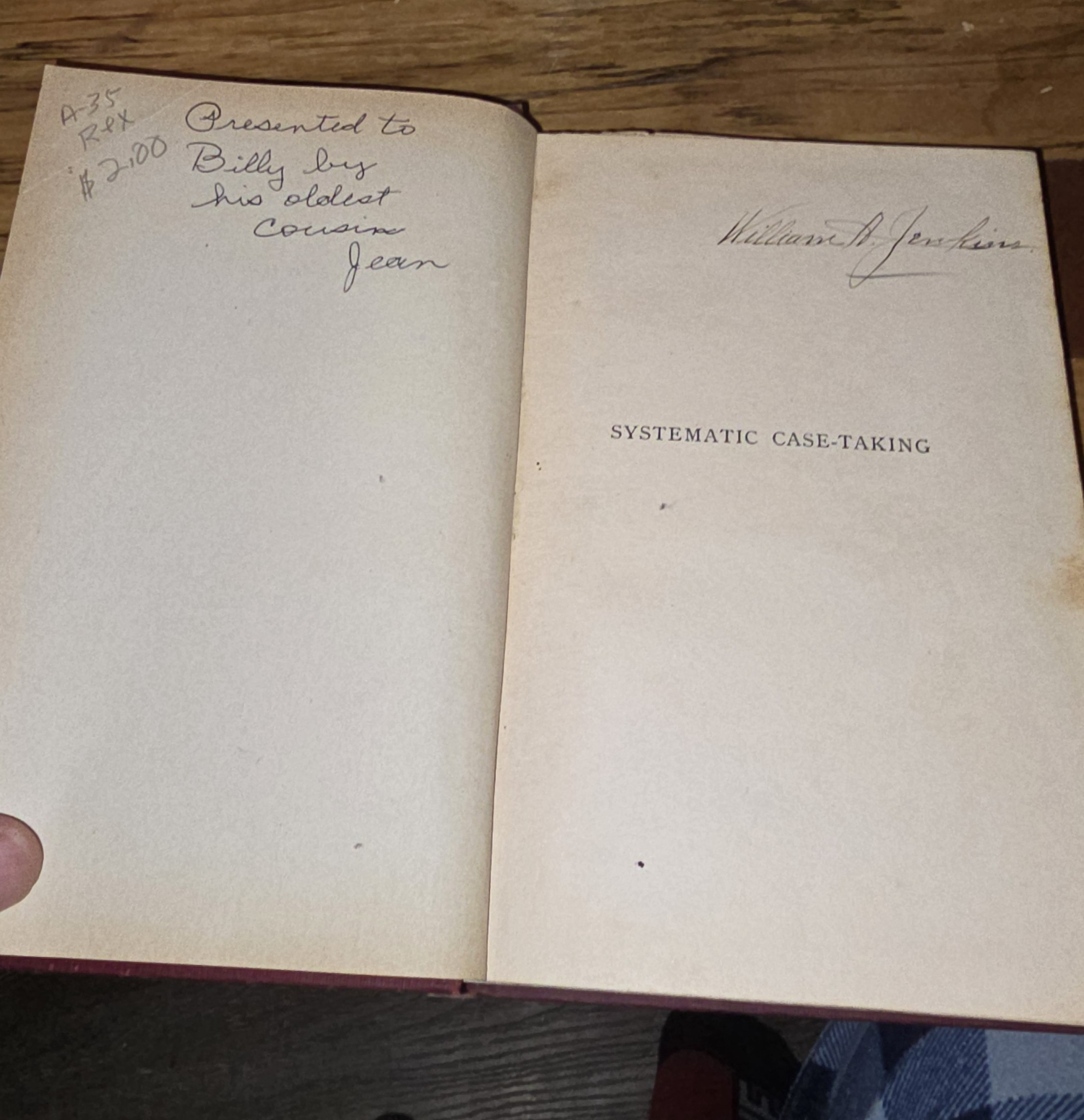
Binding is tight; cover shows minor edge wear, sun fading on spine, and light scuffing. Pages are toned with age, but text is clean and legible. Includes a handwritten ownership note:
“Presented to Billy by his oldest cousin Jean”
Signature of William H. Jenkins appears on the flyleaf.
Gallery


Historical context
Published just before the First World War, Systematic Case-Taking reflects the priorities of pre-antibiotic medicine: detailed physical exams, careful histories, and intuitive diagnostics. McKisack, practicing in Belfast, was part of a generation of physicians who relied on precise documentation, listening skills, and pattern recognition—skills still fundamental today. The publisher, Paul B. Hoeber, was known for producing concise clinical guides for American practitioners, often based on European training models.
Curious Facts, Ephemera, and Trivia
McKisack was also the author of A Dictionary of Medical Diagnosis, a popular reference text at the time.
This book was printed just two years after Flexner’s landmark report, which had begun reshaping American medical education into a more scientific model.
The flyleaf inscription suggests this copy was passed along within a family—perhaps to a student doctor—making it a piece of personal as well as medical history.
Excerpt
“Too often a diagnosis is missed not because of a lack of knowledge, but because of a lack of method in acquiring the necessary facts.” — H.L. McKisack
Why it is in the Cabinet
This book embodies a lost art—the deliberate, disciplined approach to patient interaction before modern technology took over. It’s a reminder that no matter how much medicine advances, it still begins with the story a patient tells and the attentiveness of the person listening. Plus, any book with handwritten provenance deserves to live again as part of a living archive.
Support Dr. Bebout’s Cabinet of Medical Curiosities
If you enjoy the history, the oddities, and the effort, help keep this cabinet open. Every little bit helps preserve and share the strange wonders of medicine's past.
Buy Me a Ko-fi ☕ Buy Me a Coffee ☕ Tip via PayPal 💵