
Title
Practical Dietetics
Author
A. L. Benedict, A.M., M.D.
Image
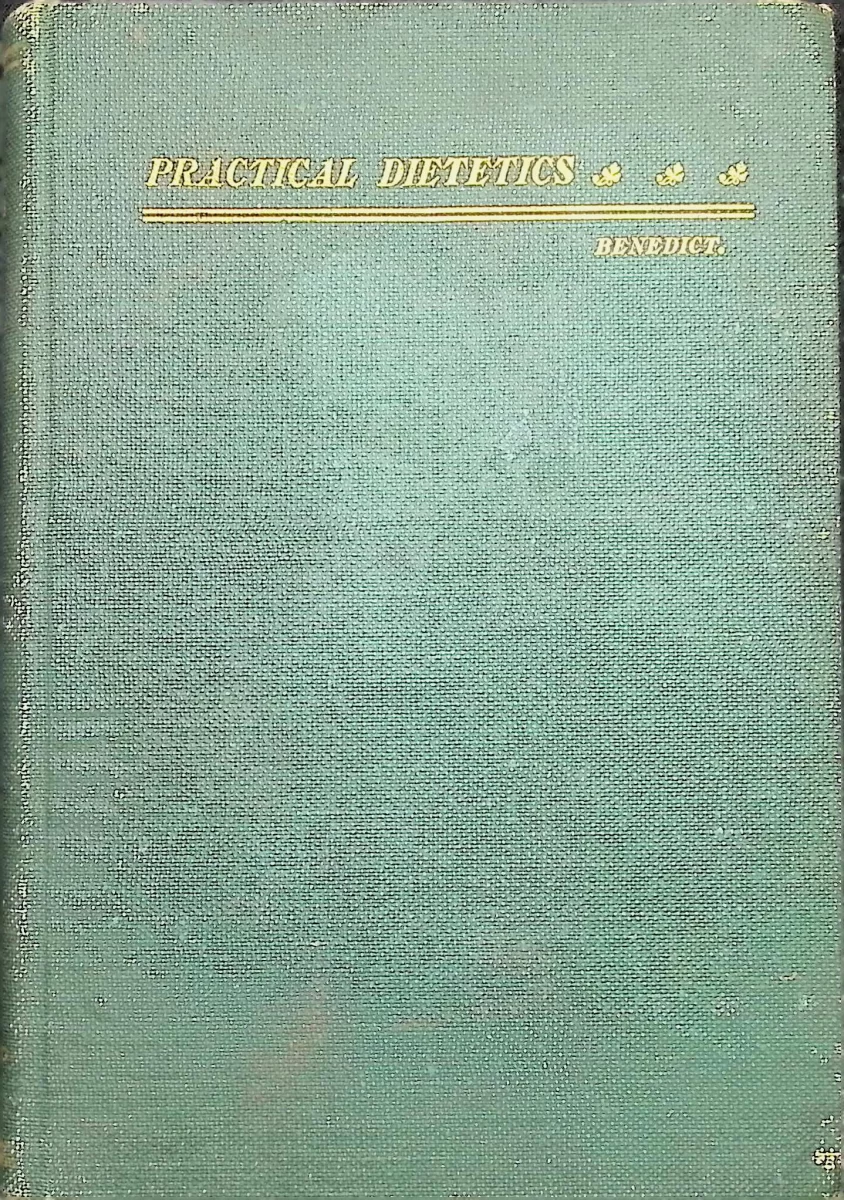
Description
Practical Dietetics (1904) by Dr. A. L. Benedict is a comprehensive volume on the medical application of nutrition, offering early 20th-century clinical advice on digestion, metabolism, obesity, fever nutrition, and emergency feeding. Dr. Benedict — a gastroenterologist, lecturer, and hospital consultant — provides both biochemical theory and prescriptive dietary interventions suited to physicians and dietitians working in hospital settings.
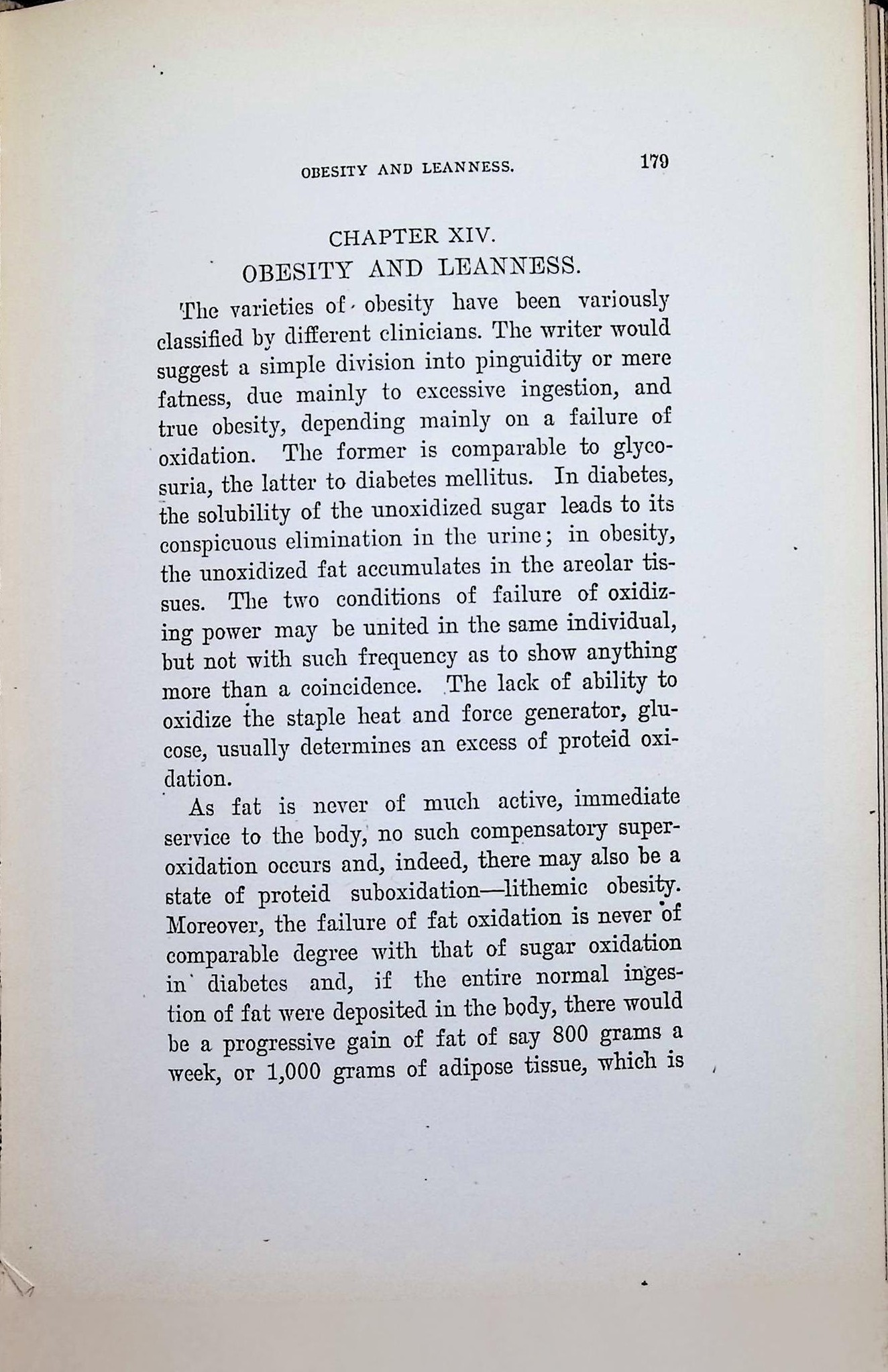
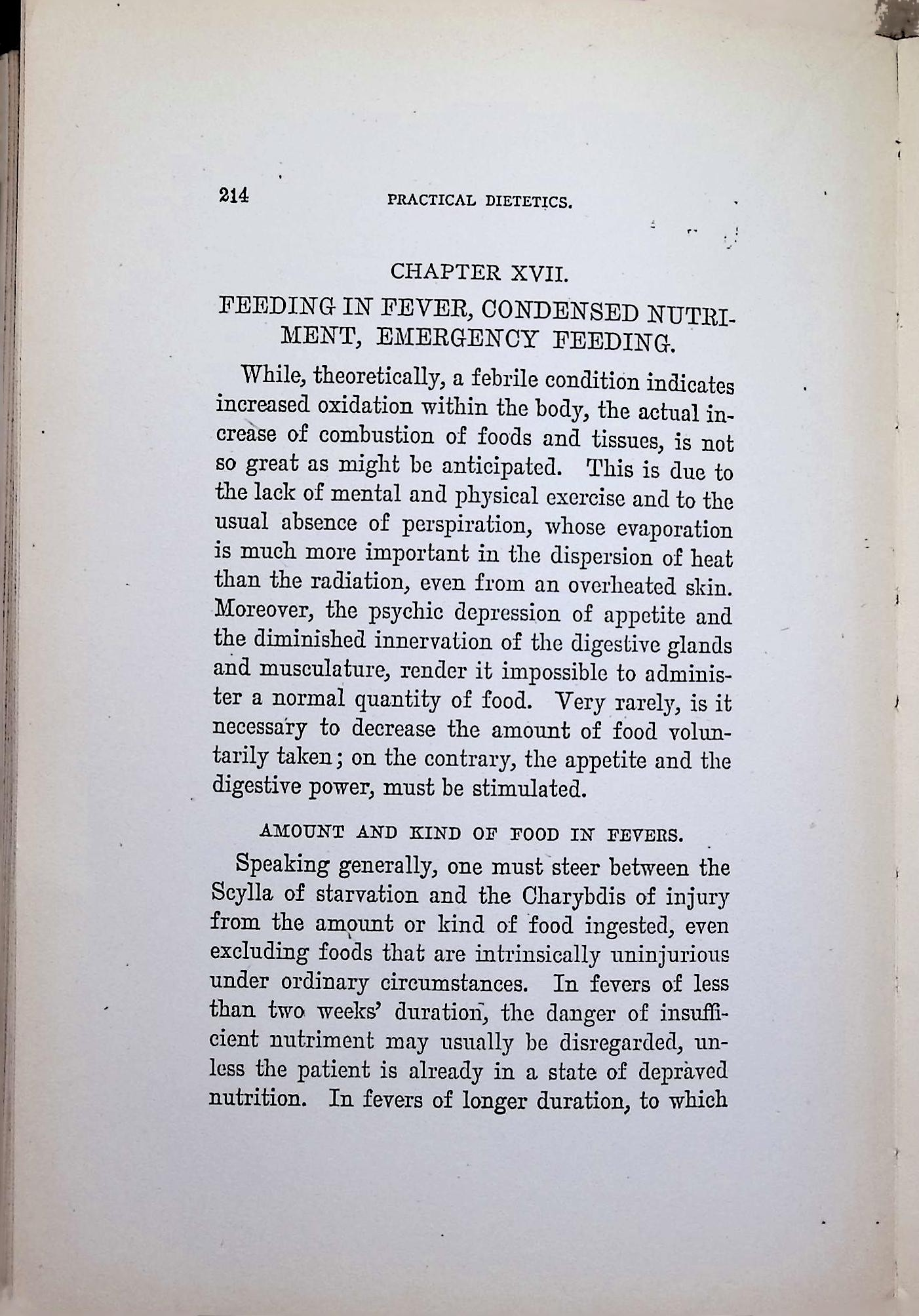
Notable for its attempts to distinguish between “mere fatness” and “true obesity,” the book outlines pathophysiological theories rooted in oxidation failure, protein suboxidation, and “lithemic” conditions — terms that would eventually be replaced by more precise endocrinologic and metabolic language. Benedict also examines the nutritional needs of febrile patients, emphasizing the delicate balance between starvation and overfeeding in fever care.
This volume captures a pivotal moment in dietetics: a field transitioning from anecdotal advice to something approximating nutritional science.
Condition
Green clothbound hardcover with gilt title on front and spine. Moderate wear to edges and spine crown. Surface mottling to the cloth and light corner fraying. Gilt lettering remains legible and intact. Interior pages are clean and tightly bound. Minor foxing on endpapers. Includes full title page, copyright (1904), and clinical chapters with intact typography.
Gallery
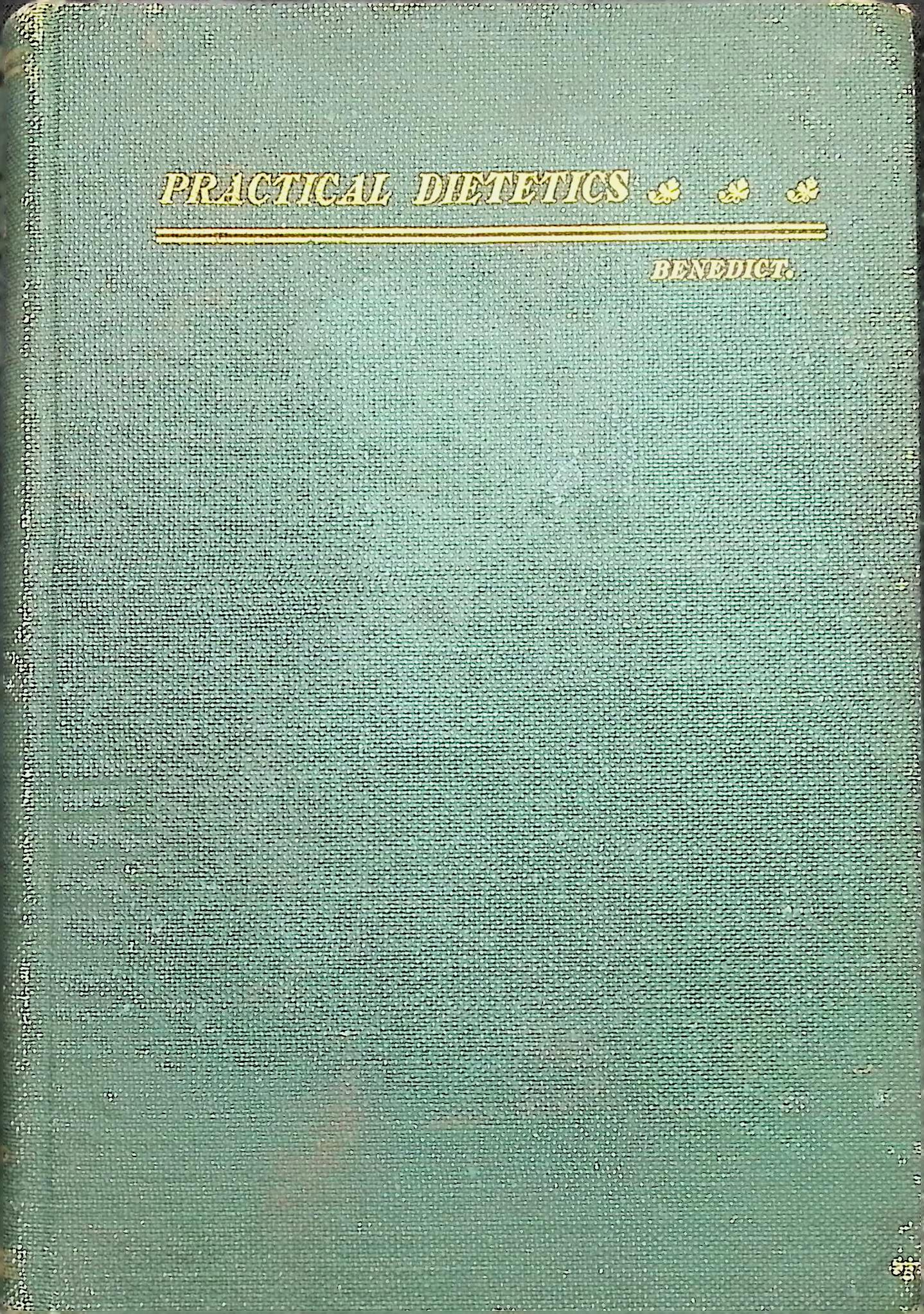
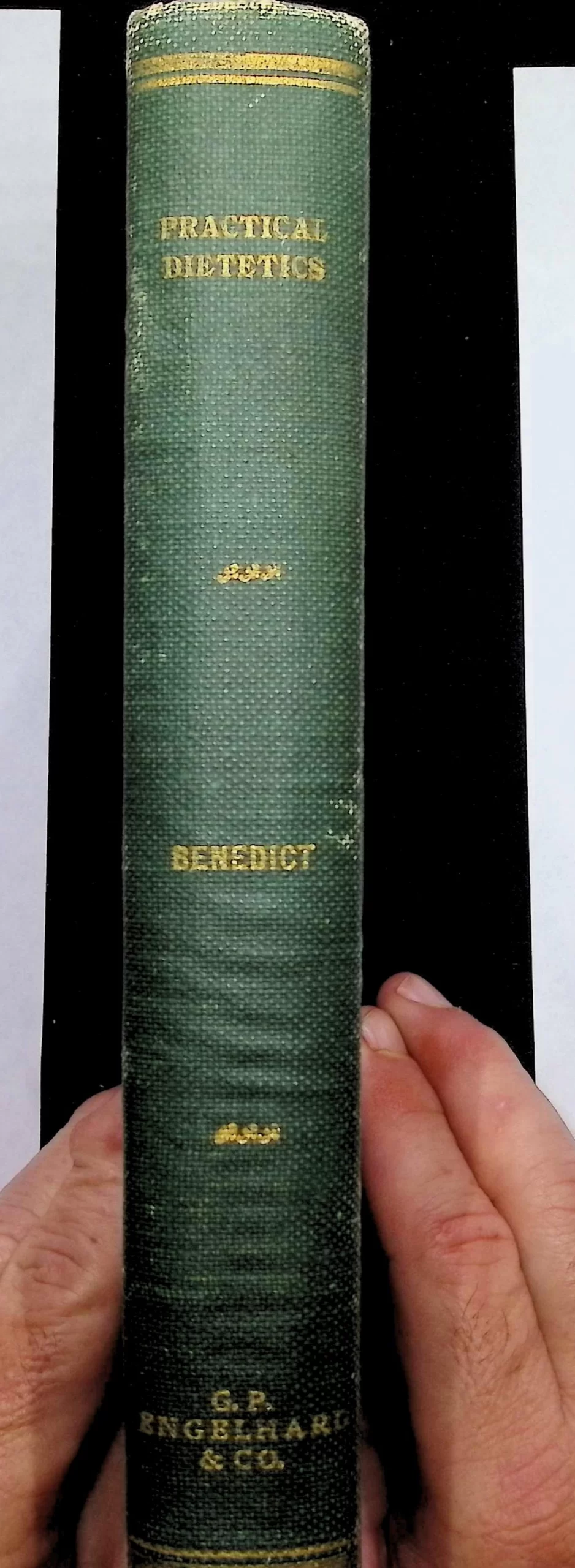
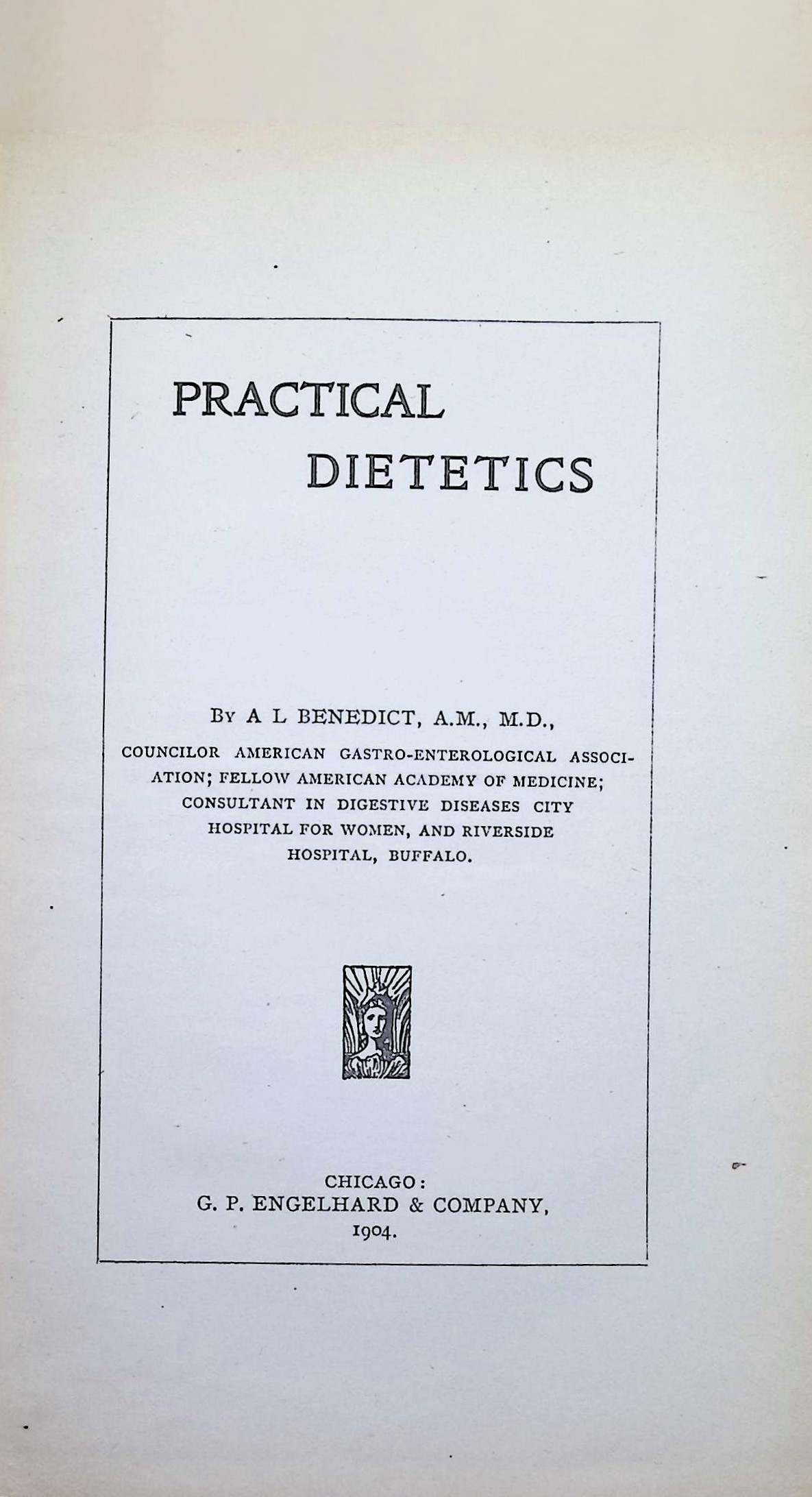
Historical context
At the turn of the 20th century, scientific dietetics was still emerging from a foundation of trial, tradition, and sometimes superstition. Practical Dietetics reflects a strong desire to medicalize nutrition — linking clinical observations to physiological theory. Benedict’s focus on oxidation, sugar metabolism, and nutrient absorption anticipated later developments in endocrinology and clinical nutrition. The emphasis on febrile feeding and caloric balance demonstrates an early understanding of metabolic demands during illness.
Curious Facts, Ephemera, and Trivia
Benedict distinguishes “pinguity” (excessive fatness due to overeating) from “true obesity” (failure of fat oxidation) — a concept now reframed through metabolic, hormonal, and genetic lenses.
The book uses the phrase “lithemic obesity,” associating obesity with disordered protein metabolism, a theory now obsolete.
The chapter on feeding during fevers compares over-restricting food to navigating between “Scylla and Charybdis,” showcasing the author’s classical education and rhetorical style.
Excerpt
“The lack of ability to oxidize the staple heat and force generator, glucose, usually determines an excess of proteid oxidation.”
— Chapter XIV: Obesity and Leanness
Why it is in the Cabinet
This book bridges folk dietary advice and the birth of evidence-based nutritional science. Its clinical intent, technical explanations, and aspirational tone reveal the medical community’s evolving relationship with food as treatment. Though its theories are outdated, its ambition is unmistakable — a meaningful relic of early dietotherapy.
Support Dr. Bebout’s Cabinet of Medical Curiosities
If you enjoy the history, the oddities, and the effort, help keep this cabinet open. Every little bit helps preserve and share the strange wonders of medicine's past.
Buy Me a Ko-fi ☕ Buy Me a Coffee ☕ Tip via PayPal 💵