
Title
Merck Mercury Sulfide Red (C.P. Powder)
Author
Merck & Co., Inc., Rahway, New Jersey
Image

Description
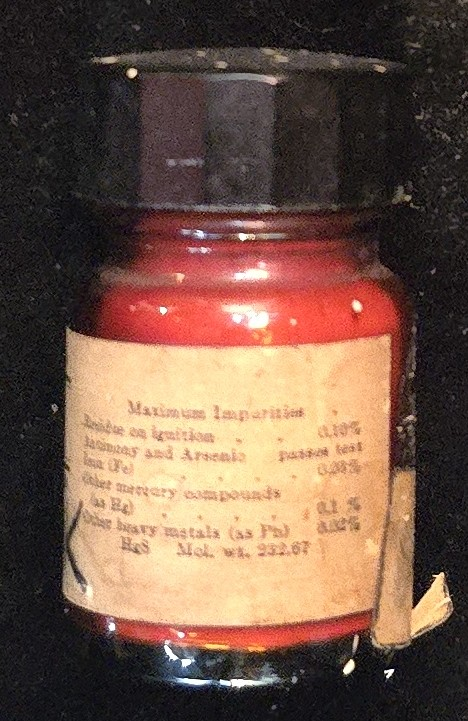
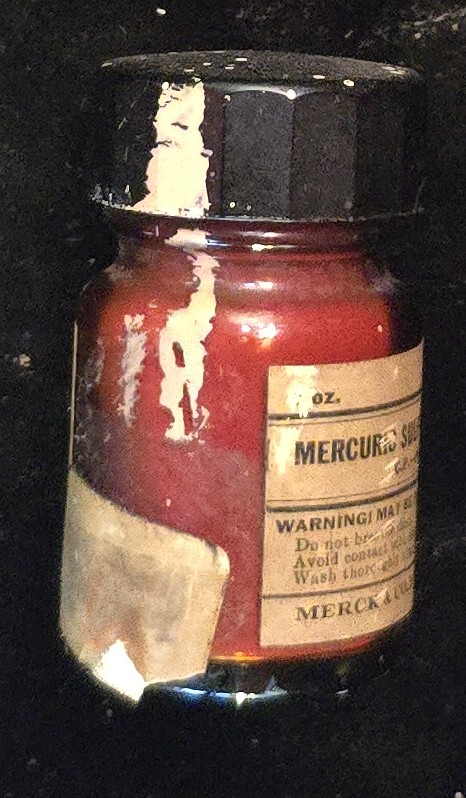
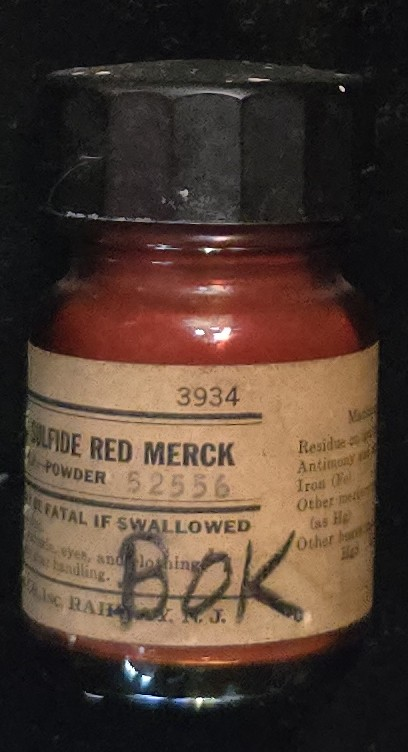
This small amber glass bottle contains Mercury Sulfide Red (Cinnabar / Vermilion), labeled “C.P. – Powder” (Chemically Pure), manufactured by Merck & Co., Inc. of Rahway, New Jersey. The label warns of extreme toxicity: “May be fatal if swallowed. Avoid contact with skin, eyes, and clothing. Wash thoroughly after handling.”
The compound is chemically known as HgS (mercuric sulfide), a historically important red pigment and medicinal substance. The embossed black Bakelite screw cap indicates mid-20th century production.
Condition
Amber glass bottle with intact original Bakelite cap. Labels are legible though show age wear, with handwritten inventory markings (“B2K”). Contents remain sealed and stable, with the vivid red powder clearly visible.
Gallery
Historical context
Mercury sulfide (HgS) has a long and controversial history:
Pigment: Used for millennia as cinnabar or vermilion in paints, inks, and art.
Medicine: Once prescribed in small doses for syphilis and skin conditions, despite severe toxicity.
Industry: Supplied by chemical companies like Merck for laboratory and manufacturing use, under strict handling precautions.
By the mid-20th century, mercury sulfide was recognized as too dangerous for medicinal use, with industrial restrictions tightening as awareness of mercury poisoning grew.
Curious Facts, Ephemera, and Trivia
Ancient Chinese and Roman cultures used cinnabar as a red pigment, often in tombs and manuscripts.
Despite its brilliant red color, vermilion darkens over time due to light-induced chemical changes.
Historical texts describe cinnabar as both a “healing elixir” and a deadly poison—capturing the paradox of many early drugs.
Excerpt
“Warning! May be fatal if swallowed. Avoid contact with skin, eyes, and clothing. Wash thoroughly after handling.”
Why it is in the Cabinet
This bottle represents the intersection of art, medicine, and toxicology—a substance revered for beauty and healing but notorious for its dangers. As a sealed Merck laboratory specimen, it highlights the evolving understanding of chemical safety in the 20th century.
Support Dr. Bebout’s Cabinet of Medical Curiosities
If you enjoy the history, the oddities, and the effort, help keep this cabinet open. Every little bit helps preserve and share the strange wonders of medicine's past.
Buy Me a Ko-fi ☕ Buy Me a Coffee ☕ Tip via PayPal 💵