
Title
Mendenhall’s Malaria Chill and Fever Tonic Advertising Booklet
Author
J. C. Mendenhall Medicine Co., Evansville, Indiana
Image
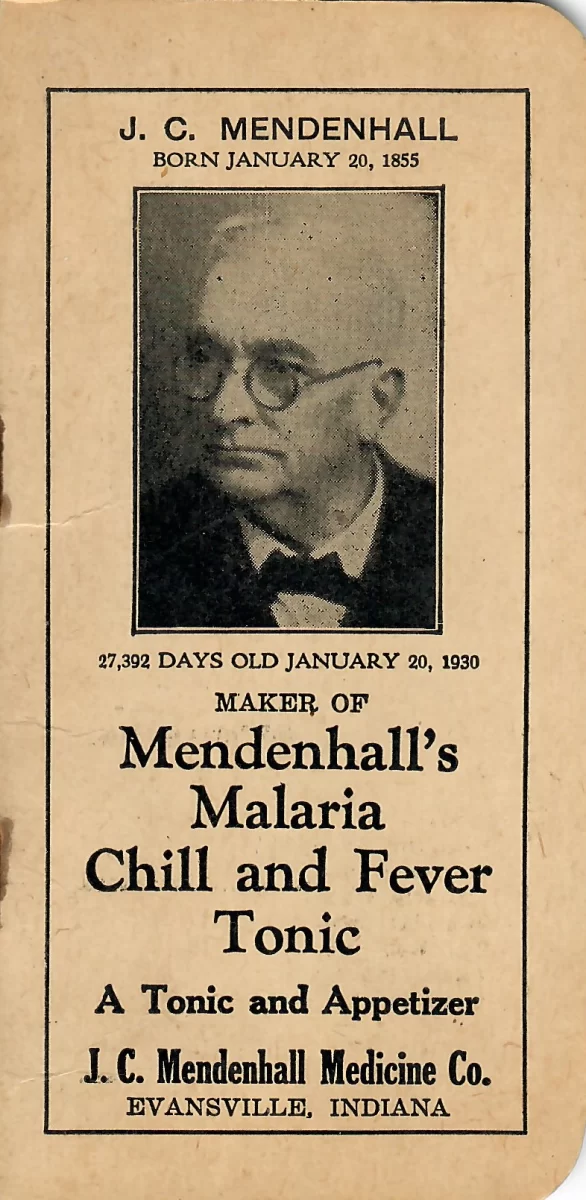
Description
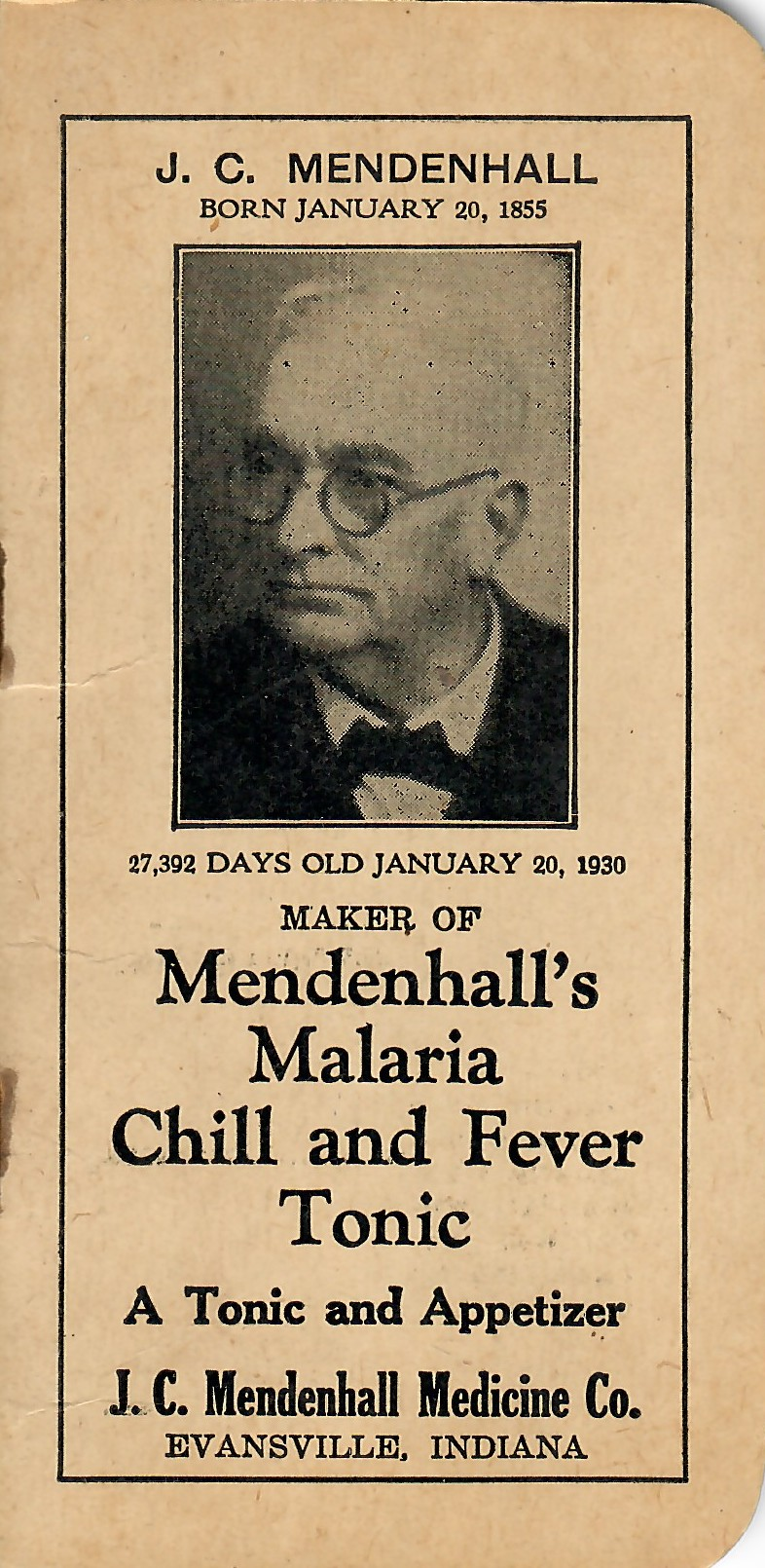
This small advertising booklet promotes Mendenhall’s Malaria Chill and Fever Tonic, a patent medicine produced by the J. C. Mendenhall Medicine Co. of Evansville, Indiana. The front panel features a portrait of J. C. Mendenhall, born January 20, 1855, and notes that he was “27,392 days old January 20, 1930,” dating this promotional piece to about 1930.
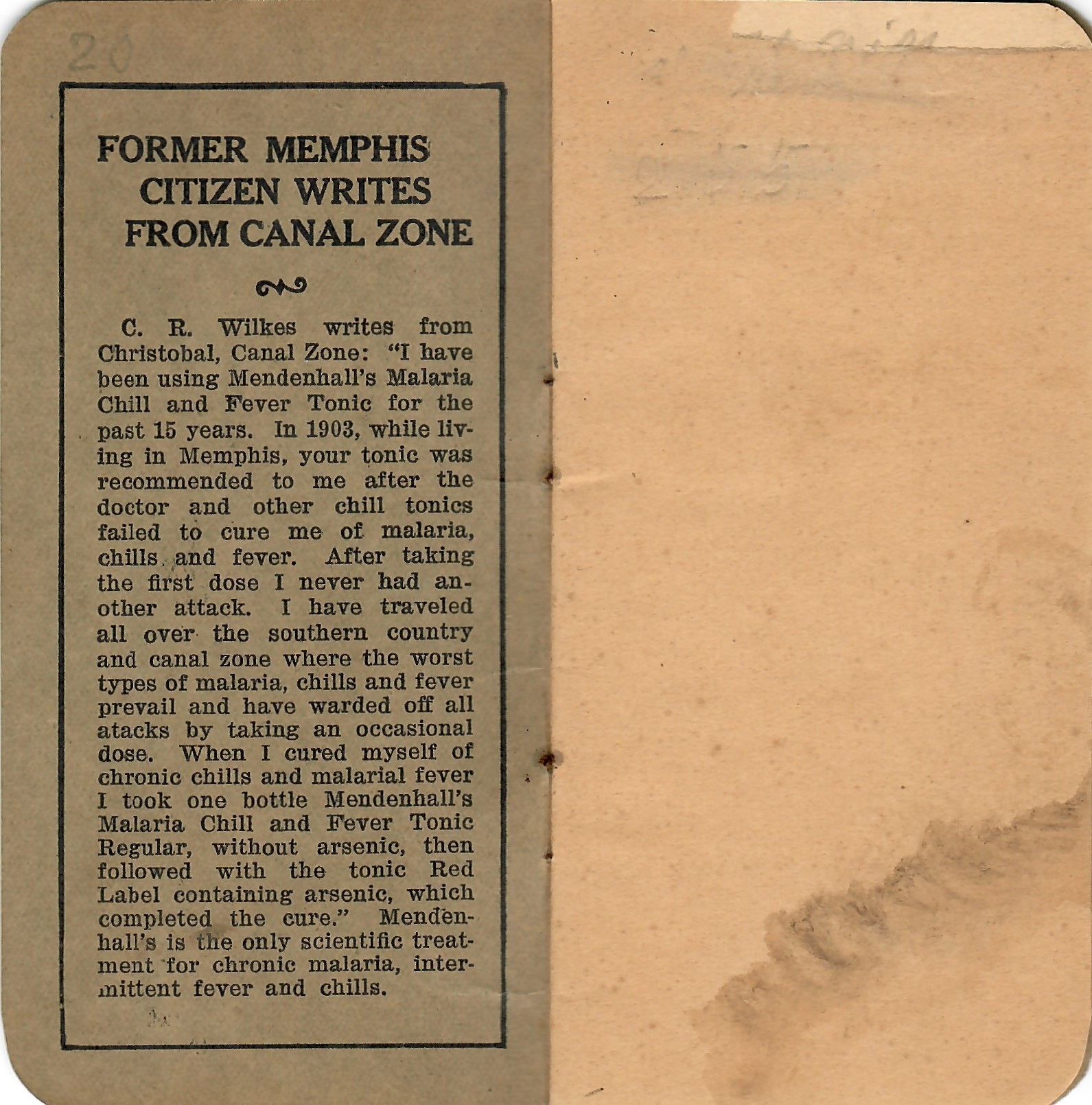
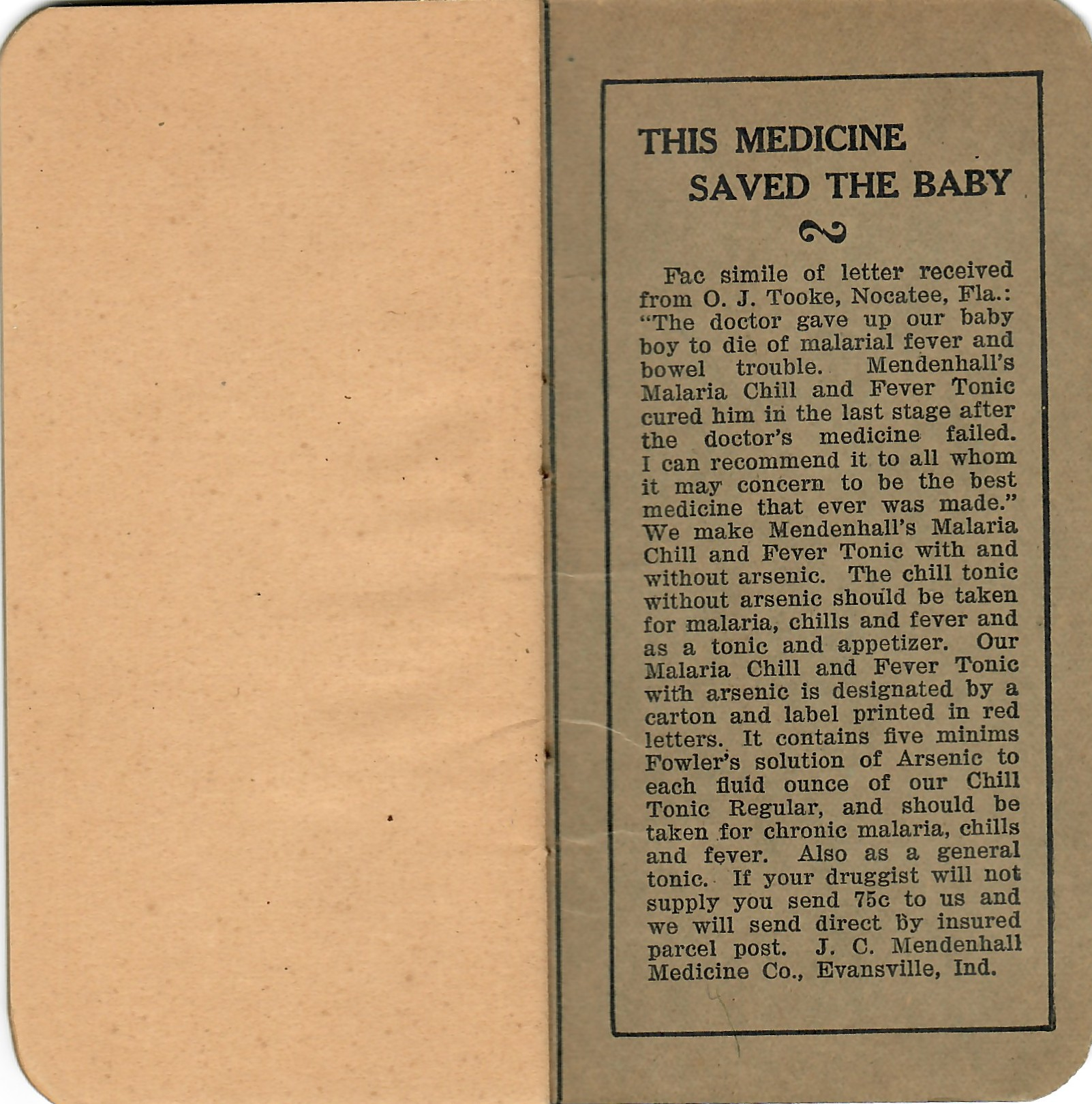
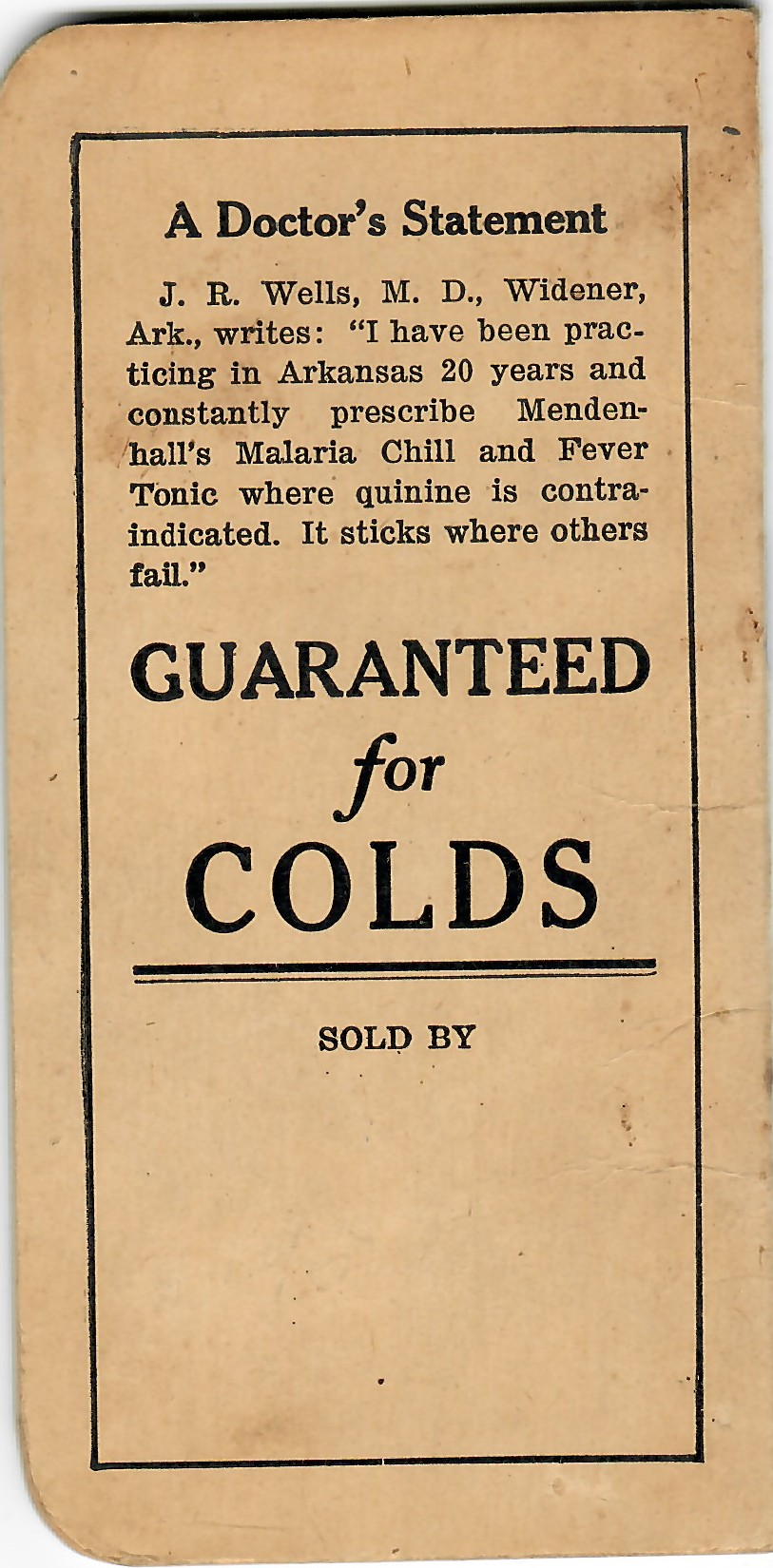
The booklet advertises the product as a “tonic and appetizer” for malaria, chills, and fever. Inside, it includes testimonial-style copy from a former Memphis resident in the Canal Zone, a dramatic “This Medicine Saved the Baby” claim, and a physician endorsement from Arkansas. The advertising is classic patent-medicine theater: personal testimony, doctor approval, cure language, child-saving drama, and just enough pseudo-scientific phrasing to make the poison go down easier.
One of the most historically significant details is the reference to two versions of the tonic: a regular version without arsenic and a red-label version containing arsenic. The booklet states that the arsenic version contained Fowler’s solution, an arsenic preparation historically used in medicine. Smithsonian holdings document Mendenhall’s Malaria Chill and Fever Tonic as a product of J. C. Mendenhall Medicine Co. and list its claimed use for malaria, chills, and fever. Fowler’s solution was a potassium arsenite preparation used historically as a tonic and in treatments for conditions including malaria and syphilis, before arsenic’s toxicity and long-term harms became impossible to politely ignore.
Condition
Original paper advertising booklet with visible age toning, fold wear, small edge creases, minor staining, and light surface soiling. Interior pages remain legible. Binding fold shows small staple or puncture marks. Overall condition is good for fragile pharmaceutical advertising ephemera of this period.
Gallery
Historical context
Malaria, chills, and intermittent fever were major medical concerns in the American South, river valleys, and tropical regions. Before modern antimalarial therapy and mosquito-control programs became widespread, “chill tonics” were heavily marketed to the public. Some contained quinine. Others leaned into tonics, bitters, alcohol, laxatives, or arsenic compounds.
Mendenhall’s booklet sits squarely in that transitional world between old patent-medicine salesmanship and early 20th-century drug regulation. The company was still using testimonial advertising, cure claims, and dramatic personal stories, but the copy also tries to sound measured by specifying arsenic content and giving dose-related language. That makes it especially useful as a Cabinet item: it is not just “old medicine advertising.” It is an artifact showing how dangerous ingredients were normalized through respectable-looking medical language.
Curious Facts, Ephemera, and Trivia
The booklet makes the oddly specific claim that J. C. Mendenhall was 27,392 days old on January 20, 1930. That is a weird little advertising flourish, and frankly, I respect the commitment to unnecessary math.
The red-label version reportedly contained five minims of Fowler’s solution of arsenic per fluid ounce of the regular tonic. Fowler’s solution was historically a potassium arsenite preparation. In plain English: this was not “herbal wellness nonsense.” This was arsenic in a bottle wearing a necktie.
The advertising also claims the product was useful when quinine was “contraindicated,” giving it a niche as an alternative malaria remedy. Whether that reflected thoughtful therapeutics or marketing opportunism is exactly the kind of thing that makes patent medicine collecting such a fun little haunted house.
Excerpt
“This medicine saved the baby.”
“We make Mendenhall’s Malaria Chill and Fever Tonic with and without arsenic.”
“It contains five minims Fowler’s solution of Arsenic to each fluid ounce of our Chill Tonic Regular.”
Why it is in the Cabinet
This booklet belongs in the Cabinet because it captures several major themes in early American pharmaceutical history: malaria fear, patent-medicine advertising, physician testimonials, arsenic as therapy, and the uneasy overlap between legitimate medicine and commercial cure-all marketing.
It is especially strong because the item openly discusses the arsenic-containing version rather than hiding behind vague “tonic” language. That makes it a compact but powerful teaching piece. It is small, paper, and easy to overlook — but historically it punches above its weight.
Support Dr. Bebout’s Cabinet of Medical Curiosities
If you enjoy the history, the oddities, and the effort, help keep this cabinet open. Every little bit helps preserve and share the strange wonders of medicine's past.
Buy Me a Ko-fi ☕ Buy Me a Coffee ☕ Tip via PayPal 💵