
Title
Dasin “Yellow Tops” Filled Capsules
Author
The S. E. Massengill Company, Bristol, Tennessee
Image
Description
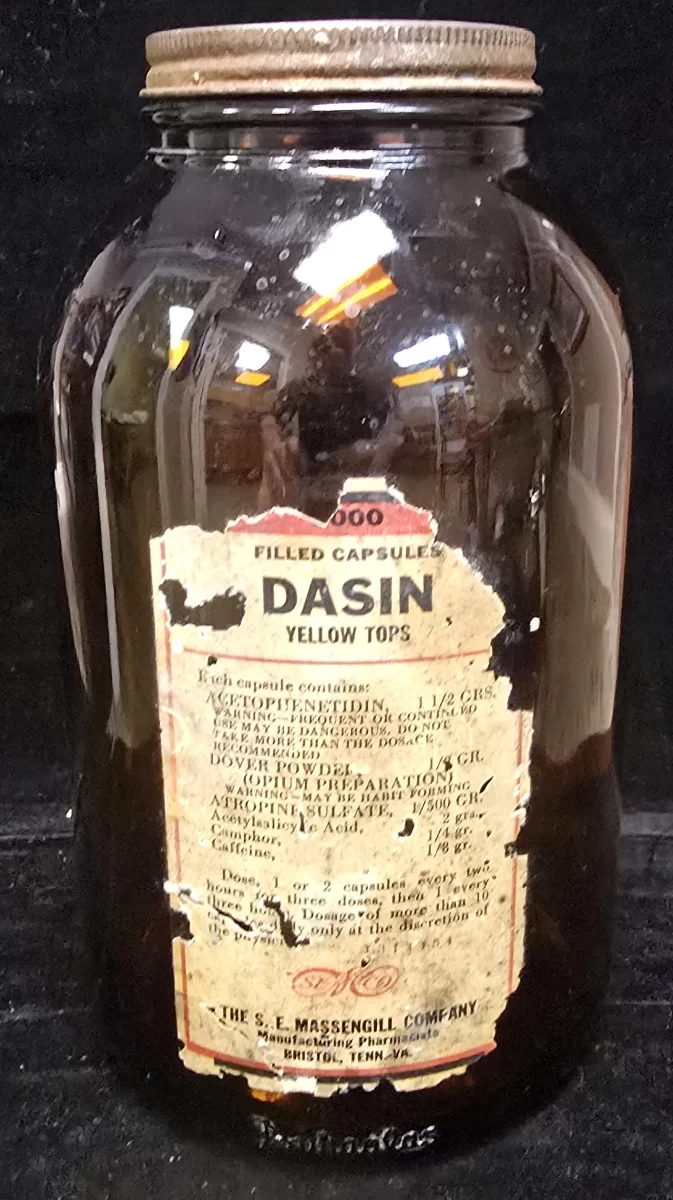
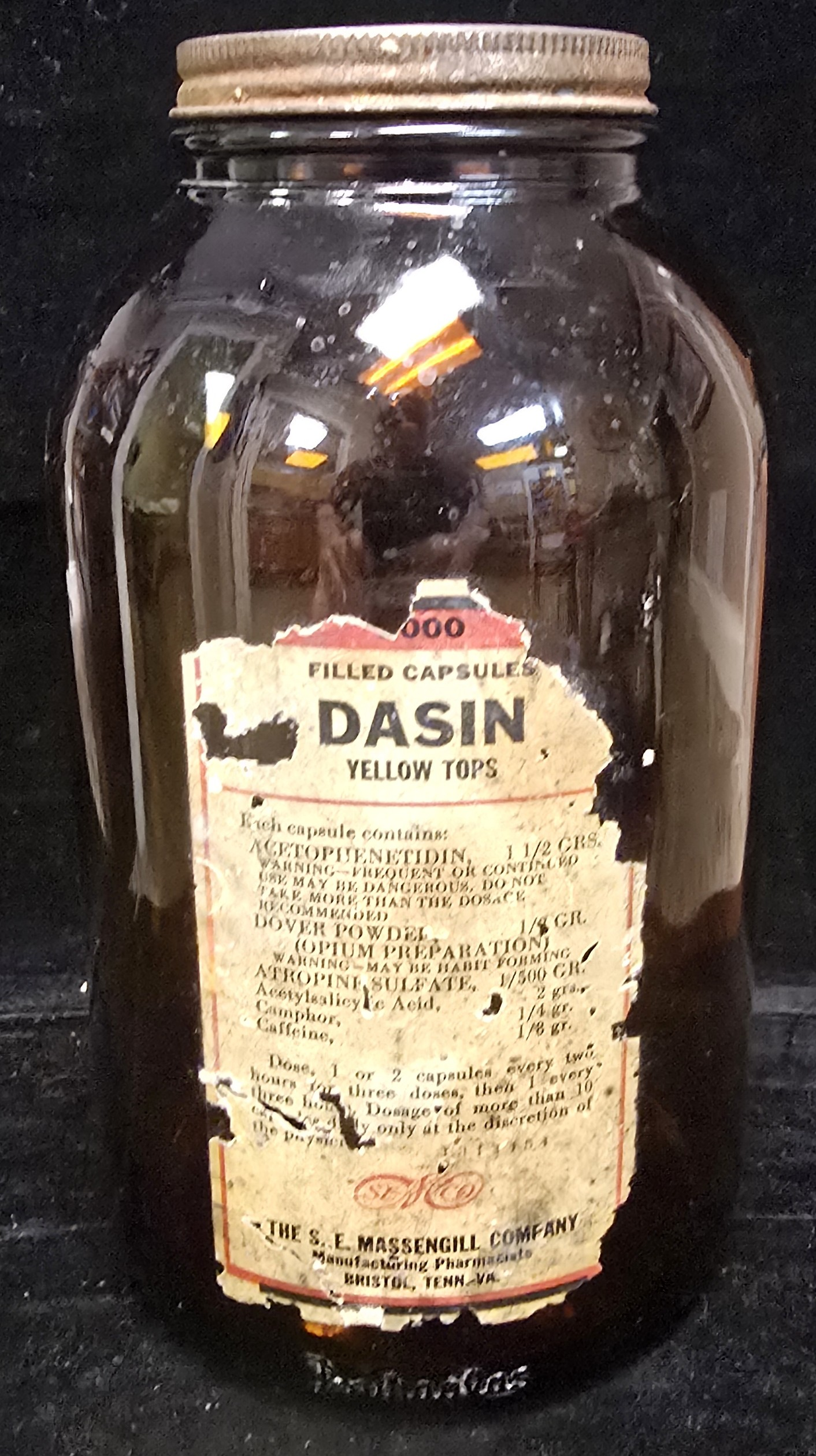
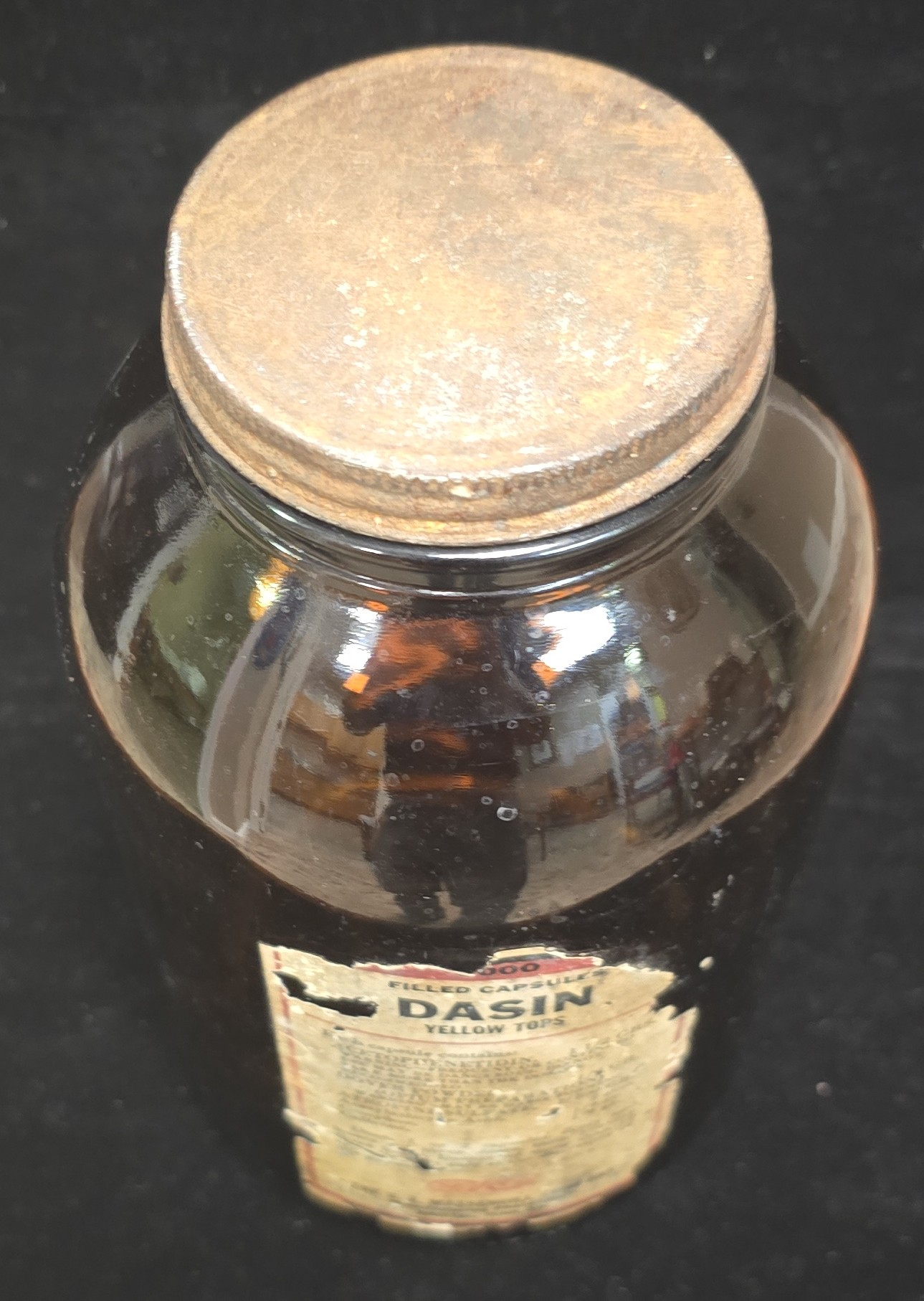
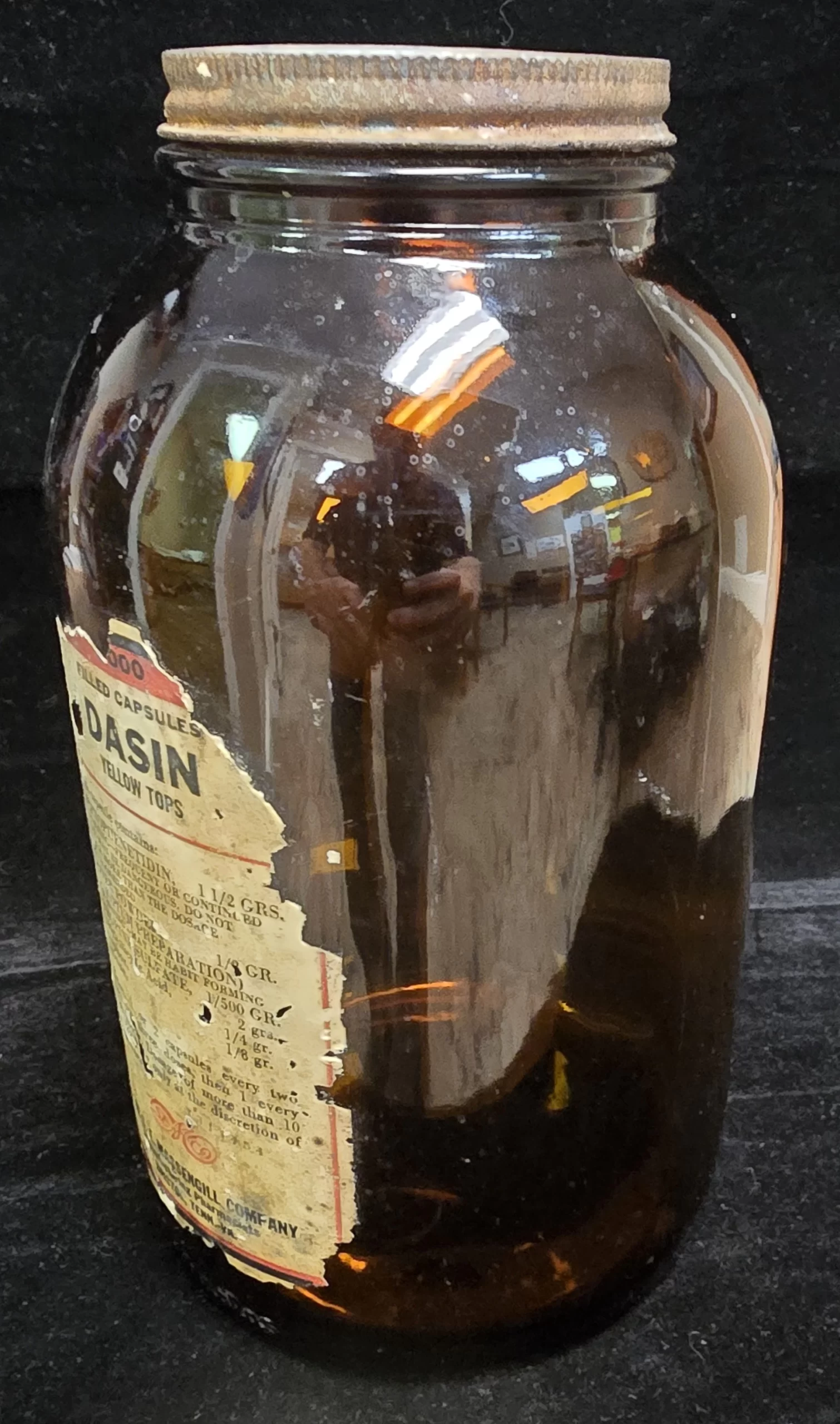
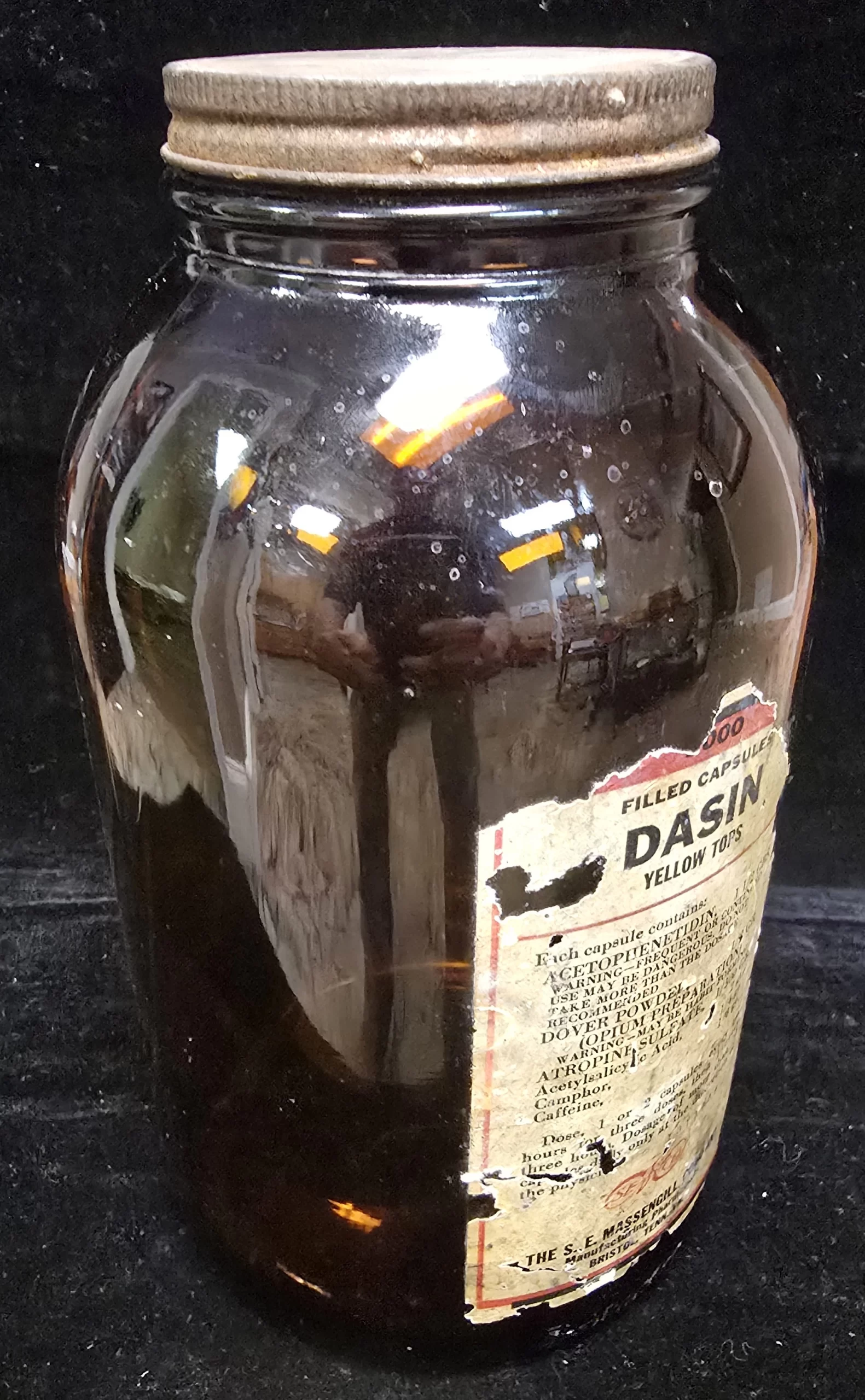
This amber glass pharmacy bottle retains a heavily worn original label for Dasin Yellow Tops, a proprietary capsule preparation sold by The S. E. Massengill Company of Bristol, Tennessee. The label identifies the bottle as a large-count package of filled capsules and preserves enough text to show the product’s intended role as a mid-20th-century compound remedy for pain, fever, and the misery of colds or grippe. The surviving packaging is plain, utilitarian, and unapologetically pharmaceutical: amber glass, metal screw cap, and a dense letterpress label built to inform rather than charm.
The ingredient panel is the real star here. The label lists acetophenetidin (phenacetin), Dover powder (opium preparation), atropine sulfate, acetylsalicylic acid, camphor, and caffeine. In other words, this was not some dainty little “comfort” capsule. It was a classic compound remedy from the era when one product could hit pain, fever, sweating, stimulation, and sedation all at once and call that good clean medicine. Contemporary drug references described Dasin as analgesic, antipyretic, diaphoretic, and sedative, and specifically noted use for symptomatic relief of colds and grippe.
Condition
Amber bottle displays well overall, with heavy label loss, edge chipping, staining, and age wear to the paper label; metal lid shows oxidation and finish loss. The surviving label remains legible enough to identify the product and most major ingredients, which is what saves the day here.
Gallery
Historical context
Dasin belongs to the long American tradition of combination pain remedies that mixed several active agents into one capsule and trusted the patient not to get too ambitious. Phenacetin was widely used for decades as an analgesic and antipyretic before later being withdrawn because of safety concerns, especially kidney toxicity and cancer risk with chronic use. Dover’s powder was an old opium-and-ipecac preparation with deep roots in earlier medicine, carried forward into many later compound remedies long after medicine should probably have had a family meeting about it.
The manufacturer is historically notable for a far darker reason. The S. E. Massengill Company became infamous after the 1937 Elixir Sulfanilamide disaster, in which more than 100 people died from a toxic formulation containing diethylene glycol. That catastrophe helped drive passage of the 1938 Federal Food, Drug, and Cosmetic Act, which greatly strengthened federal drug regulation. Your bottle is not from that event, but it does come from the same company, which gives it an extra layer of pharmaceutical history beyond the already-interesting label.
Curious Facts, Ephemera, and Trivia
One nice detail is that Dasin was not marketed as a single-ingredient drug but as a carefully engineered compound. Period drug references list it in capsule form and describe the line in very functional therapeutic terms. That kind of branding was common in the mid-century drug trade: short, punchy product name up front, chemistry and dosage buried below, and the assumption that the physician or pharmacist would do the translating.
The ingredient list also reflects a vanished pharmaceutical philosophy: if pain was bad, fever was bad, and the patient felt rotten, then the answer was to stack agents with overlapping effects and hope the whole machine ran smoother than the disease. That produced some memorable bottles. It also produced some genuinely questionable chemistry. Medicine used to do a lot more shrugging.
Excerpt
From the surviving label:
“DASIN YELLOW TOPS”
“Each capsule contains:”
“Acetophenetidin”
“Dover Powder (Opium Preparation)”
“Atropine Sulfate”
“Acetylsalicylic Acid”
“Camphor”
“Caffeine”
Why it is in the Cabinet
This is exactly the sort of thing that earns its shelf space. The bottle is visually strong, the label is battered but still readable, and the formula tells a whole story by itself. You do not need a ten-minute lecture when the words phenacetin, Dover powder, and atropine sulfate are sitting there on one label like a bad decision-making committee. It is a great example of mid-century compound drug culture, and the Massengill name gives it an extra historical punch.
Support Dr. Bebout’s Cabinet of Medical Curiosities
If you enjoy the history, the oddities, and the effort, help keep this cabinet open. Every little bit helps preserve and share the strange wonders of medicine's past.
Buy Me a Ko-fi ☕ Buy Me a Coffee ☕ Tip via PayPal 💵