
Title
Belladonna, U.S.P. (Leaf) – Eli Lilly & Company
Author
Eli Lilly & Company
Image
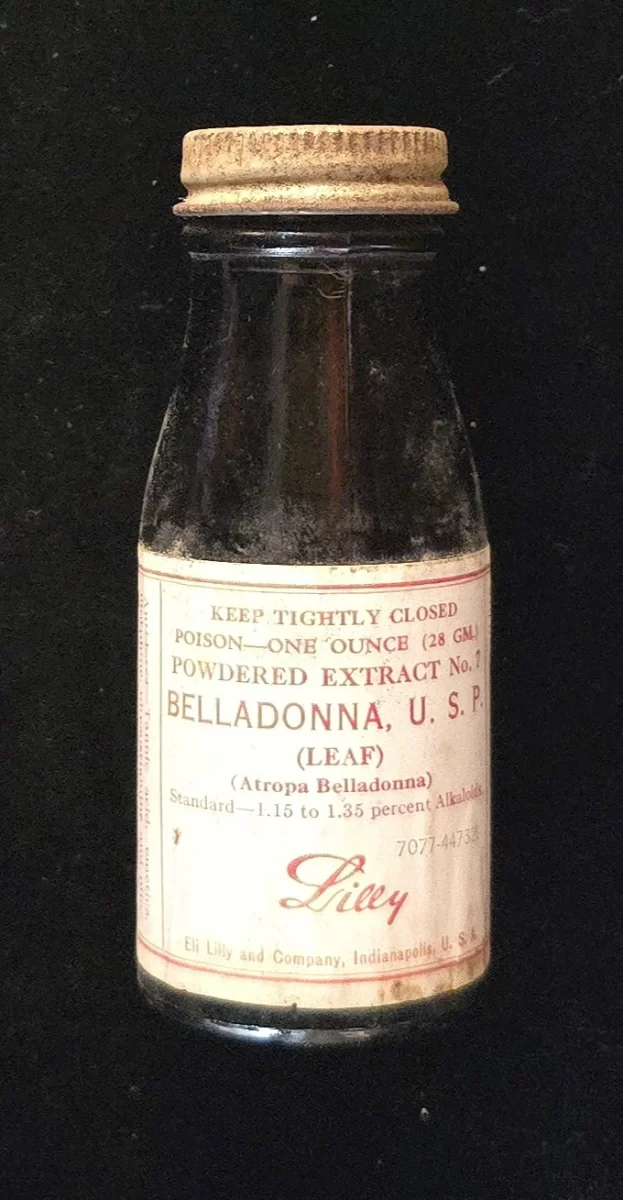
Description
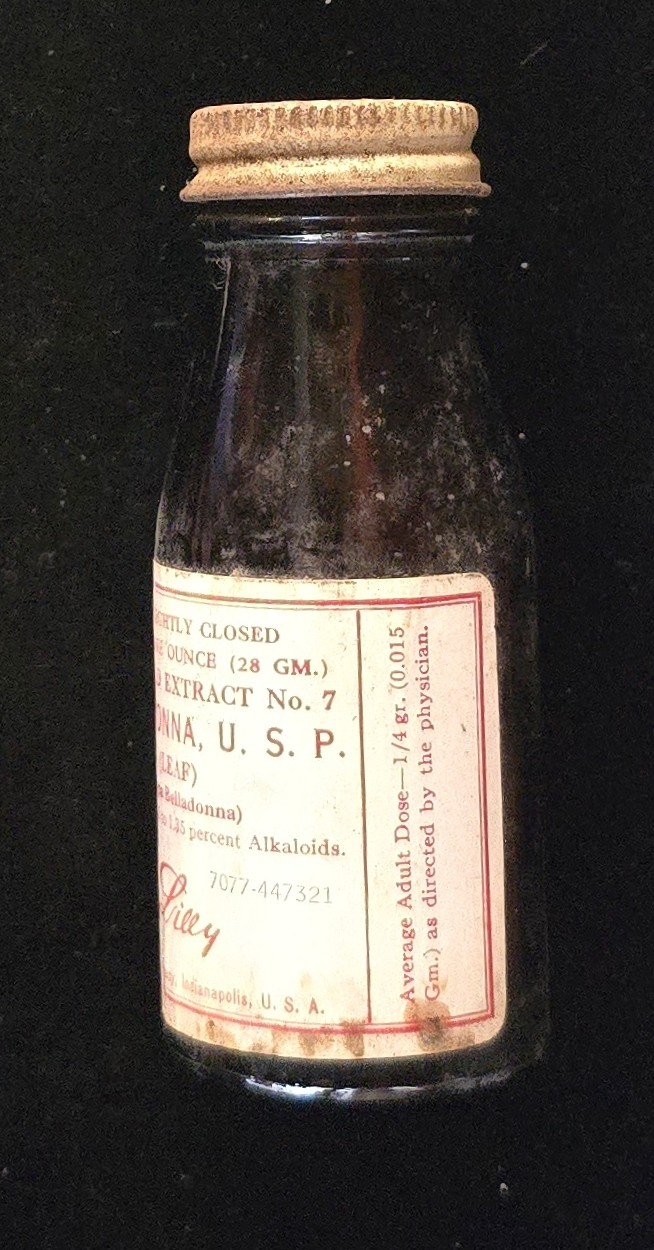
This vintage pharmaceutical bottle once held powdered extract of Belladonna (Atropa Belladonna), manufactured by Eli Lilly & Company, Indianapolis, U.S.A. Labeled boldly as “POISON”, the preparation contained 1.15–1.35% alkaloids, primarily atropine, scopolamine, and hyoscyamine. These compounds act as powerful anticholinergics, historically used to relieve muscle spasms, asthma, and gastrointestinal pain — but with narrow therapeutic margins and high risk of fatal overdose.
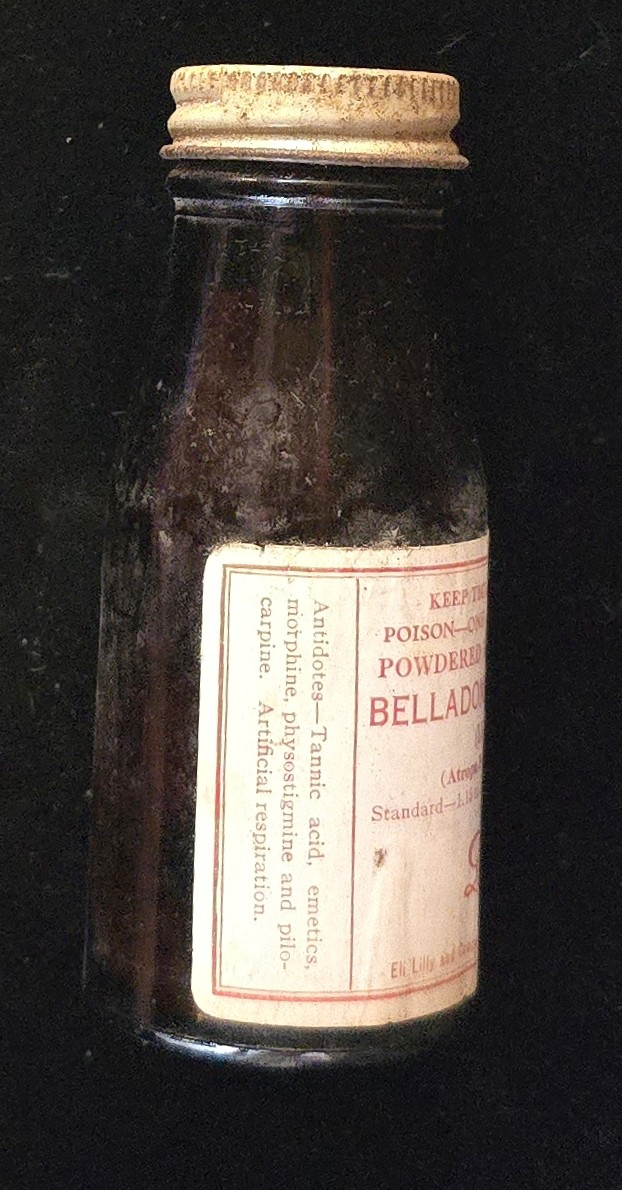
The label provides strict dosage guidance and even lists antidotes, including tannic acid, morphine, physostigmine, pilocarpine, and artificial respiration. This level of caution reflects the drug’s notorious danger.
Belladonna, also known as “Deadly Nightshade”, has a long and infamous history. From cosmetics (dilating women’s pupils to appear more alluring — hence “bella donna,” or “beautiful woman”) to poisonings and witchcraft, its reputation straddles both medicine and menace.
Condition
Amber glass bottle with original paper label intact, though darkened with age and showing staining. Metal screw cap worn but present. No contents remain.
Gallery

Historical context
Belladonna was widely prescribed in the 19th and early 20th centuries, before safer alternatives replaced it. Eli Lilly, founded in 1876, became one of the largest U.S. pharmaceutical companies and was known for producing standardized drug extracts that made dosing more consistent — though, in the case of Belladonna, still highly dangerous.
Curious Facts, Ephemera, and Trivia
During the Renaissance, women used Belladonna drops to dilate their pupils for beauty, despite the risk of blindness.
Belladonna played a role in European witchcraft lore as an ingredient in “flying ointments.”
Even in the early 1900s, pharmacists carried specific antidotes due to the frequency of poisoning cases.
Excerpt
“Antidotes — Tannic acid, emetics, morphine, physostigmine and pilocarpine. Artificial respiration.”
That one line captures the severity and the era-specific pharmacology better than any long explanation.
Why it is in the Cabinet
This bottle perfectly captures the intersection of beauty, danger, and medicine. It illustrates the razor-thin line between healing and poisoning in early pharmaceuticals — and the bold warnings that often weren’t enough to prevent tragedy.
Related objects
Support Dr. Bebout’s Cabinet of Medical Curiosities
If you enjoy the history, the oddities, and the effort, help keep this cabinet open. Every little bit helps preserve and share the strange wonders of medicine's past.
Buy Me a Ko-fi ☕ Buy Me a Coffee ☕ Tip via PayPal 💵