
Title
Merck Potassium Chlorate (12 oz. N.F. Granular)
Author
Merck & Co., Inc., Rahway, New Jersey
Image
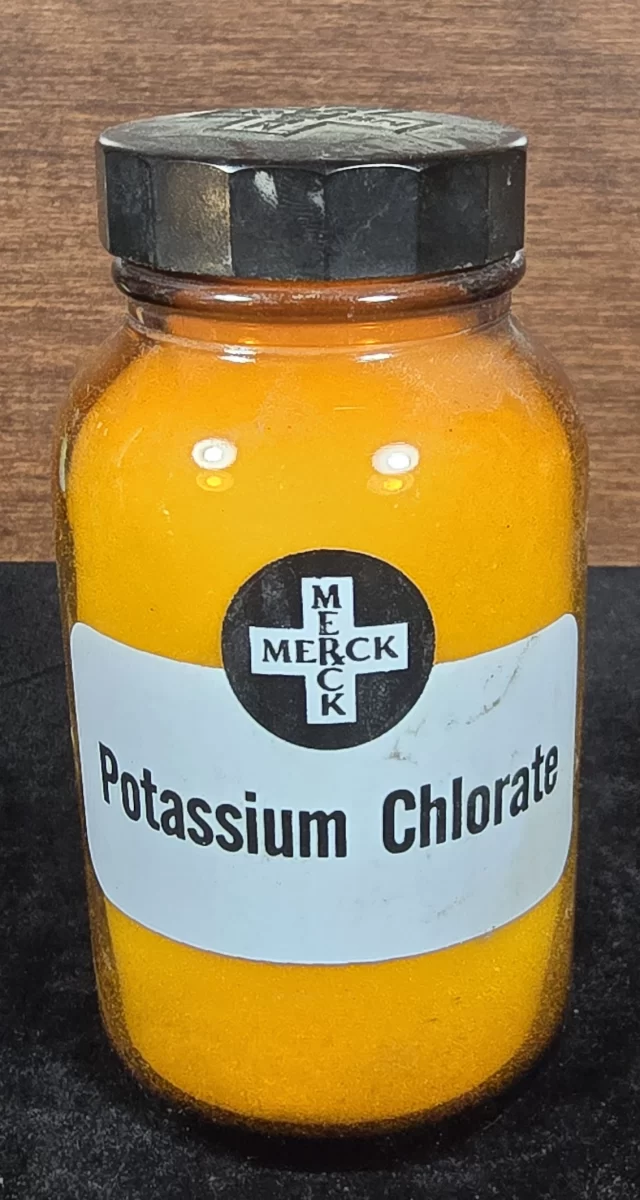
Description
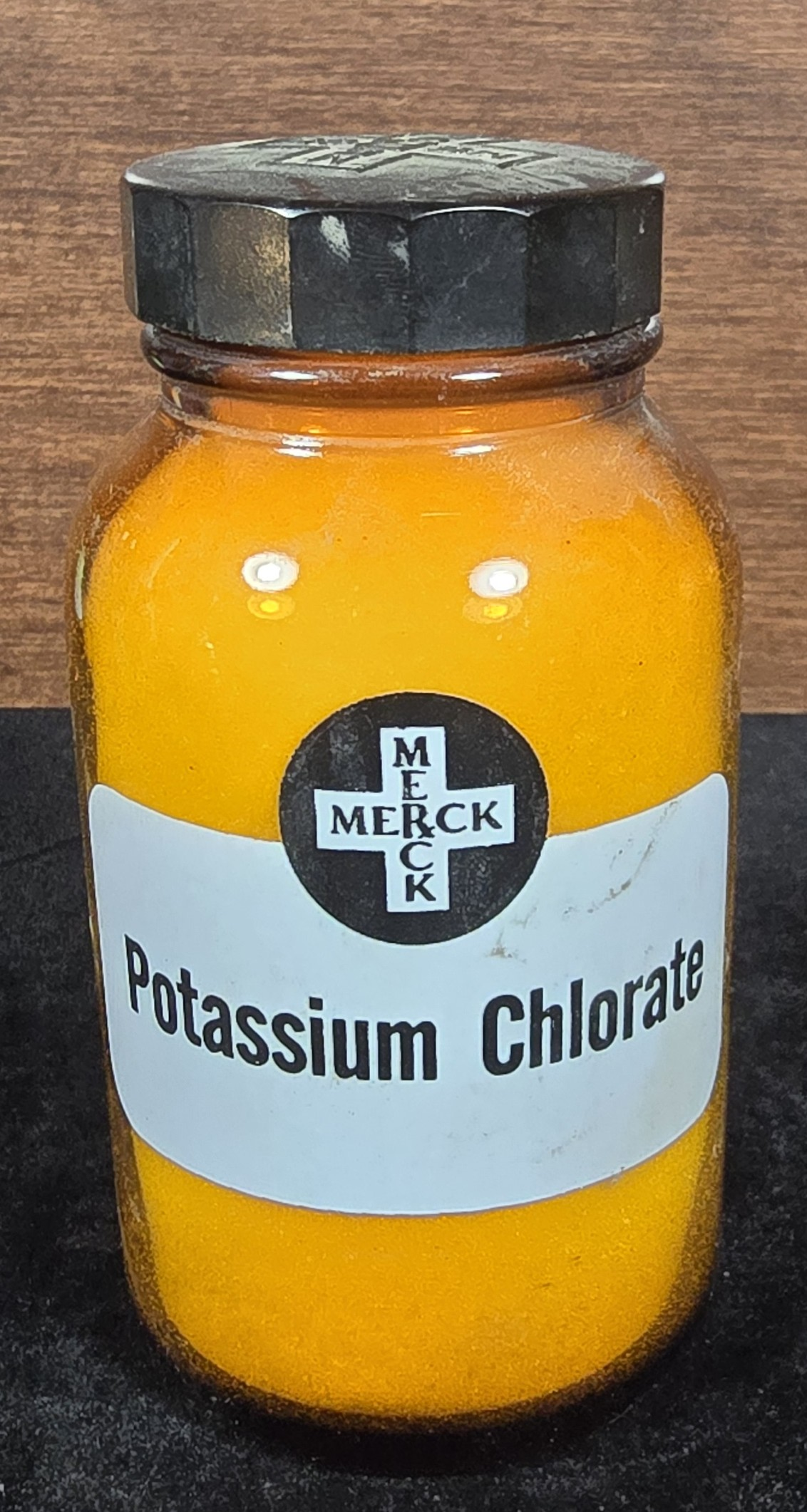
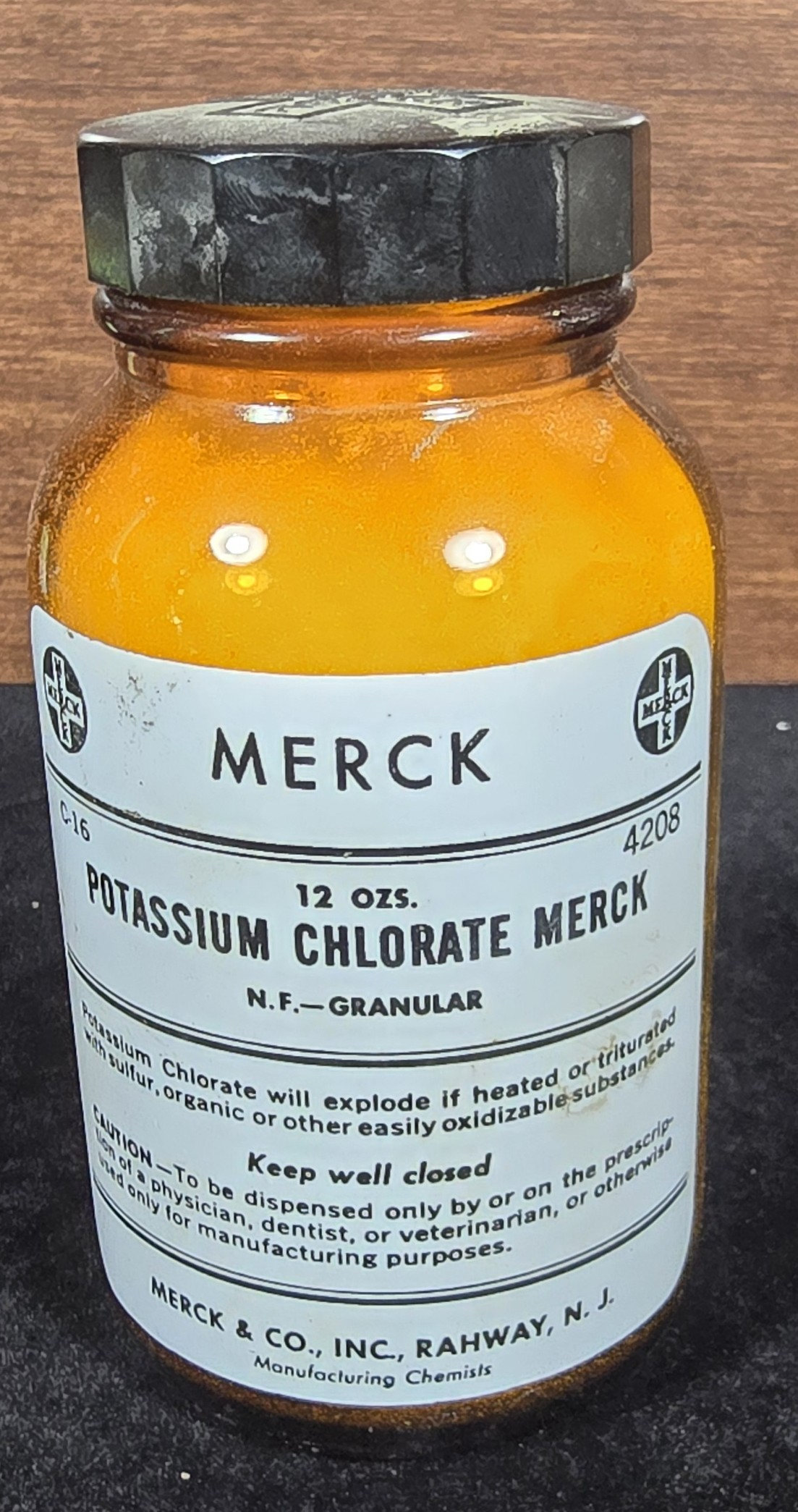
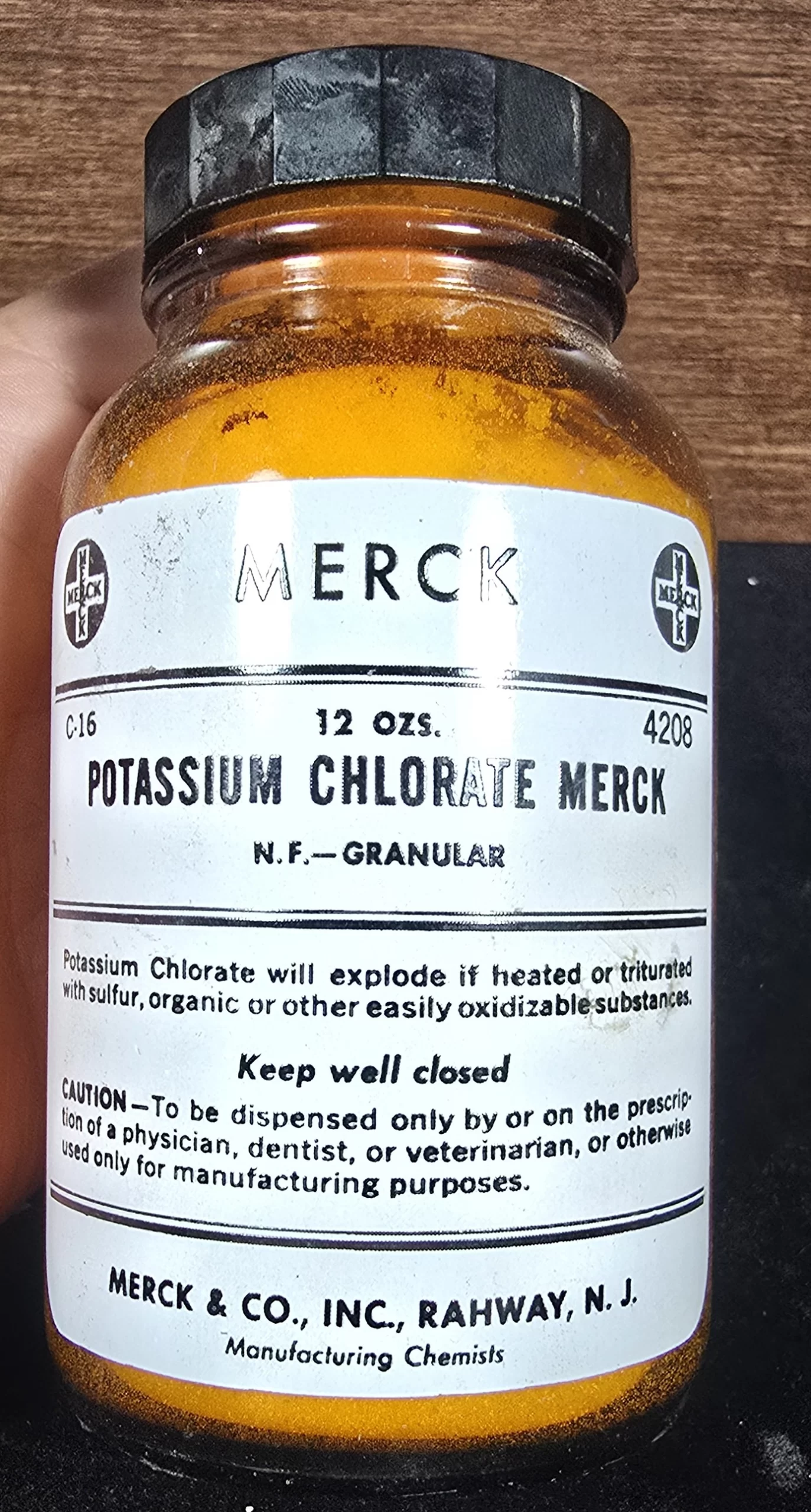
This amber glass pharmaceutical jar contains 12 ounces of granular potassium chlorate, manufactured by Merck & Co., Inc. of Rahway, New Jersey. The white label identifies the product as “N.F. – Granular” (National Formulary standard) and warns of its explosive properties if heated or combined with sulfur, organic matter, or oxidizable substances.
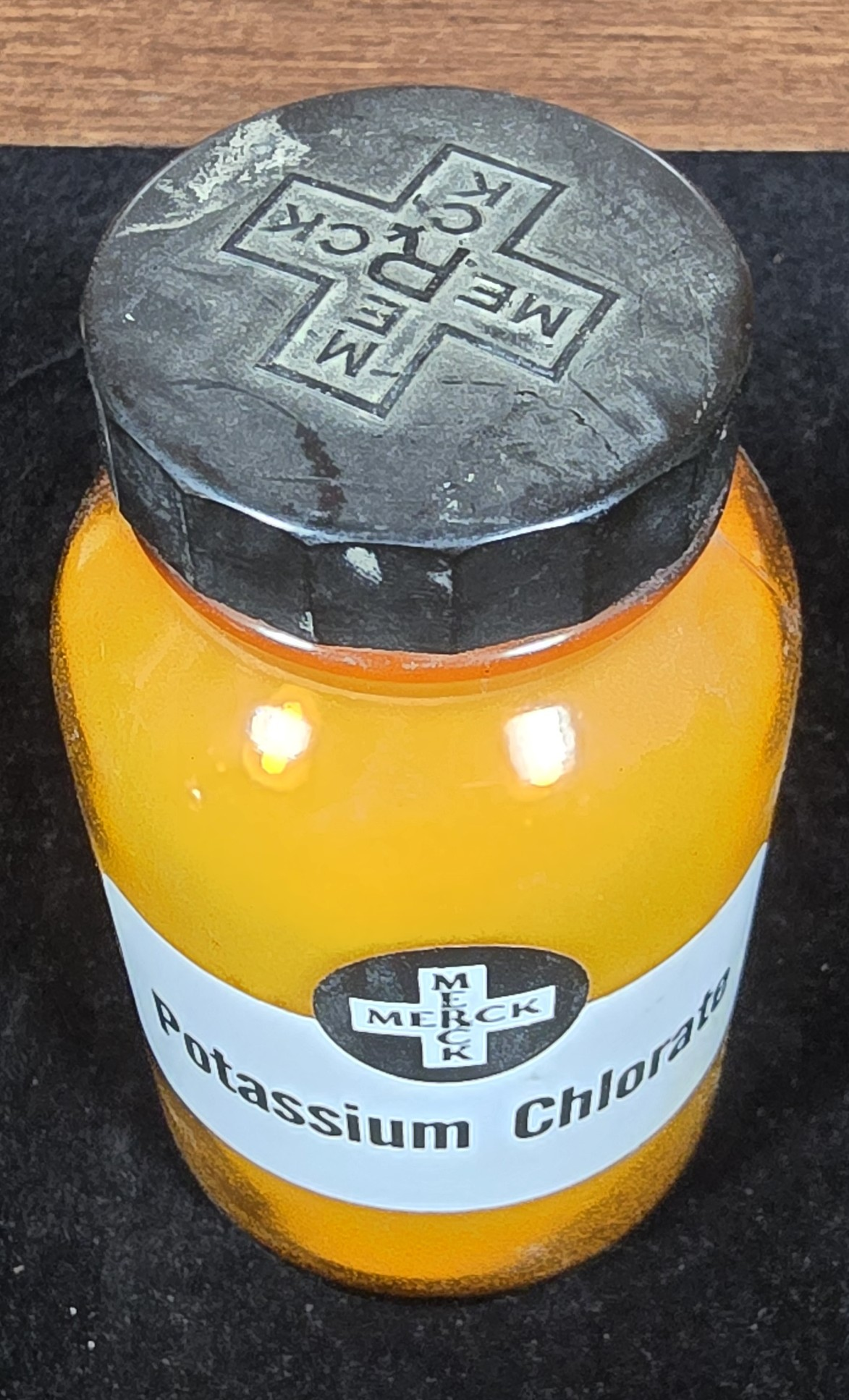
The jar is sealed with a black embossed Bakelite cap bearing the Merck cross logo. Such containers were used primarily for laboratory, manufacturing, and compounding pharmacy purposes during the early to mid-20th century.
Condition
Amber glass bottle with intact original Bakelite cap and legible label. Minor wear to cap and light scuffing to label consistent with storage age. Contents appear settled but undisturbed.
Gallery
Historical context
Merck & Co., founded in the U.S. in 1891, was one of the leading suppliers of pure chemicals and pharmaceuticals to laboratories and pharmacies. Potassium chlorate was historically used in medicine, matches, explosives, disinfectants, and pyrotechnics, though it carried significant dangers due to its reactivity.
In medicine, potassium chlorate had limited historical use as a throat lozenge ingredient and disinfectant, but its toxic and explosive nature led to discontinuation. By the mid-20th century, its primary use was restricted to industrial and manufacturing contexts, with strong cautionary labeling, as shown here.
Curious Facts, Ephemera, and Trivia
Potassium chlorate was once an ingredient in some early cough lozenges—before safer alternatives replaced it.
It was widely used in safety matches as an oxidizer.
Early pharmacists sometimes kept it in bulk jars like this one, with careful handling protocols.
Excerpt
“Potassium Chlorate will explode if heated or triturated with sulfur, organic, or other easily oxidizable substances. Keep well closed.”
Why it is in the Cabinet
This bottle represents the dual-use nature of many early pharmaceutical chemicals—substances that were once dispensed in medical contexts but later relegated to industry due to safety risks. Its intact packaging and prominent Merck branding make it an important artifact of pharmaceutical history.
Support Dr. Bebout’s Cabinet of Medical Curiosities
If you enjoy the history, the oddities, and the effort, help keep this cabinet open. Every little bit helps preserve and share the strange wonders of medicine's past.
Buy Me a Ko-fi ☕ Buy Me a Coffee ☕ Tip via PayPal 💵