
Title
Tincture No. 61 – Nux Vomica, N.F. (Eli Lilly & Company)
Author
Eli Lilly and Company
Image
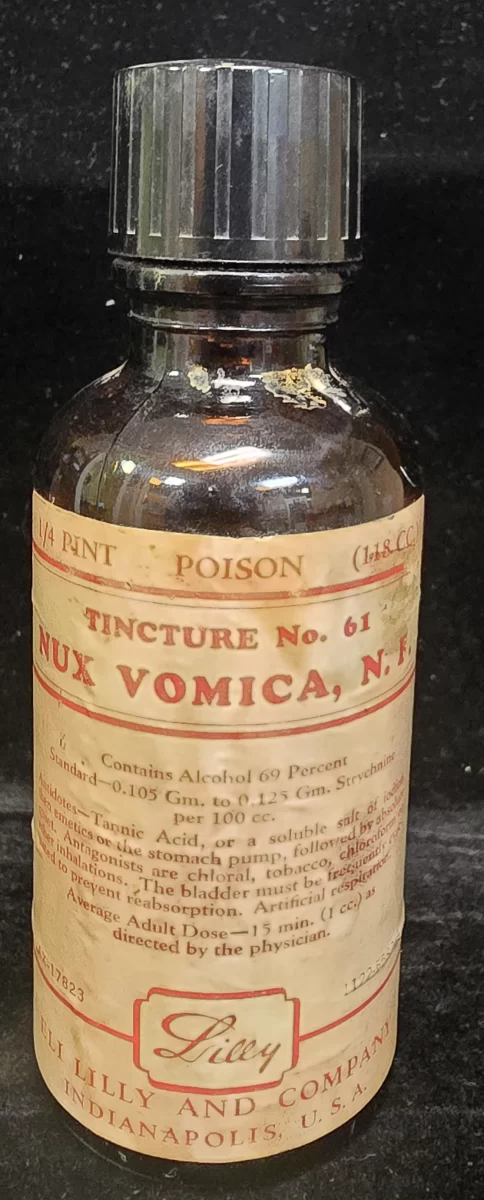
Description
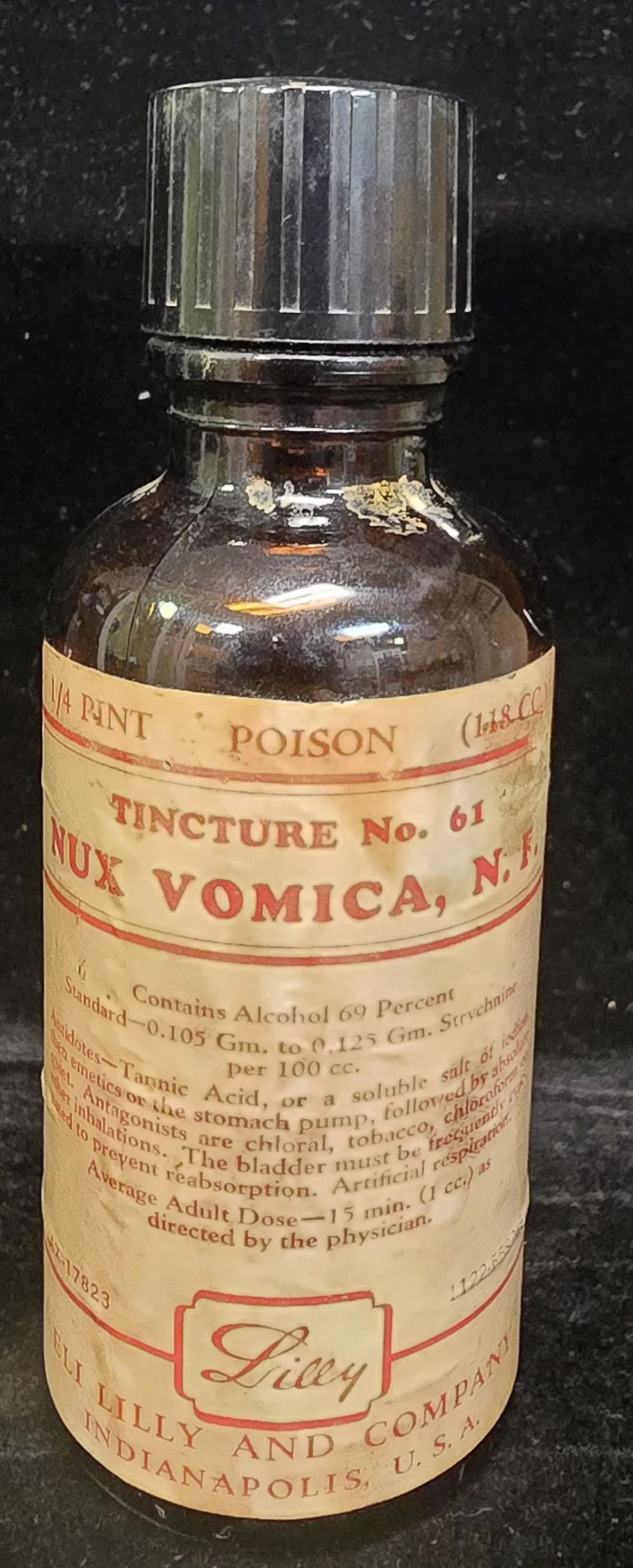
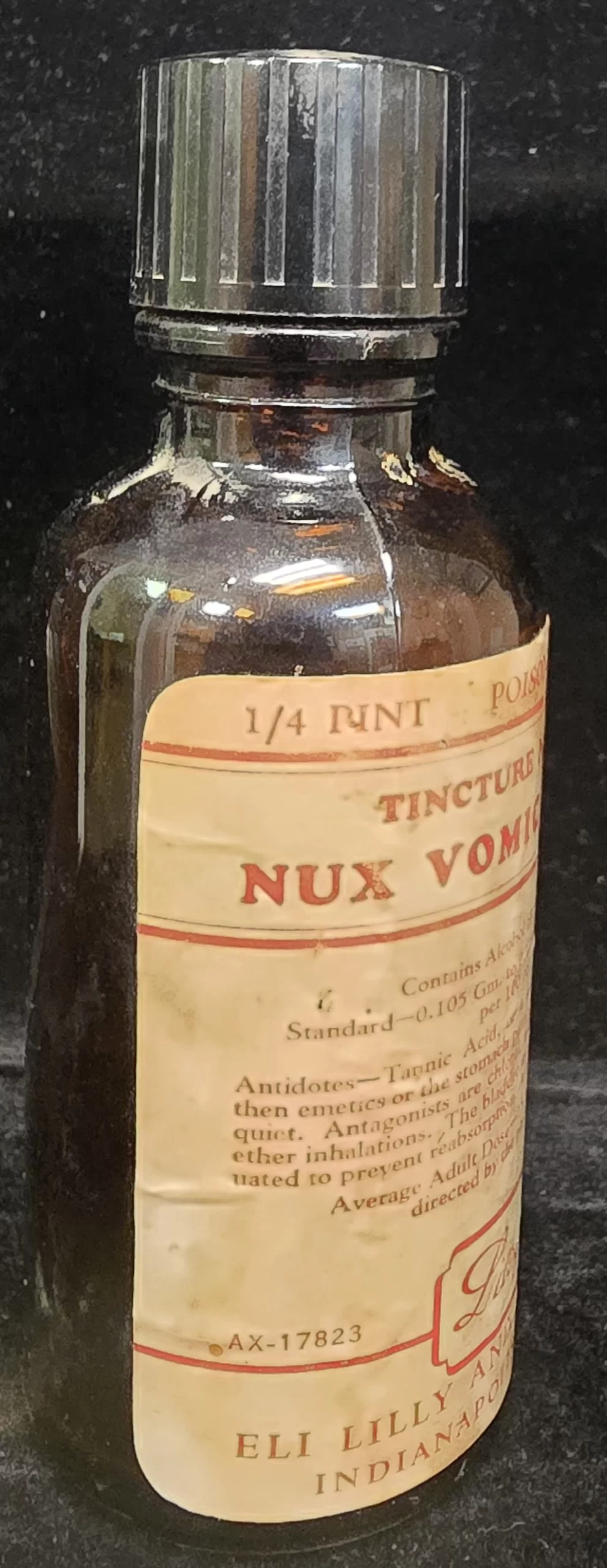
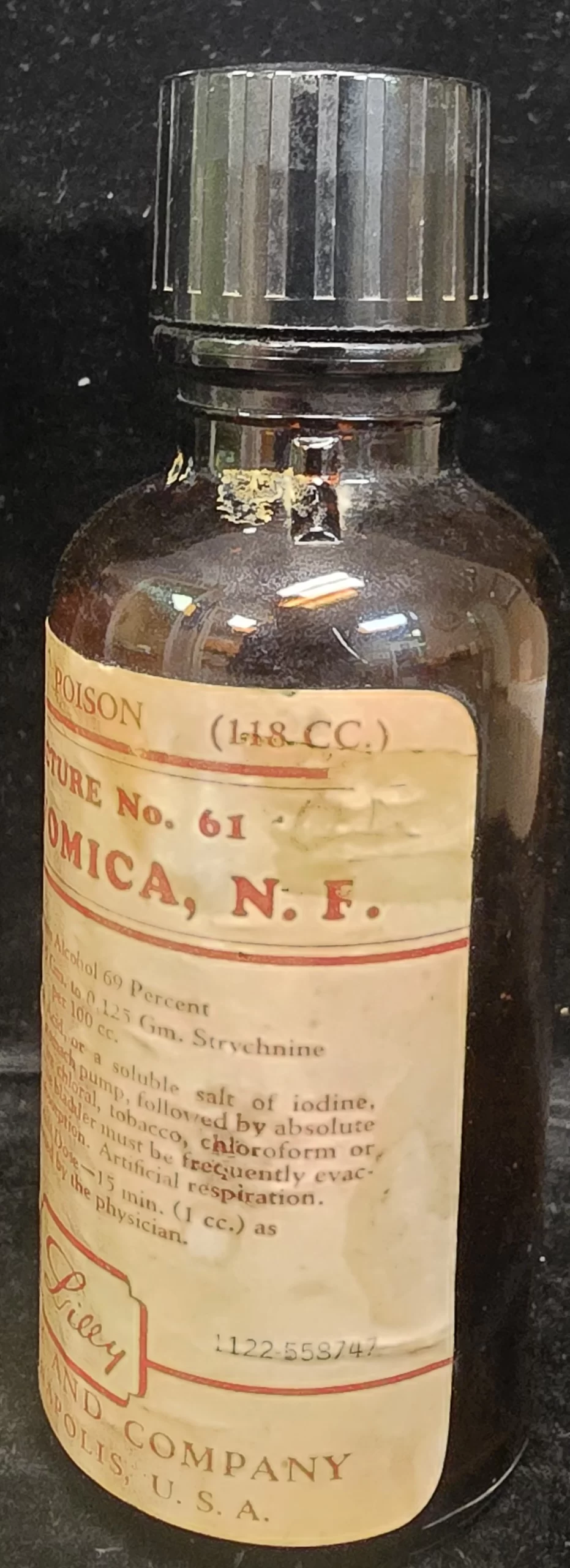
This is a labeled pharmaceutical tincture bottle produced by Eli Lilly and Company, Indianapolis, containing Tincture of Nux Vomica, N.F. (National Formulary). The bottle is marked “Poison” and indicates a volume of 1/4 pint. The formulation lists alcohol content at 69% and specifies a standardized concentration of strychnine alkaloid (approximately 0.105–0.125 grams per 100 cc).
The label includes detailed medical instructions and emergency treatment protocols, including antidotes such as tannic acid and recommendations for gastric evacuation, artificial respiration, and avoidance of reabsorption—reflecting a time when highly toxic alkaloids were routinely dispensed in controlled medicinal preparations.
Nux vomica, derived from the seeds of Strychnos nux-vomica, was historically used as a central nervous system stimulant, appetite stimulant, and treatment for digestive disorders, despite its narrow therapeutic index and well-known toxicity.
Condition
Original paper label intact with moderate age-related wear, toning, and minor staining. Glass bottle is intact with no visible cracks. Cap appears period-appropriate. Overall condition consistent with early–mid 20th century pharmaceutical use and storage.
Gallery
Historical context
Nux vomica preparations were widely used in late 19th and early 20th century medicine as stimulants and tonics. Strychnine, the active alkaloid, was employed in extremely small doses to treat conditions such as fatigue, digestive weakness, and even cardiac insufficiency.
By the early 20th century, pharmaceutical companies like Eli Lilly standardized these preparations under the National Formulary, ensuring consistent dosing. However, due to the extreme toxicity and risk of fatal overdose, such preparations fell out of favor and were largely abandoned as safer alternatives emerged.
Curious Facts, Ephemera, and Trivia
- Strychnine was once considered a “tonic” in low doses—today it’s better known as a poison used in rodent control.
- The inclusion of antidote instructions directly on the label reflects the real danger physicians and pharmacists dealt with daily.
- The “Poison” designation was part of early regulatory efforts before modern FDA labeling standards.
- Nux vomica also appears in homeopathy today—at doses so diluted it would make this bottle laugh.
Excerpt
“Antidotes—Tannic Acid… followed by emetics or the stomach pump… Artificial respiration…”
(Translation: “Good luck.”)
Why it is in the Cabinet
This is exactly the kind of artifact that tells the truth about early medicine—powerful drugs, minimal safety margin, and a physician expected to know exactly what they were doing. It’s not quackery. It’s legitimate medicine… just playing with fire.
Support Dr. Bebout’s Cabinet of Medical Curiosities
If you enjoy the history, the oddities, and the effort, help keep this cabinet open. Every little bit helps preserve and share the strange wonders of medicine's past.
Buy Me a Ko-fi ☕ Buy Me a Coffee ☕ Tip via PayPal 💵