
Title
Tentamen Medicum de Febribus Putridis
Author
Spiritus Josephus Julianus Robert
Image
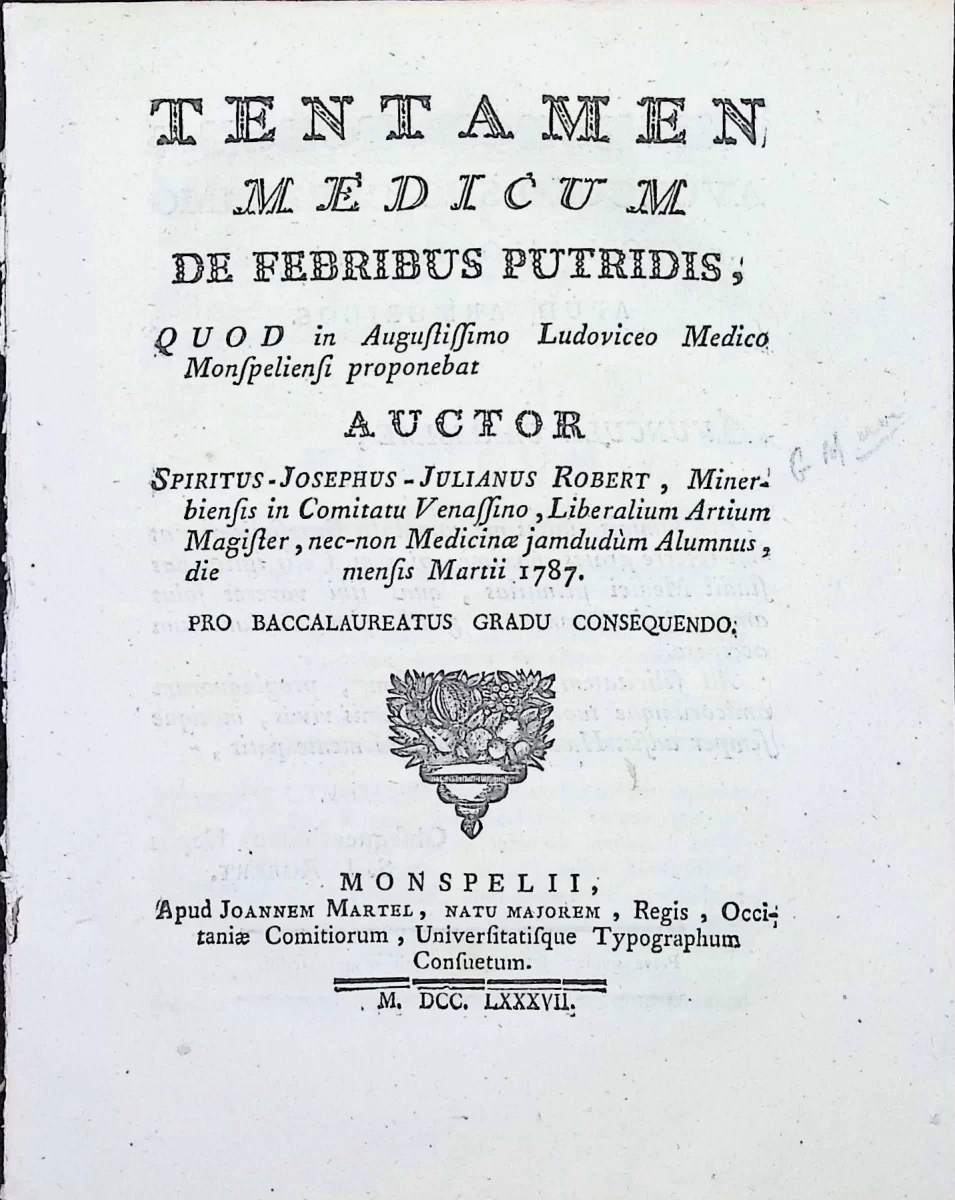
Description
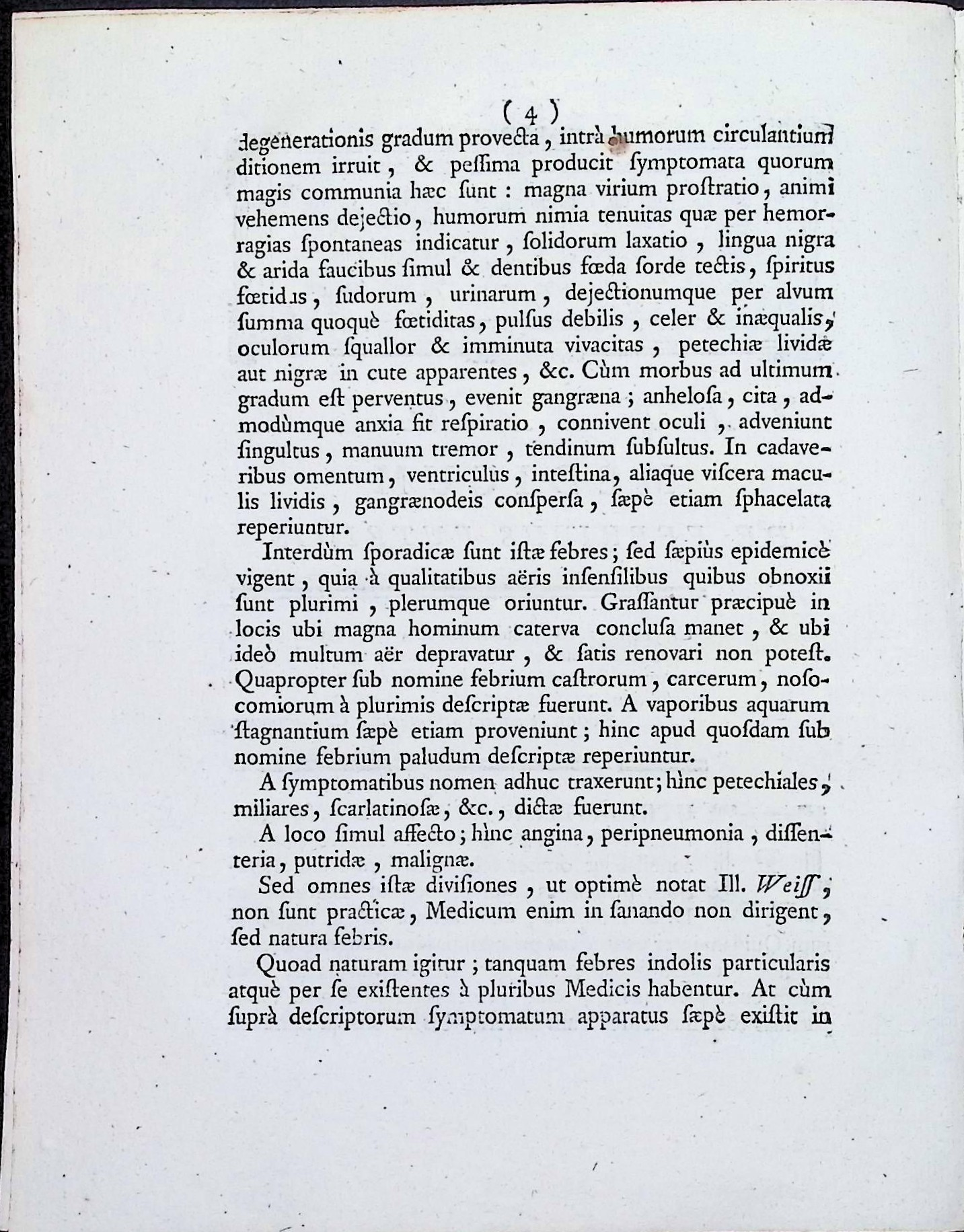
An academic medical dissertation submitted at the University of Montpellier in 1787 for the attainment of the Bachelor of Medicine degree. Written in Latin and publicly defended, Tentamen Medicum de Febribus Putridis addresses the nature, causes, classification, and treatment of so-called “putrid fevers,” a broad diagnostic category used in the 18th century to describe severe, often fatal illnesses marked by systemic decay, delirium, hemorrhage, and gangrene.
Rather than treating putrid fever as a single disease, the author argues for multiple distinct forms arising from different corrupted humors—bilious, pituitous (phlegmatic), and sanguine or inflammatory—each requiring different therapeutic approaches. The dissertation reflects pre-germ-theory medical reasoning grounded in humoral pathology, environmental miasma, and clinical observation, with detailed discussion of symptoms, prognosis, and treatment including emetics, purgatives, bloodletting, acids, Peruvian bark, wine, and regimen control.
Condition
Original 18th-century printed dissertation pamphlet. Pages show expected age-related toning, light foxing, and minor handling wear consistent with academic use. Text remains legible throughout. No evidence of modern rebinding or facsimile reproduction.
Gallery
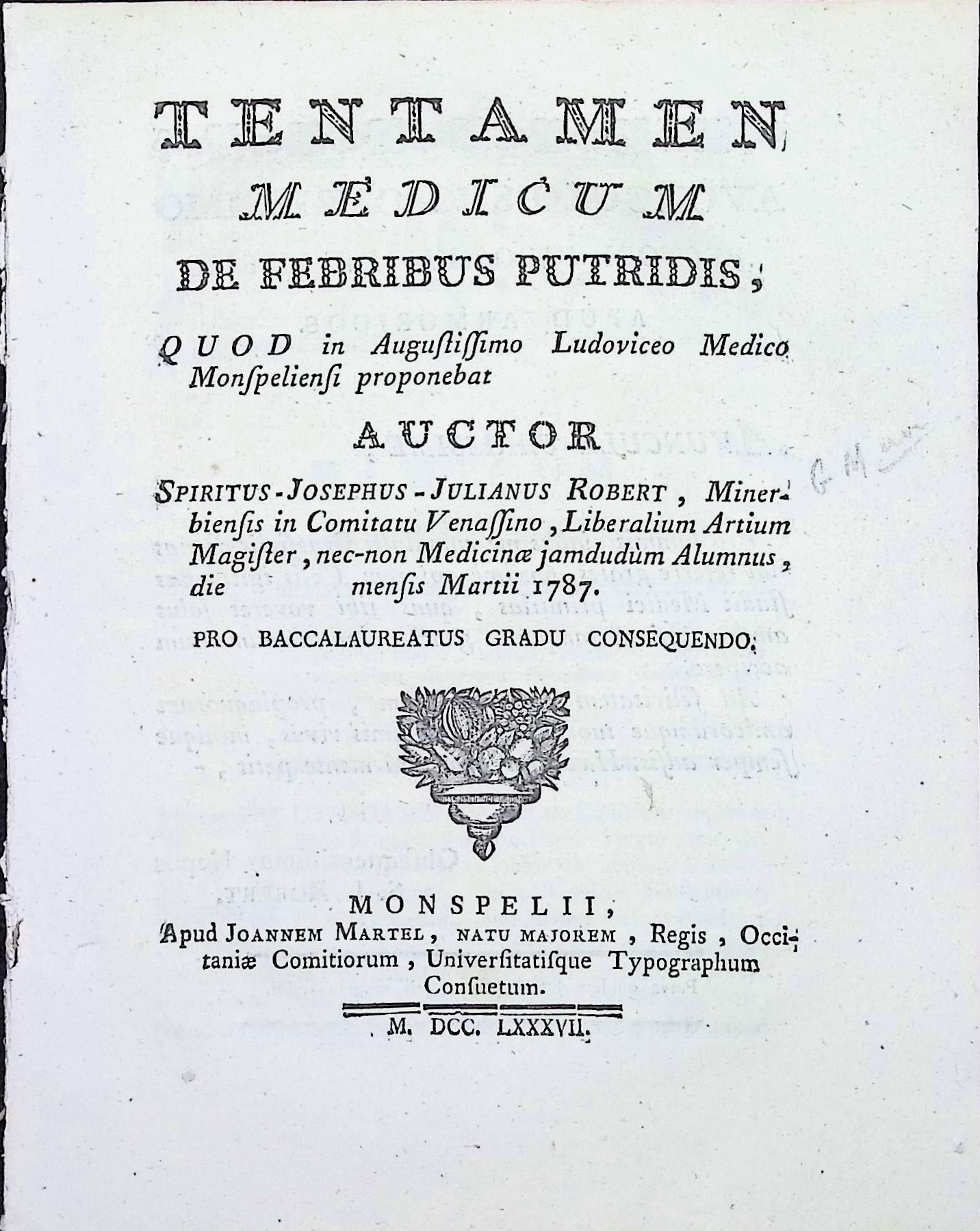
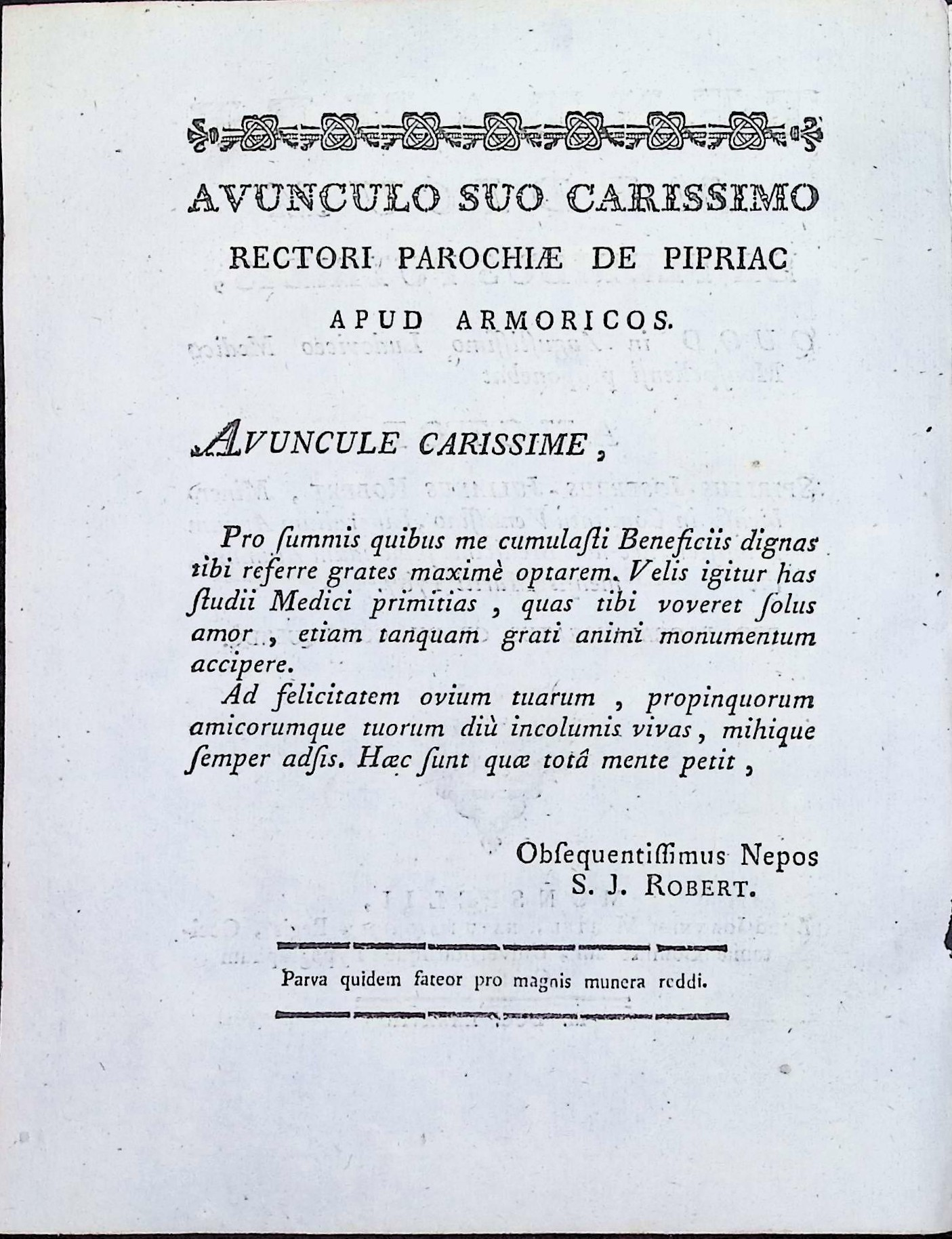
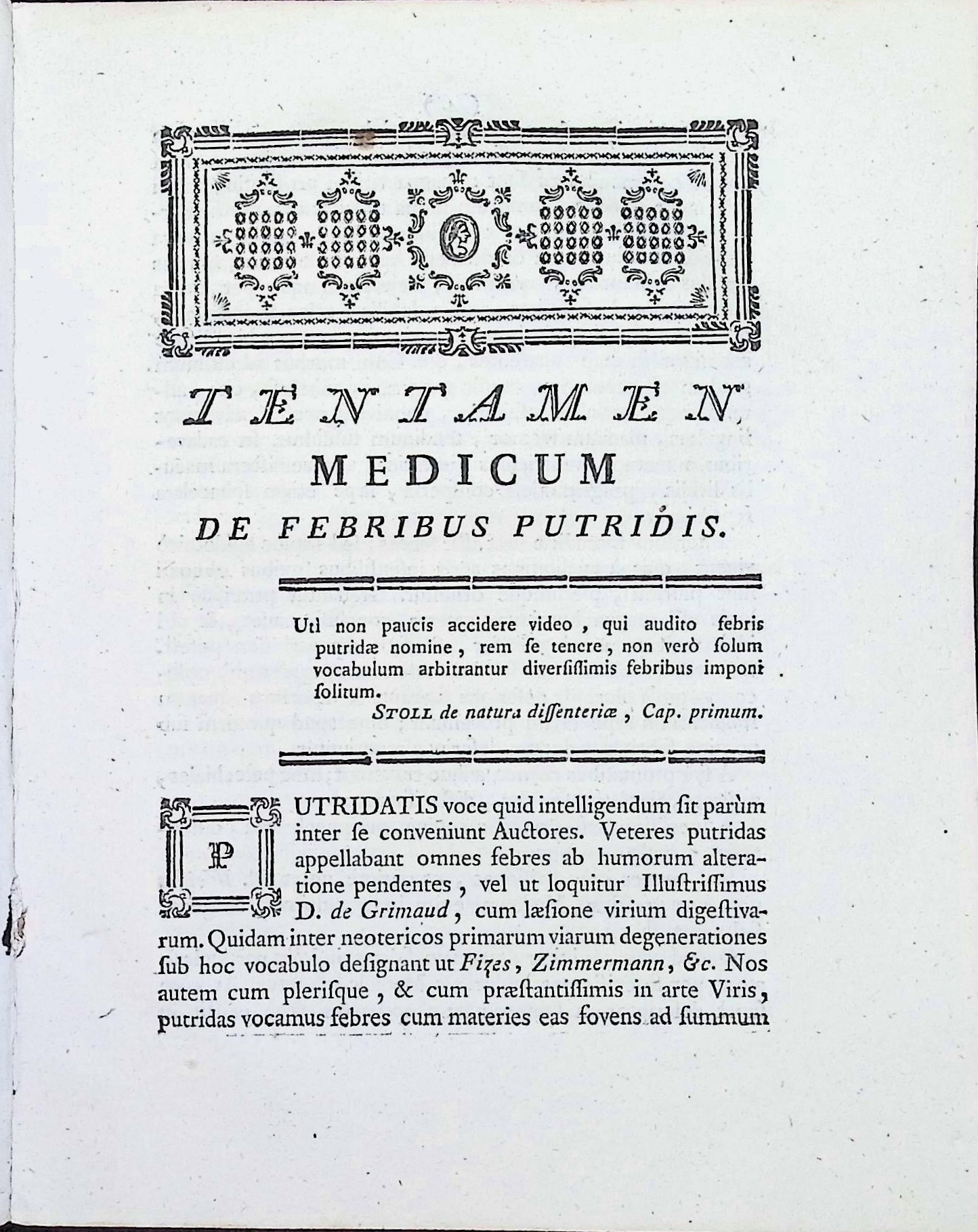
Historical context
Putrid fevers were a central concern of 18th-century medicine, particularly in hospitals, prisons, military camps, and crowded urban environments. Before the emergence of bacteriology, physicians interpreted these illnesses through humoral imbalance and environmental corruption, often attributing outbreaks to stagnant air, marsh vapors, dietary excess, and emotional disturbance. This dissertation reflects a transitional period in medical thought, immediately preceding modern infectious disease theory.
Curious Facts, Ephemera, and Trivia
Montpellier was one of Europe’s most influential medical schools in the 18th century.
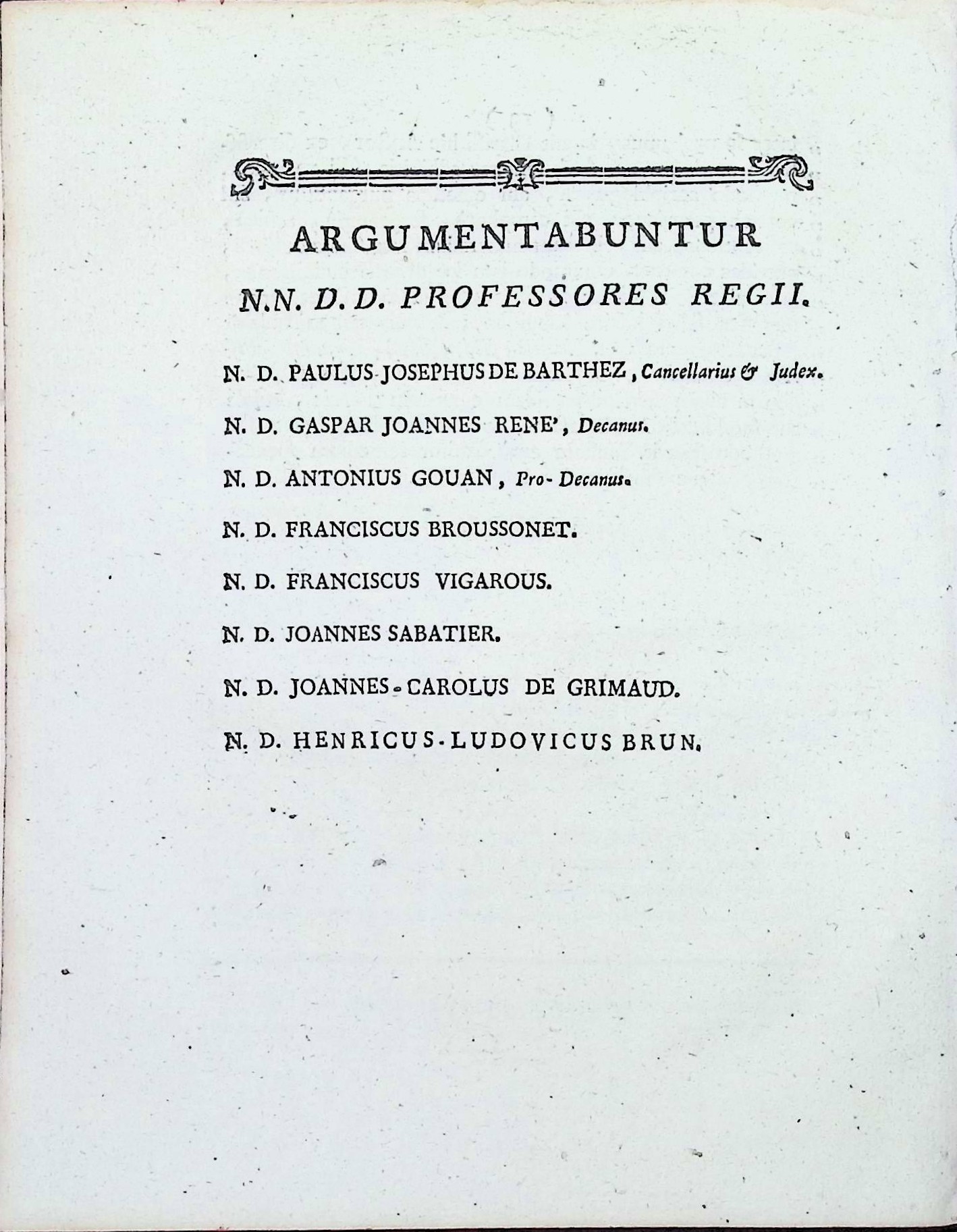
The dissertation was publicly defended before named faculty members, listed at the conclusion of the work.
“Putrid fever” encompassed what we now recognize as typhus, sepsis, dysentery, and other severe infections.
The author explicitly warns against using a single standardized treatment for all fevers—an unusually cautious position for the era.
Excerpt
“It is a very dangerous error to consider putrid fevers as one and the same disease, always requiring the same method of treatment… therefore no single specific remedy can be assigned for all putrid fevers.”
(English translation from the original Latin dissertation, 1787)
Why it is in the Cabinet
This dissertation captures medicine in transition—where careful observation begins to challenge rigid doctrine, yet predates any understanding of microbial causation. It illustrates how physicians reasoned about epidemic disease, decay, and systemic failure before modern pathology existed, making it a key artifact for understanding the intellectual foundations of infectious disease medicine.
Supporting Documents
Support Dr. Bebout’s Cabinet of Medical Curiosities
If you enjoy the history, the oddities, and the effort, help keep this cabinet open. Every little bit helps preserve and share the strange wonders of medicine's past.
Buy Me a Ko-fi ☕ Buy Me a Coffee ☕ Tip via PayPal 💵