
Title
Zinc Sulfate – Merck (8 oz. U.S.P. Granular)
Author
Merck & Co., Inc.
Image
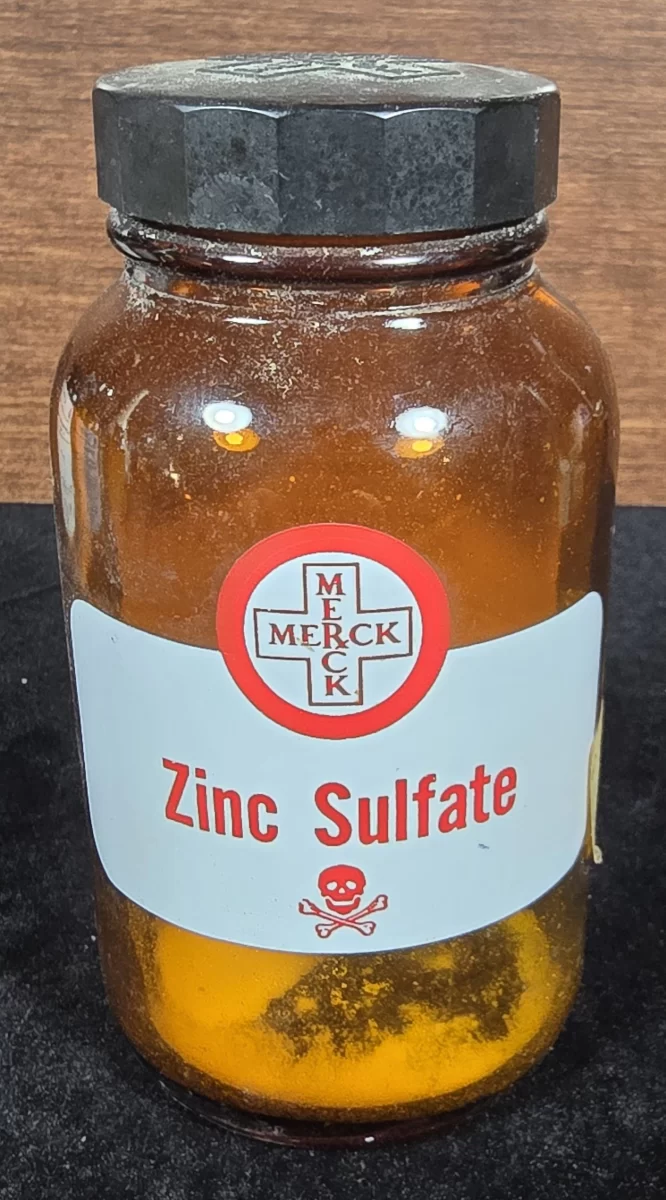
Description
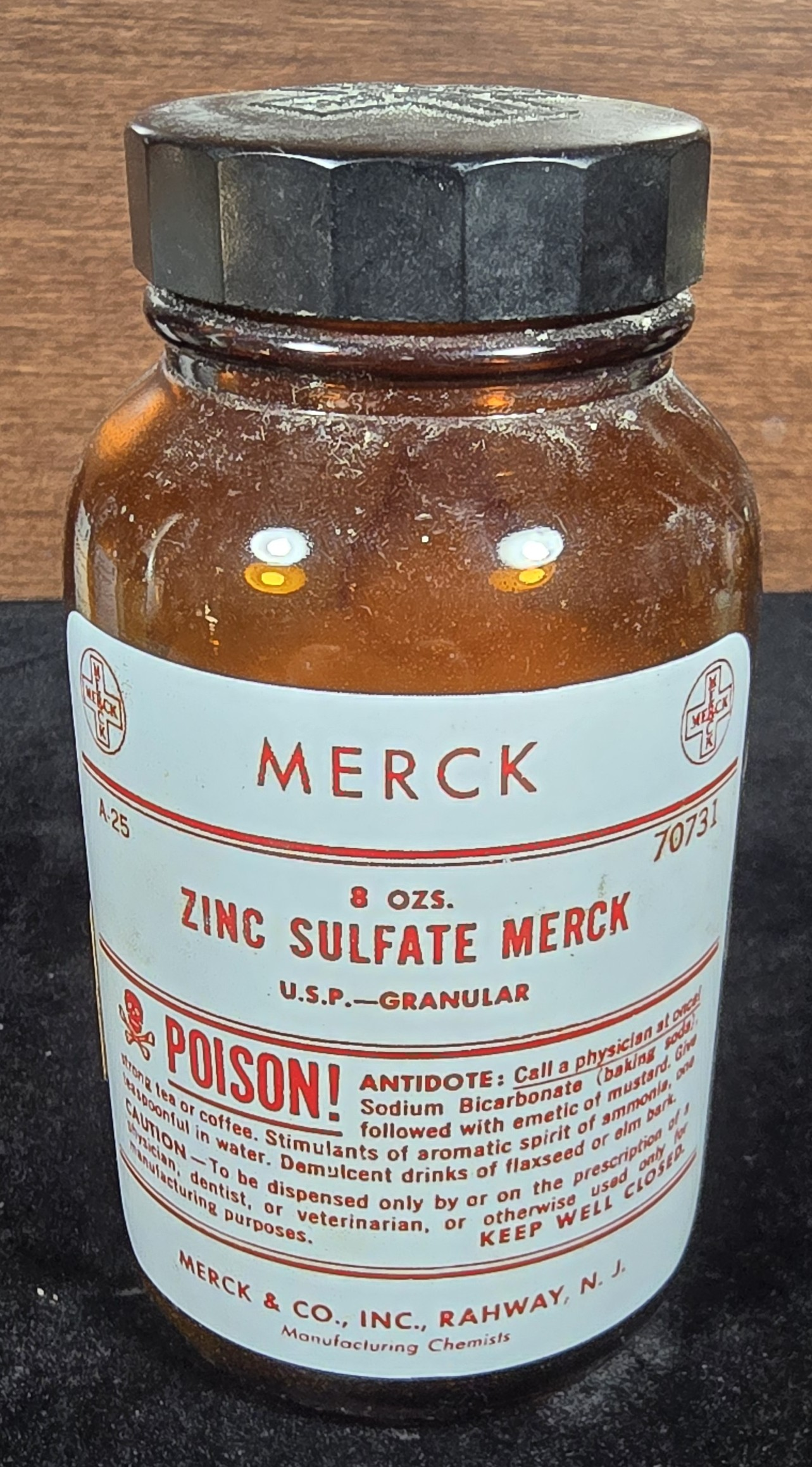
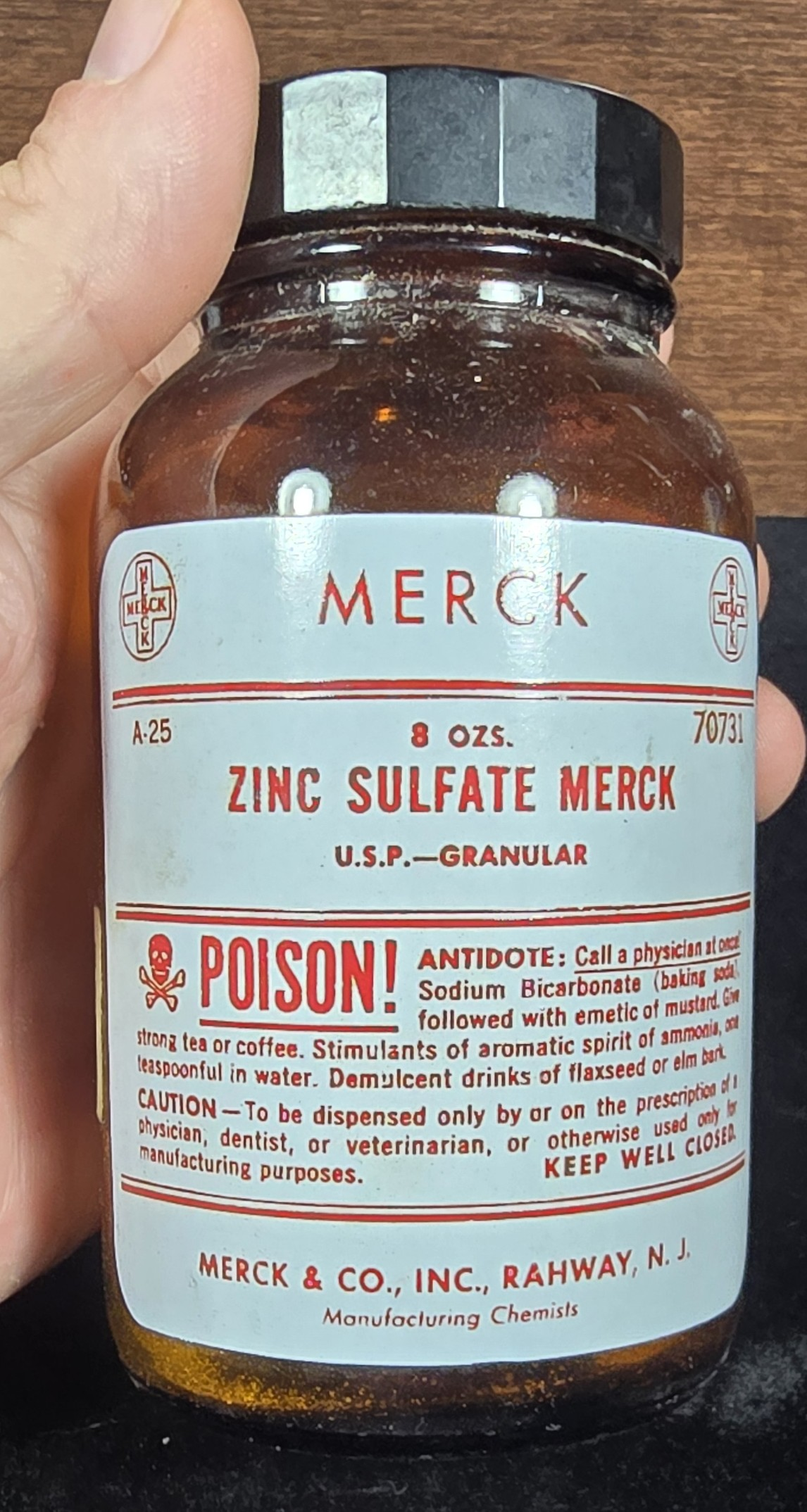
This amber glass pharmaceutical bottle from Merck & Co., Inc. contains granular zinc sulfate (U.S.P. grade) and holds 8 ounces of material. The bold red and white label warns emphatically: “POISON!”, and provides antidote instructions involving sodium bicarbonate, emetic of mustard, and various stimulants or demulcents.
The front label is marked with catalog number 70731 and prominently features the Merck logo in a red cross emblem, also embossed into the black Bakelite cap. The bottle’s label states it was to be dispensed only by prescription of a physician, dentist, or veterinarian. It was manufactured in Rahway, New Jersey, by Merck & Co., Inc.
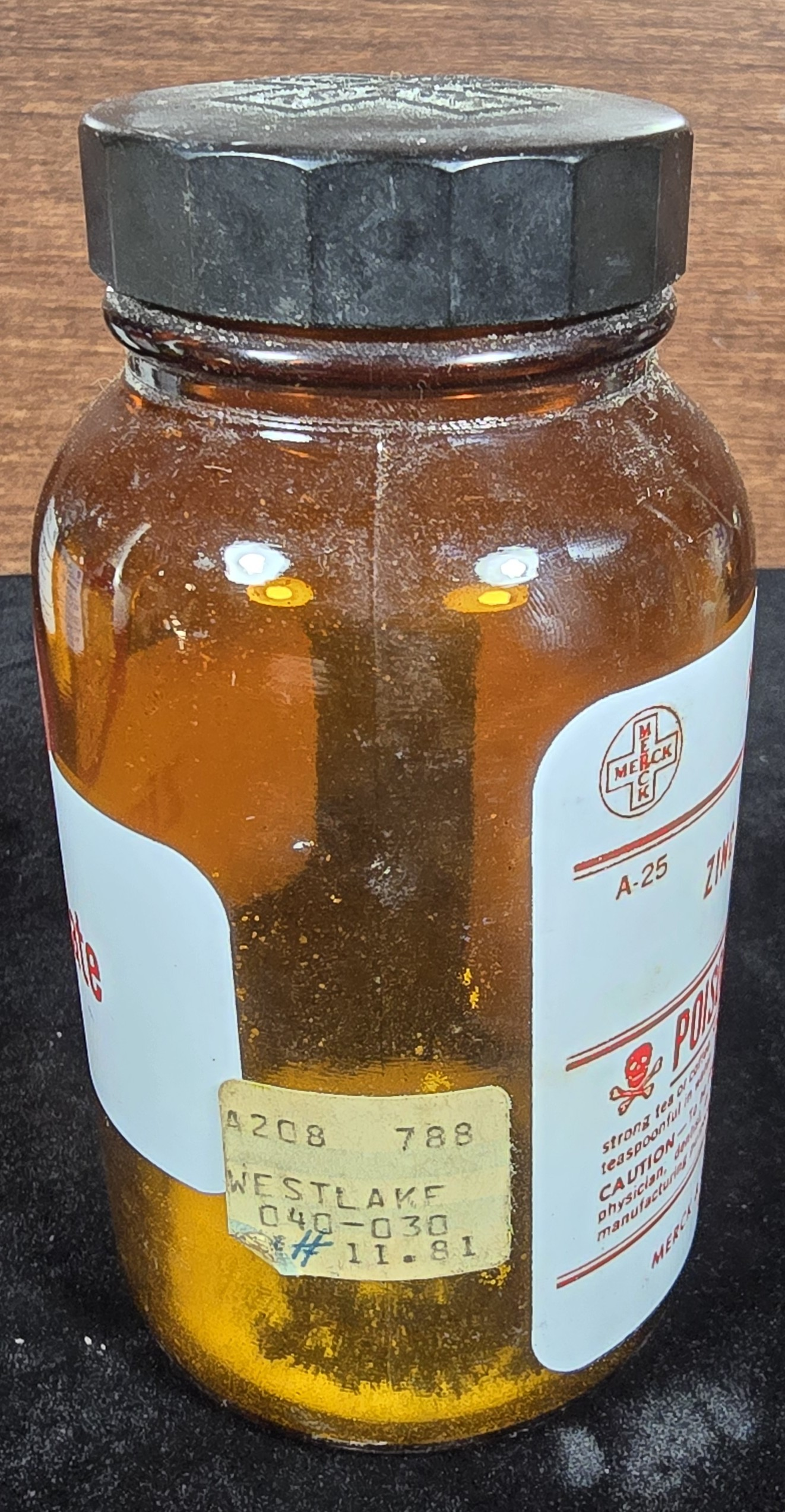
A yellow paper label reading “WESTLAKE 040-030 #11.81” likely dates this bottle’s institutional use to November 1981.
Condition
ery good overall. Minor residue and external dust on bottle, light fading and minor abrasion on the label. Cap remains tightly affixed. Internal compound appears partially solidified from age.
Gallery

Historical context
Zinc sulfate has been used for centuries in both industrial and medicinal settings. In medicine, it has served as an astringent, topical antiseptic, and treatment for zinc deficiency. During the mid-20th century, Merck was among the leading U.S. chemical and pharmaceutical suppliers producing lab-grade and USP chemicals for hospitals and medical professionals. This bottle’s packaging, warning language, and design reflect chemical safety standards and pharmaceutical practices of the late 20th century.
Curious Facts, Ephemera, and Trivia
The embossed cap features the Merck name in a cross formation—an iconic pharmaceutical branding device of the time.
Zinc sulfate, though potentially toxic in large doses, was once used in eye drops and lozenges, and is still used today in some formulations.
The “Westlake” sticker suggests this bottle may have belonged to a hospital, research institution, or compounding pharmacy.
Excerpt
POISON! Antidote: Call a physician at once. Sodium Bicarbonate (baking soda), followed with emetic of mustard. Give strong tea or coffee. Stimulants of aromatic spirit of ammonia, one teaspoonful in water. Demulcent drinks of flaxseed or elm bark.
Why it is in the Cabinet
This bottle represents the transitional era of pharmaceutical chemistry—bridging the gap between early 20th-century formulations and modern lab safety protocols. Its intact labeling, dated institutional sticker, and stark poison warning make it a standout example of mid-late 20th century medical packaging worthy of preservation and display.
Support Dr. Bebout’s Cabinet of Medical Curiosities
If you enjoy the history, the oddities, and the effort, help keep this cabinet open. Every little bit helps preserve and share the strange wonders of medicine's past.
Buy Me a Ko-fi ☕ Buy Me a Coffee ☕ Tip via PayPal 💵