
Title
Zetar: Colloidal Crude Coal Tar for Dermatologic Use
Author
N/A
Image
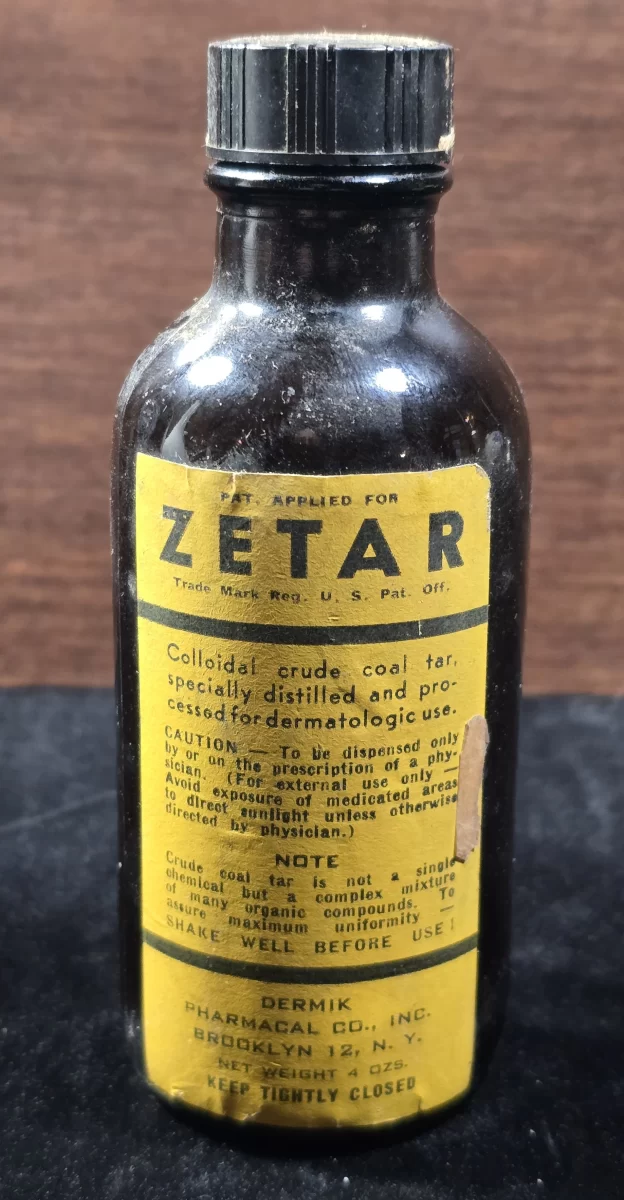
Description
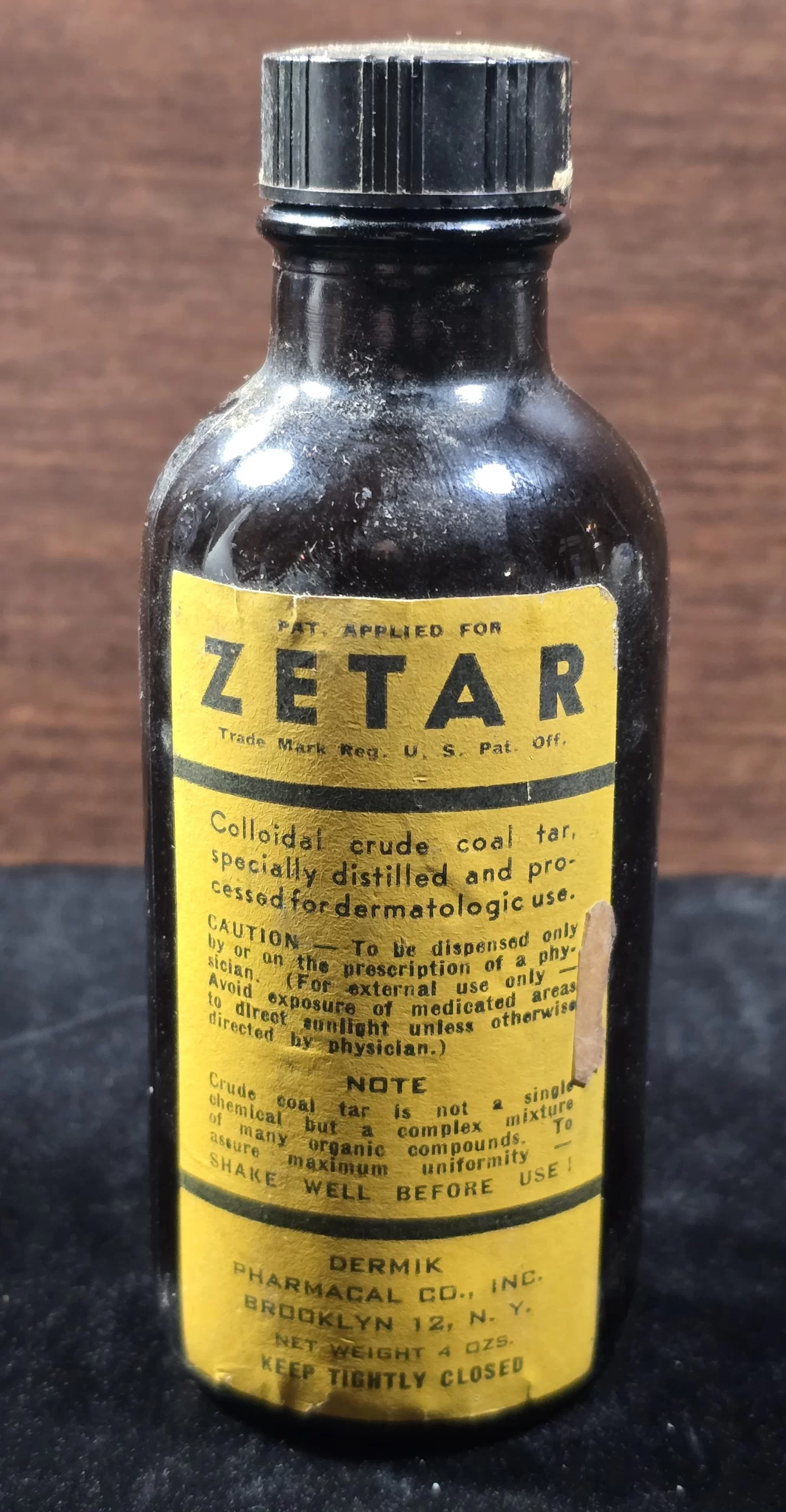
This 4 oz glass bottle of Zetar was manufactured by Dermik Pharmacal Co., Inc. in Brooklyn, NY, and contains colloidal crude coal tar, specially distilled and processed for external dermatologic use. Labeled “Pat. Applied For,” this bottle likely dates from the 1940s to early 1960s. Zetar was used to treat chronic skin conditions such as psoriasis, eczema, and seborrheic dermatitis.
The label includes strict warnings for physician oversight and sunlight avoidance due to the photosensitizing effects of coal tar. Patients were instructed to shake the bottle well before use to redistribute the suspended tar particles.
Condition
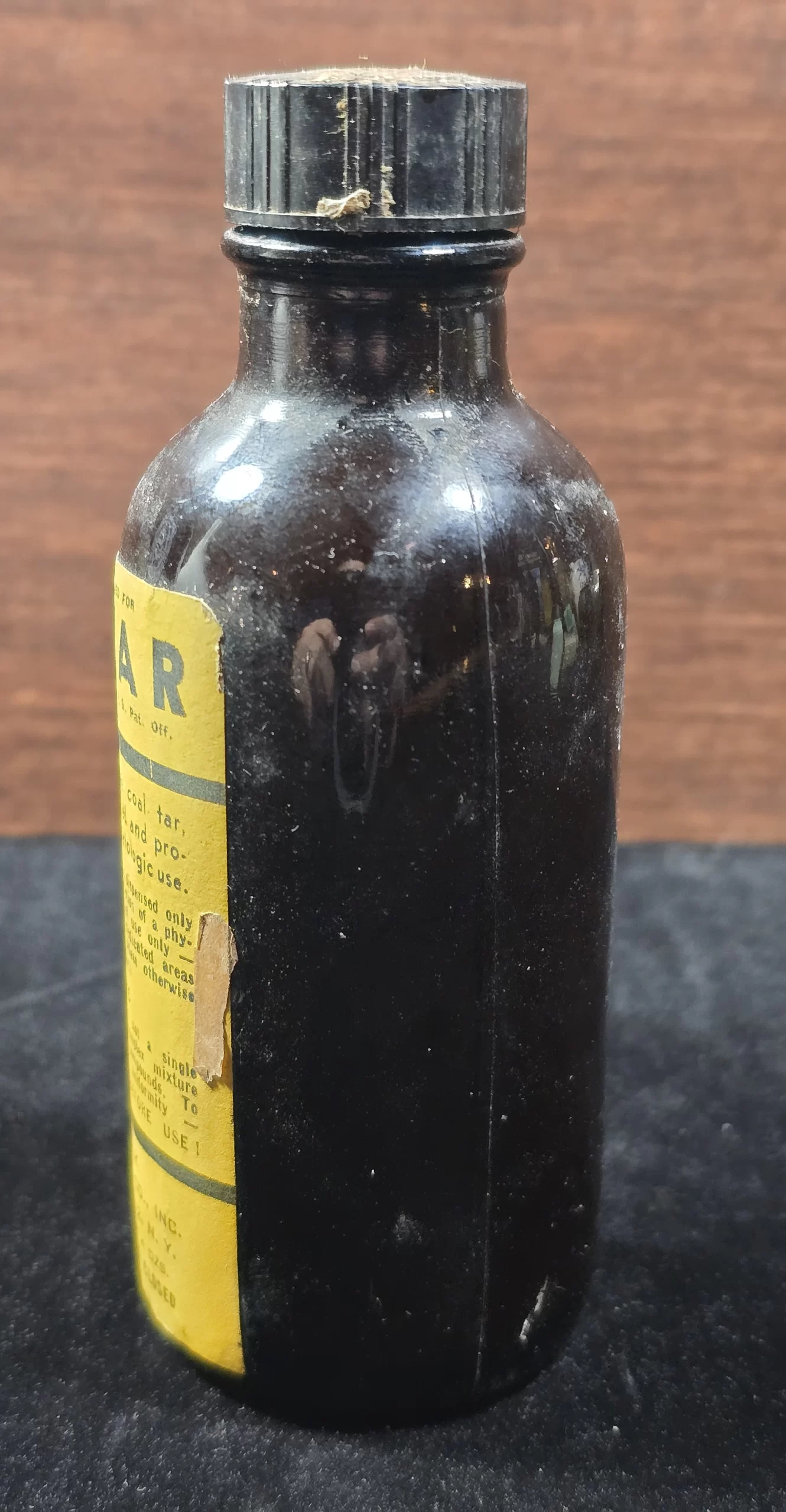
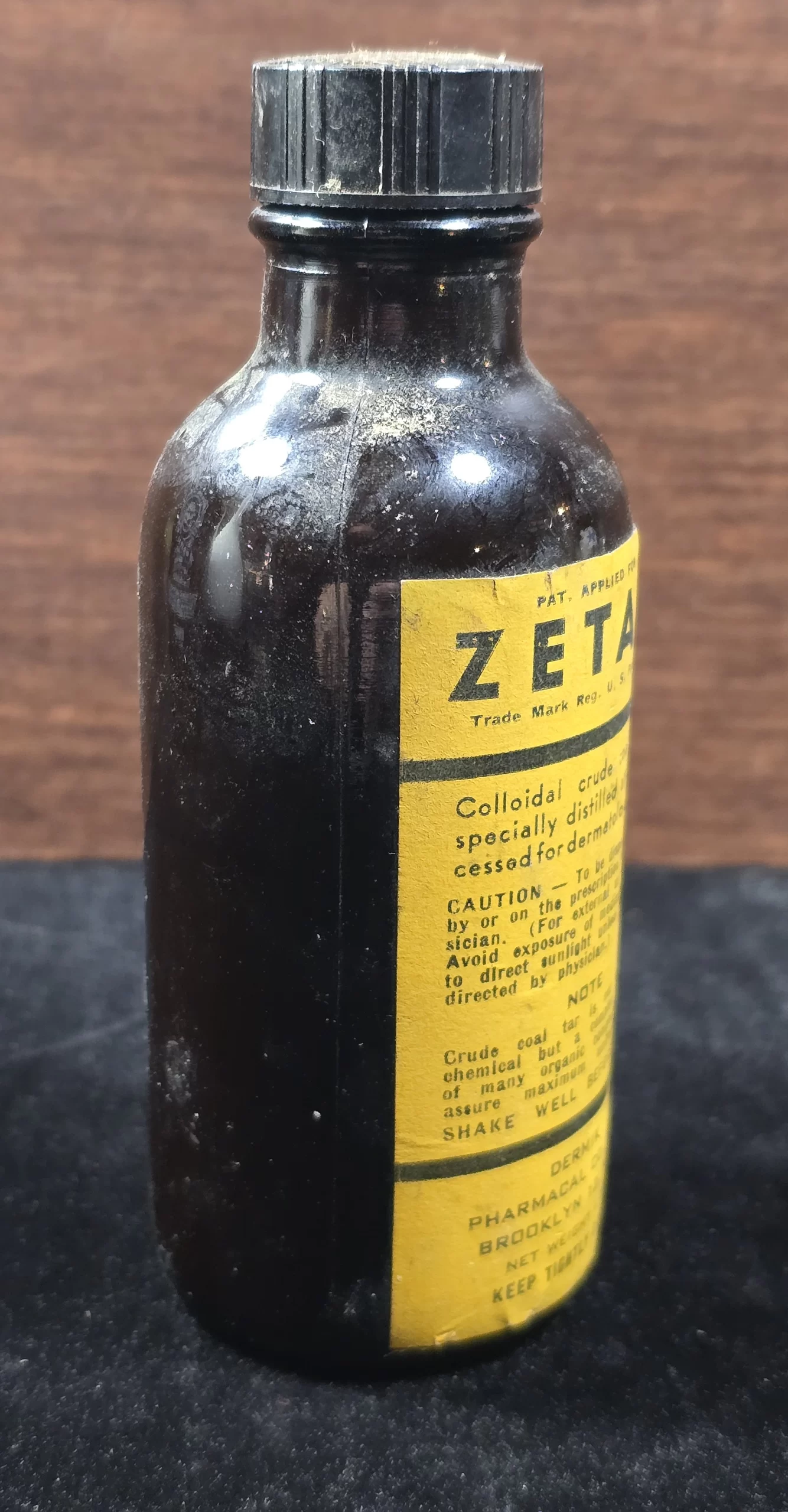
The dark amber glass bottle is intact with its original black screw cap. The yellow paper label is largely legible, with minor peeling and discoloration on one edge. No visible contents remain. A strong example of mid-20th-century dermatologic packaging.
Gallery
Historical context
Coal tar preparations date back to the 1800s and were widely used throughout the 20th century for their anti-inflammatory and antipruritic properties. While effective, crude coal tar fell out of favor in many clinical settings due to its messiness, odor, and concerns about carcinogenicity. Nevertheless, it remains part of the WHO’s List of Essential Medicines for certain skin conditions.
Dermik was later absorbed into larger pharmaceutical companies, and Zetar is no longer in production.
Curious Facts, Ephemera, and Trivia
Coal tar is a byproduct of coal processing and contains hundreds of chemical compounds, including polycyclic aromatic hydrocarbons (PAHs).
Products like Zetar were often used in combination with UV therapy, known as Goeckerman treatment.
The use of a zip code format “Brooklyn 12, N.Y.” dates this to pre-1963, before the modern ZIP Code system.
Excerpt
“Crude coal tar is not a single chemical but a complex mixture of many organic compounds. To assure maximum uniformity—Shake well before use!“
Why it is in the Cabinet
This bottle of Zetar is a quintessential example of early 20th-century dermatologic pharmacology, offering a glimpse into a time when potent natural byproducts like coal tar were staples of medical treatment. It represents a transitional era in medicine—bridging folk remedies and industrial pharmacotherapy.
Support Dr. Bebout’s Cabinet of Medical Curiosities
If you enjoy the history, the oddities, and the effort, help keep this cabinet open. Every little bit helps preserve and share the strange wonders of medicine's past.
Buy Me a Ko-fi ☕ Buy Me a Coffee ☕ Tip via PayPal 💵