
Title
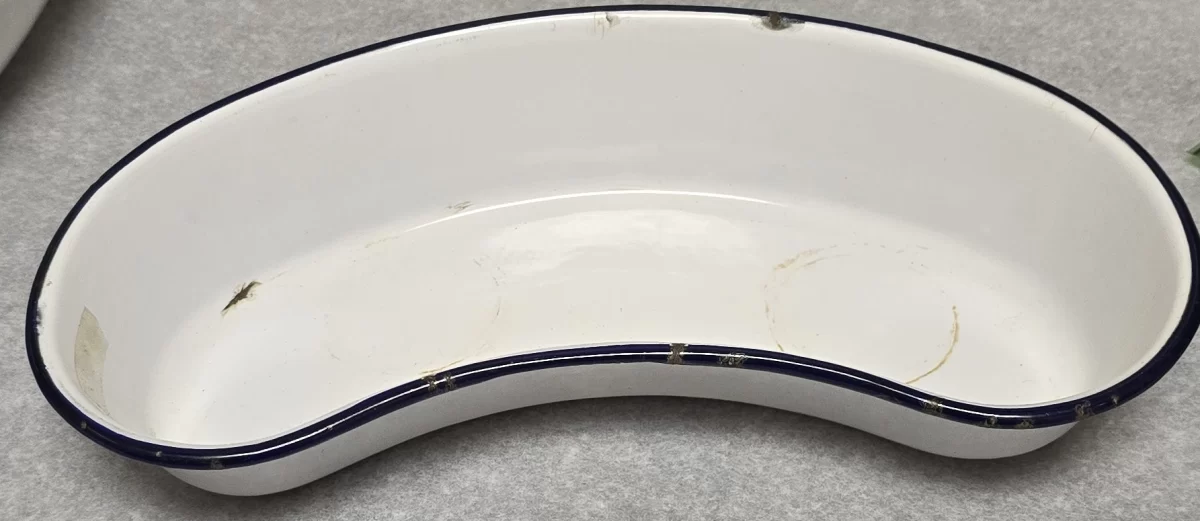
White Enamel Emesis Basin (Kidney Dish)
Image
Description
This kidney-shaped emesis basin is a classic example of mid-20th-century hospital ware. Made from heavy enamel-coated steel with a curved design to fit comfortably against a patient’s face, neck, or torso, these basins were used to collect vomit, sputum, blood, or other bodily fluids during medical care.
The rim is finished in cobalt blue—typical of older enamel medicalware—and the white body has scattered enamel chips, oxidation, and wear from extensive use and repeated sterilization.
Condition
Sturdy enamel-over-metal construction. Features include:
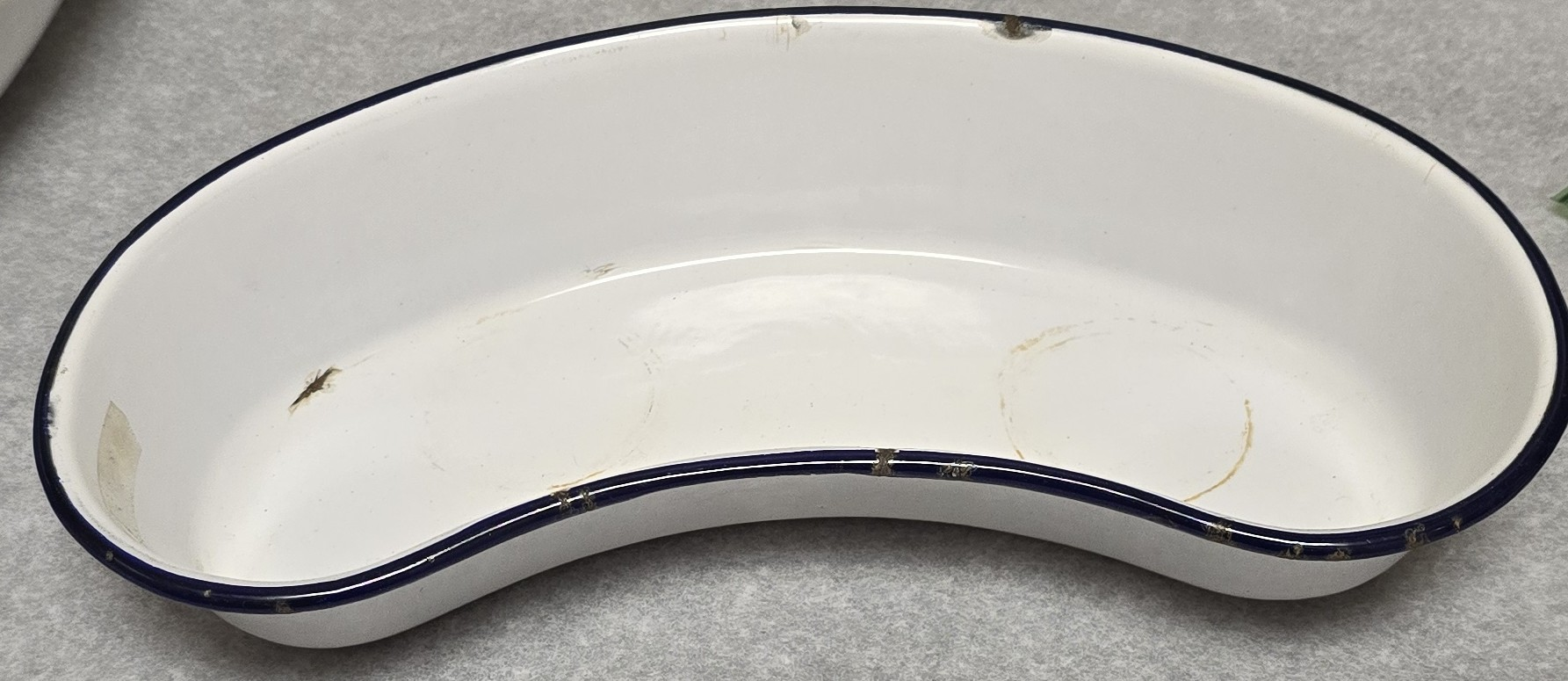
Moderate chipping and oxidation at rim and interior
Adhesive label residue in several spots
No cracks or deep structural damage
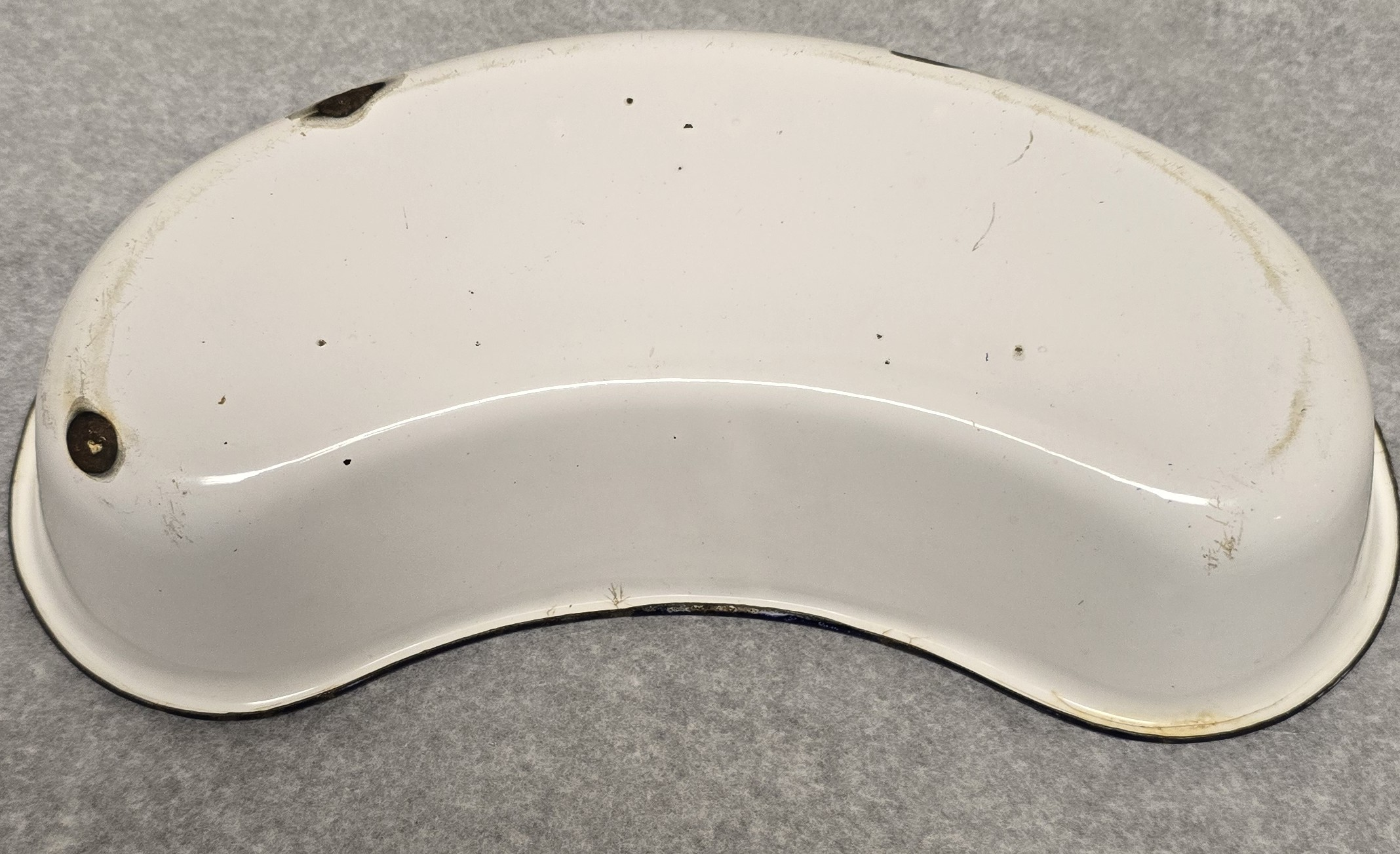
Base shows typical signs of wear and surface rust
Gallery
Historical context
The emesis basin became ubiquitous in both surgical and bedside care from the late 1800s through the 1950s. Its shape is not just ergonomic—it allows the basin to be securely held during vomiting or oral suctioning. Before disposable plastic basins became standard, durable enamel or stainless steel versions like this were washed and reused endlessly.
Often kept at the bedside, in surgical kits, or attached to anesthesia carts, emesis basins were a quiet workhorse in all settings from military field hospitals to rural clinics.
Curious Facts, Ephemera, and Trivia
The word “emesis” comes from the Greek word for vomiting.
In some surgical wards, enamel emesis basins were also used to rinse instruments mid-procedure.
Nurses would sometimes refer to them colloquially as “vomit boats.”
Chips in the enamel could harbor bacteria and eventually led to a move toward stainless steel and disposable plastics in the mid-20th century.
Why it is in the Cabinet
Though unassuming, the emesis basin was an essential part of daily hospital life—quietly present during trauma, surgery, chemotherapy, and basic bedside care. This enamel example reflects an era of sterilized, reusable gear and hands-on nursing care. It is a reminder that even the most mundane tools carried great weight in the human experience of illness and healing.
Support Dr. Bebout’s Cabinet of Medical Curiosities
If you enjoy the history, the oddities, and the effort, help keep this cabinet open. Every little bit helps preserve and share the strange wonders of medicine's past.
Buy Me a Ko-fi ☕ Buy Me a Coffee ☕ Tip via PayPal 💵