
Title
Weighted Vaginal Speculum (Graves-Style, Vintage OB/GYN Tool)
Author
n/A
Image
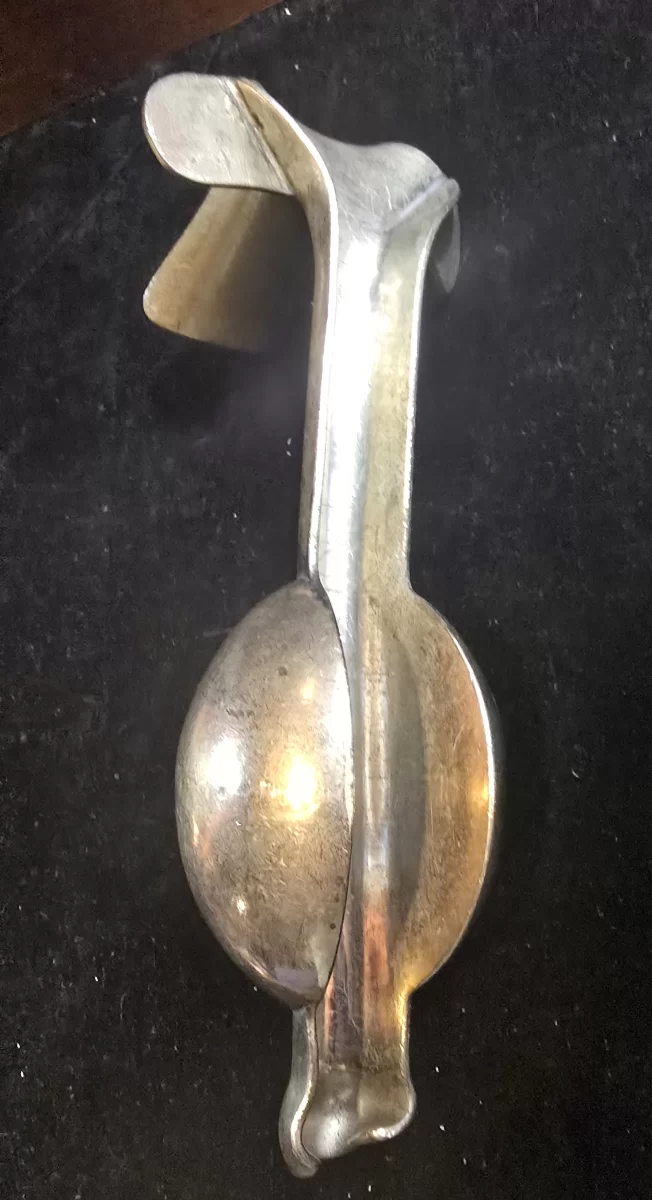
Description
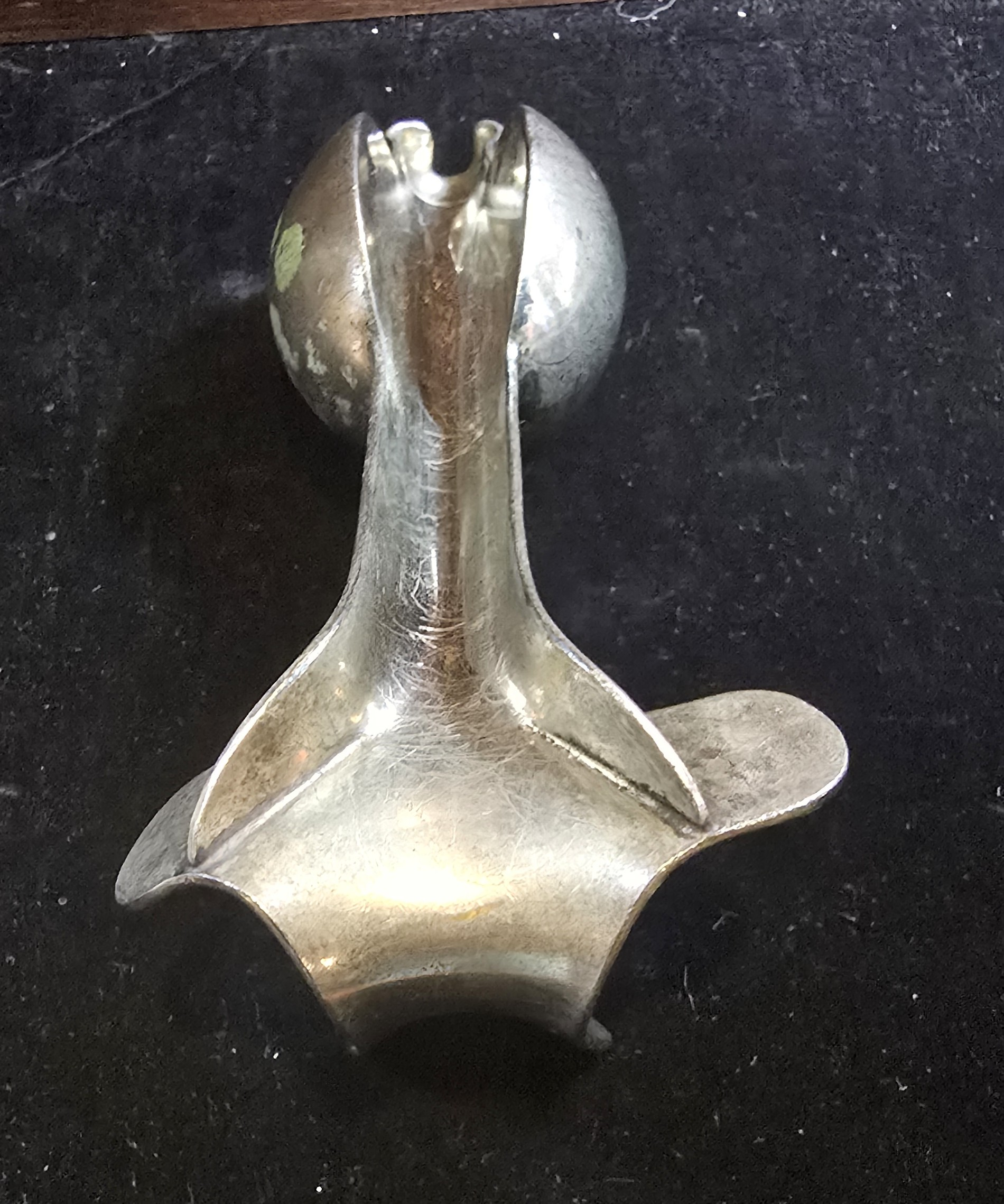
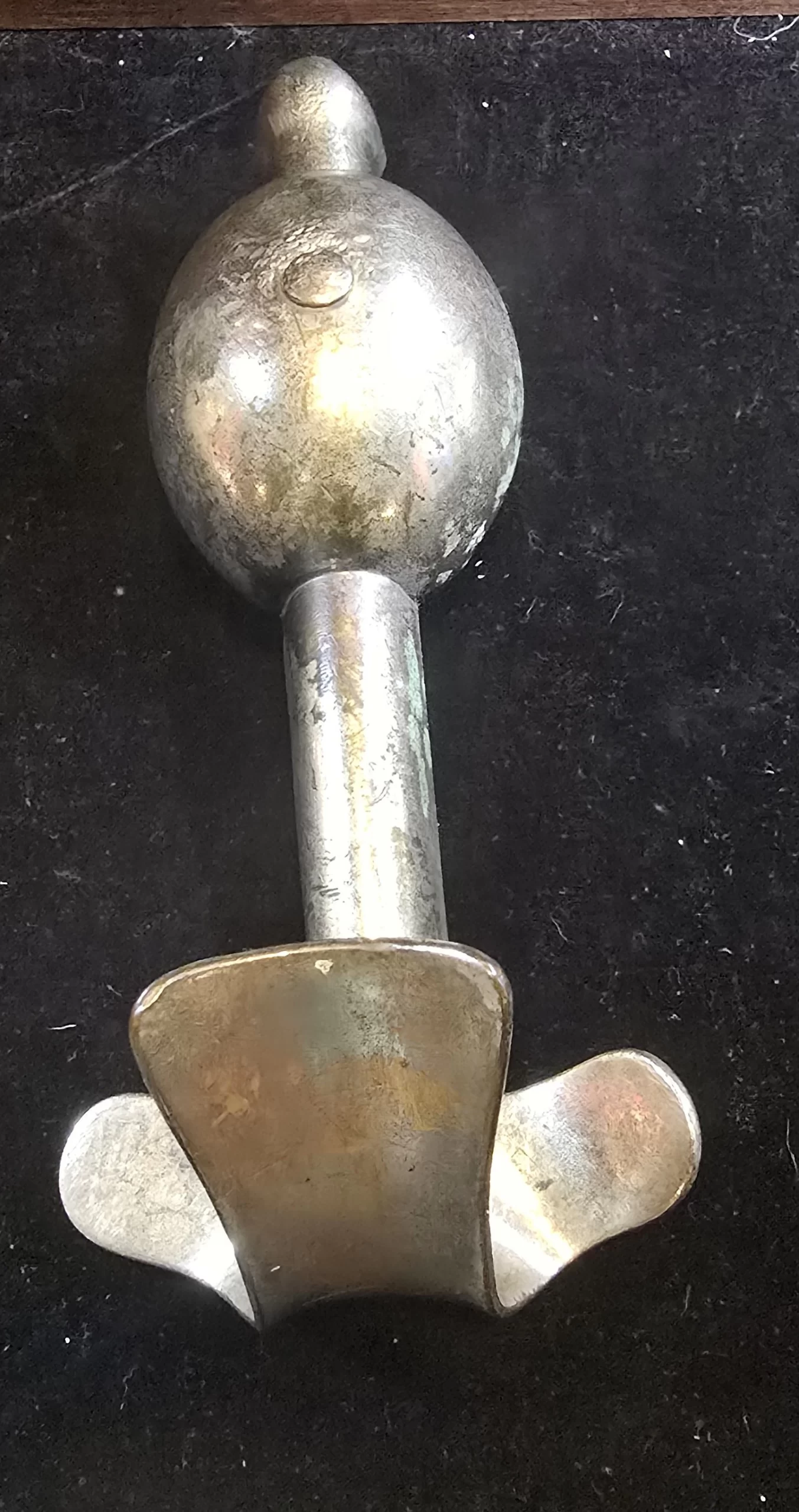
This is a weighted vaginal speculum, a classic OB/GYN instrument designed to provide hands-free exposure of the vaginal canal during procedures. Unlike the duckbill-style specula requiring manual operation, this gravity-assisted model uses its heavy, rounded counterweight to gently pull downward once inserted, leaving both of the physician’s hands free for exams, swabbing, cauterization, or surgical procedures.
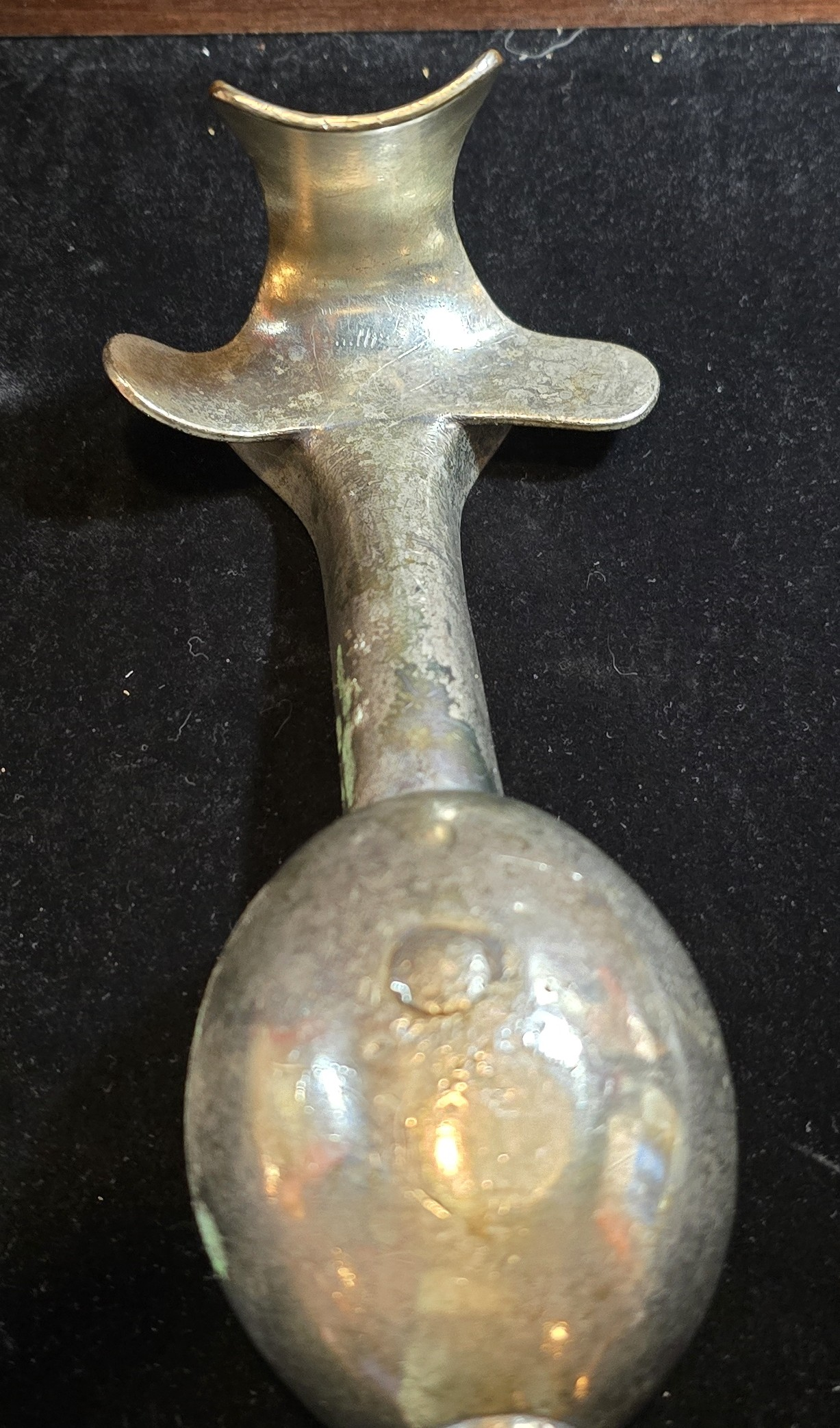
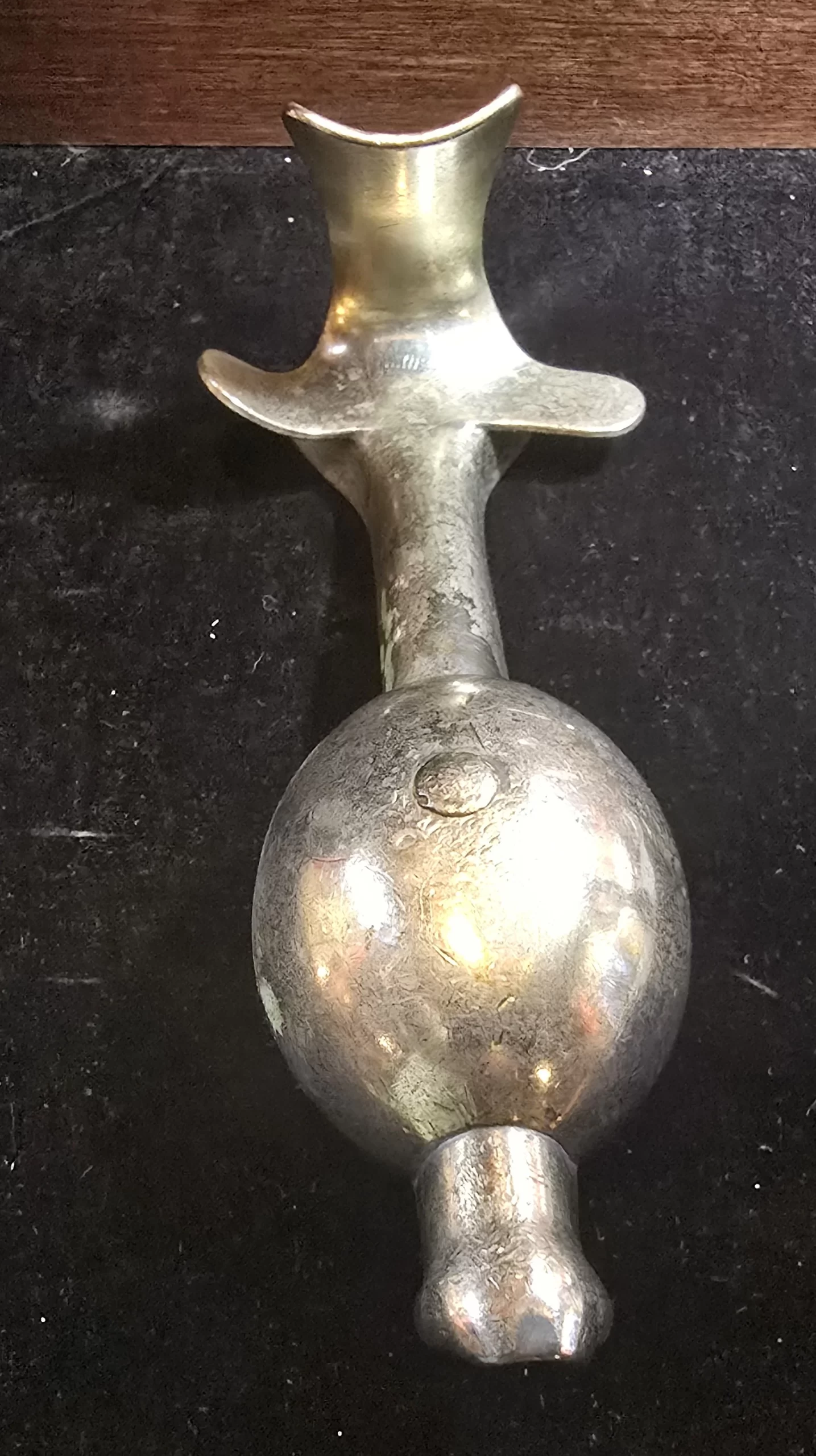
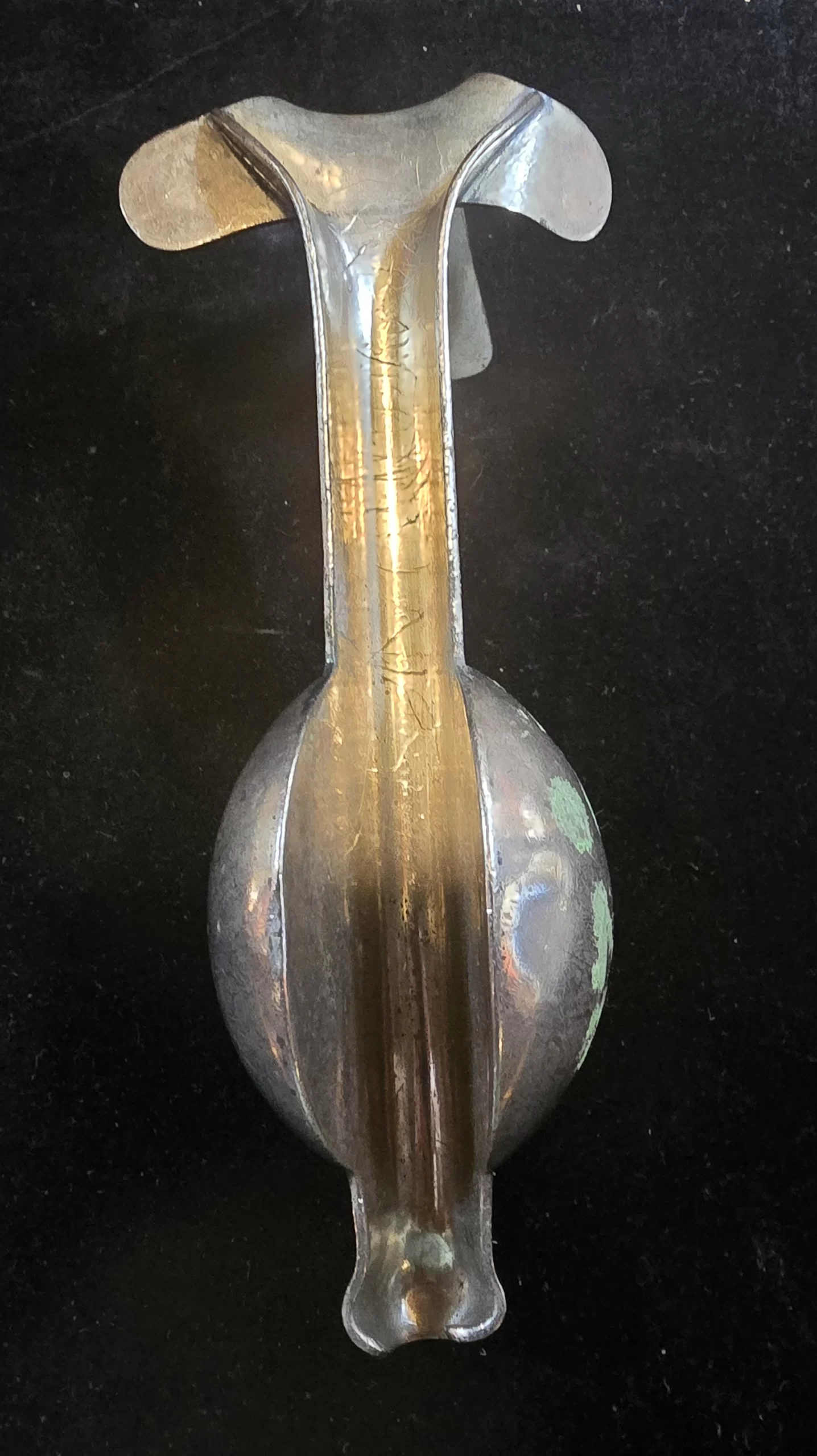
This particular model—likely nickel-plated brass or stainless steel—features a fixed blade curvature, flared lips, and a characteristic spherical base weight. Its durable, almost sculptural form reflects a design era when function, mass, and sterilizability ruled above all else.
Though no maker’s mark remains visible, the construction style and materials suggest it dates from the early to mid-20th century. The extensive surface wear and patina indicate prolonged clinical use, likely in a hospital or teaching setting.
Condition
Heavily worn from use and repeated sterilization
Visible scratches, dents, and plating loss
Oxidation and green patina present in multiple areas
No visible manufacturer’s engraving—possibly worn away
Structurally intact with no fractures or warping
Gallery

Historical context
Weighted specula became standard in mid-20th-century gynecology, especially for procedures requiring hands-free access—such as LEEP, colposcopy, biopsy, or intrauterine interventions. Earlier versions like this one were often reused for decades, meticulously sterilized between patients.
They were a common sight in teaching hospitals, where students could observe procedures without obstructing the provider’s field of view. Despite their intimidating appearance, they were often considered more comfortable than manually opened styles, as they applied steady downward pressure without the need for constant manipulation.
Curious Facts, Ephemera, and Trivia
Many OB/GYNs trained on these before the rise of modern single-use plastics.
The design allowed gravity—not springs or screws—to maintain the view.
Some early medical texts simply referred to it as “the drop speculum.”
Excerpt
“An elegant brute of an instrument—equal parts physics and medicine.”
Why it is in the Cabinet
This instrument stands as a testament to practical gynecology before disposables and digital scopes. Cold to the touch, heavy in the hand, and clinically irreplaceable in its time, it deserves its place in the Cabinet both for what it reveals—and how it helped reveal it.
Support Dr. Bebout’s Cabinet of Medical Curiosities
If you enjoy the history, the oddities, and the effort, help keep this cabinet open. Every little bit helps preserve and share the strange wonders of medicine's past.
Buy Me a Ko-fi ☕ Buy Me a Coffee ☕ Tip via PayPal 💵