
Title
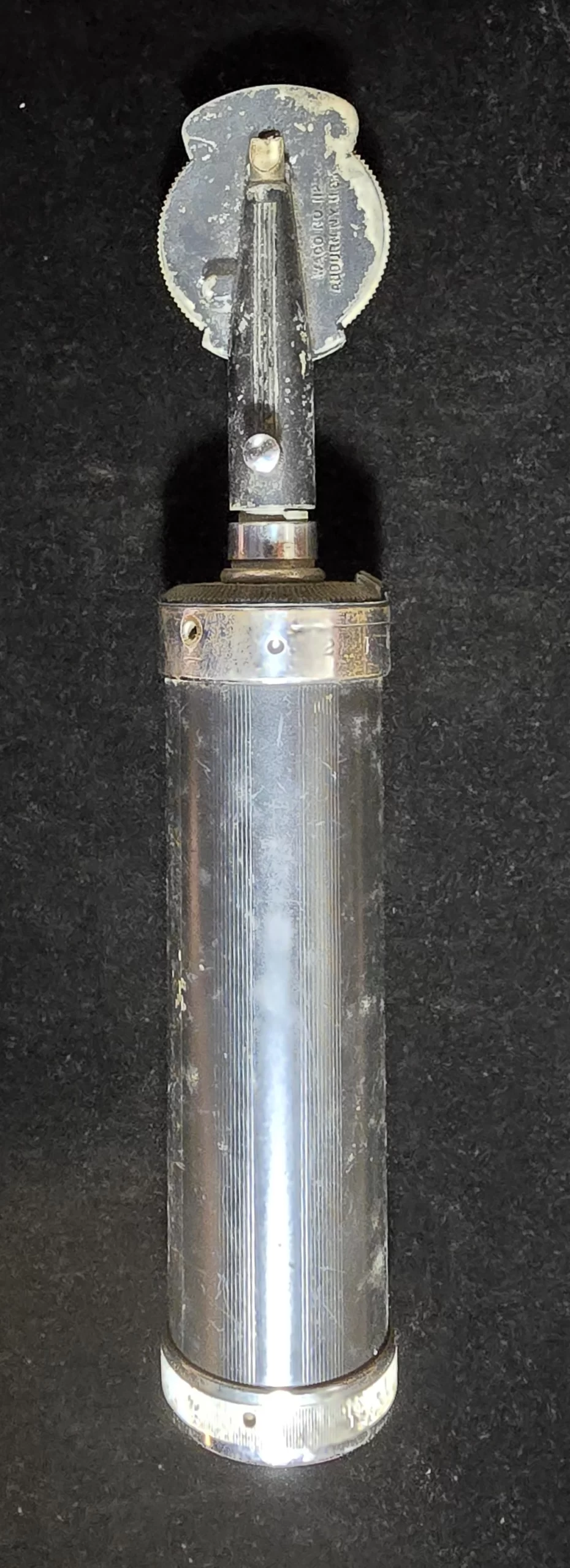
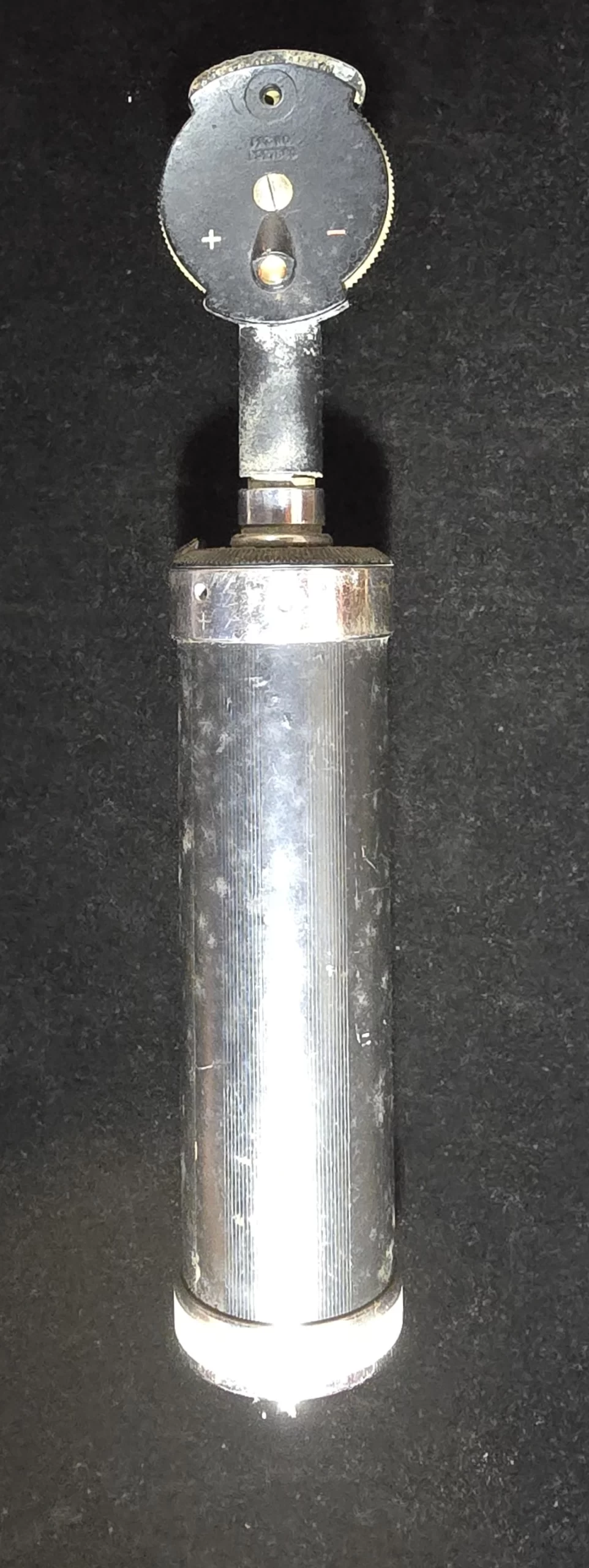
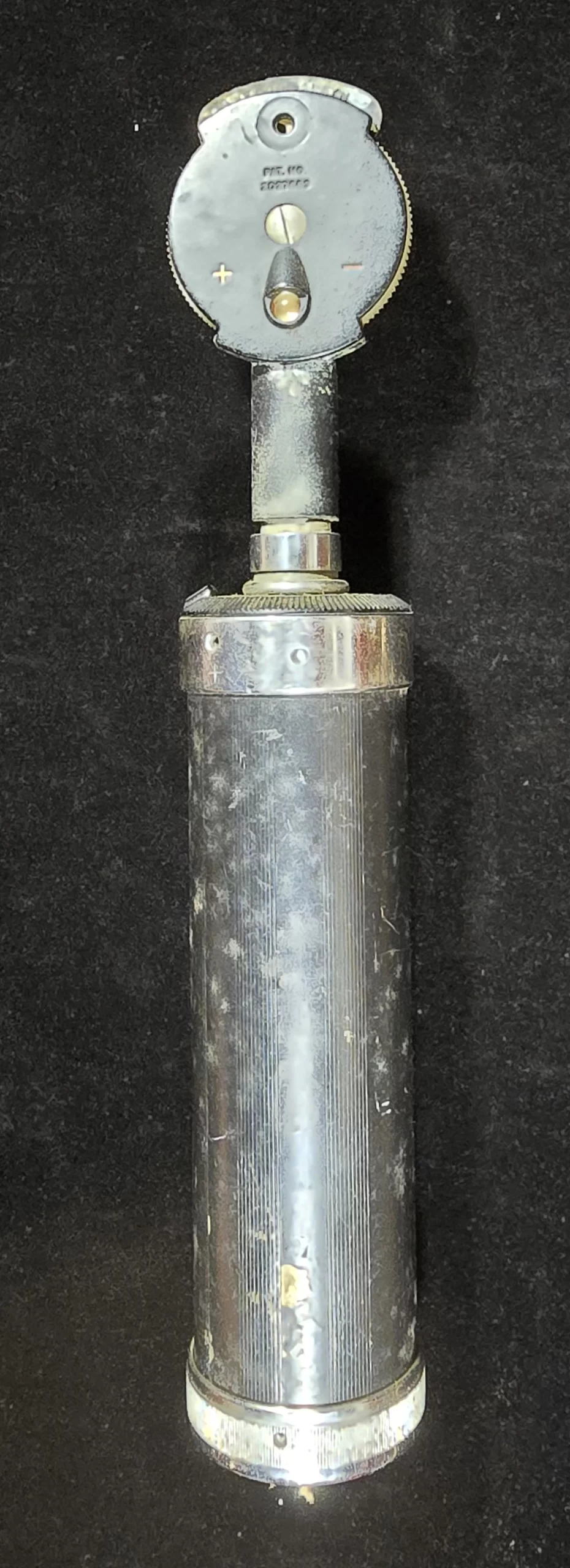
Wappler Waco No. 112 Battery Handle with Attached Ophthalmoscope Head
Author
N/A (Medical Instrument)
Image
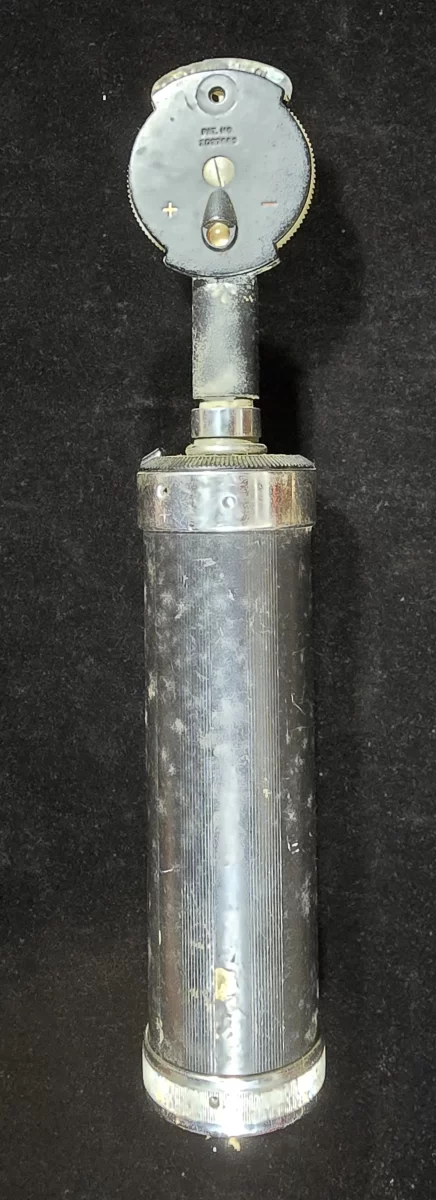
Description
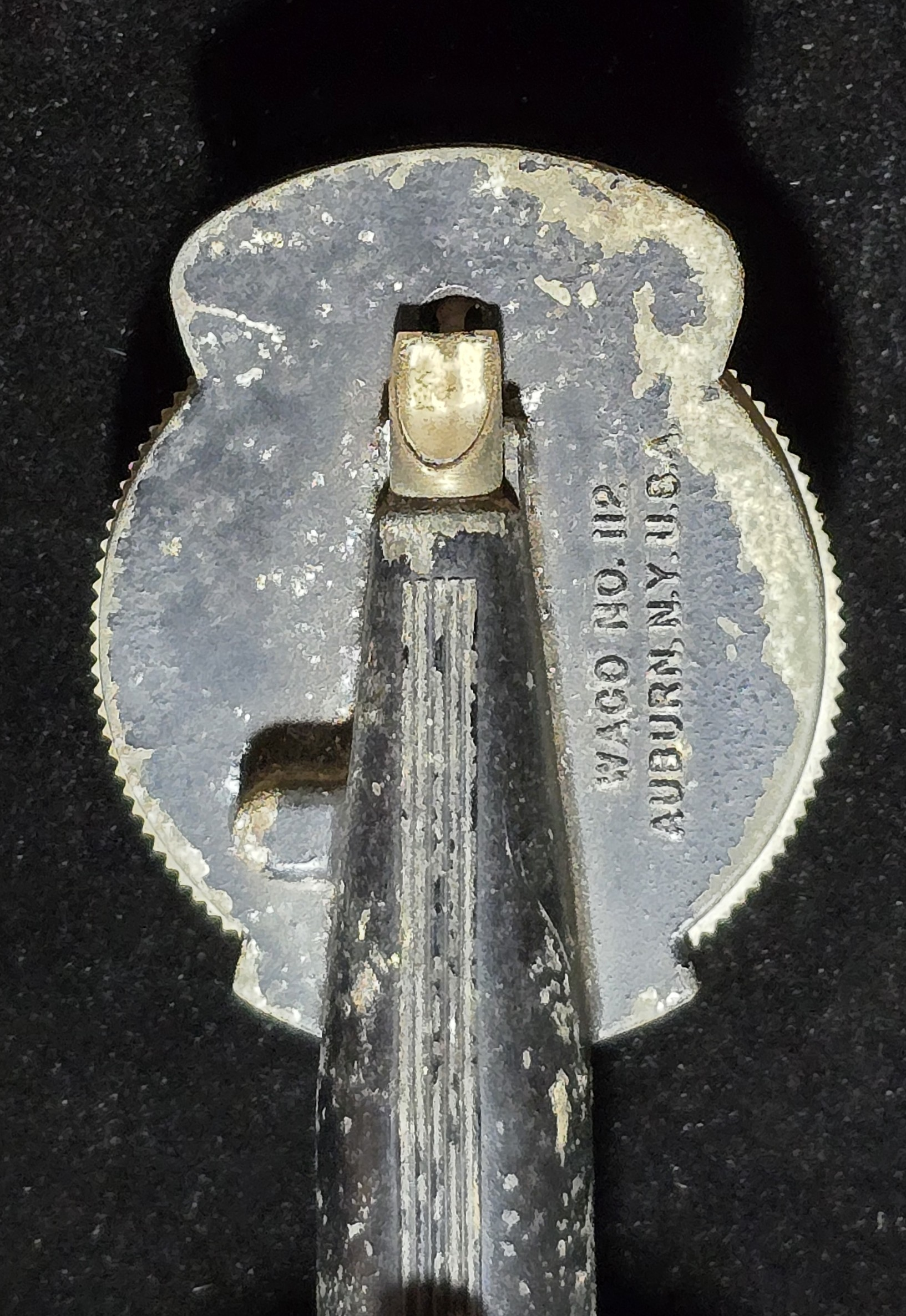
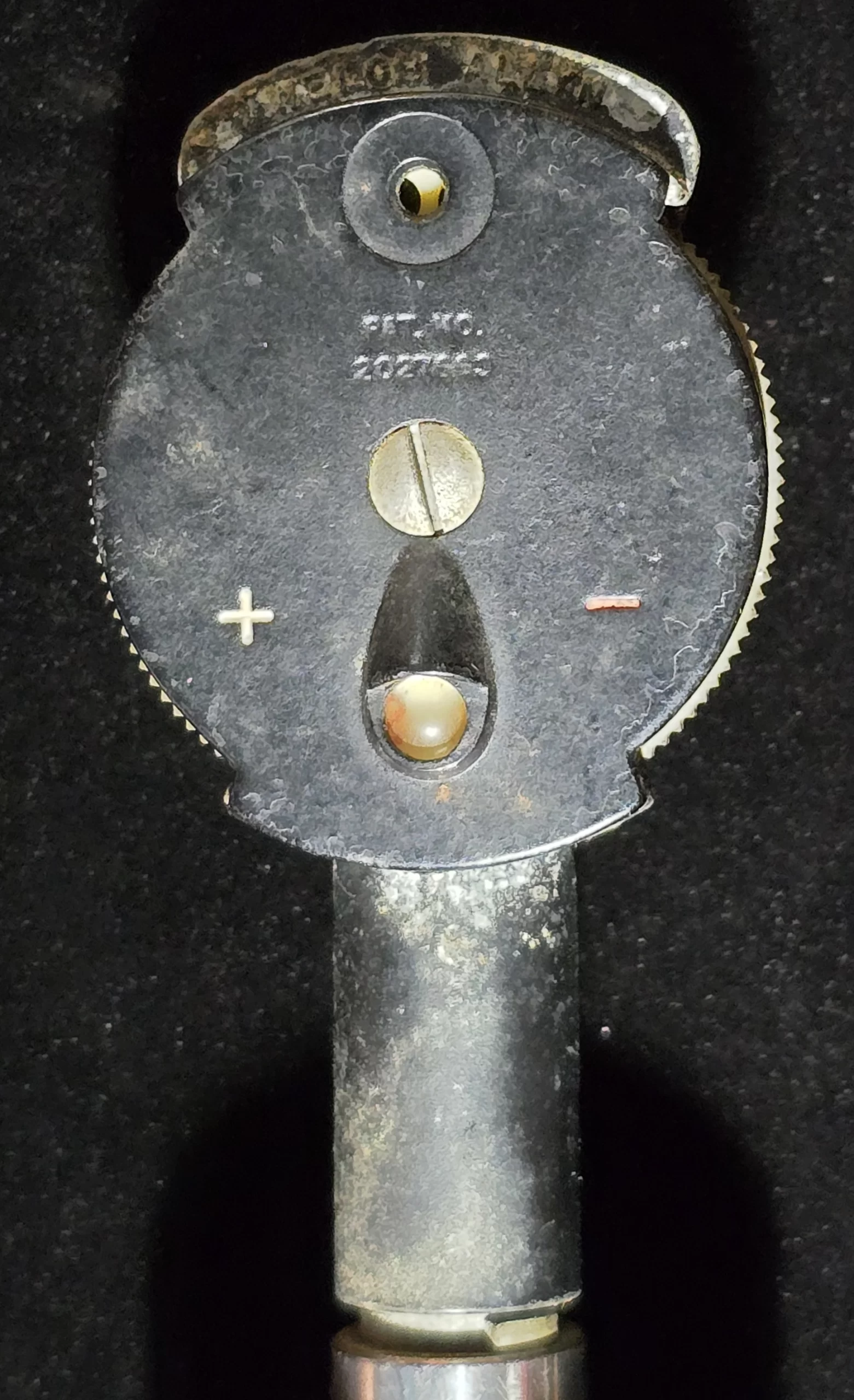
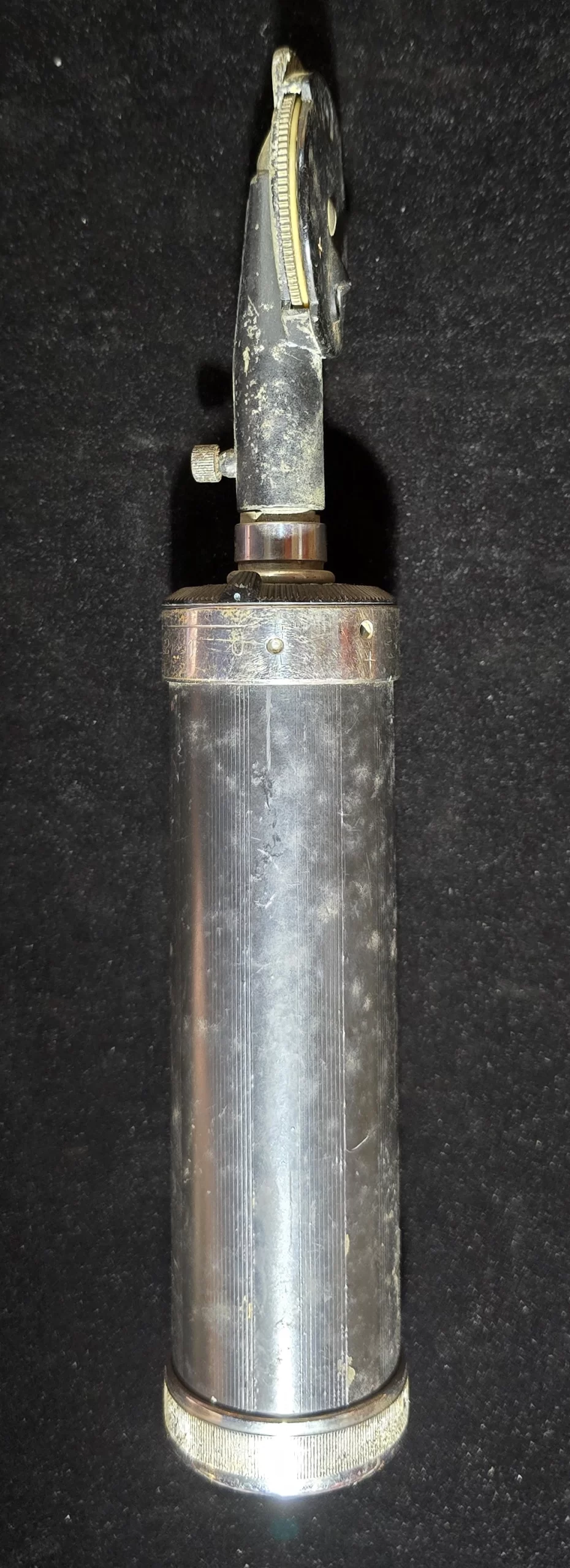
This is a vintage Wappler Waco No. 112 battery-powered diagnostic handle with its original ophthalmoscope head still attached. Manufactured in Auburn, New York, this chrome-finished instrument features a built-in rheostat dial for adjusting light intensity, a knurled grip for better handling, and a positive/negative polarity marking at the head interface. The head attachment is a classic direct-illumination ophthalmoscope, used for visualizing the retina and optic disc during eye exams.
The combined unit offers an authentic example of early to mid-20th-century portable diagnostic gear used by general practitioners and specialists before the rise of plug-in wall-mounted systems.
Condition
The handle and head show signs of heavy use, with oxidation and wear visible on both metal and enamel surfaces. The rotary rheostat markings are still readable. The ophthalmoscope lens mechanism appears intact, though untested. Some original plating is worn away.
Gallery
Historical context
The ophthalmoscope, invented in the mid-1800s, revolutionized eye exams by allowing physicians to directly observe the retina. By the early 20th century, battery-powered handheld units like this one allowed portable exams outside of a fixed clinical setting.
Wappler, a major manufacturer of electrosurgical and diagnostic equipment, helped standardize battery handles and heads, making tools like this widespread in American medical practice from the 1930s to the 1950s.
The handle’s patent number 2027463, filed in 1935 and granted in 1936, relates specifically to the integrated rheostat design.
Curious Facts, Ephemera, and Trivia
Wappler was one of the first companies to manufacture electrosurgical units and diagnostic handles in the U.S.
The “+” and “–” on the head align with internal dry-cell battery orientation, ensuring proper illumination.
Direct ophthalmoscopes like this one were the forerunners of modern fiber-optic and digital fundus imaging tools.
Excerpt
“…a battery-operated medical device handle with user-controlled variable illumination designed for diagnostic instruments including ophthalmoscopes and otoscopes.”
Why it is in the Cabinet
This preserved combination of handle and ophthalmoscope offers a complete glimpse into a physician’s portable diagnostic toolkit. It embodies both technological innovation and practical utility in a form rarely preserved with both pieces still together. It represents not just a tool, but a hands-on connection to everyday diagnostic medicine in the early 20th century.
Support Dr. Bebout’s Cabinet of Medical Curiosities
If you enjoy the history, the oddities, and the effort, help keep this cabinet open. Every little bit helps preserve and share the strange wonders of medicine's past.
Buy Me a Ko-fi ☕ Buy Me a Coffee ☕ Tip via PayPal 💵