
Title
Volcanic Oil / Turpentine Oil Pain Relieving Liniment Bottle
Author
N/A
Image
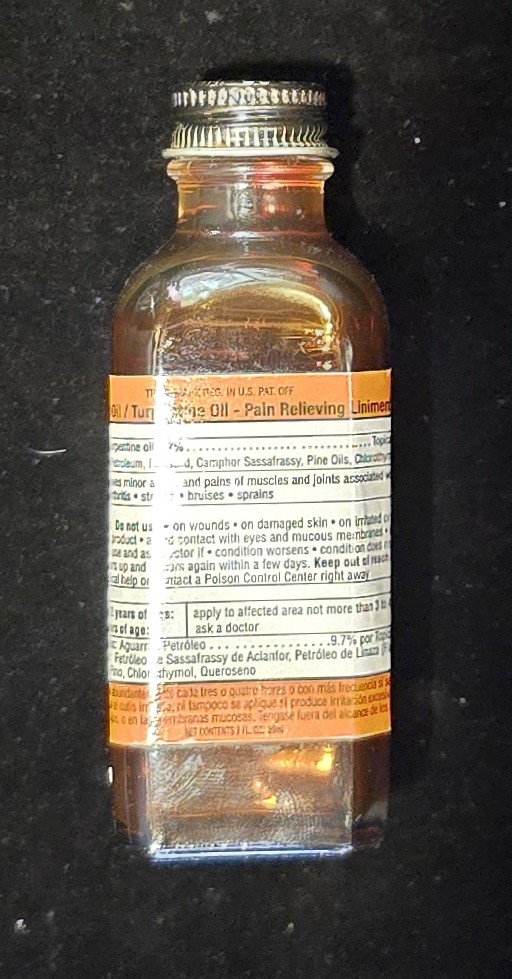
Description
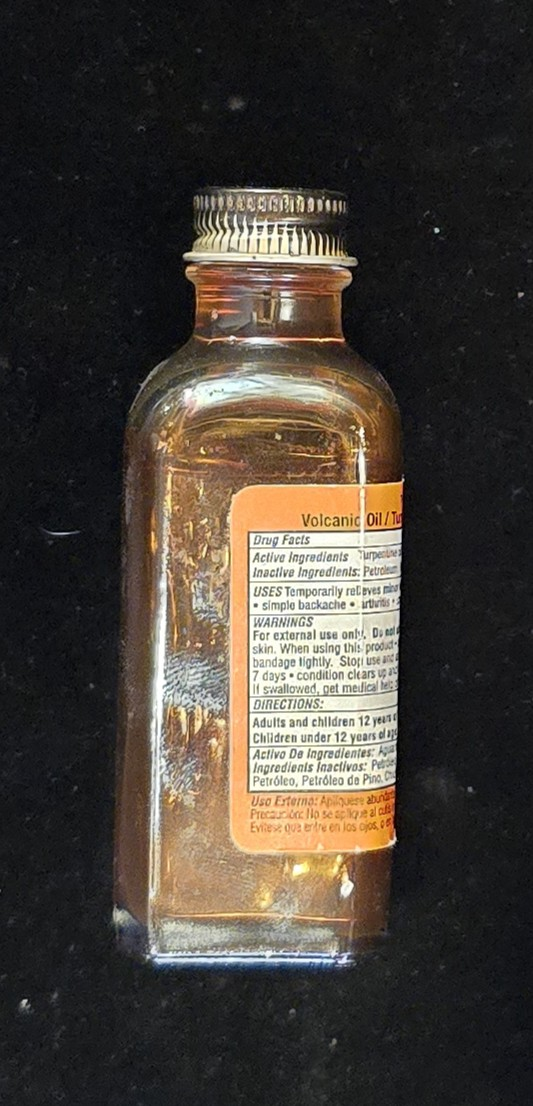
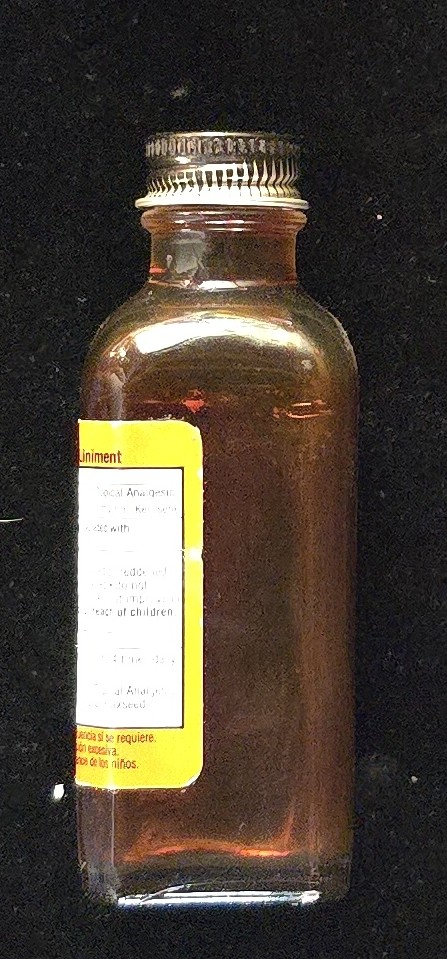
Amber glass bottle with metal screw cap containing a topical liniment labeled “Volcanic Oil / Turpentine Oil – Pain Relieving Liniment.” The label lists turpentine oil as the primary active ingredient, with inactive ingredients including petroleum oil, camphor sassafrassy, pine oils, cedarwood oil, choline, thymol, and querosene.
Marketed for temporary relief of minor aches and pains of muscles and joints associated with arthritis, bruises, sprains, and backache. The label includes drug facts, warnings, and bilingual English/Spanish instructions for external use only.
Condition
Excellent – full contents, intact label with legible print, no chips or cracks to the bottle.
Gallery
Historical context
Turpentine oil liniments have been used since the 19th century as counterirritants—substances applied to the skin to produce mild inflammation and increase blood flow, with the goal of relieving deeper muscular or joint pain. “Volcanic Oil” was a brand name historically associated with patent medicines, often blending turpentine with herbal and aromatic oils. While early versions were unregulated and sometimes contained strong irritants, modern formulations are controlled under FDA labeling and safety requirements.
Curious Facts, Ephemera, and Trivia
Turpentine, derived from the resin of pine trees, was once taken internally for various ailments—a practice now recognized as toxic.
The “Volcanic Oil” brand name appeared in early 1900s advertisements claiming to cure everything from lumbago to frostbite.
Sassafrassy oil in older formulas would have contained safrole, now restricted due to its carcinogenic potential.
Excerpt
From an early 20th-century advertisement for Volcanic Oil:
“Penetrates to the seat of the pain! Relieves aches, sprains, and stiffness. Keep a bottle in every home.”
Why it is in the Cabinet
This bottle bridges historic patent medicine traditions and modern over-the-counter regulation. It is a living example of how certain folk and patent remedies—like turpentine liniments—have survived into the present day, transformed by safety laws and ingredient restrictions but still marketed with some of the same promises as a century ago.
Support Dr. Bebout’s Cabinet of Medical Curiosities
If you enjoy the history, the oddities, and the effort, help keep this cabinet open. Every little bit helps preserve and share the strange wonders of medicine's past.
Buy Me a Ko-fi ☕ Buy Me a Coffee ☕ Tip via PayPal 💵