
Title
Vi-Jon Hospital Brand Hydrogen Peroxide
Author
Vi-Jon Laboratories, St. Louis, MO – ca. mid-20th century
Image

Description
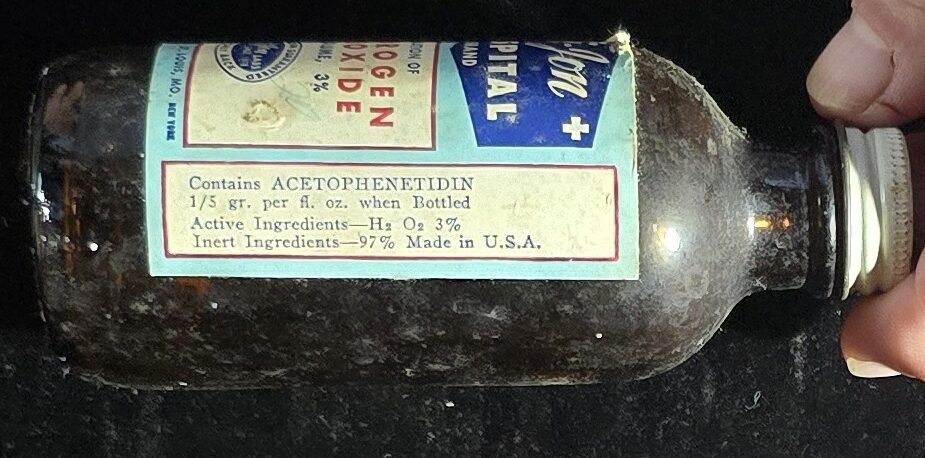
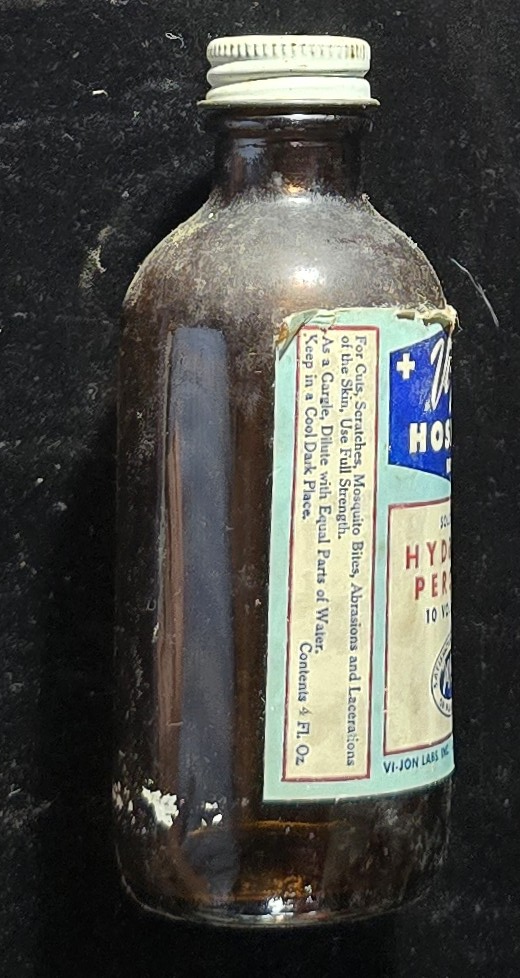
This 4 oz amber glass bottle of Vi-Jon Hospital Brand Hydrogen Peroxide features a metal screw cap and its original blue, white, and red label. It contains a 3% solution of hydrogen peroxide (“10 Volume”) and is marked as containing acetophenetidin, a once-common analgesic compound. The label includes multiple therapeutic uses such as cleansing cuts, mosquito bites, and abrasions.
Condition
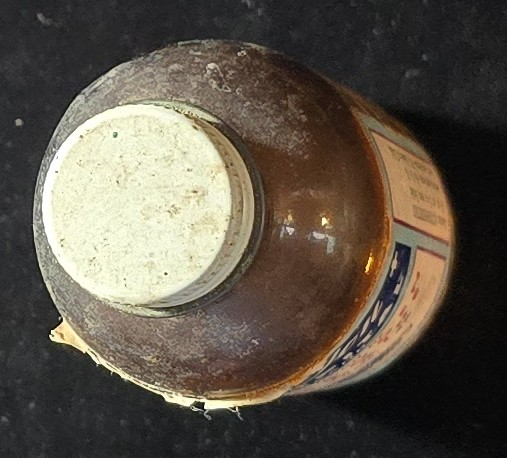
The bottle is in good vintage condition, with intact labeling and light soiling. Some discoloration and wear are present on the label, with minor chipping around the edges. The cap shows oxidation but remains firmly affixed.
Gallery
Historical context
Vi-Jon Laboratories has been in continuous operation since 1908 and is now best known for its house-brand antiseptics like Germ-X. During the mid-20th century, hydrogen peroxide was commonly sold as a household antiseptic, and acetophenetidin (also known as phenacetin) was still legally used before being banned by the FDA in 1983 due to its link to kidney damage and carcinogenic effects.
The “10 Volume” designation refers to the amount of oxygen gas released—10 times the liquid volume—which made it a reliable choice for oxidizing wound treatment before the widespread availability of antibiotic ointments.
Curious Facts, Ephemera, and Trivia
Phenacetin’s Legal History: The inclusion of acetophenetidin (a.k.a. phenacetin) is especially notable—this once-popular pain reliever was introduced in the 1880s but banned in the U.S. in 1983 after being linked to renal toxicity and cancer. At the time this bottle was manufactured, its risks were either unknown or disregarded in favor of its soothing effects.
Vi-Jon Legacy: Vi-Jon Laboratories, based in St. Louis, Missouri, began over a century ago and remains active today. They are most widely recognized for manufacturing private-label health products—notably the Germ-X hand sanitizer line.
Label Language: The product label reflects a now-rare mixture of scientific and folksy language, including promises of relief from mosquito bites and abrasions, while simultaneously cautioning to “keep in a cool dark place.” These phrases highlight both the era’s trust in home medicine and a lack of modern drug storage standards.
Color & Volume Standards: “10 Volume” refers to how much oxygen gas (in volume) the peroxide releases, a measure once common on consumer products but now rarely seen outside industrial or cosmetic contexts.
Ephemeral Use vs. Long-Term Hazard: The bottle itself is disposable by design, a one-time-use product—but what it contains (acetophenetidin) outlasted its shelf life in medical literature as a toxicological cautionary tale.
Excerpt
From the label:
“For Cuts, Scratches, Mosquito Bites, Abrasions and Lacerations… Use Full Strength or Diluted with Equal Parts of Water.”
Also note:
“Contains ACETOPHENETIDIN… Active Ingredient: H₂O₂ 3%”
– a now-discontinued ingredient due to safety concerns.
Why it is in the Cabinet
This Vi-Jon bottle represents a transitional era of home medical care—before modern over-the-counter antiseptics fully replaced early 20th-century chemical remedies. Its combination of peroxide and acetophenetidin speaks to both the scientific optimism and the regulatory looseness of its time. A poignant example of once-trusted remedies later deemed too dangerous for continued use.
Support Dr. Bebout’s Cabinet of Medical Curiosities
If you enjoy the history, the oddities, and the effort, help keep this cabinet open. Every little bit helps preserve and share the strange wonders of medicine's past.
Buy Me a Ko-fi ☕ Buy Me a Coffee ☕ Tip via PayPal 💵