
Title
Tincture of Cinchona – Eli Lilly & Co., Indianapolis (U.S.P. Standardized)
Author
Pharmaceutical preparation by Eli Lilly & Co.
Image
Description
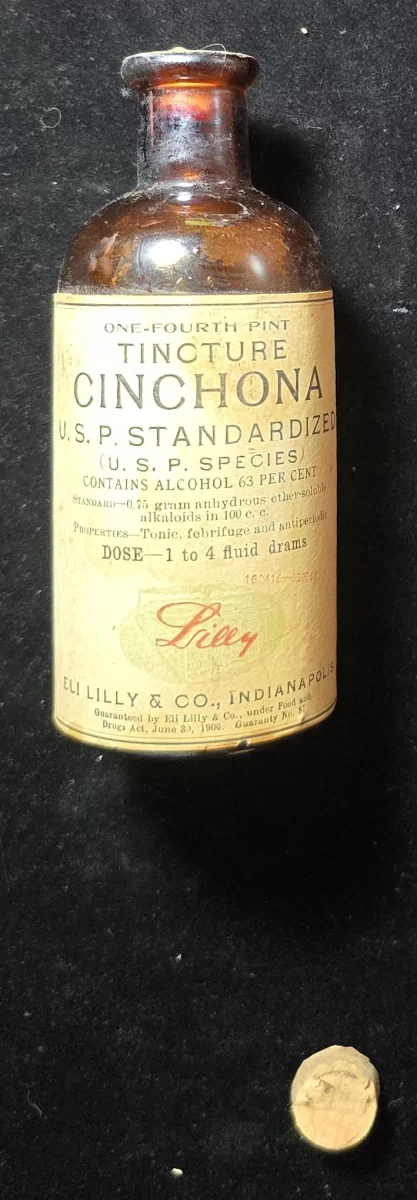
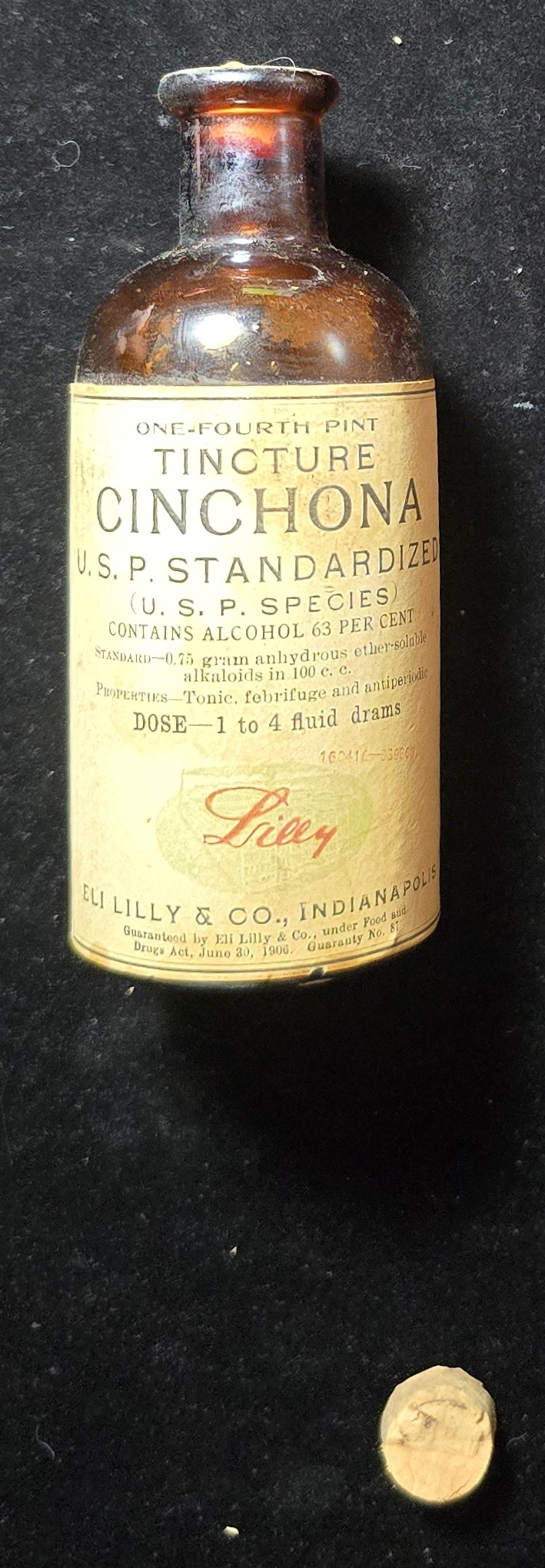
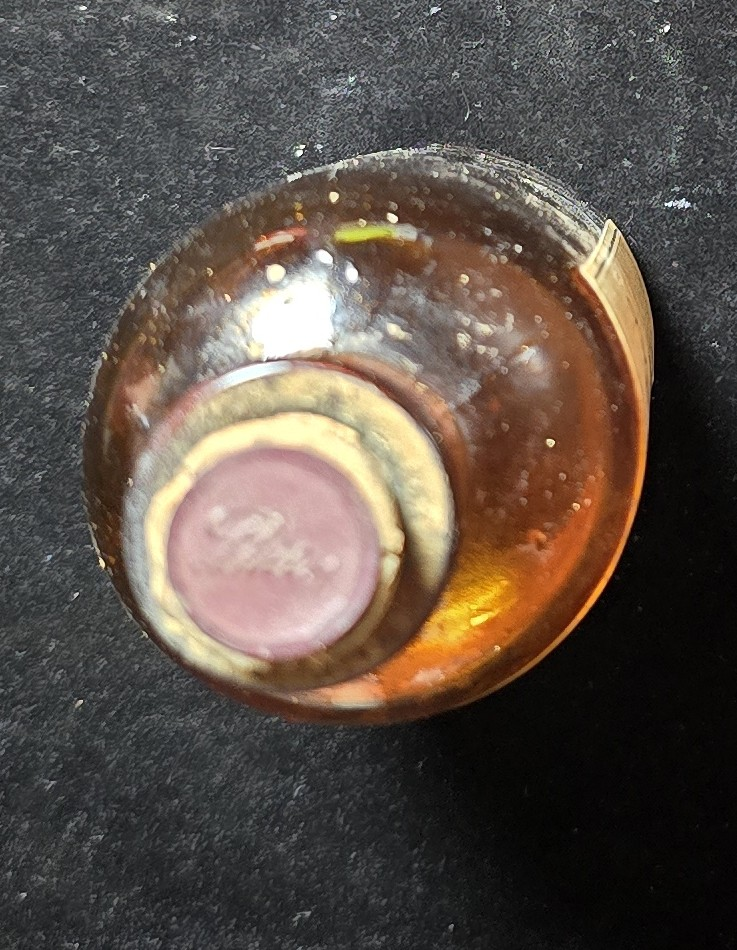
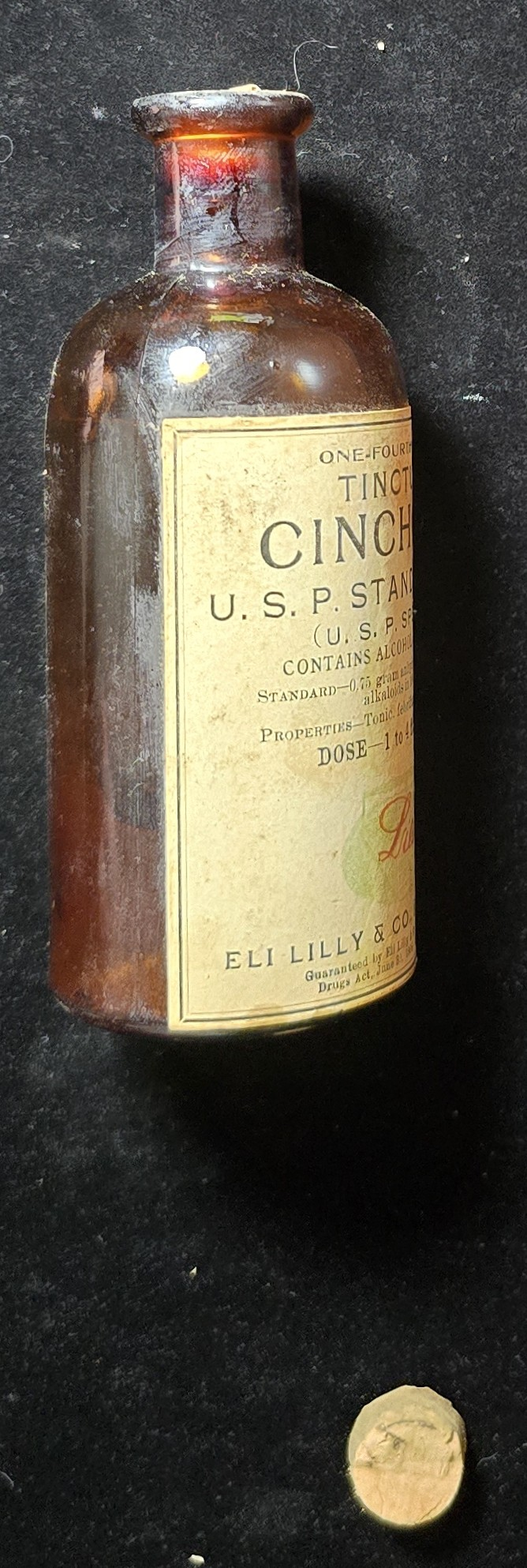
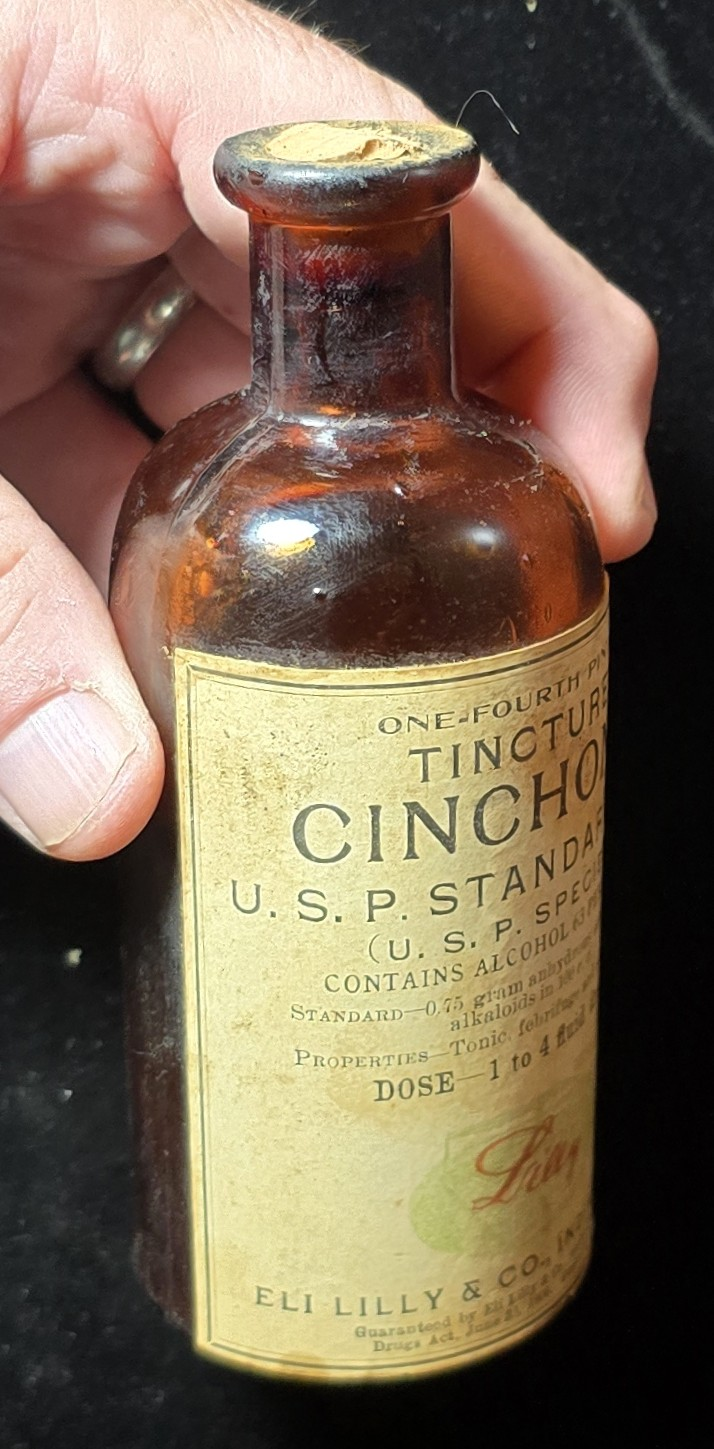
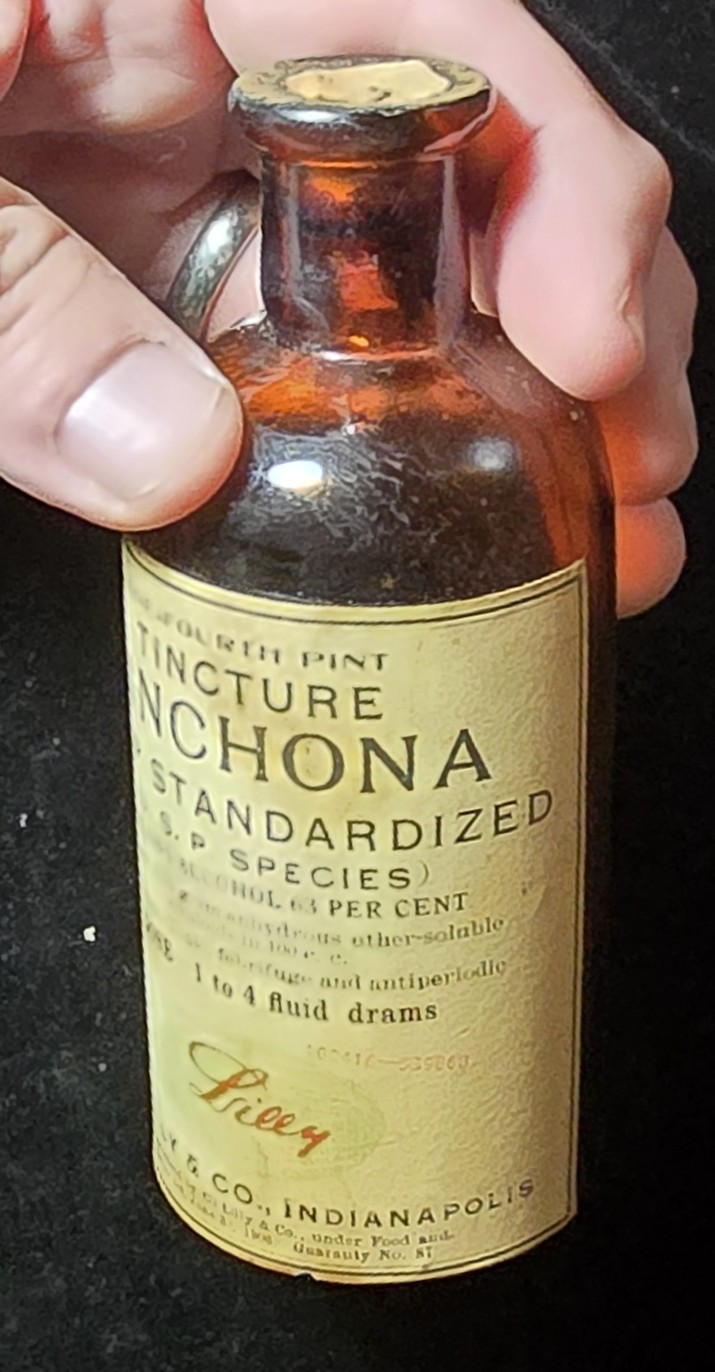
This one-fourth pint amber glass bottle contains Tincture of Cinchona, standardized to United States Pharmacopeia specifications, manufactured by Eli Lilly & Company of Indianapolis, Indiana. The label specifies that the preparation contains 63% alcohol and 0.75 gram anhydrous ether-soluble alkaloids in 100 c.c., derived from U.S.P.-listed cinchona species. The bottle retains its original paper label, cork, and wax seal, with “Lilly” printed prominently in red script across the front.
Cinchona bark, the source of quinine, was historically valued for its antipyretic (fever-reducing), tonic, and antiperiodic properties, most notably in the treatment and prevention of malaria. The dosage recommended on the label is 1 to 4 fluid drams.
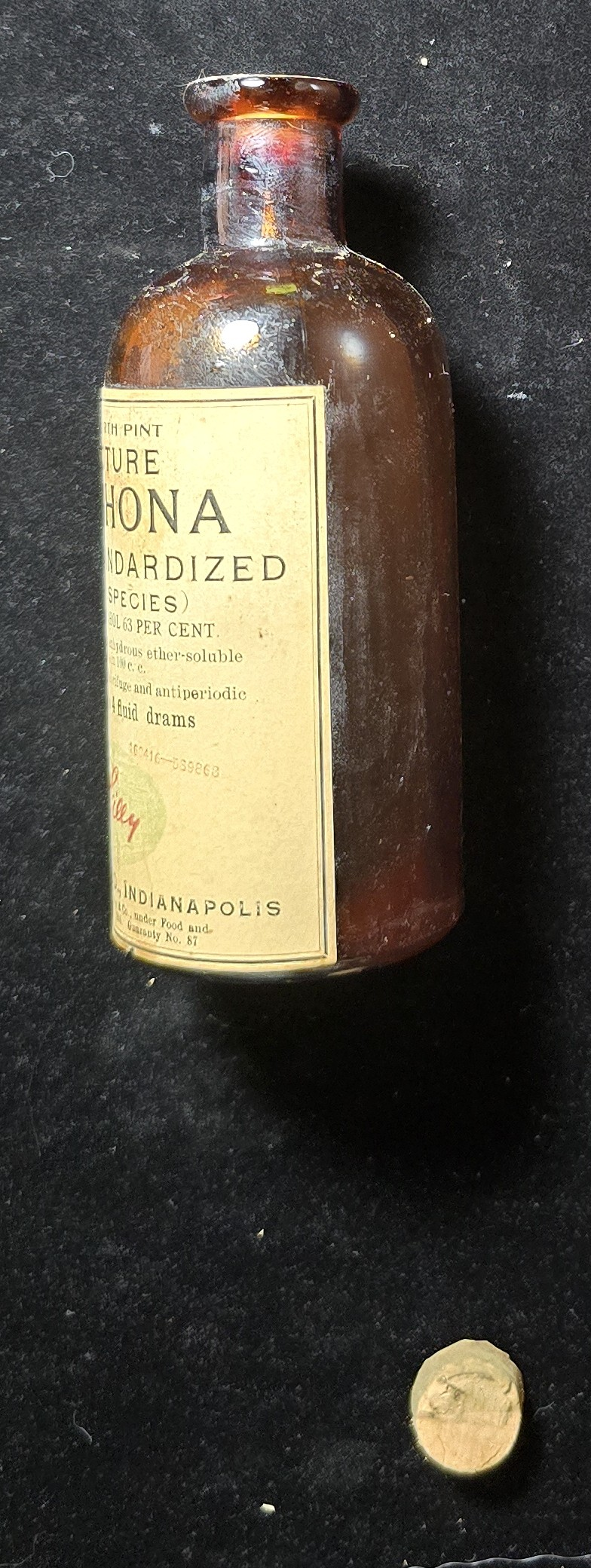
The bottle features a rounded collar lip with no screw threads, typical of early 20th-century apothecary glass. This example appears unopened, with the cork and wax still in place.
Condition
Good antique condition. Label is intact with minor edge wear, toning, and small spots of discoloration. Glass is free of cracks and major chips, though it shows typical surface wear and residue from long-term storage. Cork and wax seal are present and appear undisturbed. Minor dust and particulate matter present.
Gallery
Historical context
The cinchona tree (genus Cinchona), native to South America, was the original source of quinine, the first effective treatment for malaria. By the late 19th and early 20th centuries, standardized tinctures were produced by major pharmaceutical companies, including Eli Lilly, for use as tonics and febrifuges.
The U.S. Pharmacopeia set chemical standards for cinchona preparations to ensure consistent alkaloid content. These tinctures were also used as general tonics, reflecting the era’s broad and sometimes indiscriminate application of “restorative” remedies.
Curious Facts, Ephemera, and Trivia
Cinchona bark was so valuable in the 19th century that smuggling seeds out of South America was considered a major act of industrial espionage.
The bitter taste of quinine is the origin of tonic water as a palatable delivery method for British colonial officers in malaria-endemic regions.
Eli Lilly’s cinchona tinctures were advertised in early medical catalogs as reliable for combating “malarial fevers and other periodic diseases.”
Excerpt
From an early 20th-century Eli Lilly catalog:
“Tincture of Cinchona – U.S.P. Standardized. Contains the full proportion of alkaloids as required by the United States Pharmacopeia. A reliable febrifuge and general tonic.”
Why it is in the Cabinet
This bottle represents both the medicinal history of quinine-based preparations and the branding of one of America’s most enduring pharmaceutical companies. The survival of its original seal and intact labeling makes it an excellent example of early 20th-century pharmacy packaging and a valuable addition to the Cabinet.
Support Dr. Bebout’s Cabinet of Medical Curiosities
If you enjoy the history, the oddities, and the effort, help keep this cabinet open. Every little bit helps preserve and share the strange wonders of medicine's past.
Buy Me a Ko-fi ☕ Buy Me a Coffee ☕ Tip via PayPal 💵