
Title
Tincture No. 19 – Capsicum, N.F.
Author
Eli Lilly & Company, Indianapolis, U.S.A.
Image
Description
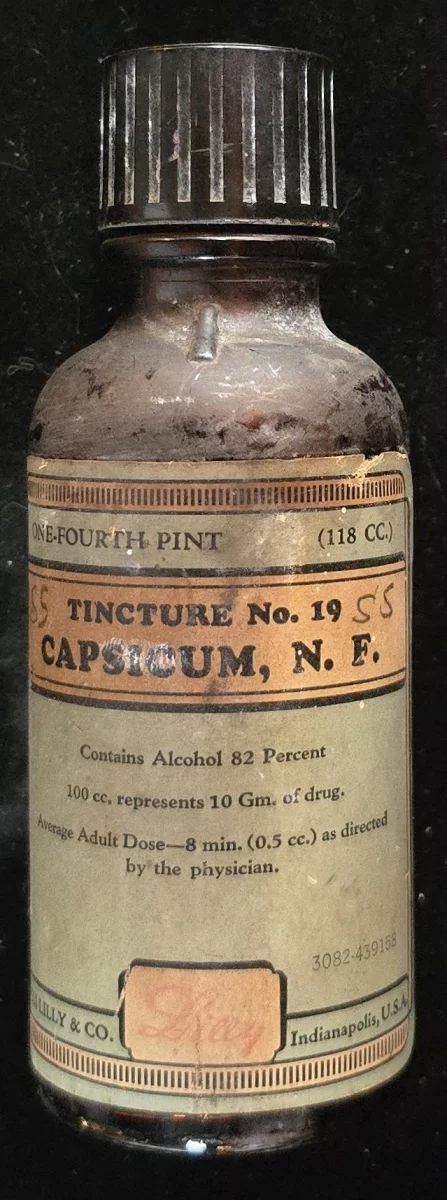
This quarter-pint amber glass bottle once held Tincture of Capsicum, a potent alcoholic extract derived from Capsicum annuum – the red chili pepper. Produced by Eli Lilly & Company and standardized under the National Formulary (N.F.), this fiery preparation contained 82 percent alcohol and 10 grams of drug per 100 cc. The average adult dose was listed as “8 minims (0.5 cc) as directed by the physician.”
In the early- to mid-20th century, tincture of capsicum was valued as a stimulant and counterirritant, both internally and externally. Internally, it was prescribed in small doses to aid digestion, increase circulation, or “warm the stomach.” Topically, it was used to rub sore muscles and joints, producing a burning hyperemia that distracted from deep pain – a primitive precursor to modern capsaicin creams.
Condition
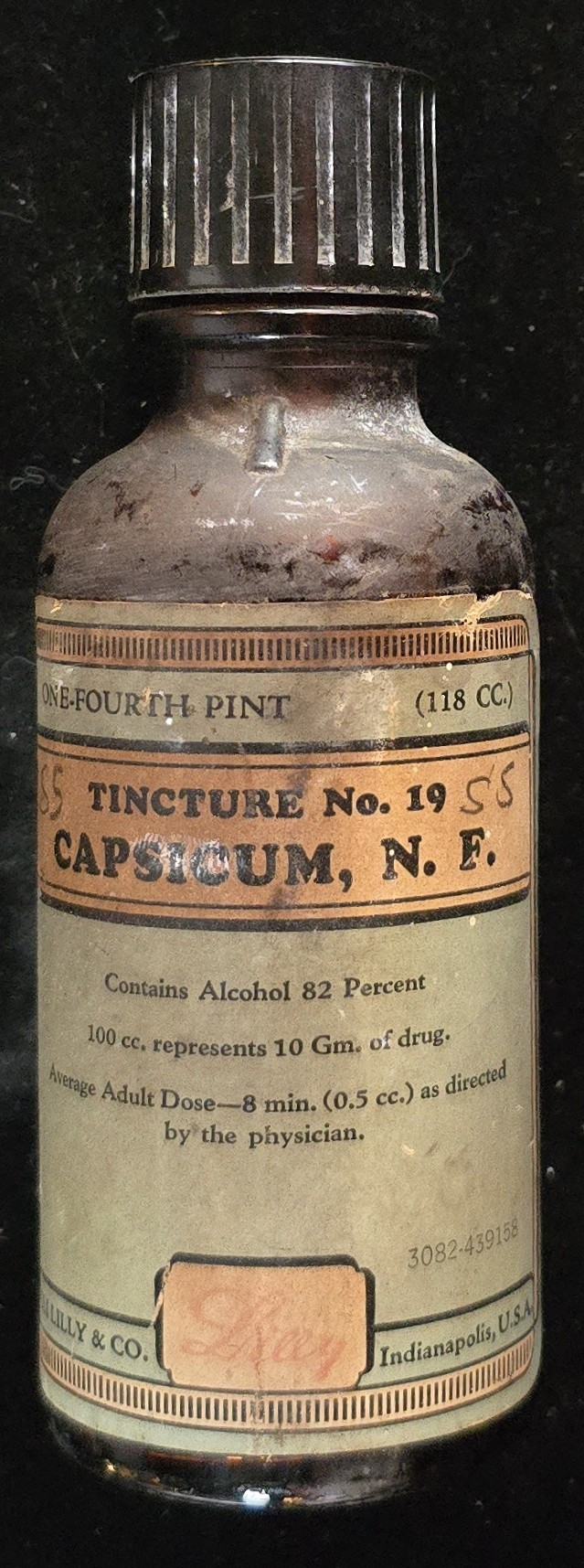
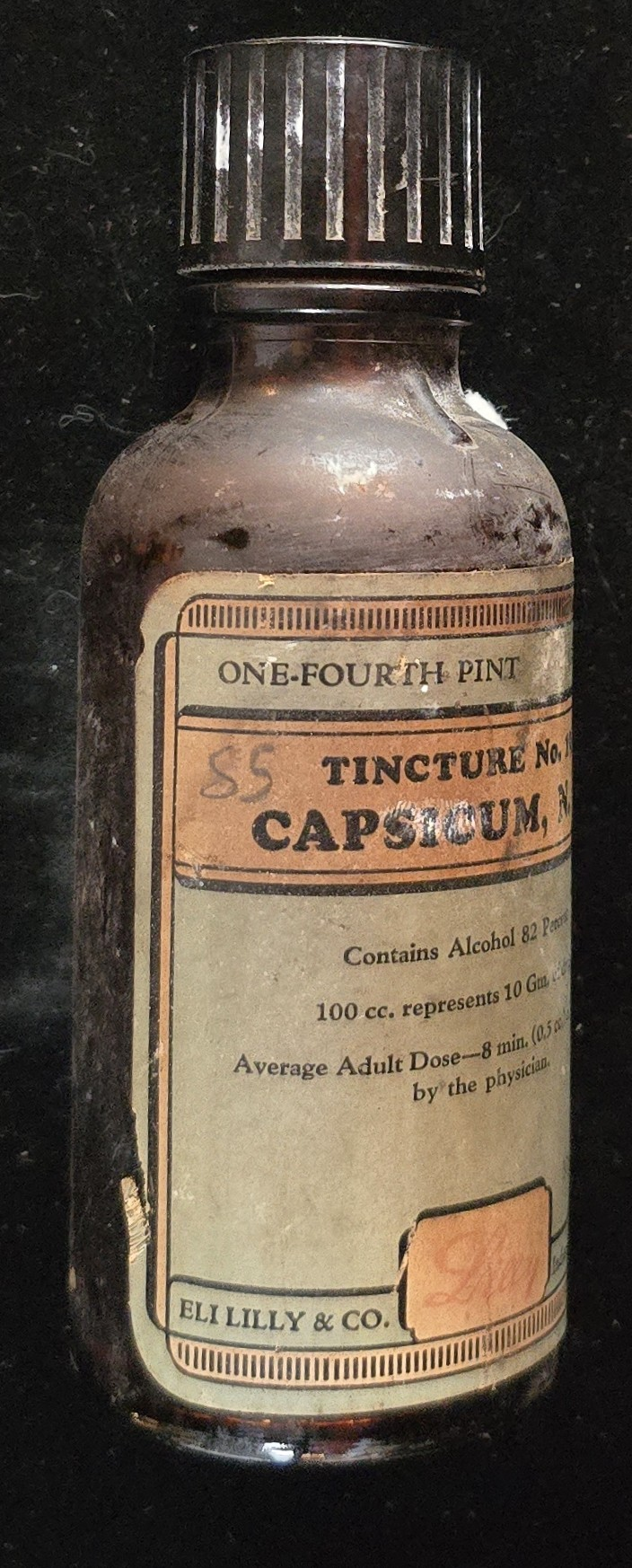
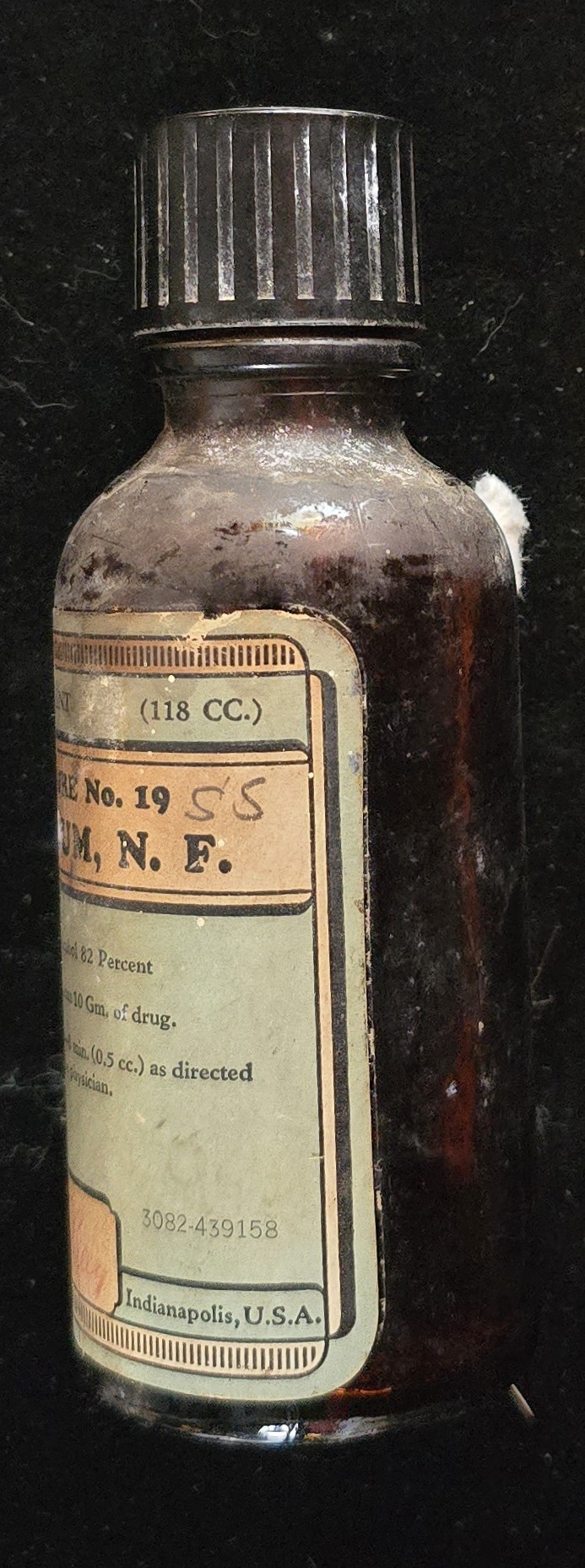
Amber bottle retains original screw cap and full readable label with expected edge wear, darkening, and mild surface residue. Minor chipping on lower label margin; glass intact.
Gallery
Historical context
Eli Lilly, founded in 1876, was among the earliest American manufacturers to offer standardized tinctures – pre-measured botanical extracts ensuring consistent potency for pharmacists and physicians. “Tincture No. 19” reflects Lilly’s cataloging system from the 1910s–1930s, when hundreds of herbal and chemical solutions were produced under N.F. or U.S.P. specifications.
Capsicum tinctures enjoyed enduring popularity for rheumatism, sore throats, and poor circulation. Though modern medicine abandoned such internal use, the same pharmacologic principle – capsaicin’s ability to deplete substance P from sensory nerves – is still employed in prescription pain patches and topical creams today.
Curious Facts, Ephemera, and Trivia
A single minim (0.06 mL) of this tincture could ignite a fierce burning if spilled on skin – medical bottles were often marked with warning labels by pharmacists.
“82 Percent Alcohol” made tincture of capsicum one of the stronger pharmacy preparations; it was as much a solvent as a preservative.
The fiery pepper has ancient medicinal roots – from Aztec stimulant tonics to 19th-century “warming cordials” sold in temperance-era apothecaries.
Excerpt
Tinctura Capsici stimulates gastric and circulatory activity and acts as a local rubefacient.” – Eli Lilly catalog, circa 1925
Why it is in the Cabinet
This bottle embodies the transitional era when American pharmacies still dispensed potent botanical extracts, yet with standardized precision. Its blend of old-world spice and industrial chemistry captures the evolution from folk remedy to regulated pharmacology – and serves as a spicy reminder of how medicine once “warmed” its patients inside and out.
Support Dr. Bebout’s Cabinet of Medical Curiosities
If you enjoy the history, the oddities, and the effort, help keep this cabinet open. Every little bit helps preserve and share the strange wonders of medicine's past.
Buy Me a Ko-fi ☕ Buy Me a Coffee ☕ Tip via PayPal 💵