
Title
Tinct. Cinch. Co. – Compound Tincture of Cinchona Apothecary Bottle
Author
N/A (pharmaceutical container)
Image
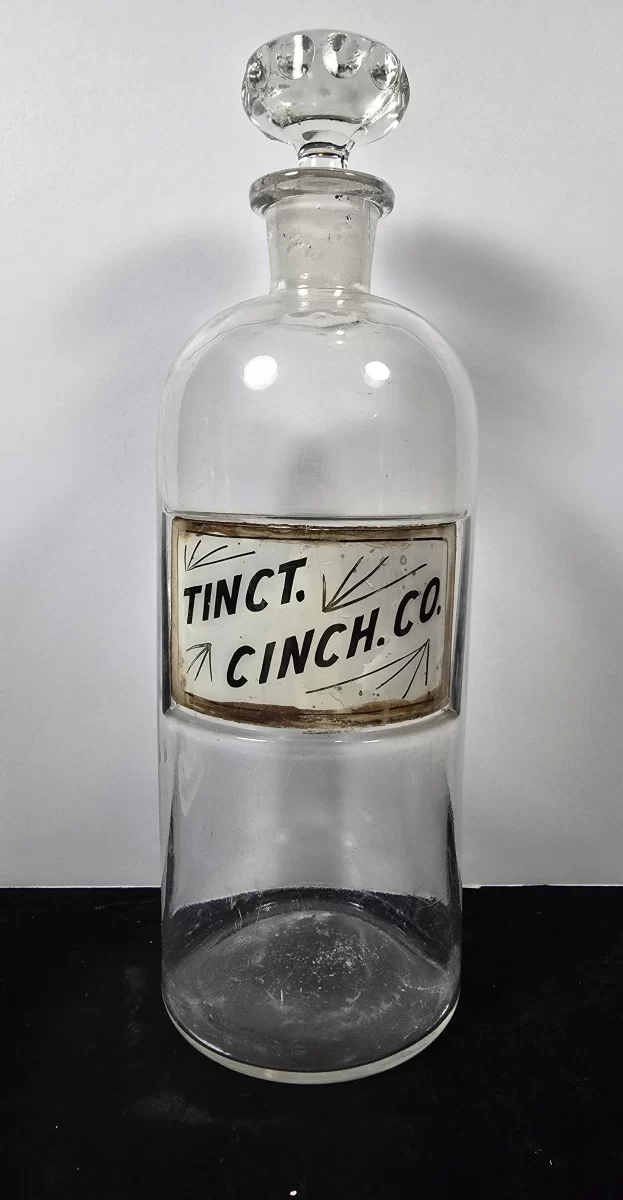
Description
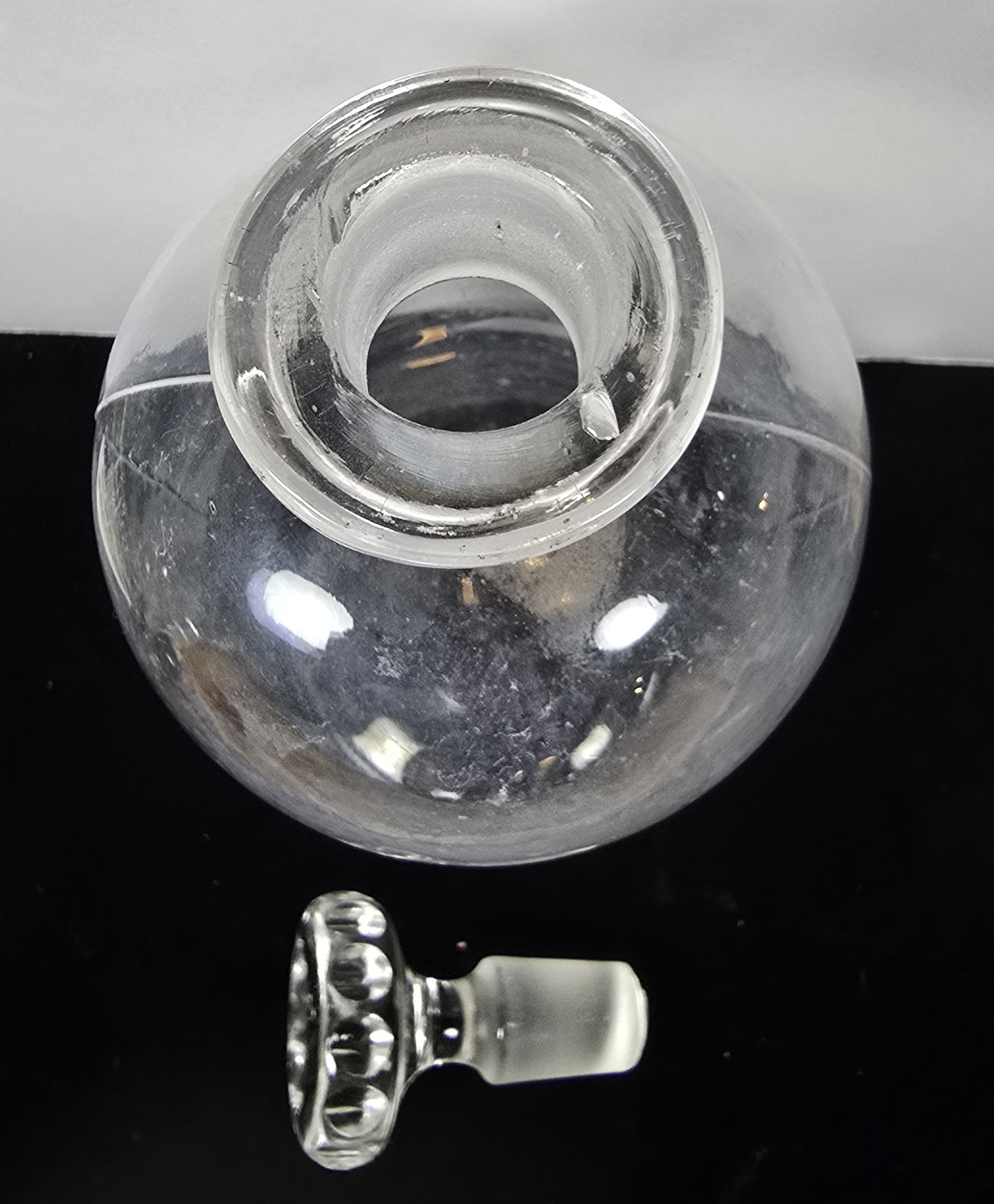
This is a tall, round clear-glass apothecary bottle with its original heavy glass stopper, labeled “Tinct. Cinch. Co.” The abbreviation refers to Tinctura Cinchonae Composita, or Compound Tincture of Cinchona.
Cinchona bark was a primary historical source of quinine, a vital treatment for malaria and fevers. The compound tincture blended cinchona with other aromatic ingredients such as bitter orange peel and serpentaria to make the preparation more palatable and tonically stimulating.
This bottle would have once stood among a pharmacy’s display stock, storing a key remedy of the 19th century when malaria and intermittent fevers were far more prevalent.
Condition
The bottle is in good antique condition with original stopper intact. The enameled/applied label shows discoloration, surface spotting, and age toning, but remains legible. The glass has light interior haze and shelf wear, but no major cracks or chips.
Gallery
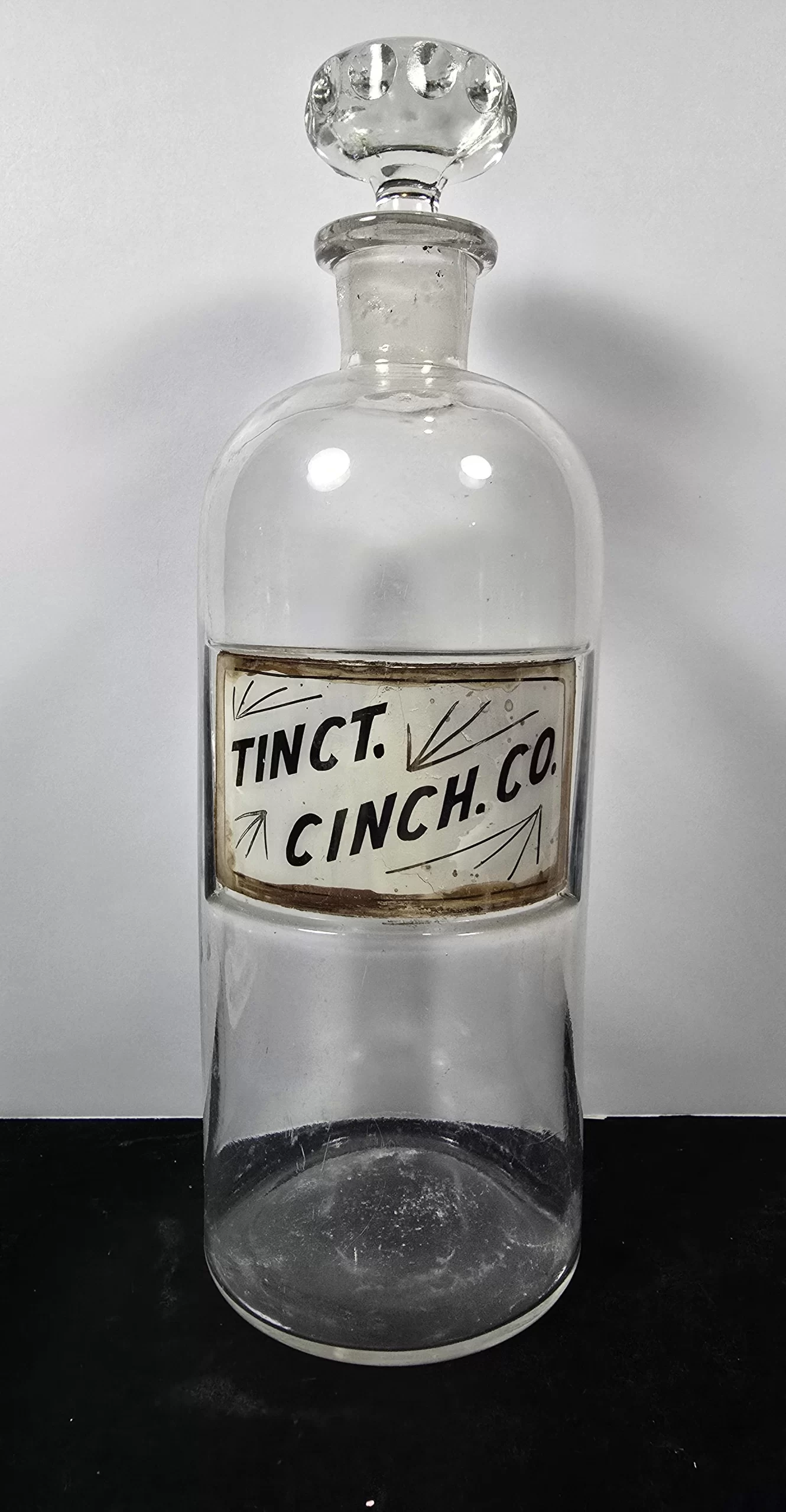
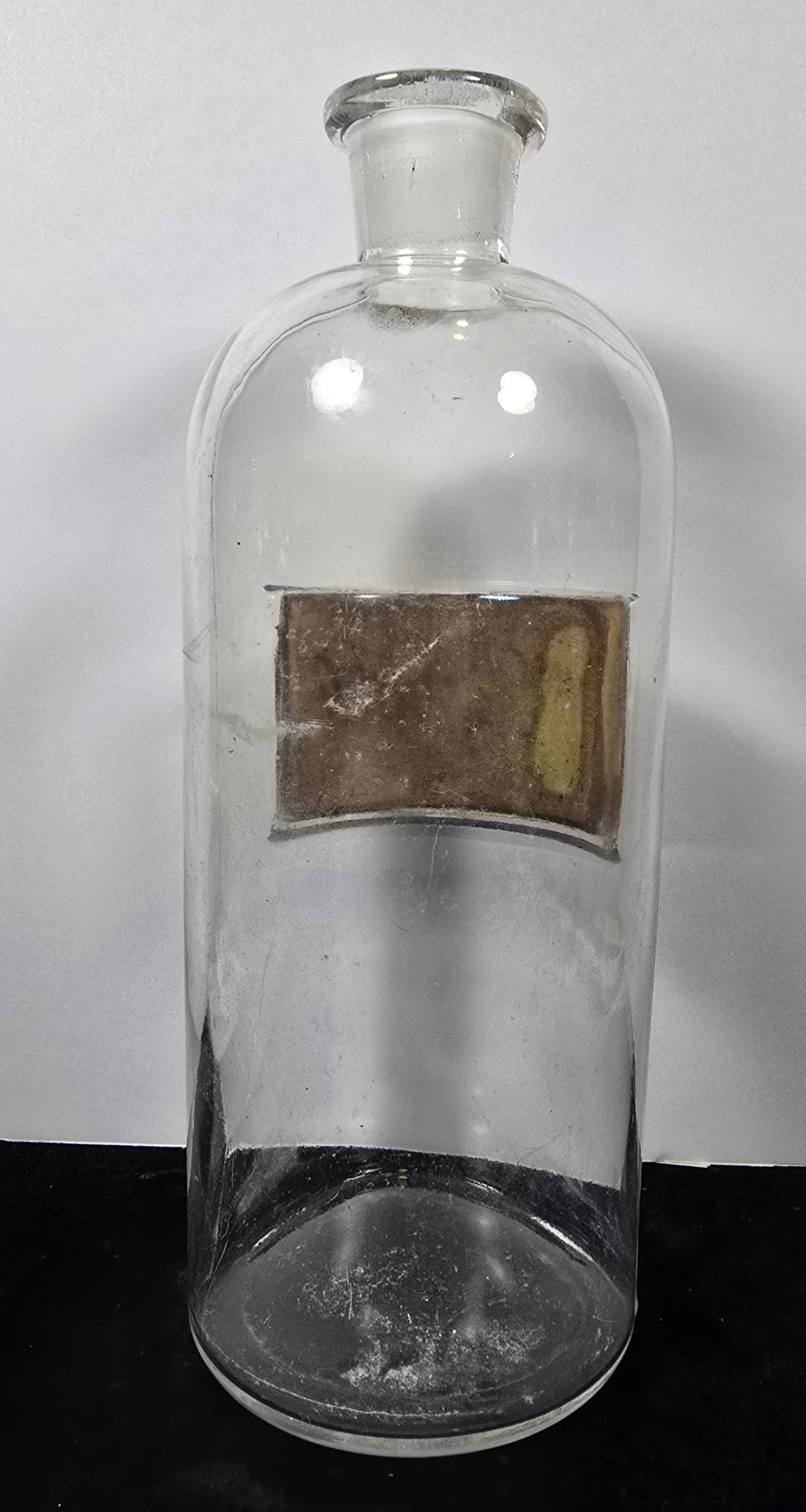
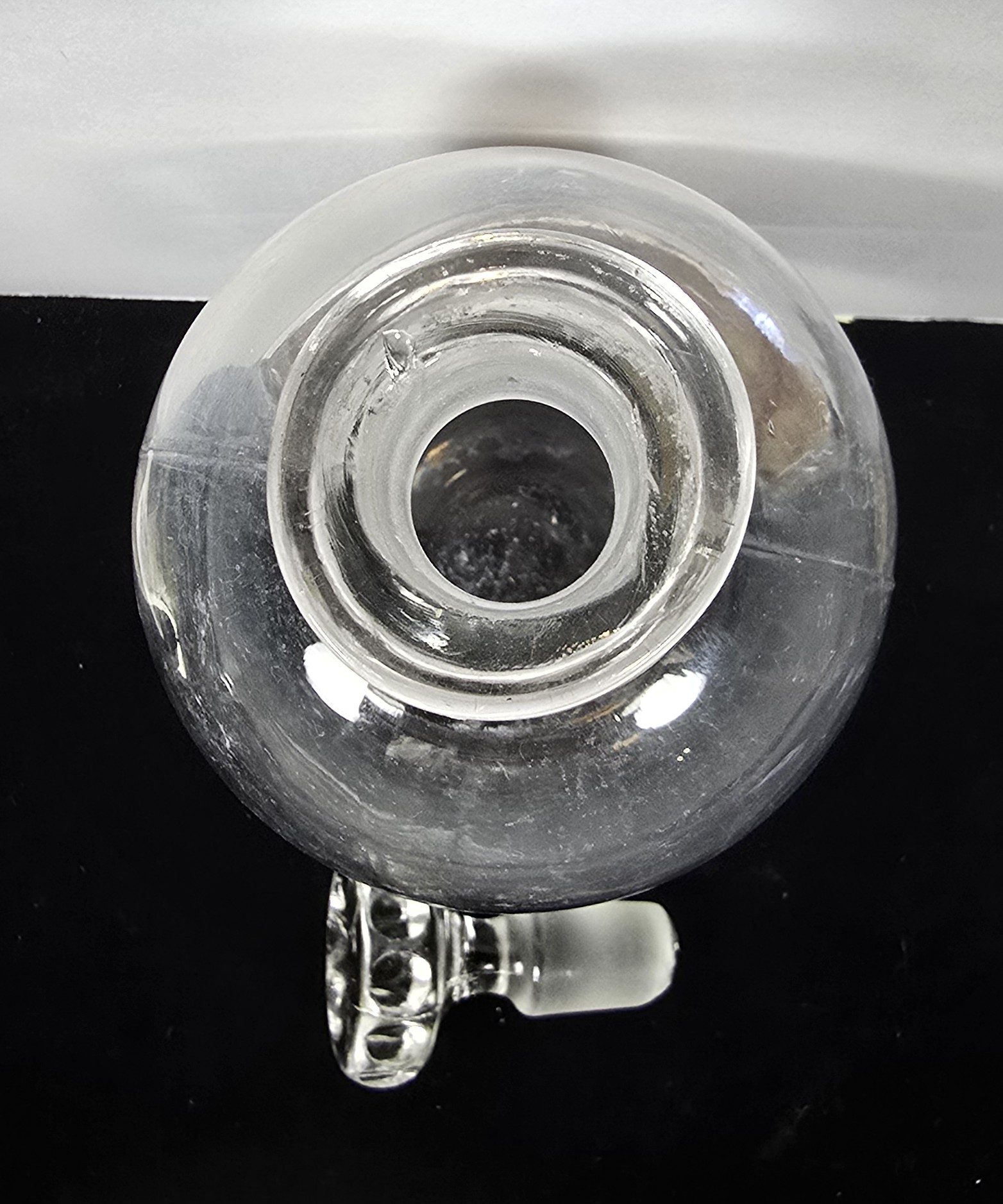
Historical context
The discovery of quinine from cinchona bark revolutionized the treatment of malaria, making tinctures of cinchona one of the most important medicines of the 18th and 19th centuries. Compound tinctures extended its uses to digestive complaints and general tonic therapy, often prescribed for weakness, fever recovery, and “low vitality.”
Curious Facts, Ephemera, and Trivia
Jesuit missionaries were among the first to introduce cinchona bark to Europe, earning it the nickname “Jesuit’s Powder.”
Quinine remained the gold standard malaria treatment well into the 20th century, later supplanted by synthetic drugs.
Cinchona bark also gave tonic water its bitter flavor—gin and tonic was originally consumed to make quinine prophylaxis more palatable.
Excerpt
From United States Dispensatory, 19th century:
“Compound Tincture of Cinchona is employed as a stomachic and tonic, useful in dyspepsia, intermittent fevers, and as an adjuvant in convalescence.”
Why it is in the Cabinet
This bottle embodies the transition of pharmacy from botanical remedies toward standardized chemical medicine. It represents the global significance of cinchona in controlling malaria and highlights how pharmacists stored and dispensed one of the world’s most important plant-derived drugs.
Support Dr. Bebout’s Cabinet of Medical Curiosities
If you enjoy the history, the oddities, and the effort, help keep this cabinet open. Every little bit helps preserve and share the strange wonders of medicine's past.
Buy Me a Ko-fi ☕ Buy Me a Coffee ☕ Tip via PayPal 💵