
Title
Theory and Treatment of Fevers
Author
John Sappington, M.D.
Image
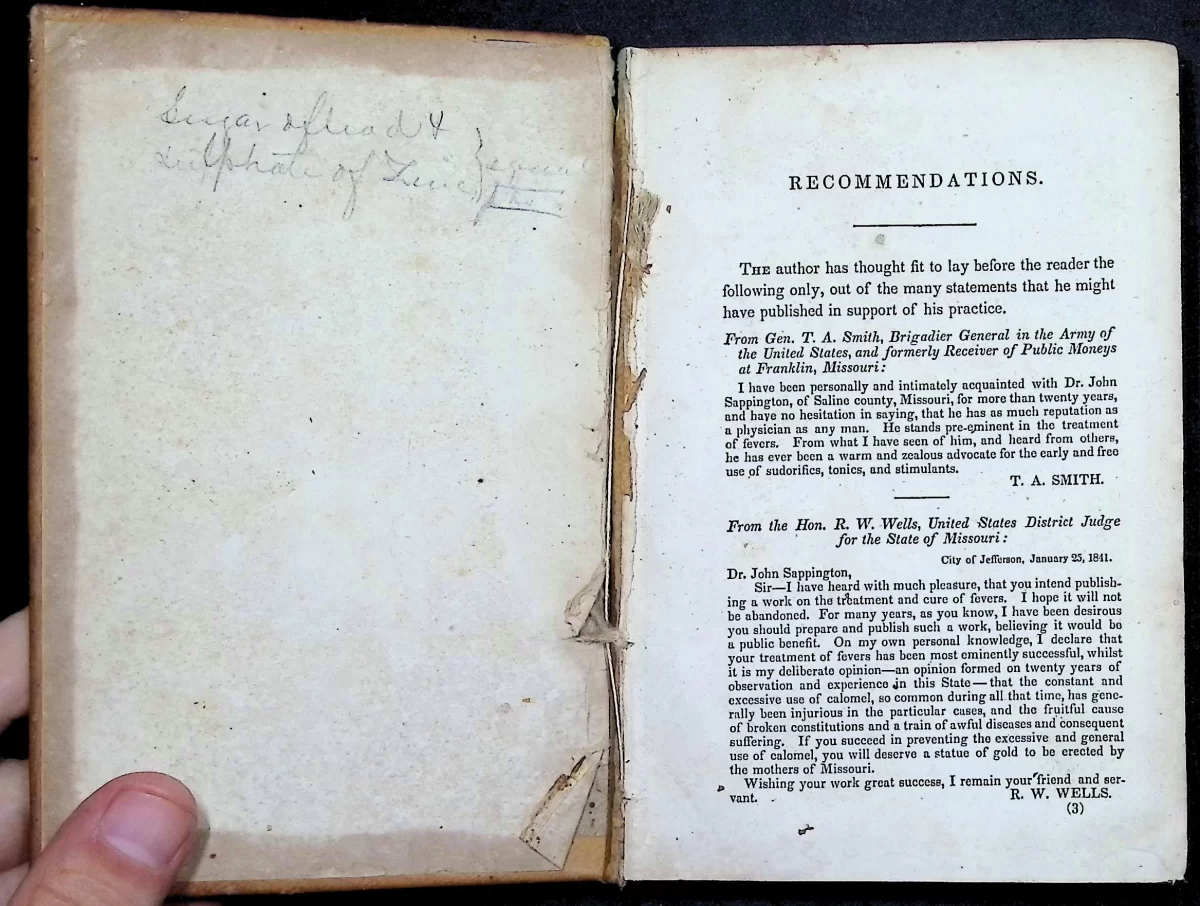
Description
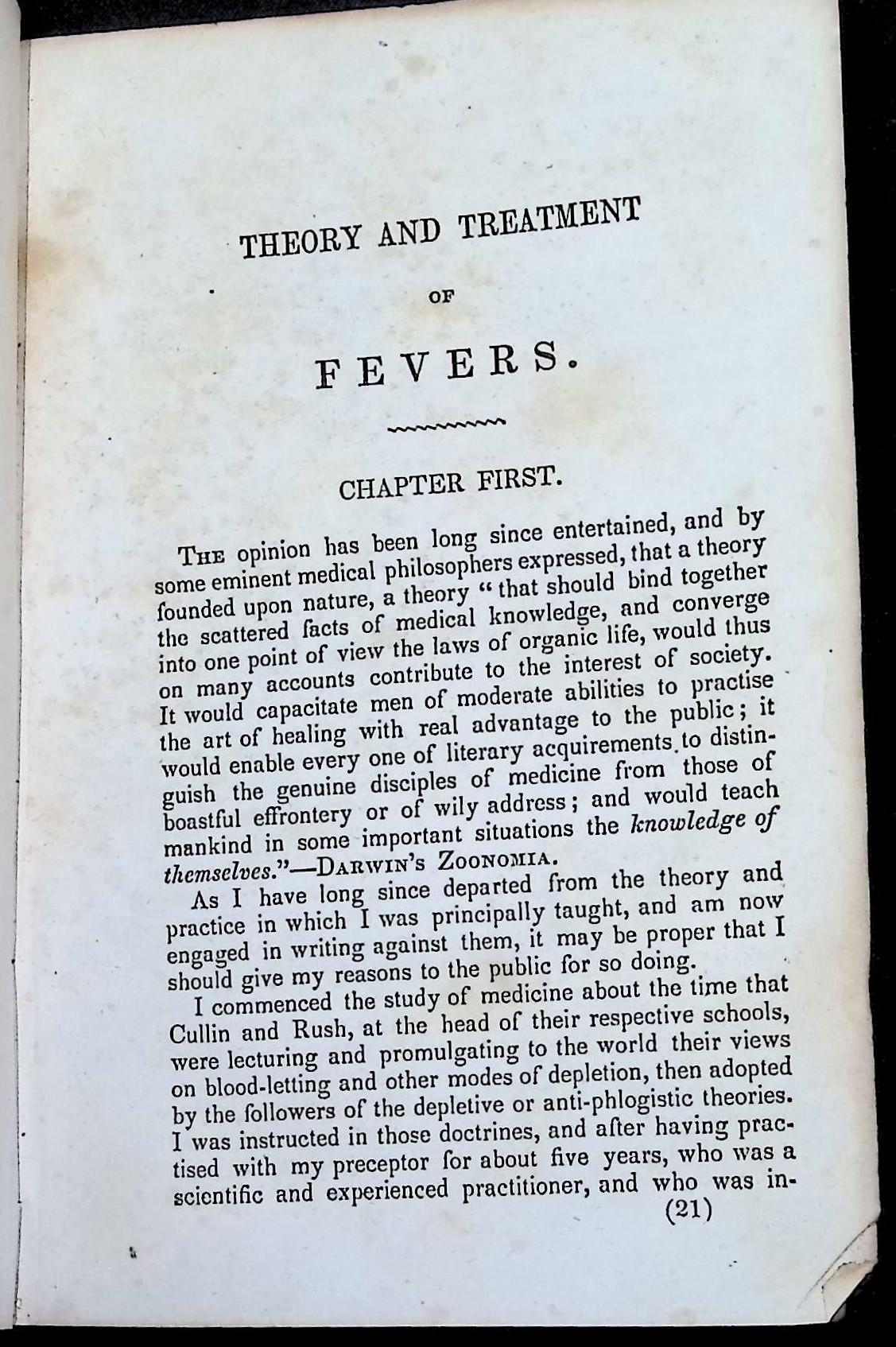
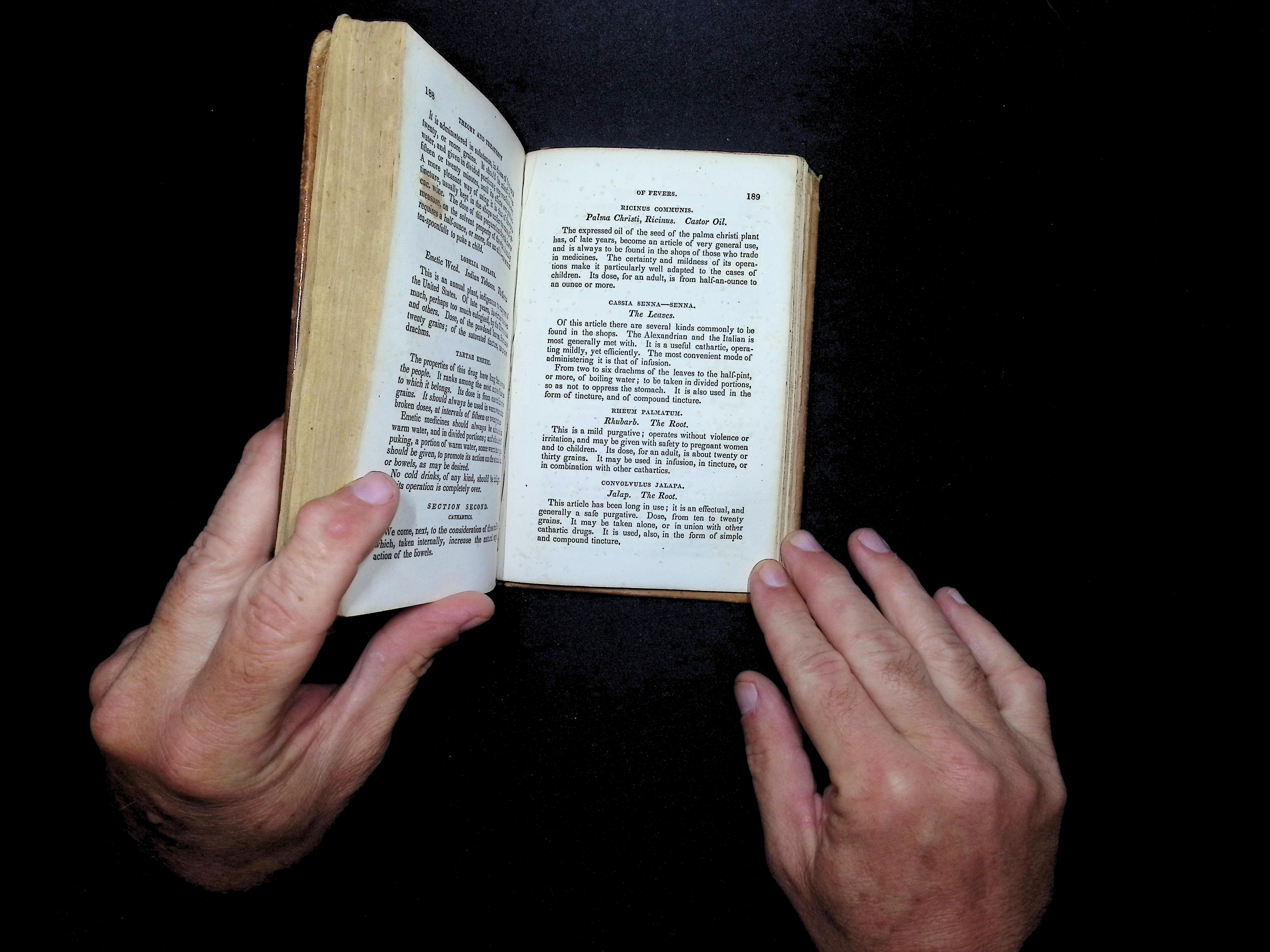
An 1844 medical treatise written and printed by Missouri physician Dr. John Sappington, one of the earliest American advocates for quinine therapy. Sappington rejected the prevailing practices of bleeding and purging, promoting instead his own “anti-febrile” quinine pills for intermittent, remittent, and typhoid fevers.
Printed at Arrow Rock, Missouri, this work represents a major turning point in American frontier medicine, blending practical pharmacology with early public health understanding.
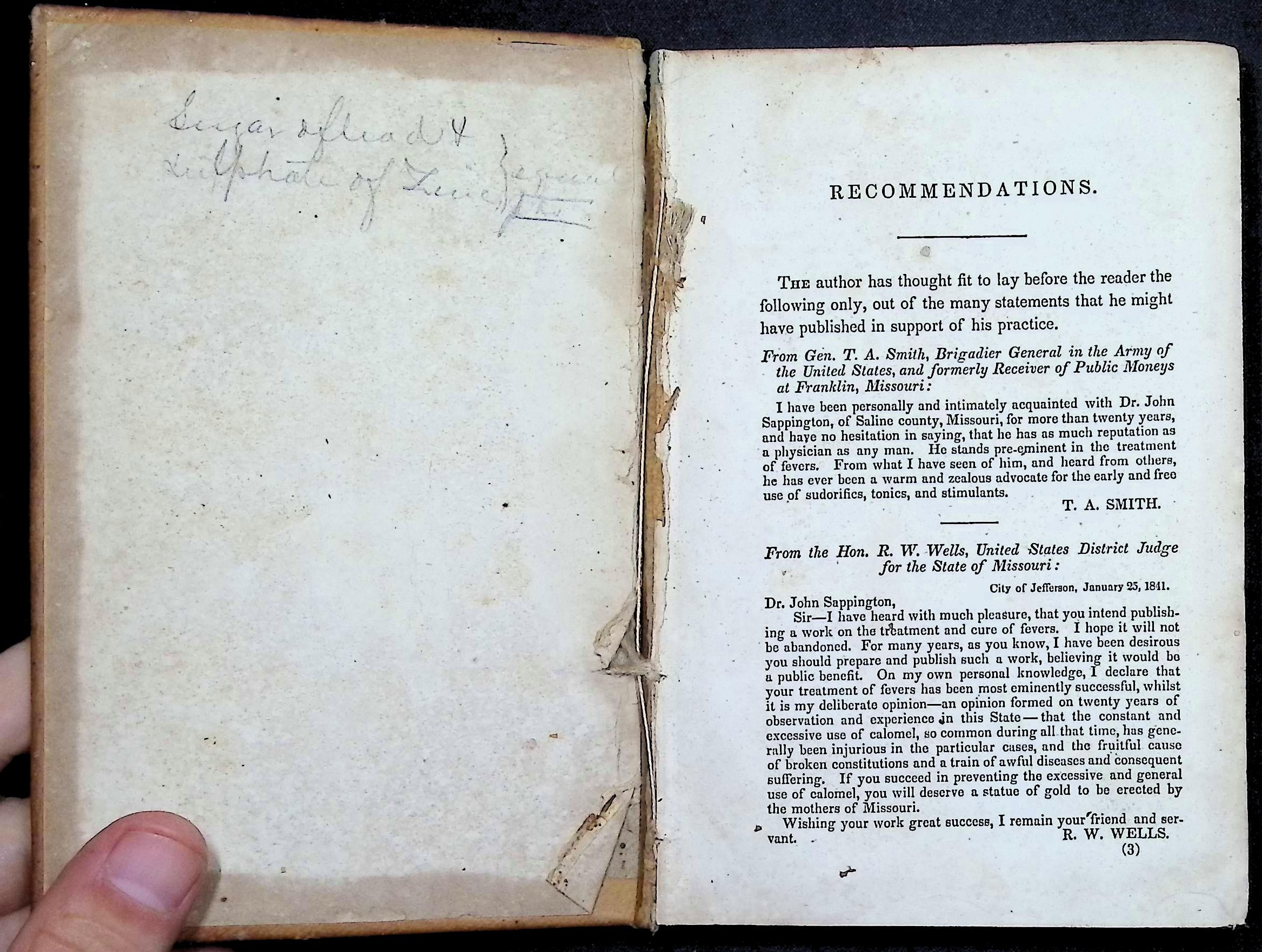
This copy lacks the title and copyright pages but retains the complete text block beginning with the Recommendations section.
Condition
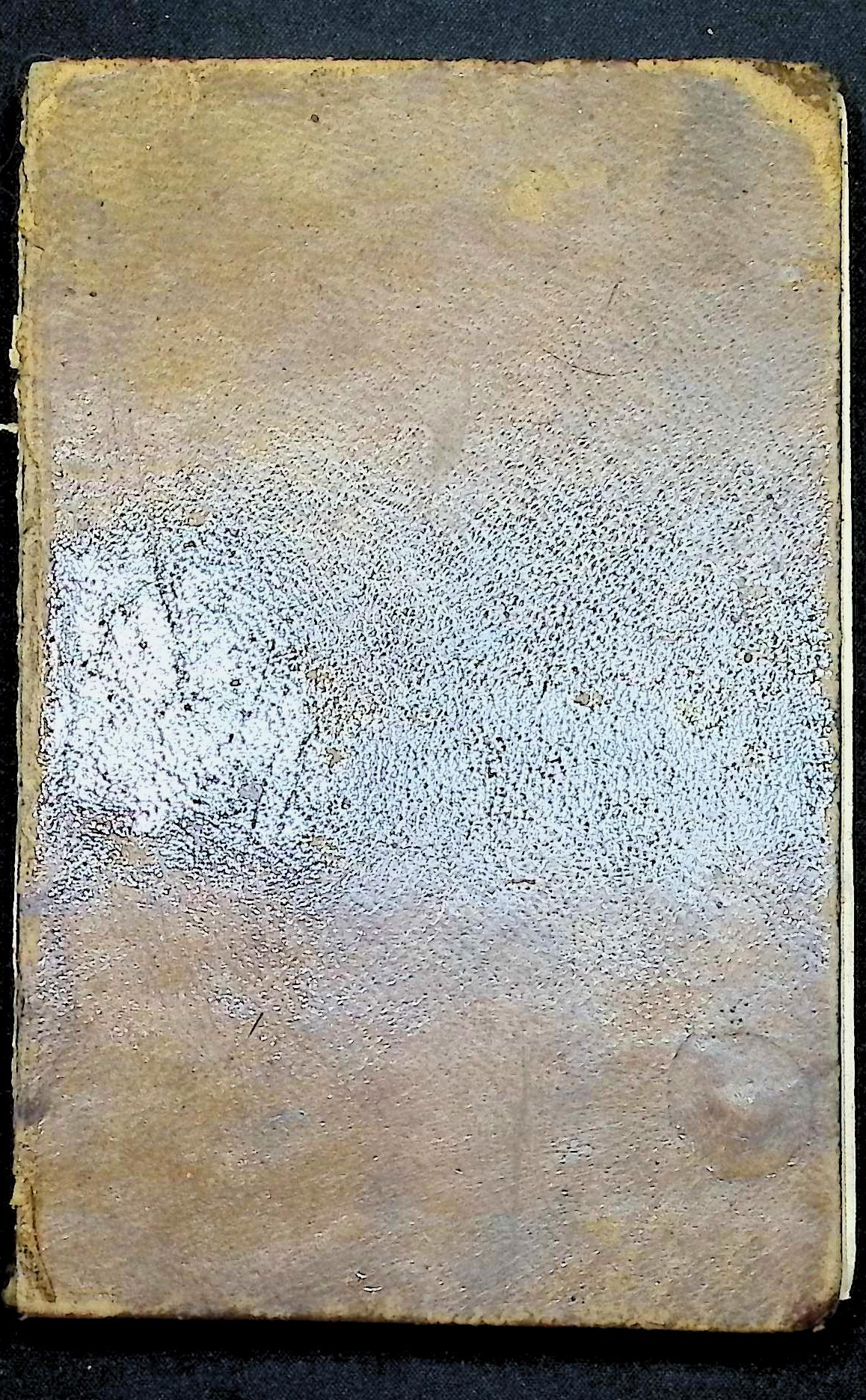
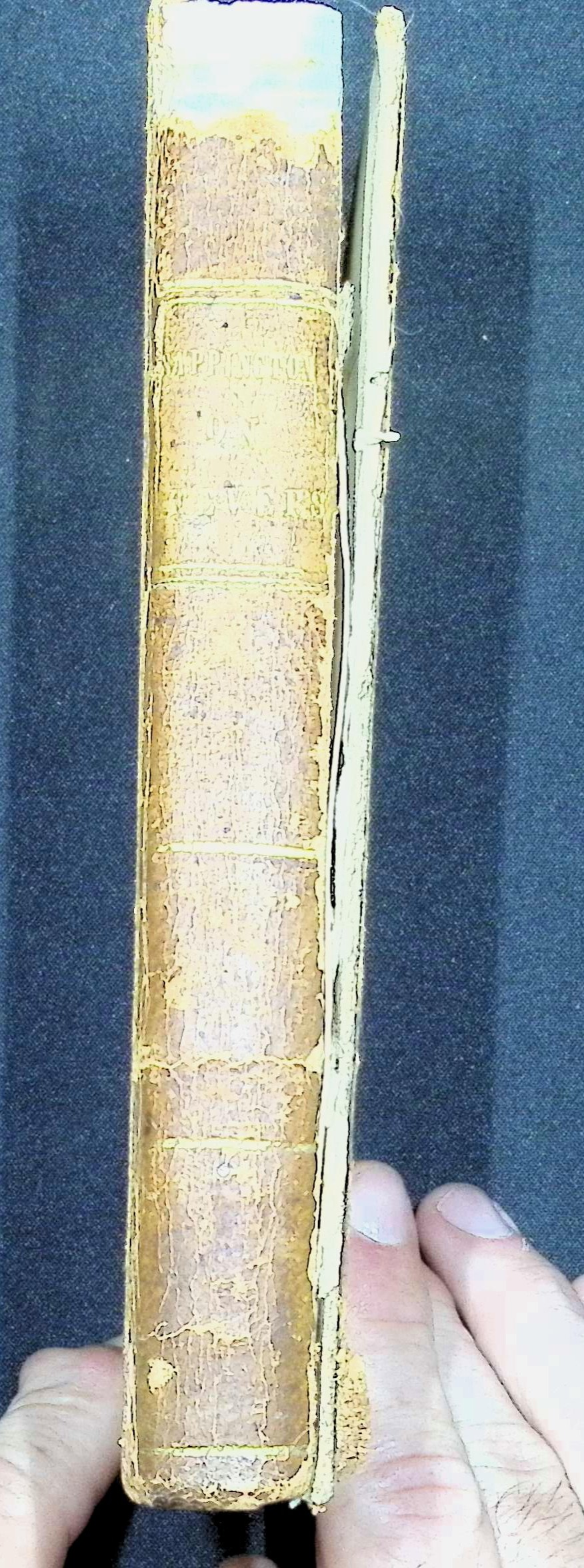
Fair to good. Original leather binding worn and cracked with hinge weakness. Interior pages show mild foxing and edge wear. Title and copyright pages missing.
Gallery
Historical context
Published in Arrow Rock, Missouri, Sappington’s volume was among the first American medical works printed west of the Mississippi River. His endorsement of quinine over bleeding and starvation positioned him as a reformer during the waning era of humoral medicine. His writings later influenced both civilian and military treatment of fevers and malaria throughout the Mississippi Valley.
Curious Facts, Ephemera, and Trivia
Dr. Sappington produced and sold his own quinine-based “Anti-Fever Pills,” packaged in small wooden boxes bearing his likeness. His medicines were used by settlers and U.S. Army surgeons alike. Sappington’s family became politically prominent—his son-in-law, Meredith Marmaduke, served as governor of Missouri.
Excerpt
“Experience has proved that bleeding, purging, and starving the patient, so long relied upon, only serve to increase debility. Quinine, properly administered, interrupts the paroxysm and restores the system to its natural state.”
Why it is in the Cabinet
This 1844 edition captures a defining moment in early American medicine—the shift from speculative humoral treatment to evidence-based pharmacology. Though incomplete, the volume remains an authentic artifact of the frontier physician’s battle against fever and malaria.
Support Dr. Bebout’s Cabinet of Medical Curiosities
If you enjoy the history, the oddities, and the effort, help keep this cabinet open. Every little bit helps preserve and share the strange wonders of medicine's past.
Buy Me a Ko-fi ☕ Buy Me a Coffee ☕ Tip via PayPal 💵