
Title
The Principles and Practice of Medicine (1892) – Digitized Edition
Author
Sir William Osler, M.D.
Fellow of the Royal College of Physicians (London); Professor of Medicine, Johns Hopkins University; formerly of McGill University and the University of Pennsylvania
Image

Description
This digitized edition of Sir William Osler’s The Principles and Practice of Medicine marks the inaugural publication of a text that revolutionized medical education. Released in 1892, this work emphasized clinical observation at the bedside and served as the gold standard for internal medicine texts for over 40 years.
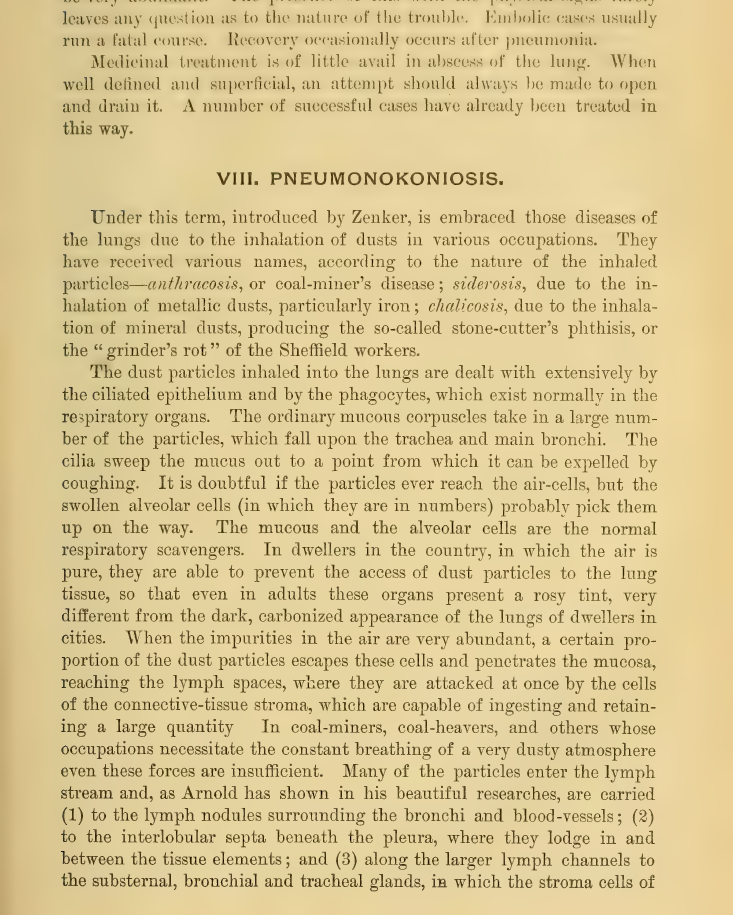
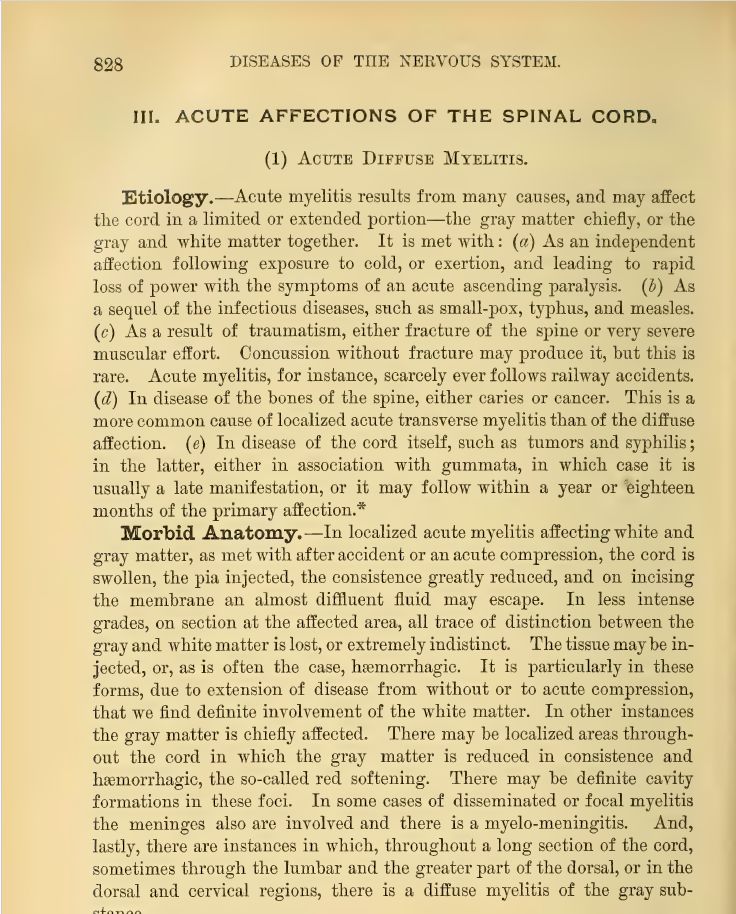
The book covers a broad spectrum of diseases, integrating pathology, diagnosis, and treatment into one cohesive volume. From classic descriptions of typhoid fever and tuberculosis to acute affections of the spinal cord and pneumonokoniosis, Osler’s voice rings with clarity, confidence, and the clinical precision that earned him legendary status.
Though the Cabinet does not yet hold a physical copy of the first edition, this digital version offers the same invaluable historical insight.
Condition
Digitized public domain edition. Source: Archive.org
Read it online here
Gallery
Historical context
Osler’s textbook was a cornerstone of medical training across English-speaking countries for decades. It reflected the emerging clinical methods of the late 19th century, bridging empirical observation with a rapidly growing understanding of pathophysiology.
Curious Facts, Ephemera, and Trivia
1. Osler coined the phrase “Listen to your patient.”
He famously told students: “Listen to your patient; he is telling you the diagnosis.” This was radical at a time when doctors relied heavily on textbooks rather than patient observation.
2. This book was written by candlelight… literally.
Osler often worked into the early hours, writing by gas lamp and candle while serving as the physician-in-chief at Johns Hopkins.
3. The book predates antibiotics by 40 years.
Osler’s treatments for pneumonia, tuberculosis, and typhoid fever were rooted in supportive care, as antibiotics like penicillin wouldn’t arrive until the 1940s.
4. Osler made typhoid sound poetic.
His description of enteric fever in this book was so vivid and elegant that students said “he made dying from typhoid seem almost desirable.”
5. The first edition omitted women.
There are no references to female-specific diseases or gynecologic care. Osler’s clinical focus mirrored the male-dominated patient base of early hospitals.
6. This book was a “one-textbook med school.”
For decades, students only needed The Principles and Practice of Medicine to pass exams. It was referred to as “the medical bible.”
7. Osler didn’t believe in gloves.
In this same era, Osler reportedly criticized over-reliance on antiseptic procedures and insisted “a physician must feel disease with his hands.”
8. Radiology didn’t exist yet.
The book predates the first clinical use of X-rays (1895), so all diagnostic methods described are physical: inspection, palpation, percussion, and auscultation.
9. A copy was reportedly found in a WWI trench.
Medical officers carried Osler’s text into the field during World War I. Anecdotal records note that a worn, bloodstained copy was recovered from a British aid station.
Excerpt
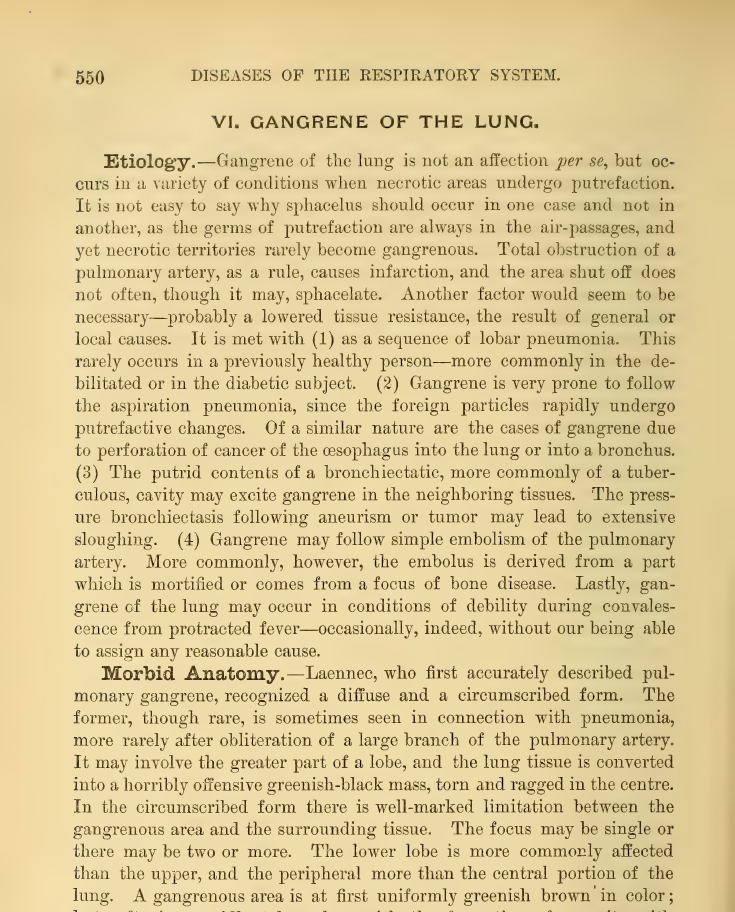
“Gangrene of the lung is not an affection per se, but occurs in a variety of conditions when necrotic areas undergo putrefaction… The lung tissue is converted into a horribly offensive greenish-black mass, torn and ragged in the centre.”
— Chapter VI: Gangrene of the Lung
Why it is in the Cabinet
This is the foundational text of modern medicine, and no historical collection would be complete without it. Osler’s teachings defined generations of physicians and continue to influence clinical reasoning today.
Support Dr. Bebout’s Cabinet of Medical Curiosities
If you enjoy the history, the oddities, and the effort, help keep this cabinet open. Every little bit helps preserve and share the strange wonders of medicine's past.
Buy Me a Ko-fi ☕ Buy Me a Coffee ☕ Tip via PayPal 💵