
Title
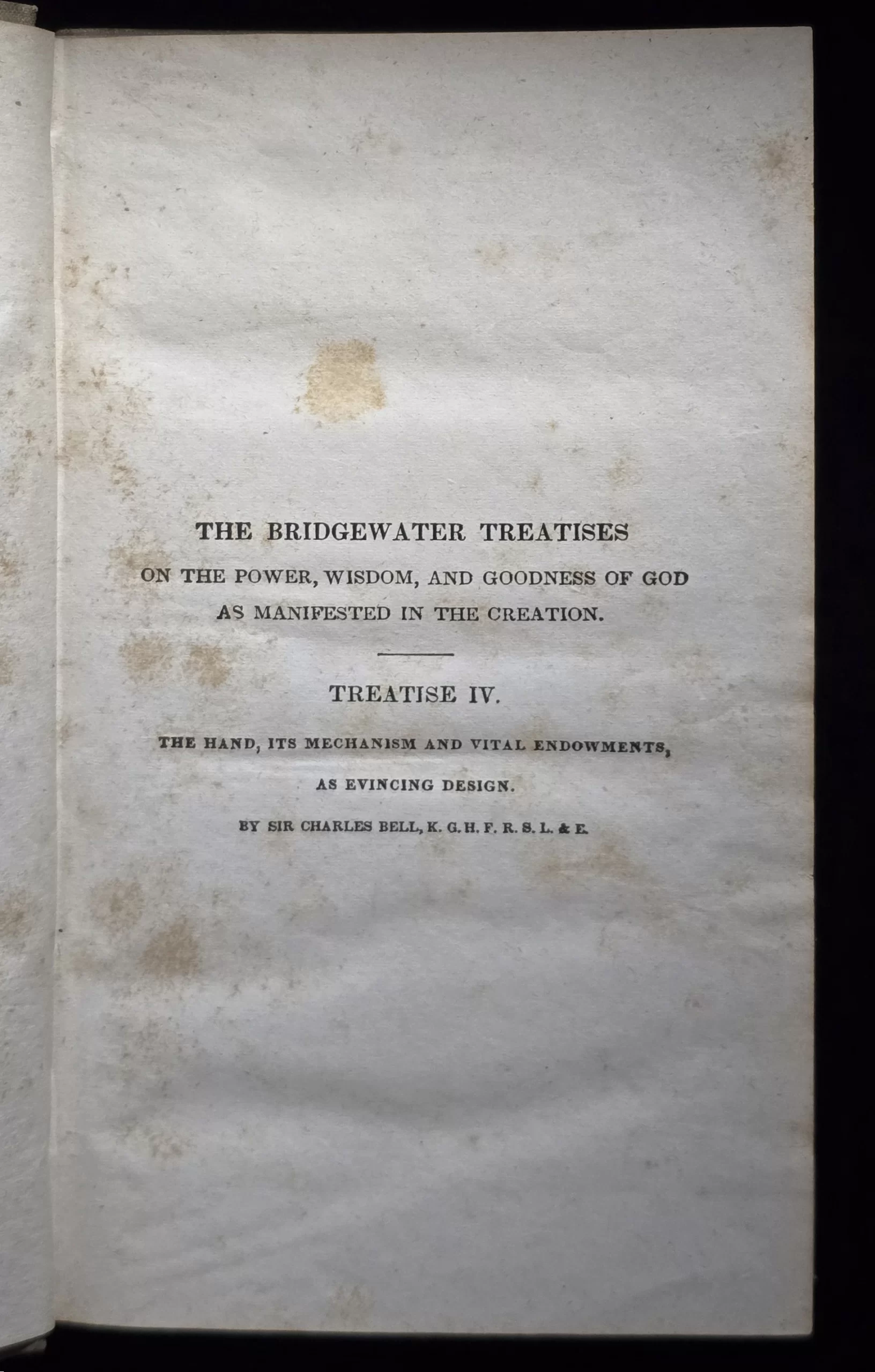
The Hand: Its Mechanism and Vital Endowments, as Evincing Design (1835)
Author
Sir Charles Bell, K.G.H., F.R.S. L&E
Image
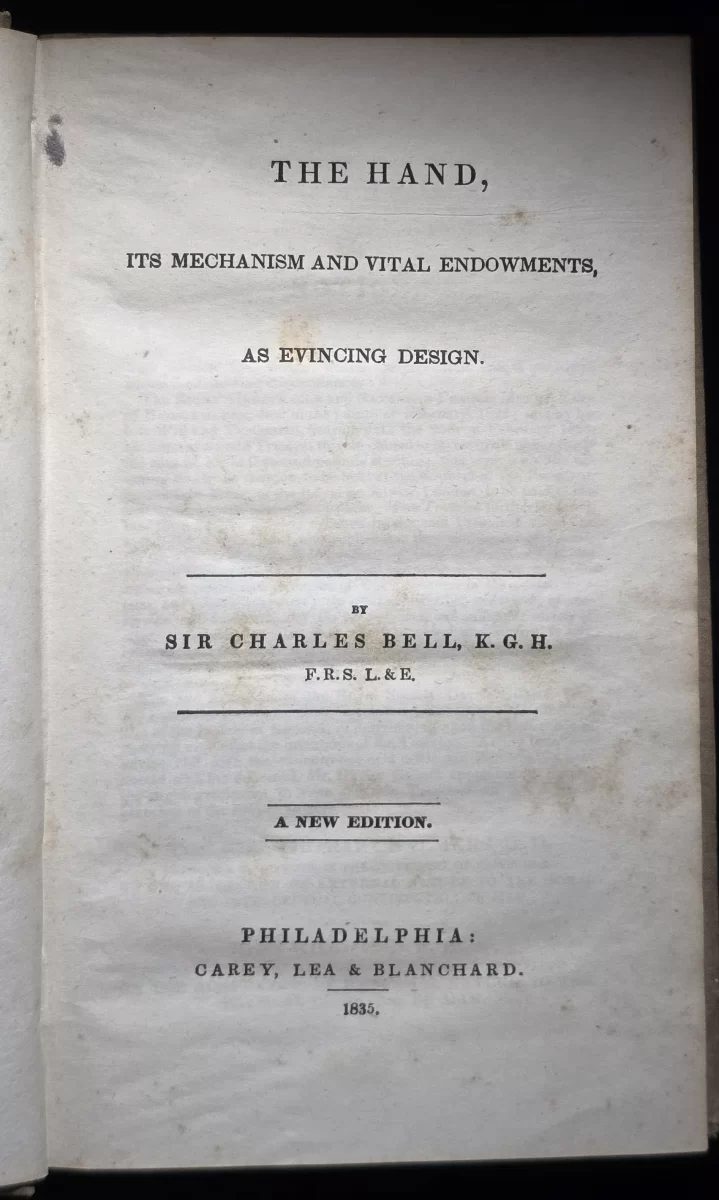
Description
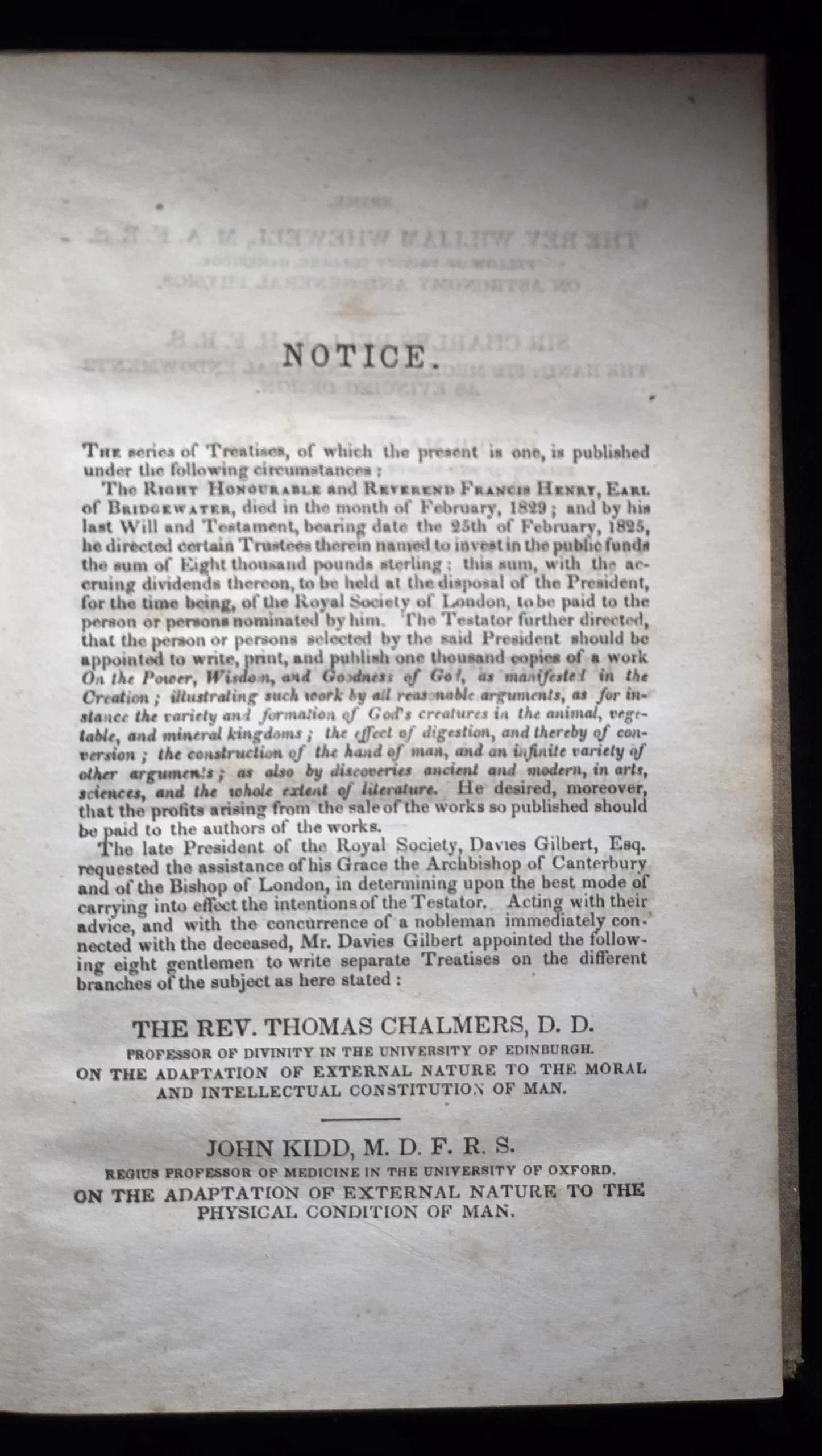
This is an 1835 American edition of one of the foundational volumes in anatomical theology: The Hand: Its Mechanism and Vital Endowments, as Evincing Design by Sir Charles Bell. It is the fourth volume in the famed Bridgewater Treatises, a series commissioned to explore the divine design evident in nature.
Sir Charles Bell—renowned anatomist and namesake of Bell’s palsy—devotes this work to the human hand as the pinnacle of functional design. He argues that the intricacy and utility of the hand reflects intelligent creation, merging scientific precision with theological reflection. Bell’s writing blends anatomical insight with Victorian prose and philosophical overtones.
This volume includes original Bridgewater notices, theological commentary, and extensive analysis of manual anatomy. The chapter shown (“The hand not the source of ingenuity or contrivance”) discusses whether man’s intellect derives from the physical hand or vice versa—a hallmark of Bell’s attempt to unify physical form and divine purpose.
Condition
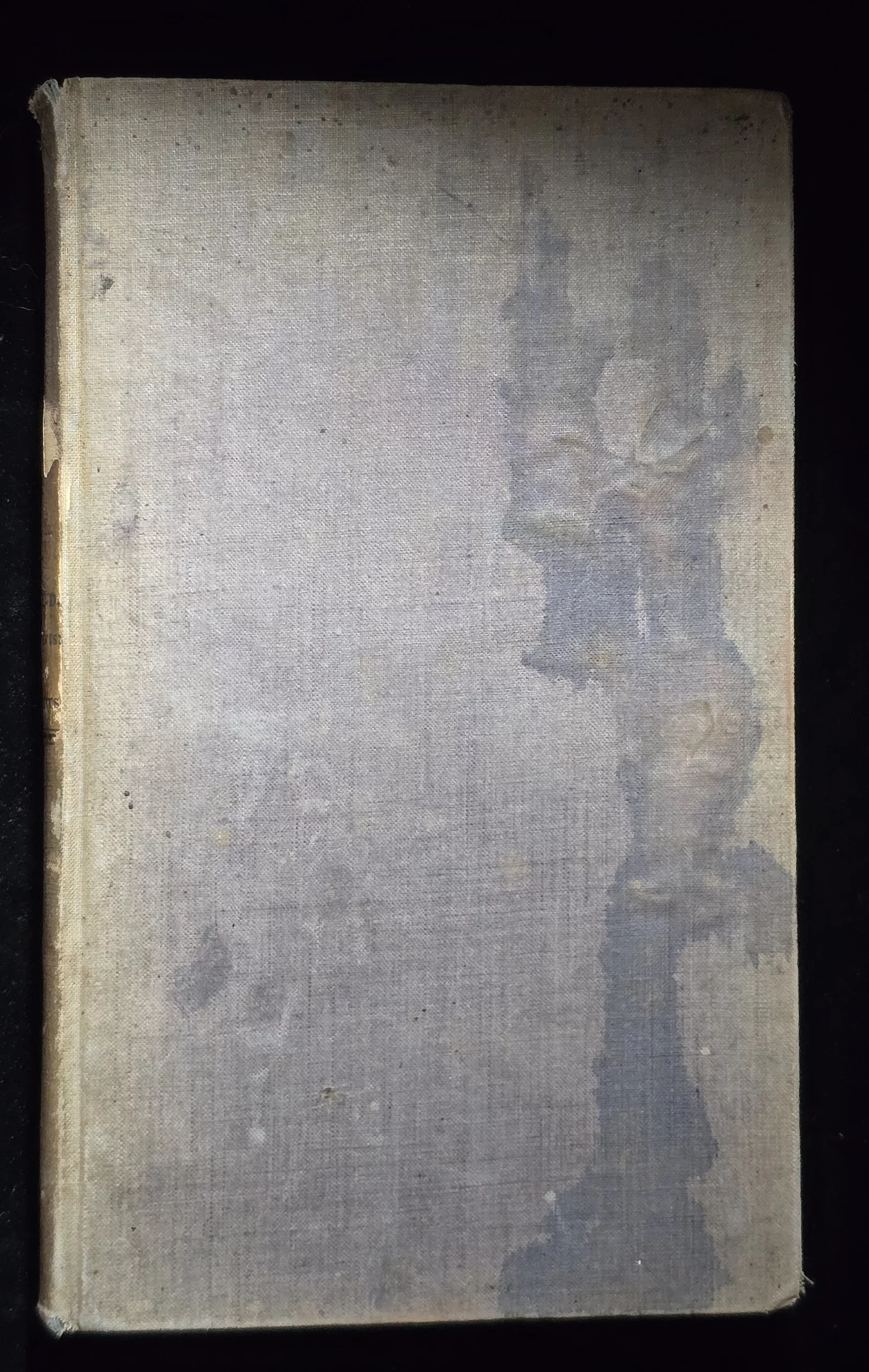
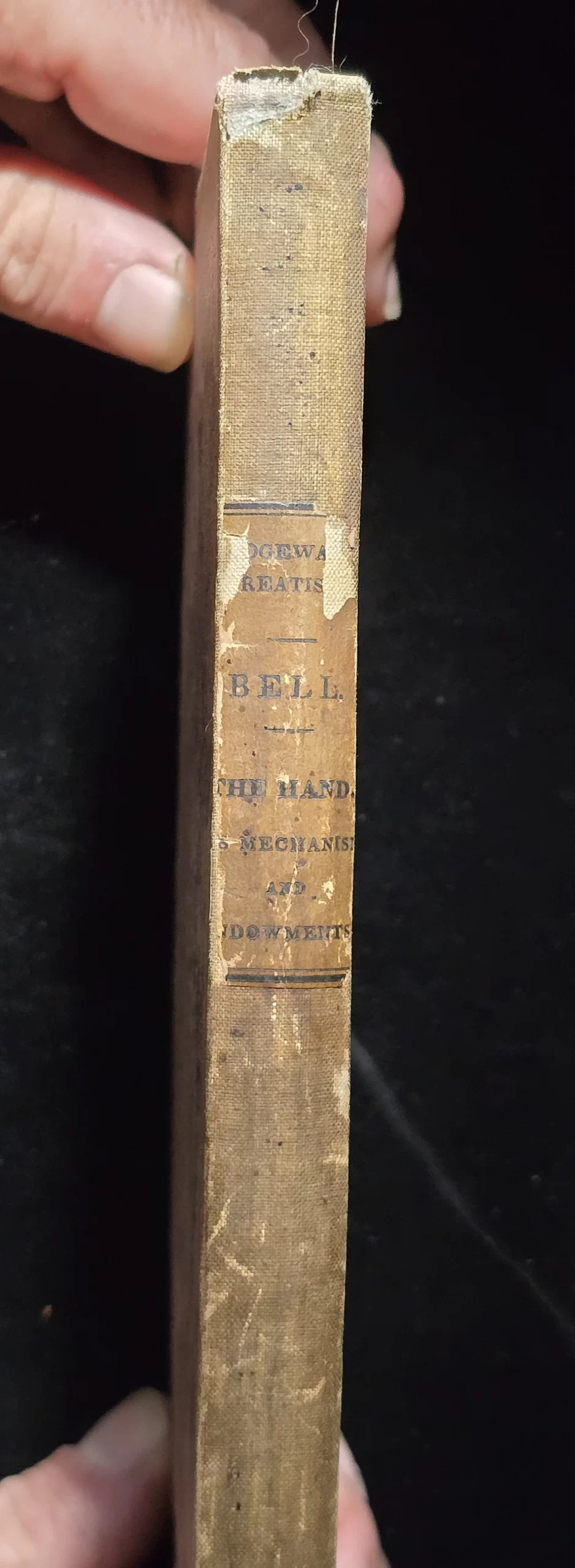
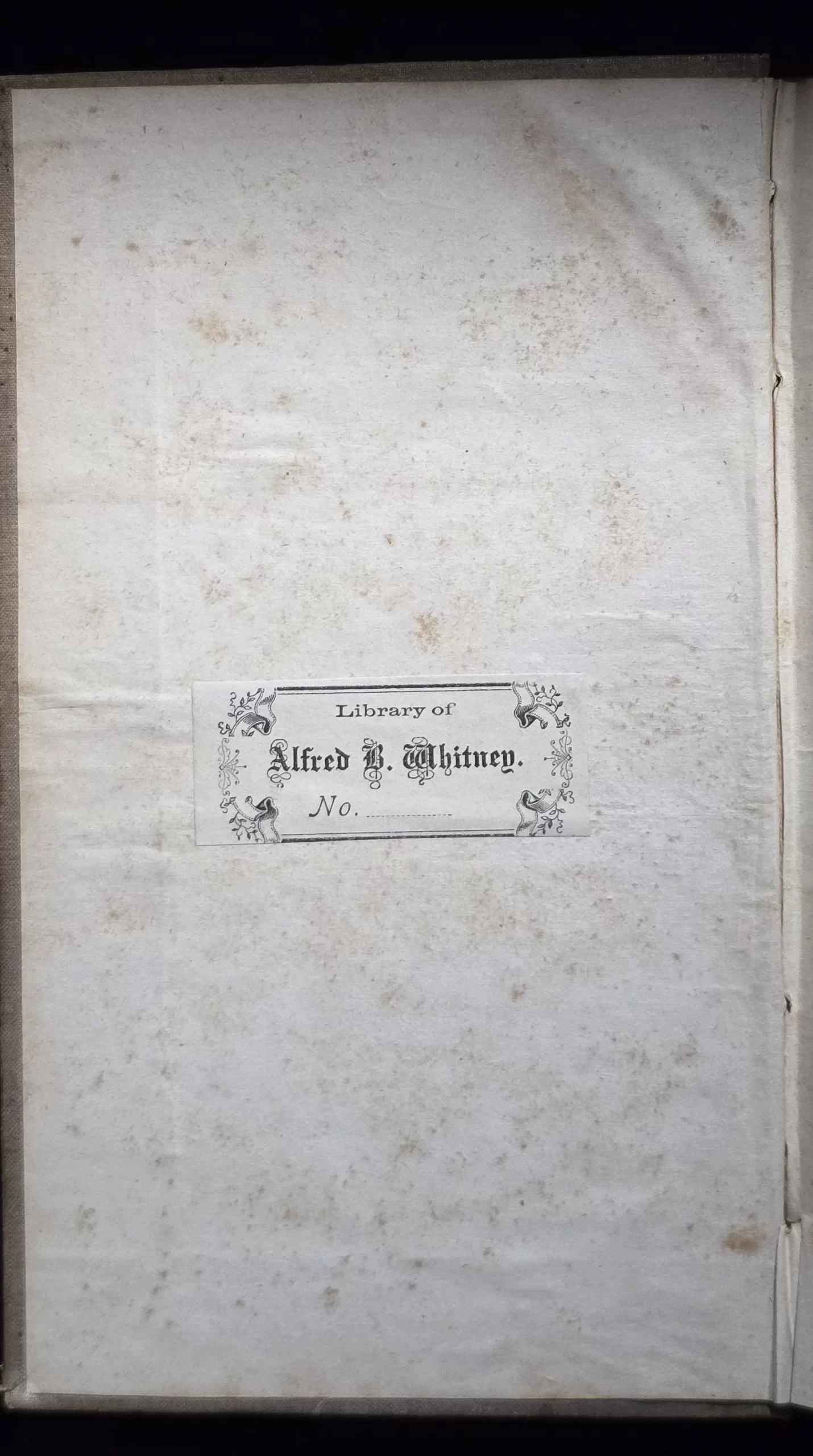
Heavily aged but intact. The spine shows wear with loss to the paper label. Cloth cover bears distinct staining and foxing. Interior pages are foxed but fully legible, including intact notices and title pages. An old library plate inside front board reads “Library of Alfred B. Whitney.”
Gallery

Historical context
This book is part of the Bridgewater Treatises (1833–1836), a landmark series in 19th-century natural theology funded by the bequest of Francis Henry Egerton, 8th Earl of Bridgewater. The treatises sought to harmonize scientific discovery with theological doctrine.
Bell, a Scottish surgeon and anatomist, is credited with groundbreaking work in neuroanatomy and functional mapping of the brain and spine. In this treatise, he turns his attention to the hand—not just its physical mechanics, but its philosophical implications. His argument: that design implies a Designer.
The 1835 Philadelphia edition by Carey, Lea & Blanchard helped bring these influential ideas to an American audience during a time of burgeoning scientific curiosity and religious engagement with nature.
Listing in Archives.org
Curious Facts, Ephemera, and Trivia
This book was part of a coordinated publishing project involving multiple prominent thinkers of the time, including Peter Mark Roget (of Thesaurus fame).
Bell’s discussion of the hand predates Darwin’s On the Origin of Species by nearly 25 years, offering a contrasting pre-evolutionary view of anatomical purpose.
This edition includes Latin footnotes, such as one quoting Galen: “Non enim quia manus sunt organa sapienti animali convenientia…”
Bell argued that the intellect preceded the instrument—not that the hand made man wise, but that wisdom found in man made such a hand possible.
Excerpt
“We must confess that it is in the human hand that we have the consummation of all perfection as an instrument.”
Why it is in the Cabinet
This volume is a masterful example of early 19th-century anatomical philosophy, where science and spirituality interlace. As a historical artifact, it reflects a pivotal moment in the intellectual history of medicine—and the elevation of the human hand as both tool and symbol of divine craftsmanship. Its survival in this condition, nearly two centuries later, earns it a rightful place among the most thoughtful curiosities in the Cabinet.
Support Dr. Bebout’s Cabinet of Medical Curiosities
If you enjoy the history, the oddities, and the effort, help keep this cabinet open. Every little bit helps preserve and share the strange wonders of medicine's past.
Buy Me a Ko-fi ☕ Buy Me a Coffee ☕ Tip via PayPal 💵