
Title
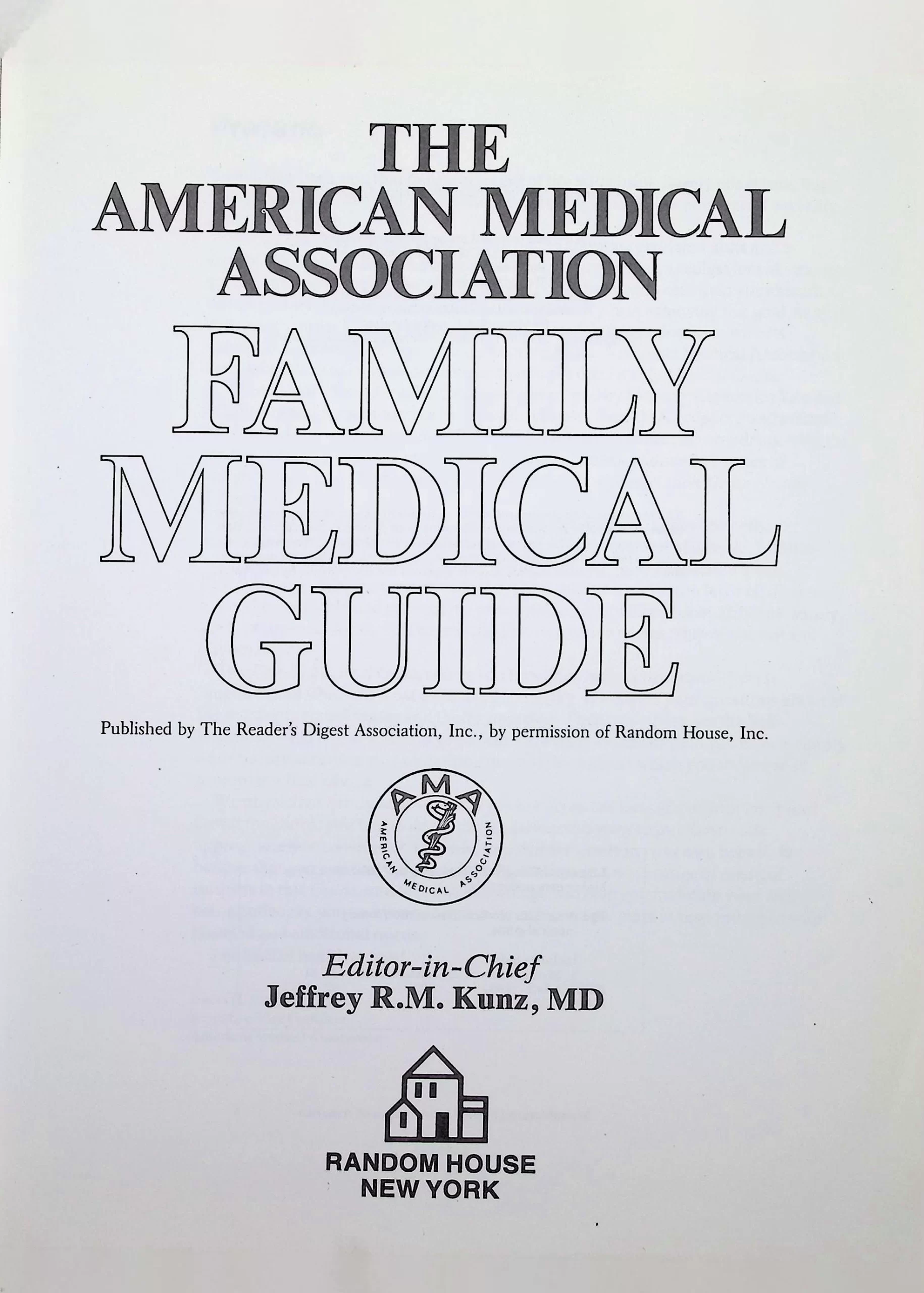
The American Medical Association Family Medical Guide
Author
Editor-in-Chief: Jeffrey R.M. Kunz, MD
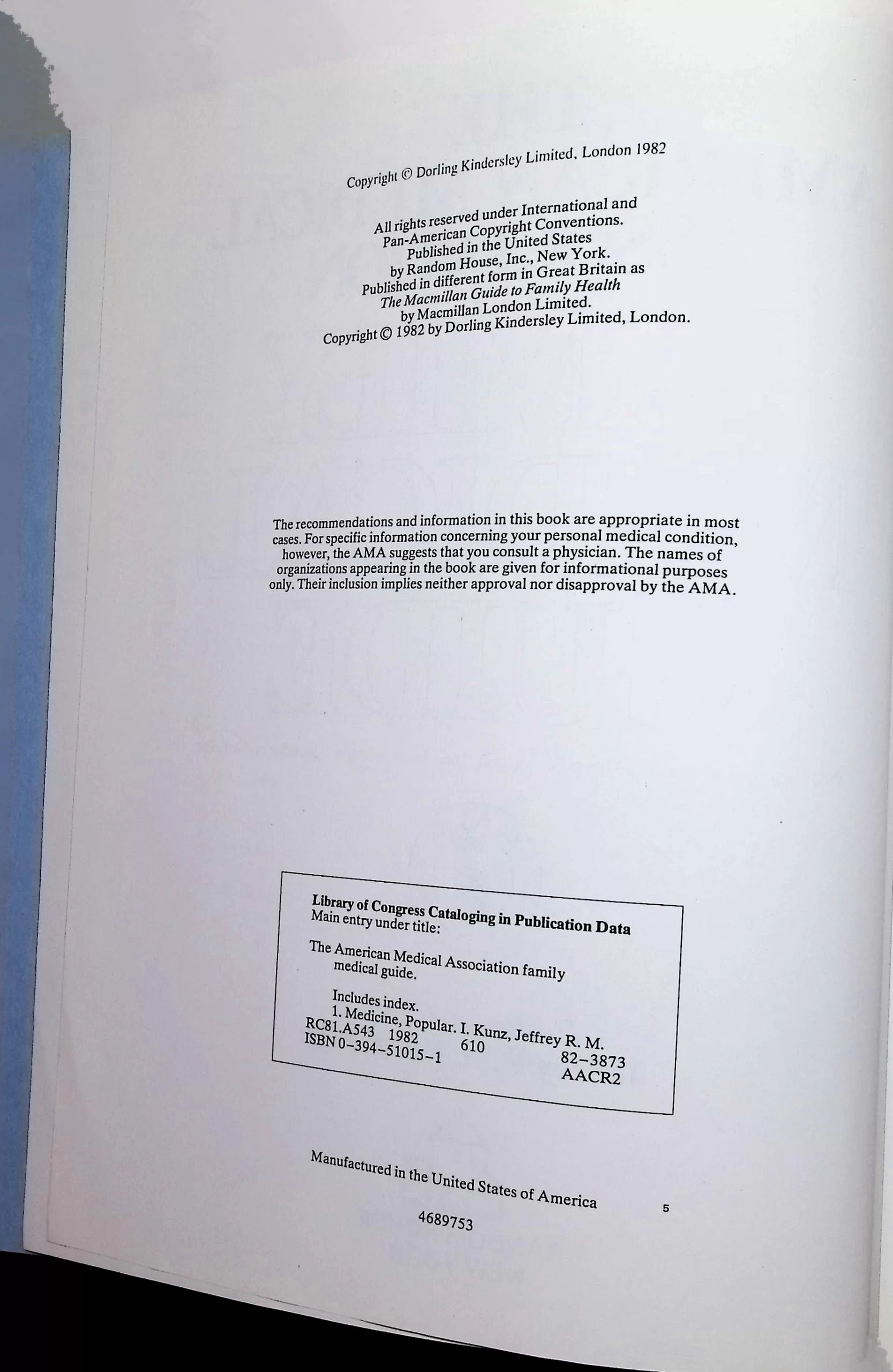
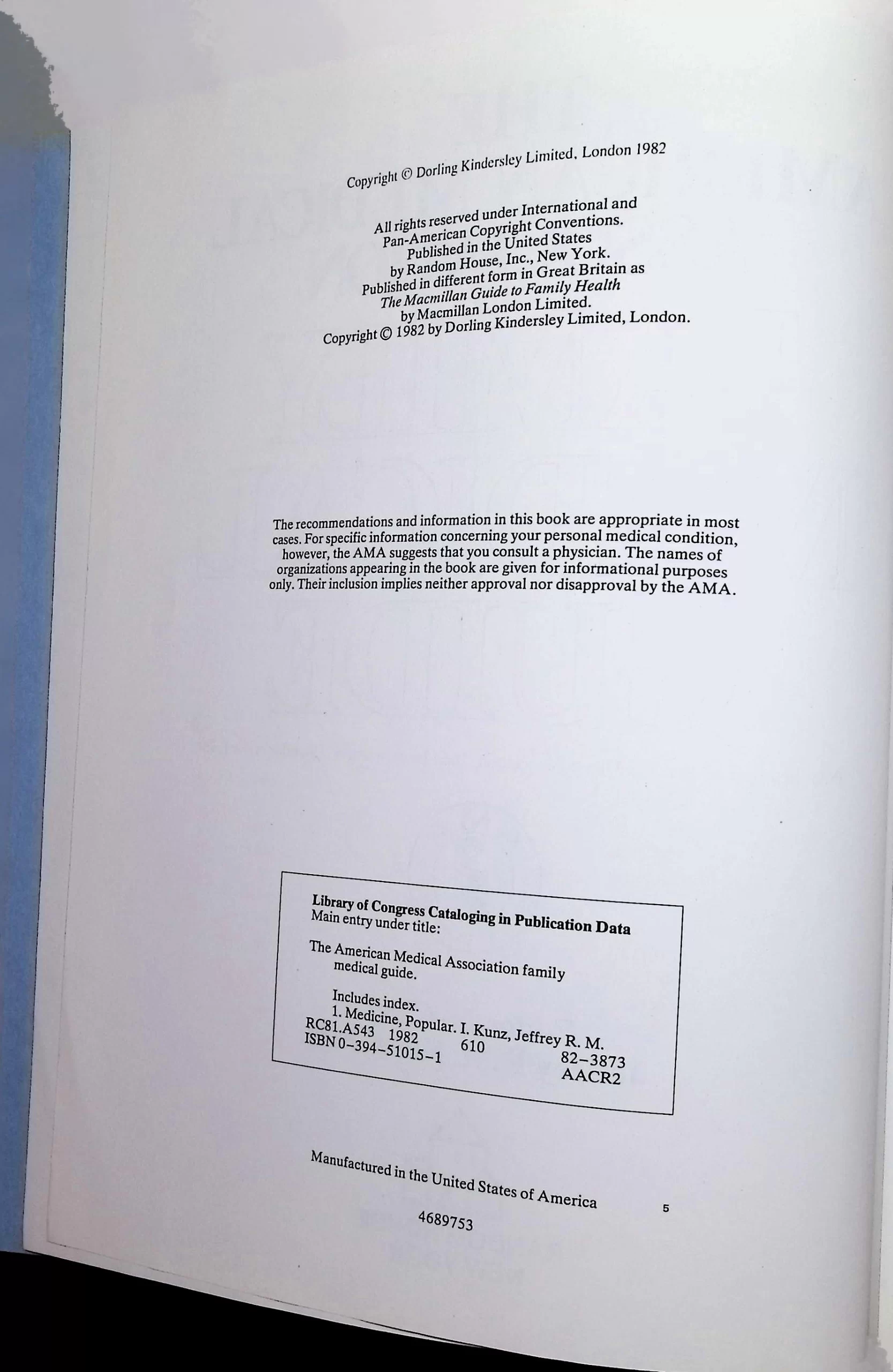
Publisher: The Reader’s Digest Association, Inc., by permission of Random House, Inc.
Image
Description
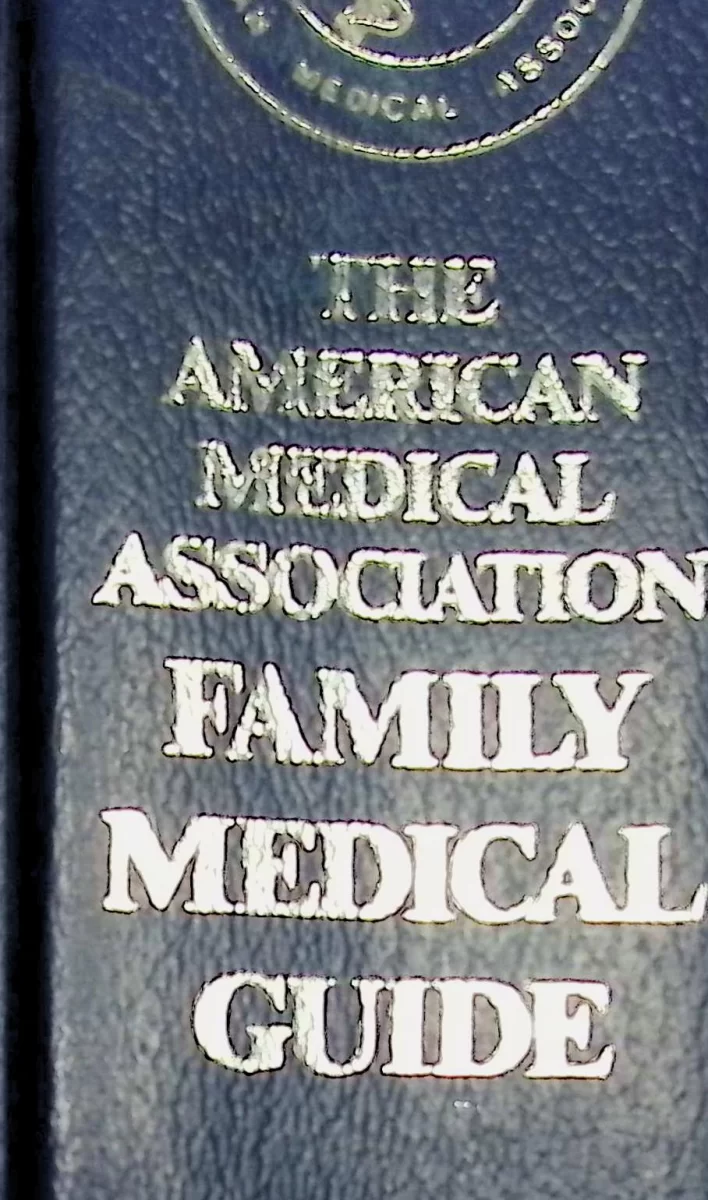
his 1982 edition of The American Medical Association Family Medical Guide was the AMA’s landmark attempt to empower the public with medically vetted knowledge in plain language. Published as part of the “Home Health Library,” this massive volume covers everything from anatomy and diagnostic charts to common symptoms, diseases, treatments, and sexual health.
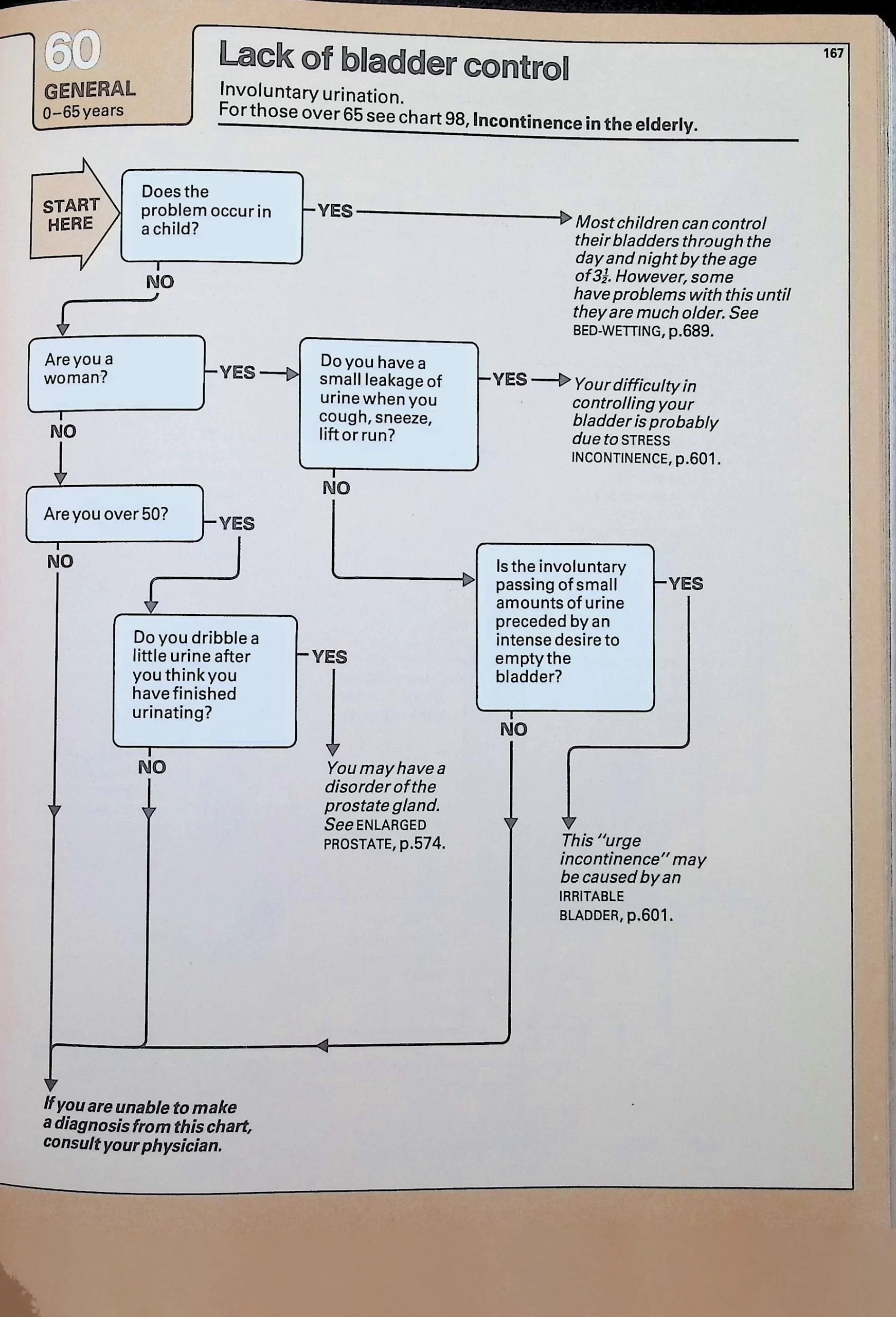
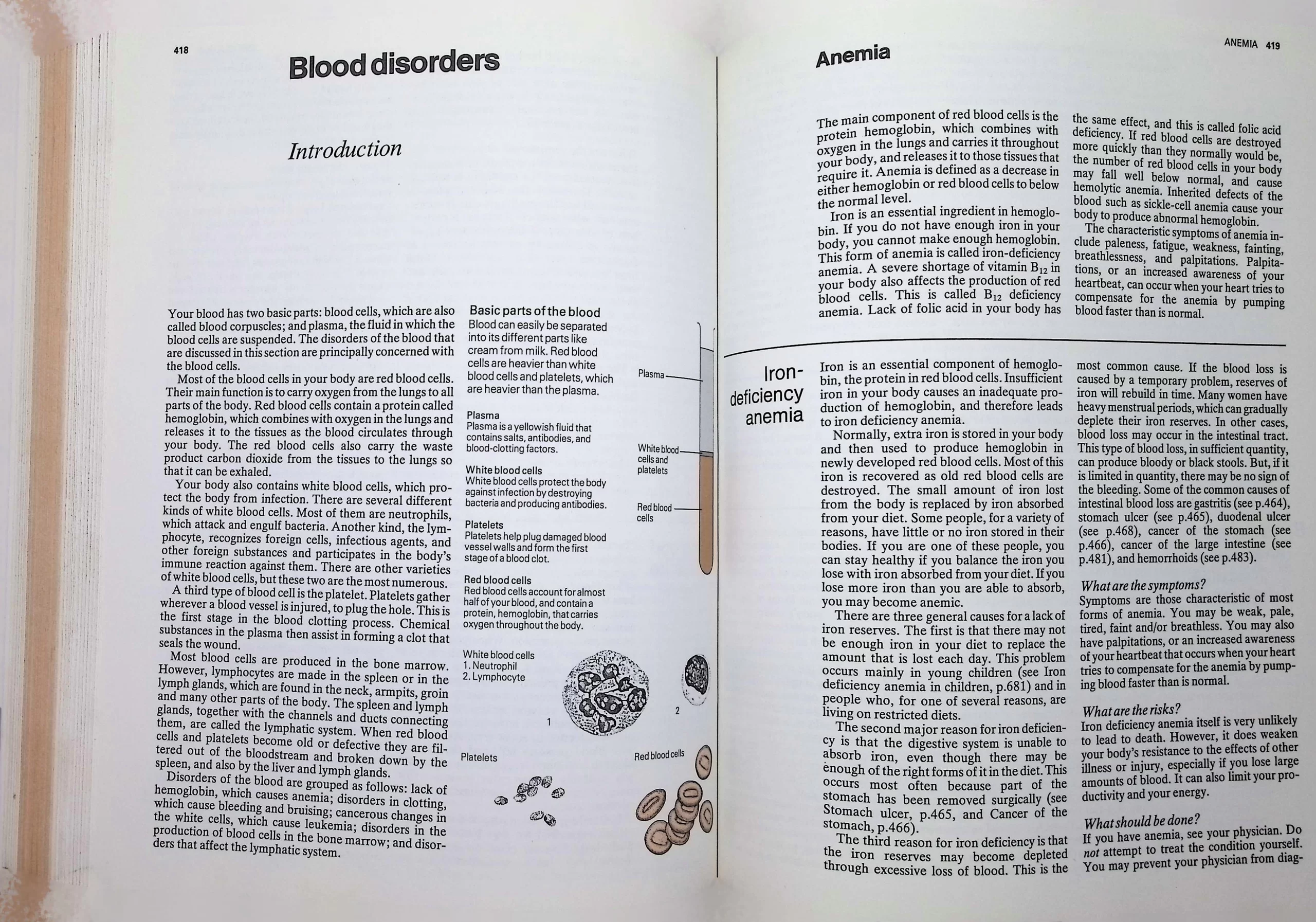
Graphically rich and thoughtfully organized, this book includes flowcharts, illustrations, symptom trees, and color-coded sections. Its visual triage charts were widely praised for helping families make informed decisions about whether to manage a condition at home—or see a physician immediately.
While the guide reflects the medical consensus of its time, including terminology and social framing that has since evolved, it remains a powerful snapshot of mainstream American health education in the early 1980s.
Condition
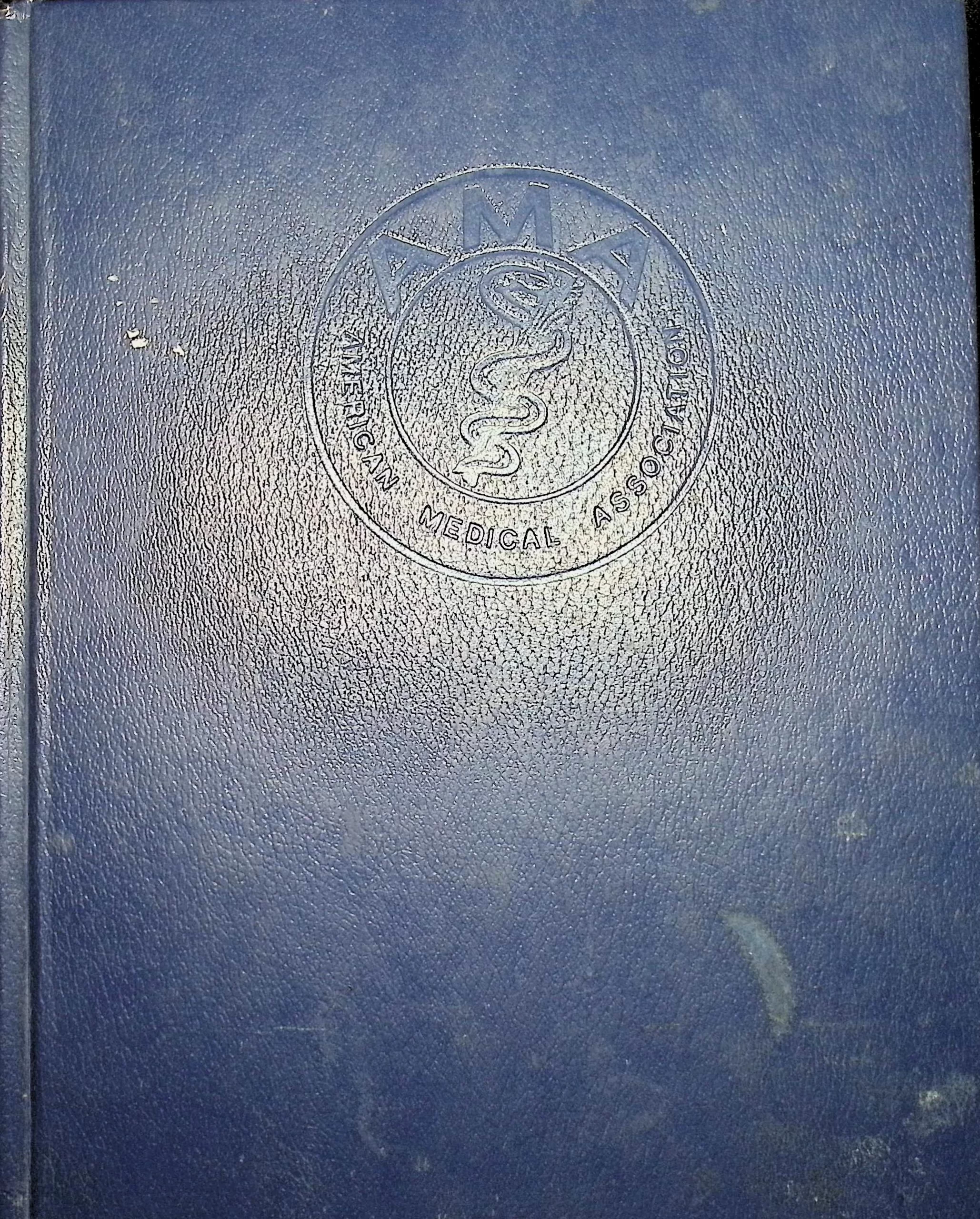
Bound in embossed faux-leather boards featuring the AMA caduceus seal. Interior pages are clean and legible. Some edge wear and light foxing present. Structurally intact with no missing pages.
Gallery
Historical context
The 1980s marked a shift in U.S. healthcare toward greater personal responsibility, with increased emphasis on patient education due to skyrocketing costs. The AMA Family Medical Guide was positioned as a tool to combat misinformation and empower individuals before the internet era. It also subtly promoted AMA-endorsed standards and discouraged reliance on alternative therapies without formal medical oversight.
Curious Facts, Ephemera, and Trivia
This volume is part of a coordinated effort by the AMA in the early 1980s to create a series of home health reference books accessible to the lay public.
Flowcharts like the one on urinary incontinence were novel in medical self-care publishing and served as a precursor to modern symptom-checker tools.
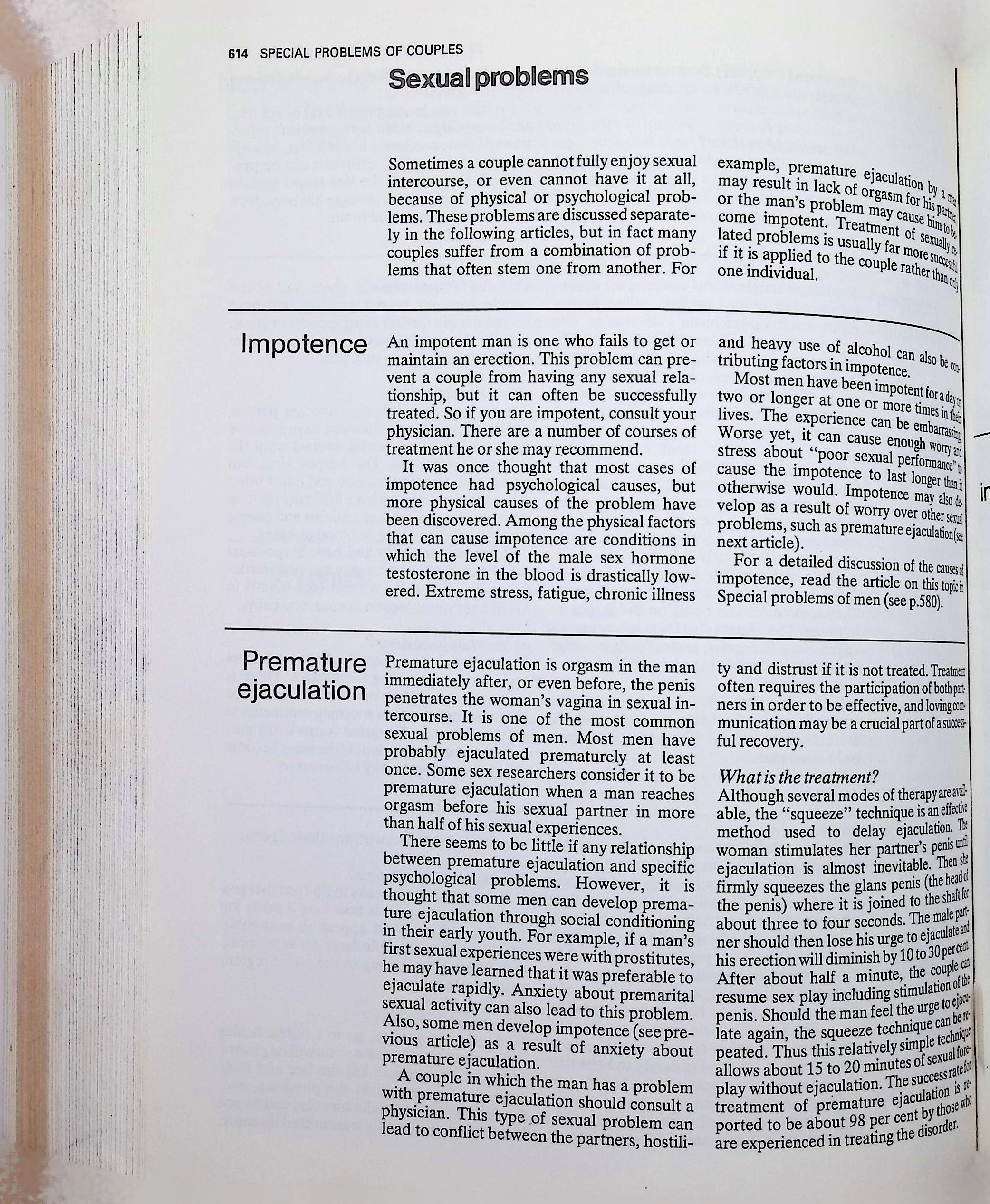
The “Special Problems of Couples” section reflects the cultural and sexual health attitudes of the time, including somewhat outdated views on impotence and orgasm.
Excerpt
“The Family Medical Guide shows you how your body is structured, how it functions and what you must do to keep it healthy. It answers your questions about the most common diseases and their symptoms. Then, too, there are the unique Diagnosis Charts that will help you decide whether an ache or pain you have is a temporary annoyance or something more serious…”
— Preface by James H. Sammons, M.D., Executive Vice President, AMA
Why it is in the Cabinet
This guidebook represents the AMA’s peak influence over American health literacy in the pre-internet era. It reflects a transitional moment in medicine—when patients were first encouraged to take a more active role in their own care, yet were still advised to defer final judgment to a physician. The format, with user-friendly charts and plain language, illustrates how 20th-century health organizations attempted to educate the public without surrendering professional control.
Support Dr. Bebout’s Cabinet of Medical Curiosities
If you enjoy the history, the oddities, and the effort, help keep this cabinet open. Every little bit helps preserve and share the strange wonders of medicine's past.
Buy Me a Ko-fi ☕ Buy Me a Coffee ☕ Tip via PayPal 💵