
Title
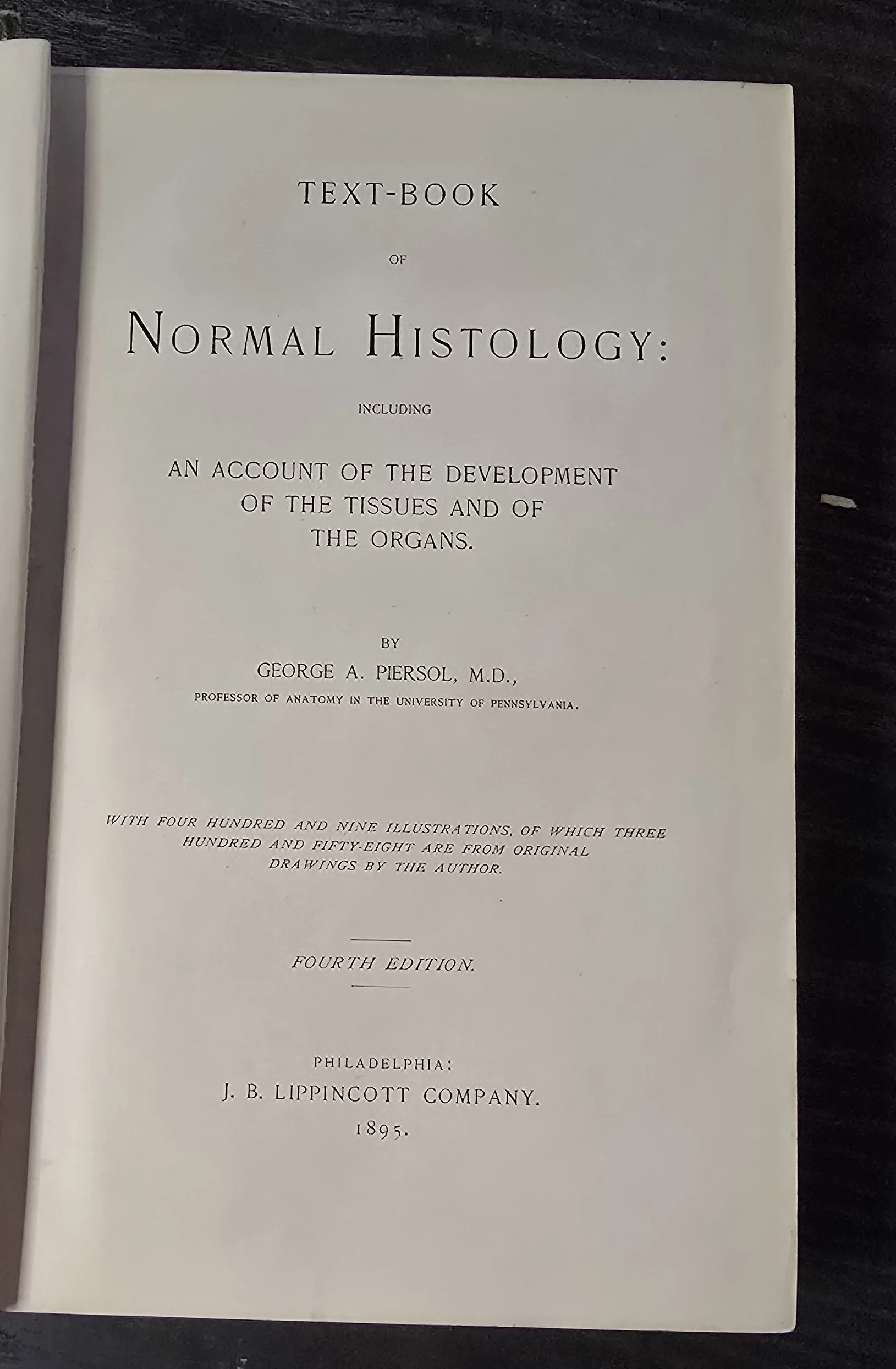
Text-Book of Normal Histology: Including an Account of the Development of the Tissues and of the Organs
Author
George A. Piersol, M.D.
Image
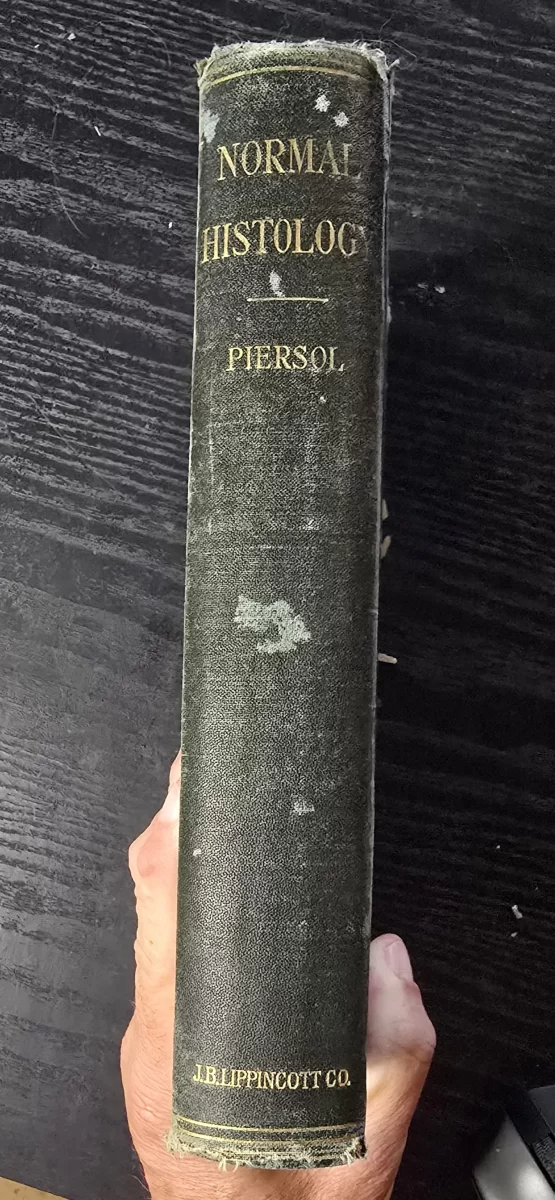
Description
George A. Piersol, M.D.
Publisher: J. B. Lippincott Company, Philadelphia
Edition: Fourth Edition
Publication Year: 1895
Description:
This fourth edition of Text-Book of Normal Histology by Dr. George A. Piersol is a landmark text in late 19th-century medical education. Authored by a professor of anatomy at the University of Pennsylvania, this volume contains 409 detailed illustrations—358 of which were original drawings by Piersol himself. It offers a systematic exploration of tissue structure, organ development, and microscopic anatomy during a pivotal era in histological science.
Condition
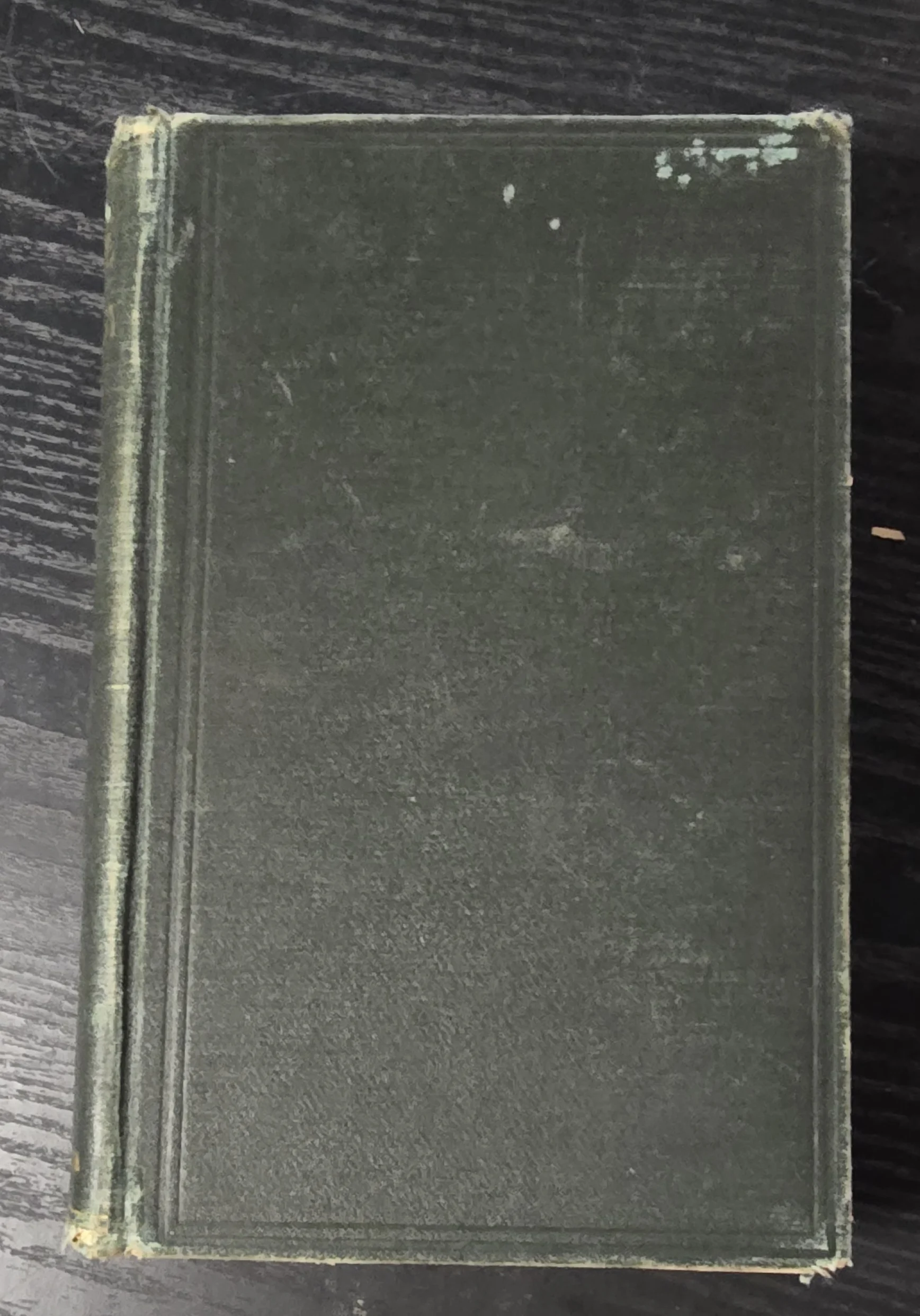
This hardcover volume shows signs of significant age-related wear. The green cloth cover and spine display moderate scuffing, surface fading, and small patches of fabric loss. The spine retains its gold-stamped titling, though it is visibly rubbed. Internal pages are intact and legible, with the featured diagrams remaining sharp and clear.
Gallery
Historical context
This hardcover volume shows signs of significant age-related wear. The green cloth cover and spine display moderate scuffing, surface fading, and small patches of fabric loss. The spine retains its gold-stamped titling, though it is visibly rubbed. Internal pages are intact and legible, with the featured diagrams remaining sharp and clear.
Gallery:
Spine and cover close-up
Title page with full publishing details
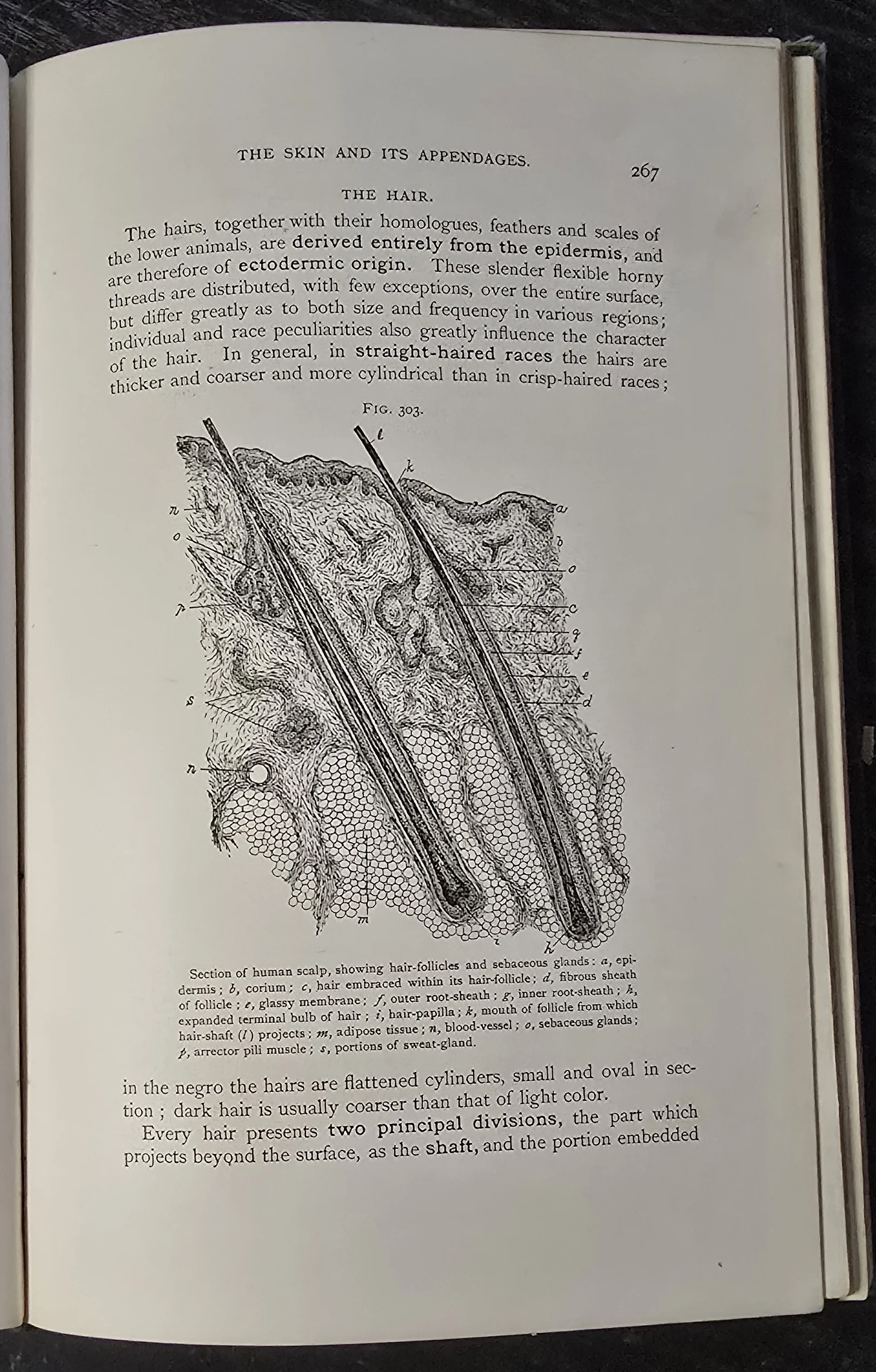
Page 267 featuring hair follicle structure and discussion
Historical Context:
Histology was an emerging cornerstone of medical education in the 1890s. The discipline’s development paralleled advances in optical microscopy, which helped formalize the study of tissues and set a precedent for understanding disease at the cellular level. Piersol’s meticulous illustrations were especially valued at a time when microscopes were still gaining traction in clinical settings.
Curious Facts, Ephemera, and Trivia
Piersol’s text remained influential into the early 20th century, later being revised and expanded in multiple editions.
His original artwork was prized for its anatomical precision and is still admired by collectors and educators today.
Excerpt
“In the negro the hairs are flattened cylinders, small and oval in section; dark hair is usually coarser than that of light color.”
This quote reflects the outdated and racially biased language used in 19th-century anatomical texts. While it is preserved here as a historical artifact, it serves as a reminder of the need for cultural awareness in medical discourse.
Why it is in the Cabinet
“In the negro the hairs are flattened cylinders, small and oval in section; dark hair is usually coarser than that of light color.”
This quote reflects the outdated and racially biased language used in 19th-century anatomical texts. While it is preserved here as a historical artifact, it serves as a reminder of the need for cultural awareness in medical discourse.
Personal Significance:
This book represents a foundational layer of anatomical education, bridging traditional microscopy with early histopathology. Its preservation provides insight not just into scientific content, but also the cultural lens through which medicine was viewed in the late 1800s.
Support Dr. Bebout’s Cabinet of Medical Curiosities
If you enjoy the history, the oddities, and the effort, help keep this cabinet open. Every little bit helps preserve and share the strange wonders of medicine's past.
Buy Me a Ko-fi ☕ Buy Me a Coffee ☕ Tip via PayPal 💵