
Title
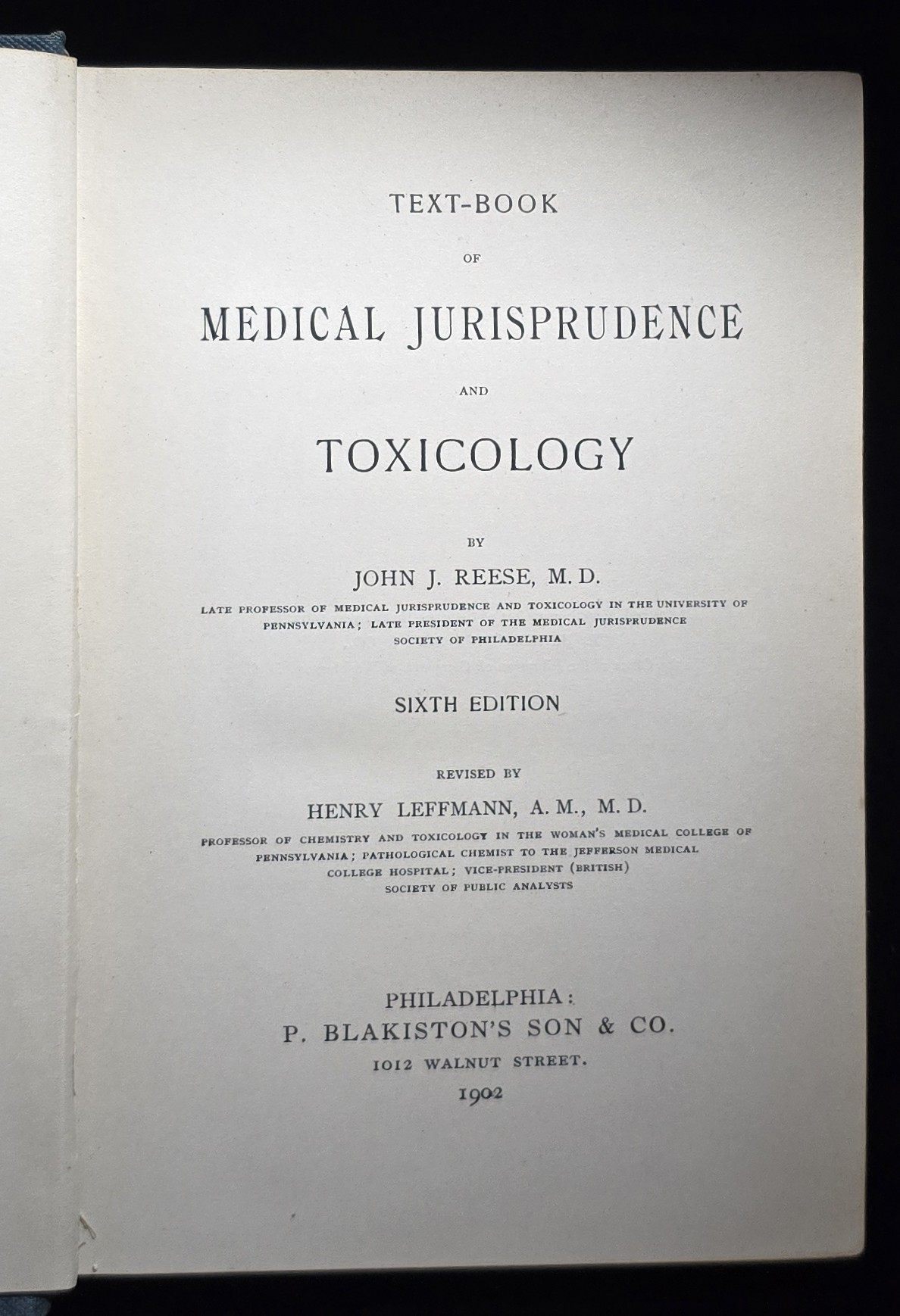
Text-Book of Medical Jurisprudence and Toxicology – Sixth Edition (1902)
Author
John J. Reese, M.D.
Revised by Henry Leffmann, A.M., M.D.
Image
Description
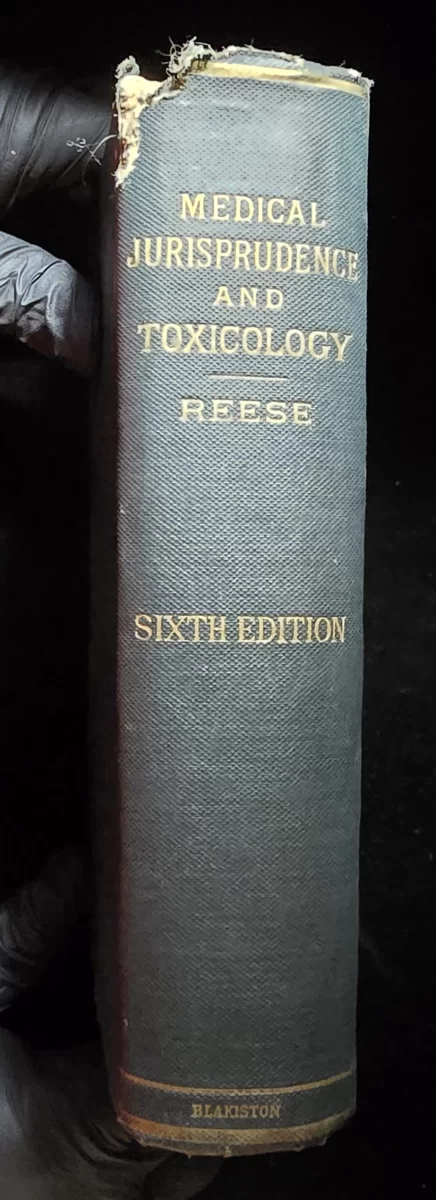
This 1902 sixth edition of Reese’s Medical Jurisprudence and Toxicology represents a cornerstone in the American forensic canon. Originally authored by Dr. John J. Reese, one of Philadelphia’s most prominent 19th-century medical jurists, the text was revised for this edition by Dr. Henry Leffmann, a pathologist, chemist, and medical examiner of note.
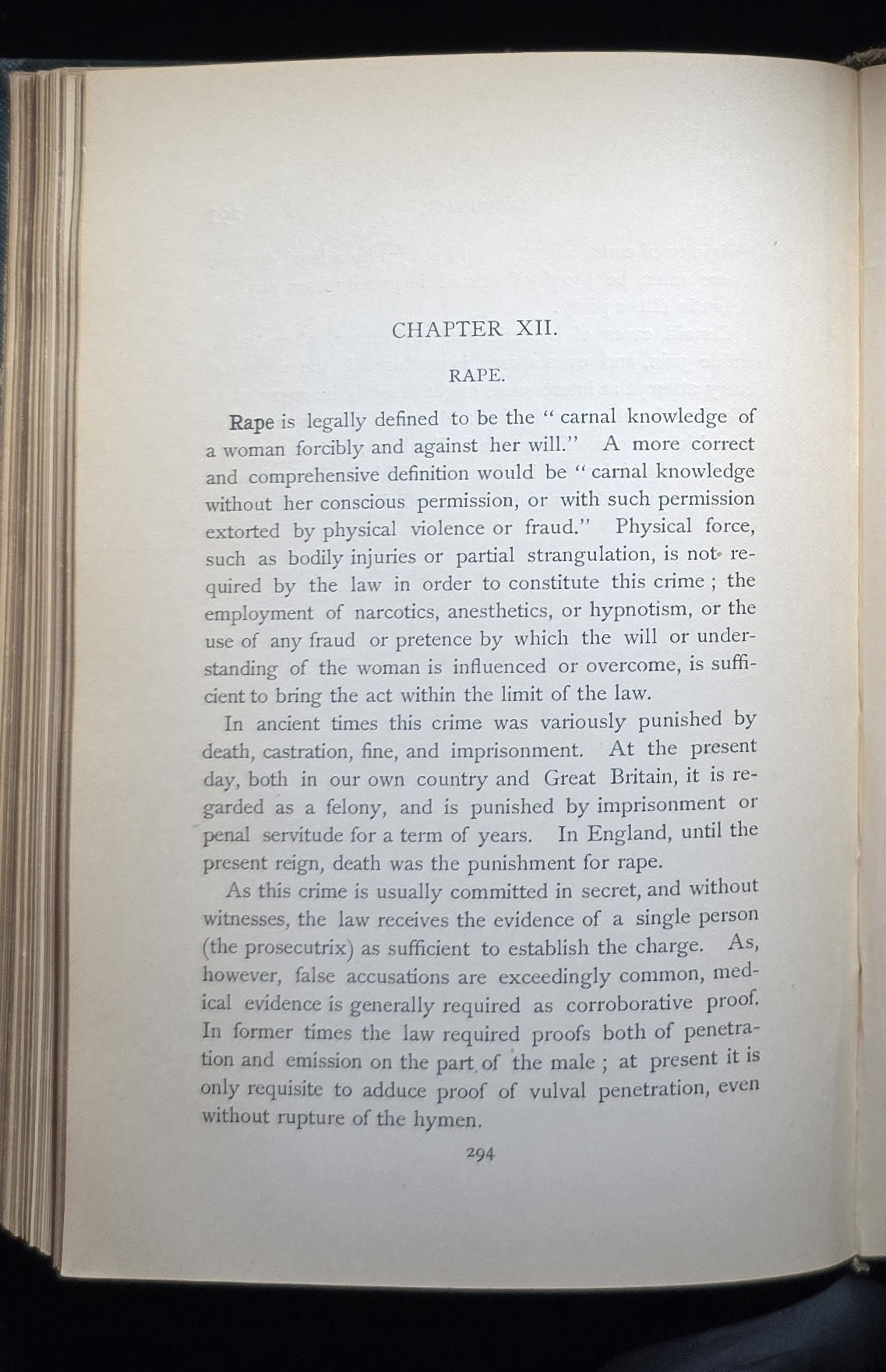
Reese’s textbook covers a full range of medico-legal topics: injury patterns, sexual offenses, toxic agents, cause of death, forensic procedure, and legal standards for testimony. The chapter on rape, shown here, reflects early-20th-century definitions and prosecutorial standards—blunt, clinical, and deeply shaped by the legal norms of its day.
The book was widely used in medical colleges and by coroners and court officials. Its blend of legal reasoning, clinical knowledge, and moral undertone makes it a representative voice of forensic practice at the turn of the century.
Condition
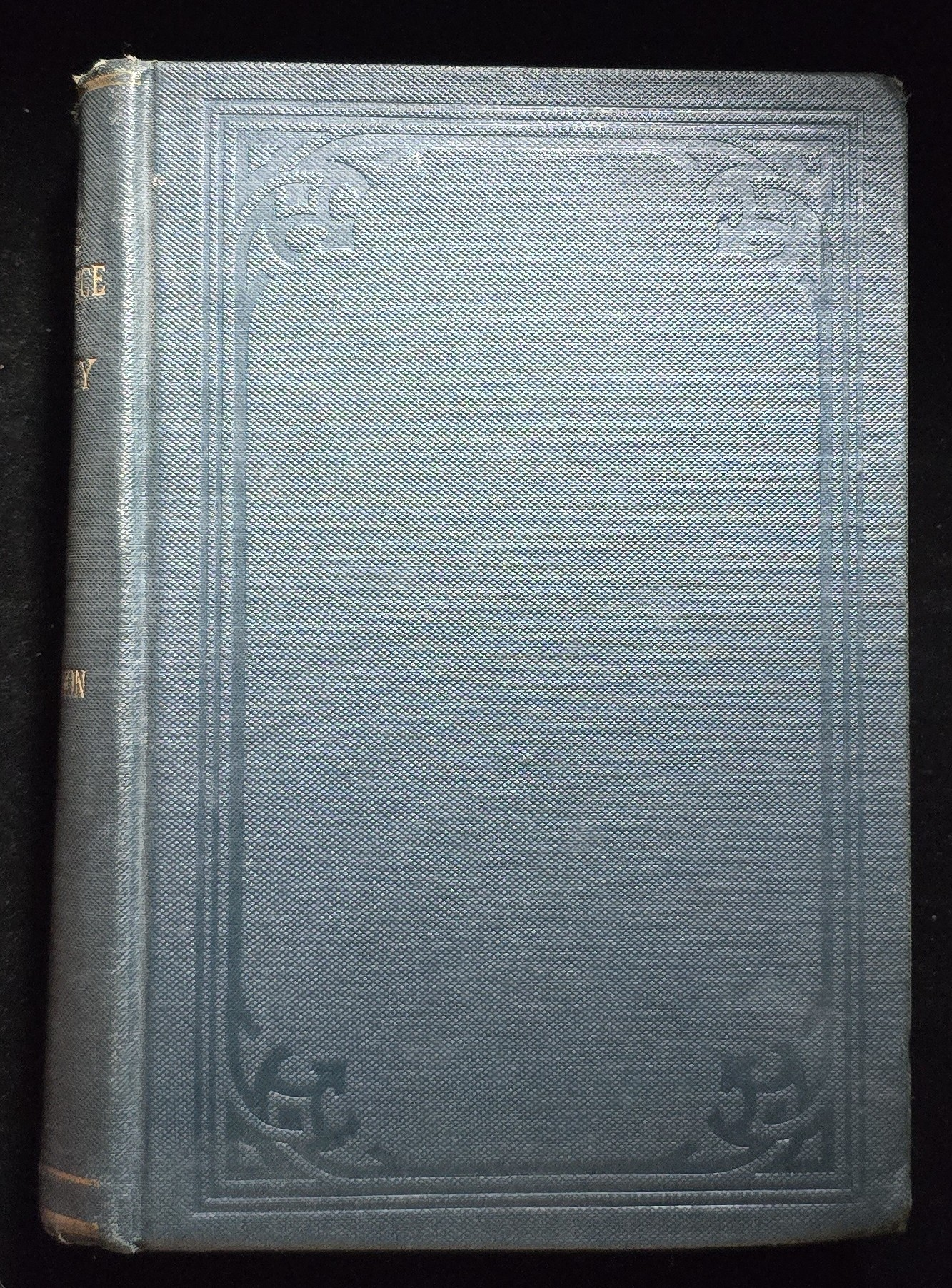
Spine is intact but worn at the crown, with fraying and chipping of the cloth. Gilt lettering remains bright. Binding tight. Interior pages are clean and well-preserved, with only mild toning. Corners show light shelf wear. Embossed front cover retains crisp texture and decoration.
Gallery

Historical context
Dr. John J. Reese (1818–1892) was a professor of Medical Jurisprudence at the University of Pennsylvania and served as a medico-legal examiner in Philadelphia. His textbook was first published in 1860 and underwent numerous revisions, remaining in active use for over 40 years.
By 1902, forensic science was beginning to formalize as a discipline, but many legal and social norms—especially in topics like sexual violence—still reflected Victorian moral and gendered assumptions. This volume bridges the era between the empirical rise of toxicology and the still-evolving human rights framework of criminal justice.
Curious Facts, Ephemera, and Trivia
Reese’s book was used as a training text for medical officers in both civil and military service.
The Blakiston firm (based in Philadelphia) was a major publisher of medical texts through the late 1800s and early 1900s.
Leffmann, the revising editor, was also a forensic witness in numerous Pennsylvania court cases.
The chapter on rape explicitly references the shift in legal standards from requiring physical injury to accepting the testimony of the victim alone—a controversial legal point in 1902.
Excerpt
“At present it is only requisite to adduce proof of vulval penetration, even without rupture of the hymen.”
Why it is in the Cabinet
This volume captures the formative era of American forensic medicine, when the boundaries between medical evidence, legal testimony, and moral judgment were being actively debated. It preserves the forensic vocabulary and sensibilities of its time, and reminds us how ideas of evidence, injury, and authority have evolved. Its relevance is both historical and sociocultural—a forensic fossil with sharp edges.
Support Dr. Bebout’s Cabinet of Medical Curiosities
If you enjoy the history, the oddities, and the effort, help keep this cabinet open. Every little bit helps preserve and share the strange wonders of medicine's past.
Buy Me a Ko-fi ☕ Buy Me a Coffee ☕ Tip via PayPal 💵