
Title
Taka-Diastase – Parke, Davis & Co.
Author
Parke, Davis & Co.
Image
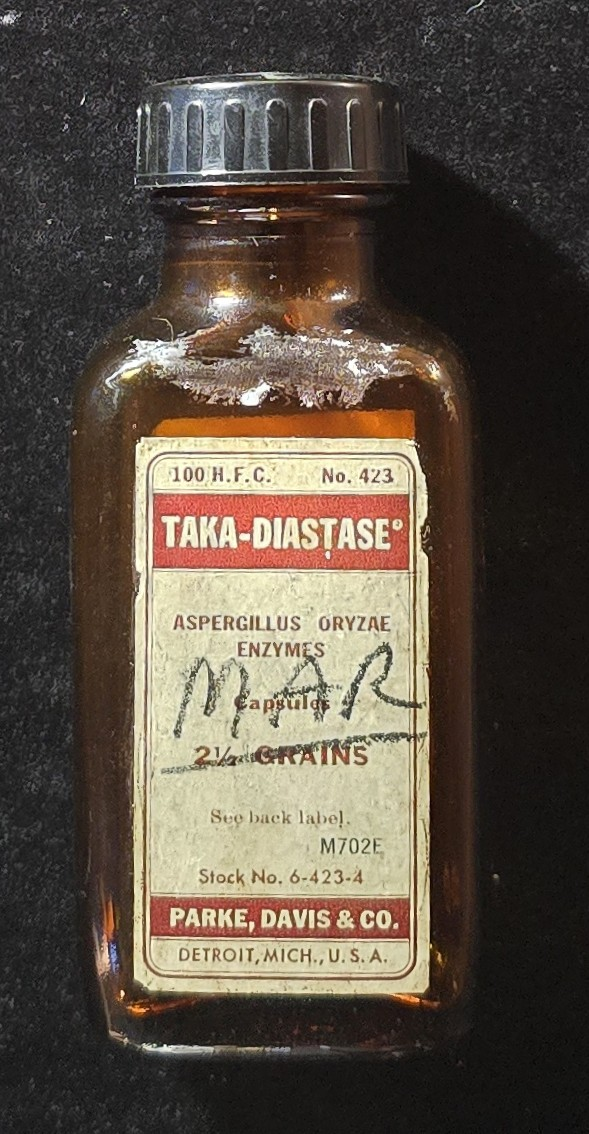
Description
This vintage glass bottle once contained Taka-Diastase, a digestive enzyme preparation manufactured by Parke, Davis & Co. of Detroit, Michigan. The product derived its name from the Japanese term “taka,” referencing Aspergillus oryzae, a mold traditionally used in sake brewing. The enzymes produced by this mold, particularly diastase, assist in breaking down starch into simpler sugars, functioning similarly to human salivary amylase (ptyalin).
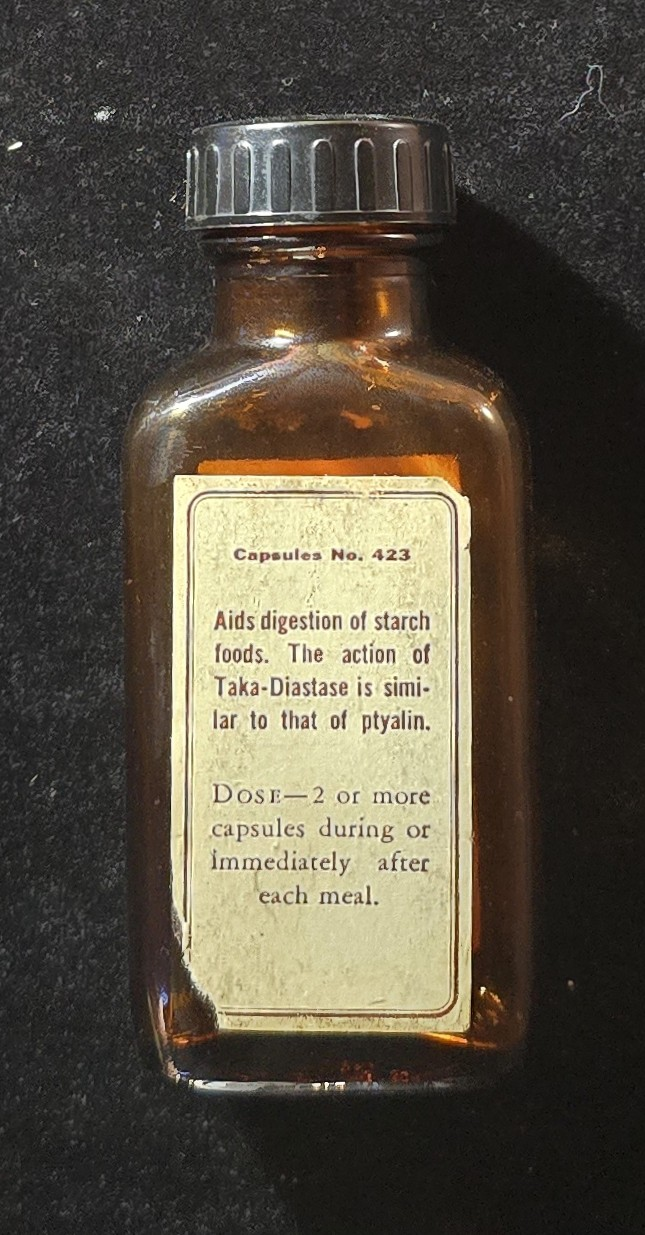
Taka-Diastase was marketed for conditions involving digestive insufficiency, particularly those affecting starch digestion. It was often prescribed for dyspepsia, chronic gastritis, and other ailments attributed to “weak digestion.” The label describes the product’s ability to convert starches into maltose and dextrins, making it a favored digestive aid in the early 20th century.
Condition
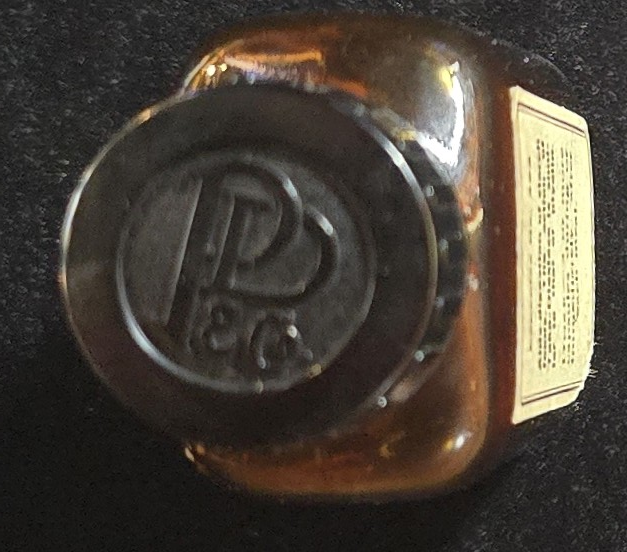
Bottle is intact with readable front and back labels. Minor age-related discoloration to the label paper. Glass is clear with no cracks or chips. Embossed “PD&Co” mark present on the bottom.
Gallery
Historical context
Taka-Diastase was first introduced in 1894 after Japanese chemist Jokichi Takamine isolated and commercialized the enzyme from Aspergillus oryzae. Parke, Davis & Co. quickly obtained U.S. marketing rights, positioning the product as an advanced alternative to malt extracts and pancreatin powders. At the time, digestive aids were a booming pharmaceutical market, promoted not only to treat diagnosed disease but also as “stomach strengtheners” for the general public.
By the mid-20th century, Taka-Diastase’s use waned as modern gastroenterology advanced and over-the-counter antacids and digestive enzymes diversified.
Curious Facts, Ephemera, and Trivia
Jokichi Takamine, the scientist behind Taka-Diastase, also became famous for isolating the hormone adrenaline (epinephrine).
Taka-Diastase advertisements often claimed it could help people “eat anything without distress,” a common hook for patent medicines of the time.
Parke, Davis & Co. was one of the first pharmaceutical firms to implement systematic clinical trials in the U.S.
Excerpt
“…a diastatic ferment capable of converting starch into maltose and dextrin in a manner analogous to ptyalin…” — excerpt from original Parke, Davis labeling.
Why it is in the Cabinet
This bottle represents the intersection of international science, early enzyme therapy, and turn-of-the-century pharmaceutical marketing. It also marks a key moment when American companies were importing and patenting foreign scientific discoveries to sell in a rapidly growing over-the-counter medicine market.
Support Dr. Bebout’s Cabinet of Medical Curiosities
If you enjoy the history, the oddities, and the effort, help keep this cabinet open. Every little bit helps preserve and share the strange wonders of medicine's past.
Buy Me a Ko-fi ☕ Buy Me a Coffee ☕ Tip via PayPal 💵