
Title
Surgical Nursing (Seventh Edition, 1945)
Author
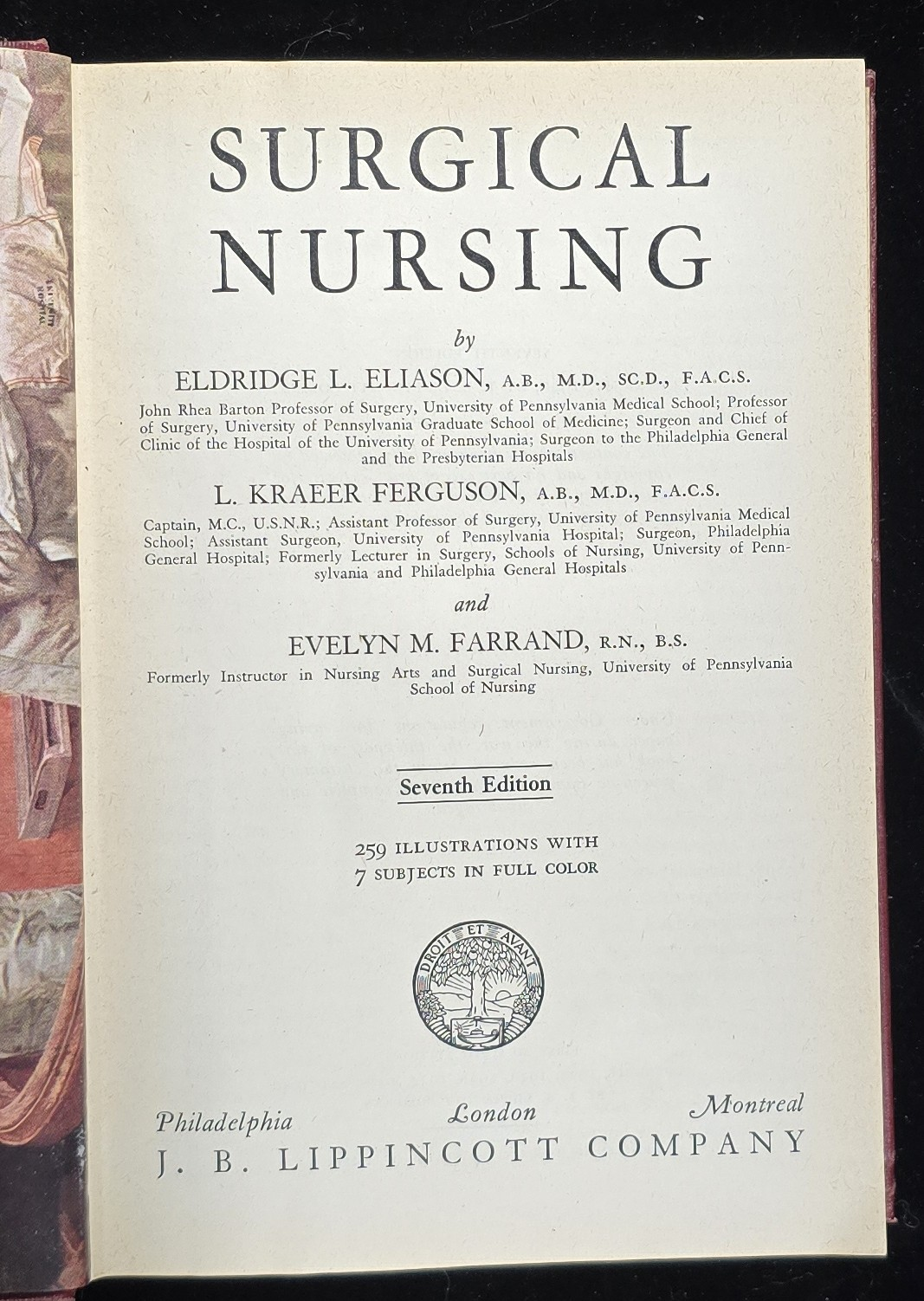
Eldridge L. Eliason, M.D., L. Kraeer Ferguson, M.D., and Evelyn M. Farrand, R.N.
Image
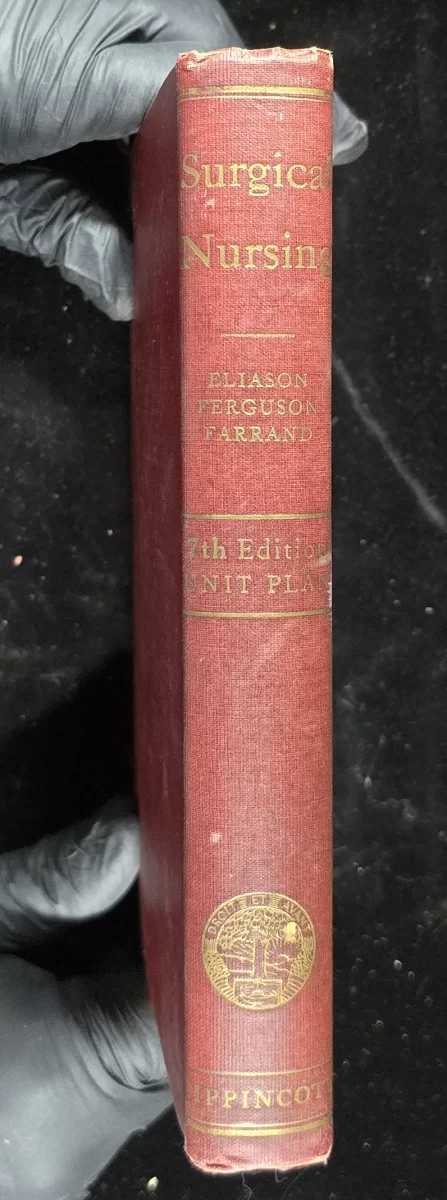
Description
This 1945 edition of Surgical Nursing reflects wartime medical education and practices during World War II. Authored by leaders from the University of Pennsylvania Medical School and School of Nursing, the textbook was widely used for training nurses in surgical care and perioperative procedures. The 7th edition notably includes a “Unit Plan” for teaching, 259 illustrations, and 7 full-color plates.
Condition
Red clothbound hardcover with some surface wear and scratches, most visibly on the front board and spine. Fraying and fading at the spine head. Binding appears intact. Pages are clean and unmarked. War-era printing is thinner, as noted by the publisher, with full text preserved.
Gallery
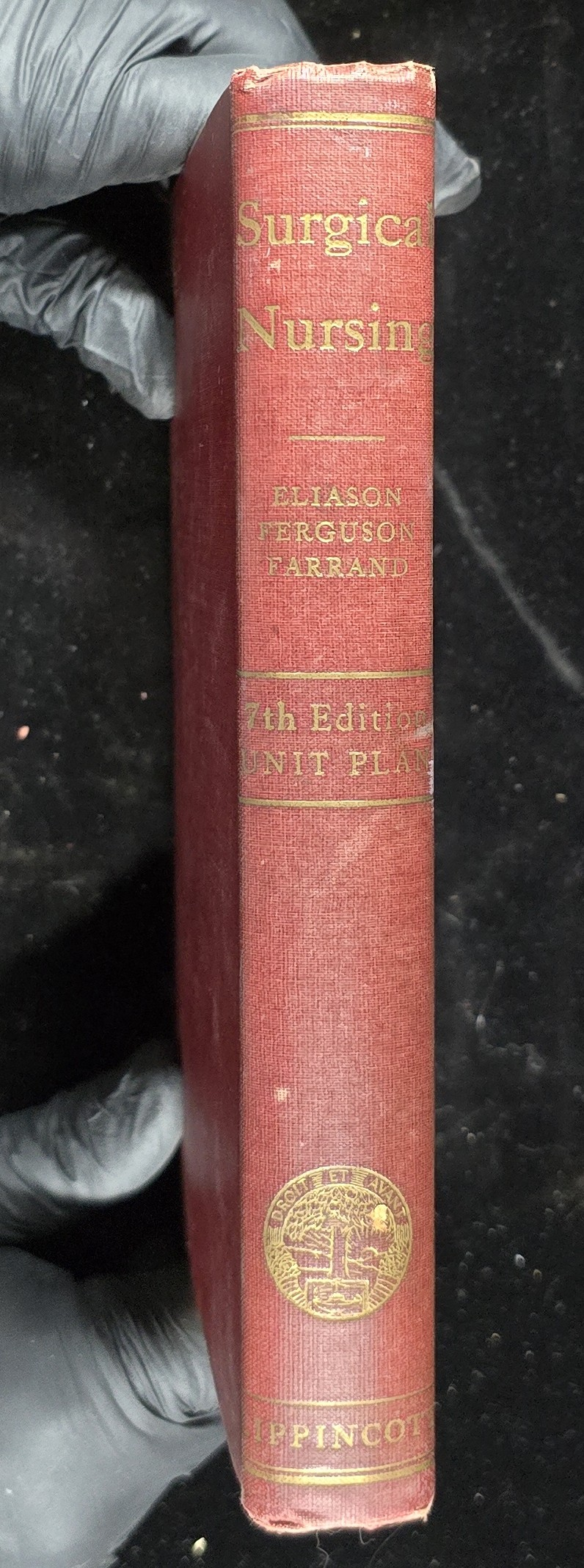
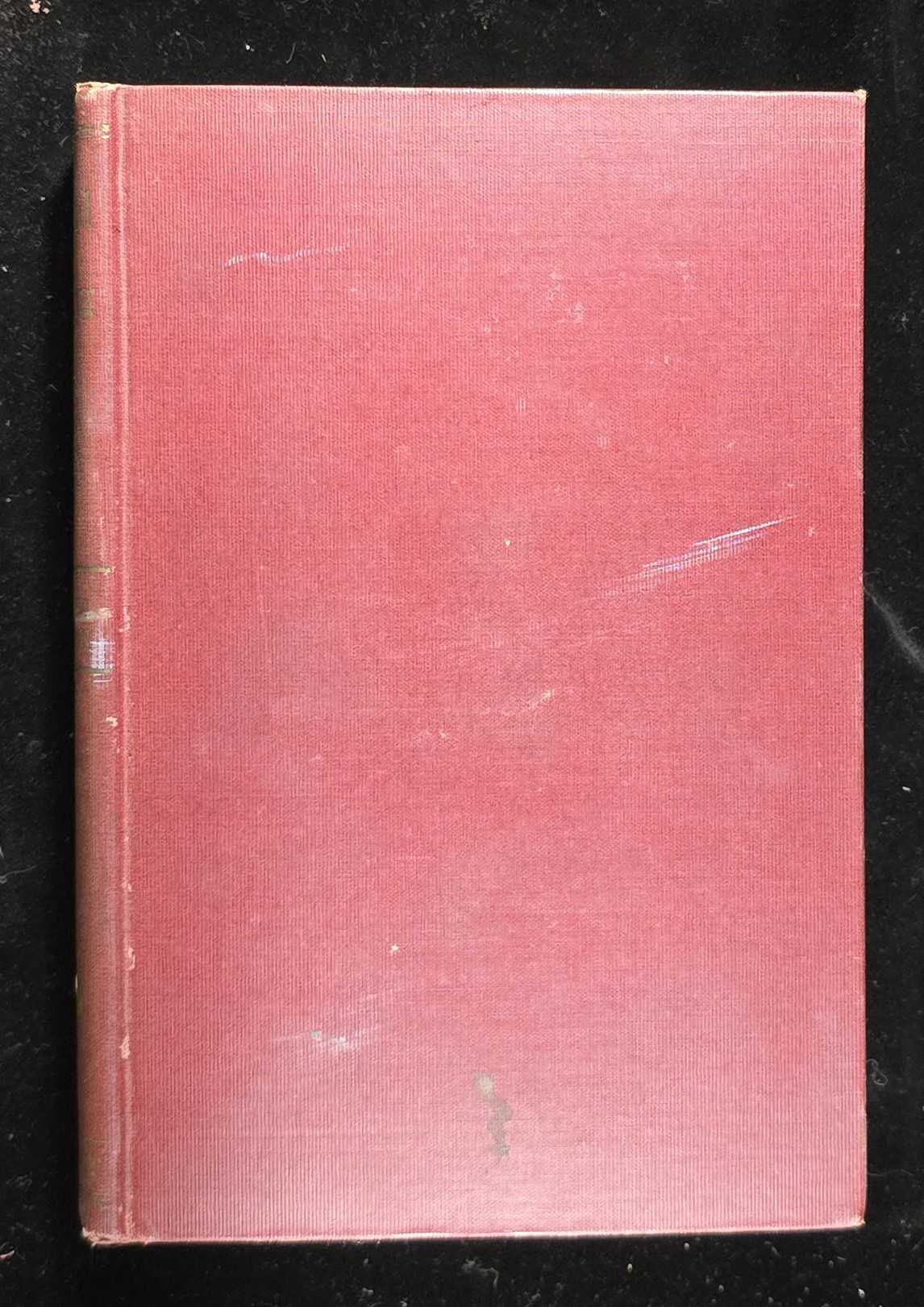
Historical context
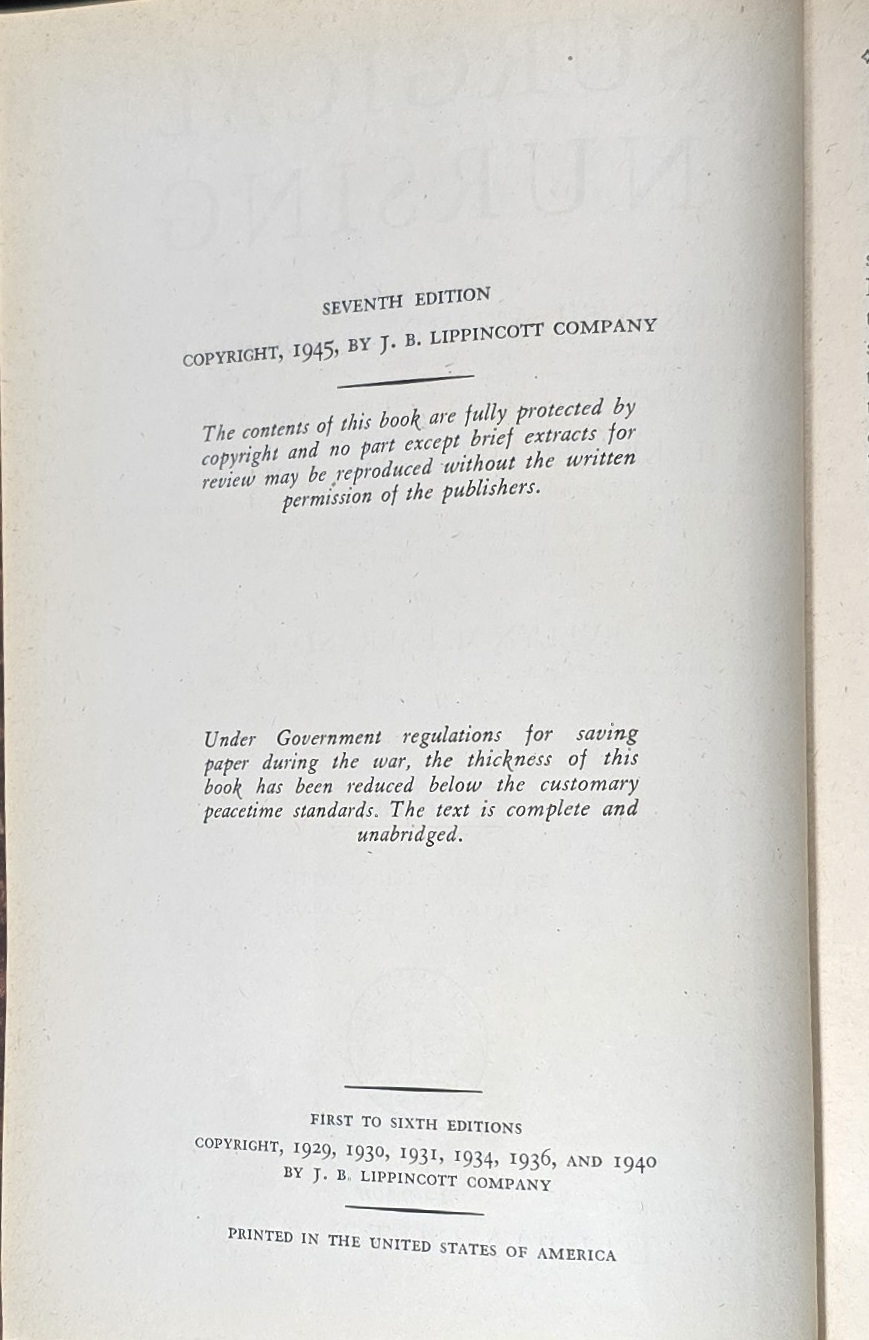
First published in 1929, Surgical Nursing became a foundational text for educating nurses during a critical period in modern medical history. The seventh edition was published in 1945—coinciding with the final year of WWII—and includes a note that the book’s thickness was reduced in compliance with government paper-saving regulations. Wartime conditions often shaped not only the content of medical texts but also their physical construction. The use of the unit teaching model was part of a broader shift toward structured, standardized nursing education in the early 20th century.
Curious Facts, Ephemera, and Trivia
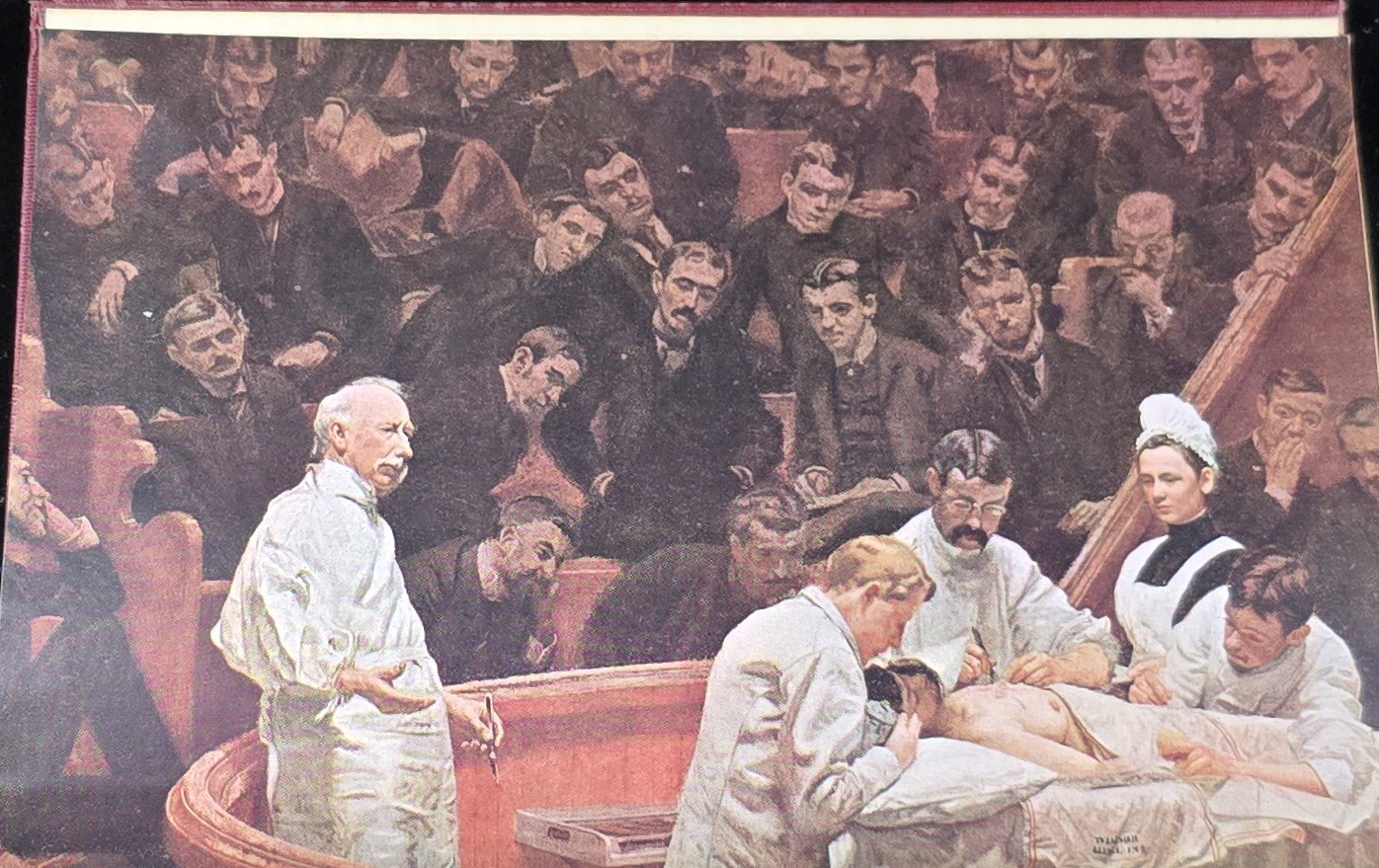
The frontispiece features a full-color reproduction of Thomas Eakins’ famous painting The Agnew Clinic (1889), one of the most iconic depictions of 19th-century surgical instruction, used symbolically in this mid-20th-century textbook to evoke continuity in surgical tradition and education.
Excerpt
“Under Government regulations for saving paper during the war, the thickness of this book has been reduced below the customary peacetime standards. The text is complete and unabridged.”
(Preface note, 1945 edition)
Why it is in the Cabinet
This book represents an important chapter in the evolution of surgical nursing during wartime. It reflects not only advances in medical care and nursing instruction but also the resource constraints and adaptations necessitated by global conflict. The inclusion of Evelyn M. Farrand as co-author also marks the essential, though often under credited, contributions of women in medical education.
Support Dr. Bebout’s Cabinet of Medical Curiosities
If you enjoy the history, the oddities, and the effort, help keep this cabinet open. Every little bit helps preserve and share the strange wonders of medicine's past.
Buy Me a Ko-fi ☕ Buy Me a Coffee ☕ Tip via PayPal 💵