
Title
Sodium Cacodylate Injection Ampoules (No. 154)
Author
Eli Lilly & Company, Indianapolis, U.S.A.
Image
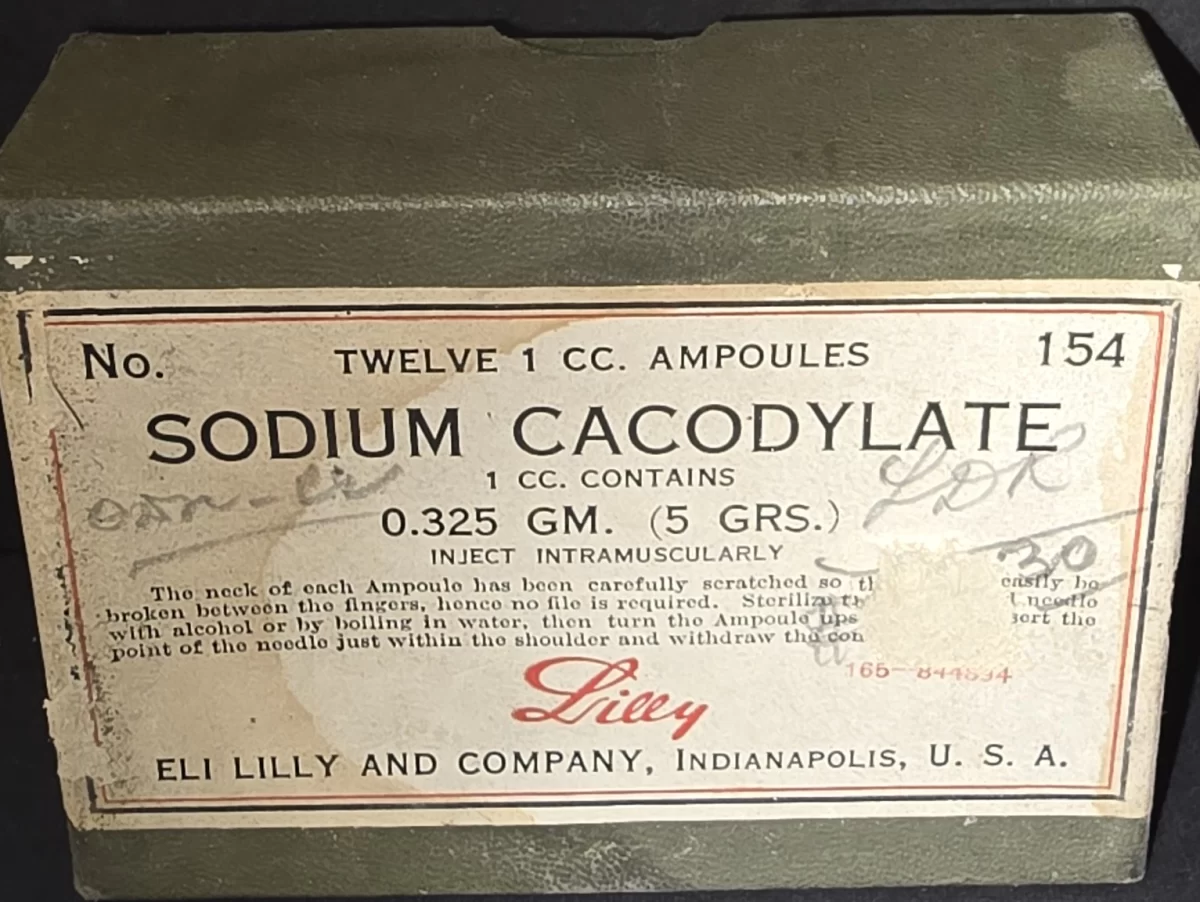
Description
This is an original early-20th-century pharmaceutical injectable prepared by Eli Lilly & Company, labeled Sodium Cacodylate, supplied as twelve 1 cc glass ampoules in the original green-textured cardboard box. Each ampoule contains 0.325 grams (5 grains) of sodium cacodylate and is explicitly labeled for intramuscular injection.
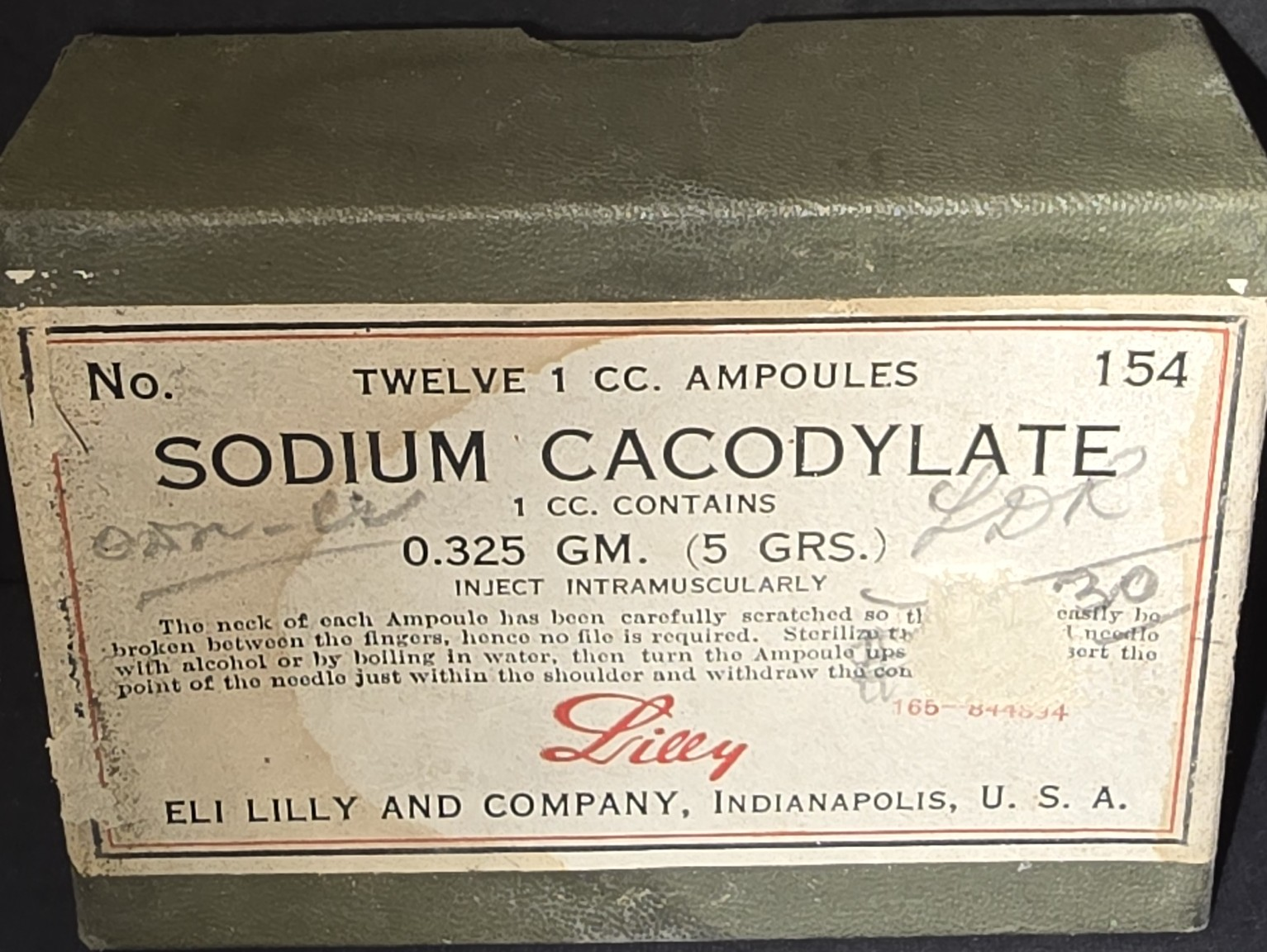
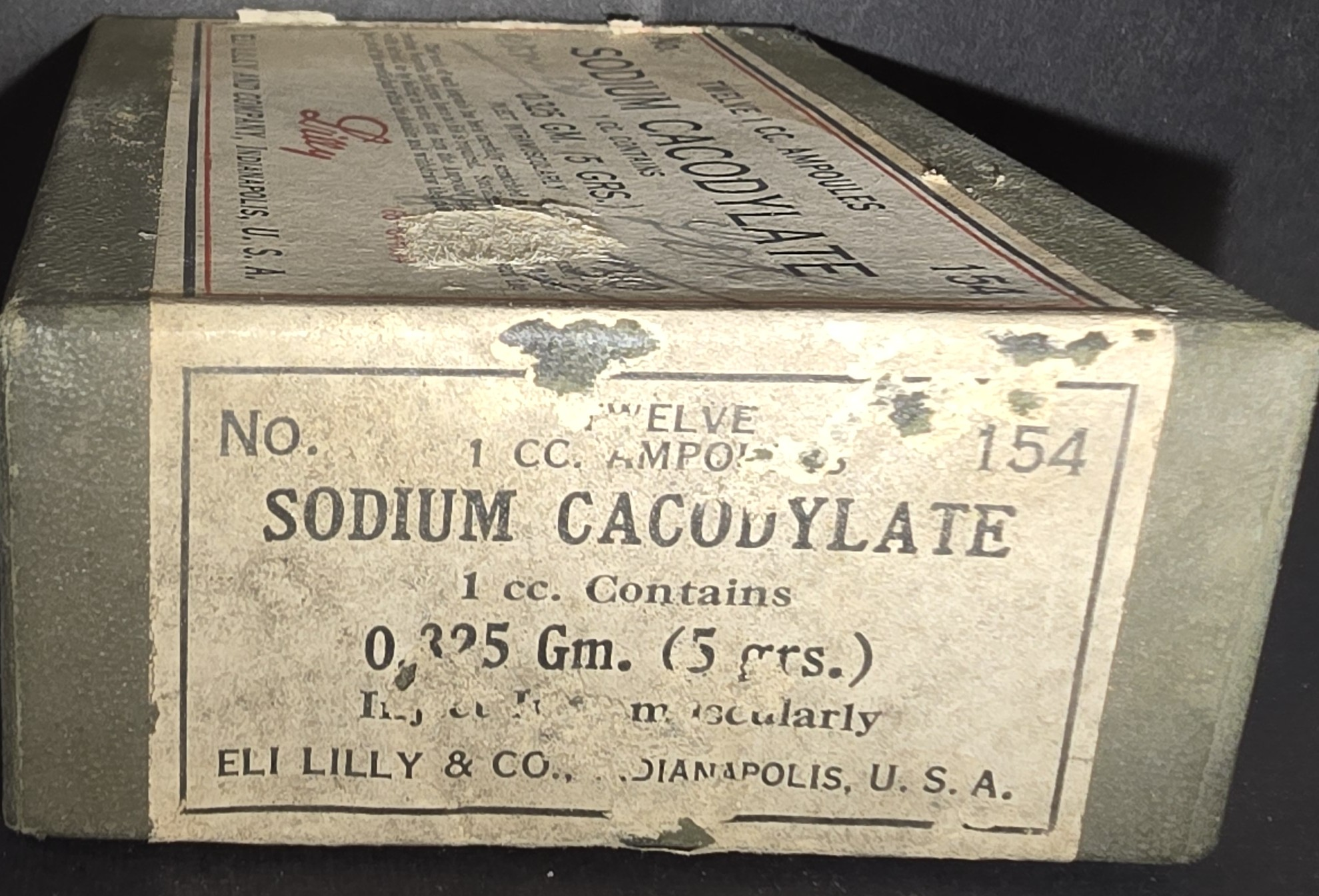
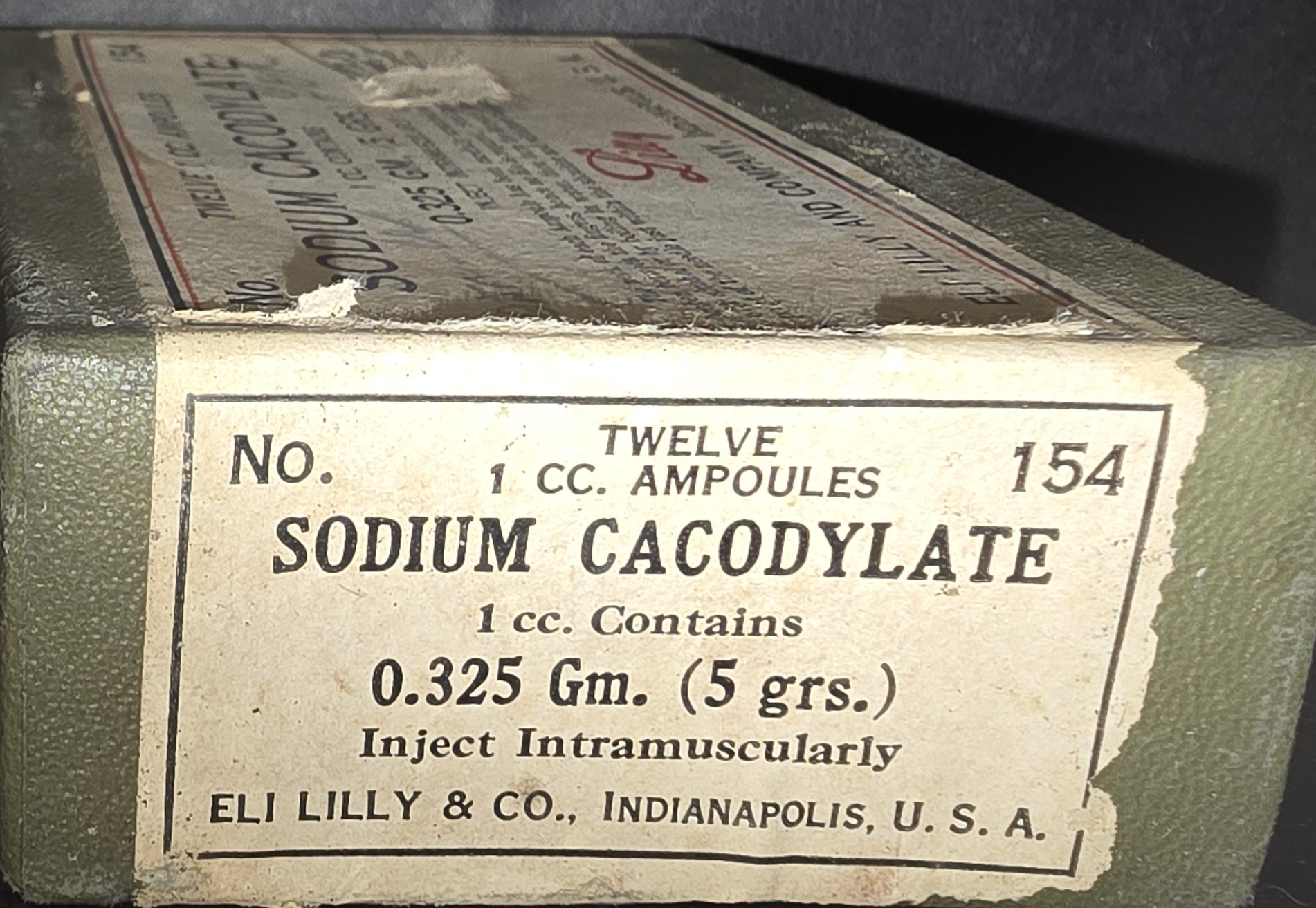
The box retains its original printed labels on multiple faces, including dosage instructions and manufacturer markings. A secondary Lilly inventory label is affixed to the rear. The container reflects institutional medical use—hospital, clinic, or physician office—rather than retail pharmacy sale.
Sodium cacodylate is an organic arsenic compound, representative of a period when arsenicals were widely used as metabolic stimulants, hematinic agents, and “tonics” before safer alternatives existed.
Condition
Original box present with expected edge wear, label loss, paper abrasion, and surface scuffing consistent with age and handling. Text remains largely legible. Structural integrity intact. Ampoules presumed present but not opened or disturbed.
Gallery

Historical context
Sodium cacodylate was widely used in the late 19th and early 20th centuries as a general tonic, prescribed for anemia, debility, neurasthenia, and chronic fatigue states. Arsenic compounds were believed to stimulate metabolism and blood formation, an idea reinforced by their temporary symptomatic effects.
Eli Lilly was a major manufacturer of standardized injectable arsenicals, supplying physicians during a period when injectable therapy was increasingly favored for speed and perceived potency.
The practice declined as toxicity risks became better understood and safer hematologic and nutritional therapies emerged.
Curious Facts, Ephemera, and Trivia
“Cacodyl” compounds are among the earliest organometallic chemicals studied in medicine.
Arsenic injections were often described as making patients feel “stronger” before cumulative toxicity became apparent.
The explicit intramuscular instruction reflects early confidence in injectable therapy long before modern safety standards.
Excerpt
“Inject intramuscularly.”
A single line that quietly summarizes an entire era of medical confidence—and risk tolerance.
Why it is in the Cabinet
This piece represents the uncomfortable but essential truth of medical history: progress is built on what we later abandon. Sodium cacodylate injections sit squarely at the crossroads of innovation, hubris, and evolving scientific understanding. It is a clean, honest example of mainstream medicine doing its best with the knowledge of the time.
Support Dr. Bebout’s Cabinet of Medical Curiosities
If you enjoy the history, the oddities, and the effort, help keep this cabinet open. Every little bit helps preserve and share the strange wonders of medicine's past.
Buy Me a Ko-fi ☕ Buy Me a Coffee ☕ Tip via PayPal 💵