
Title
Sloan’s Liniment
Image
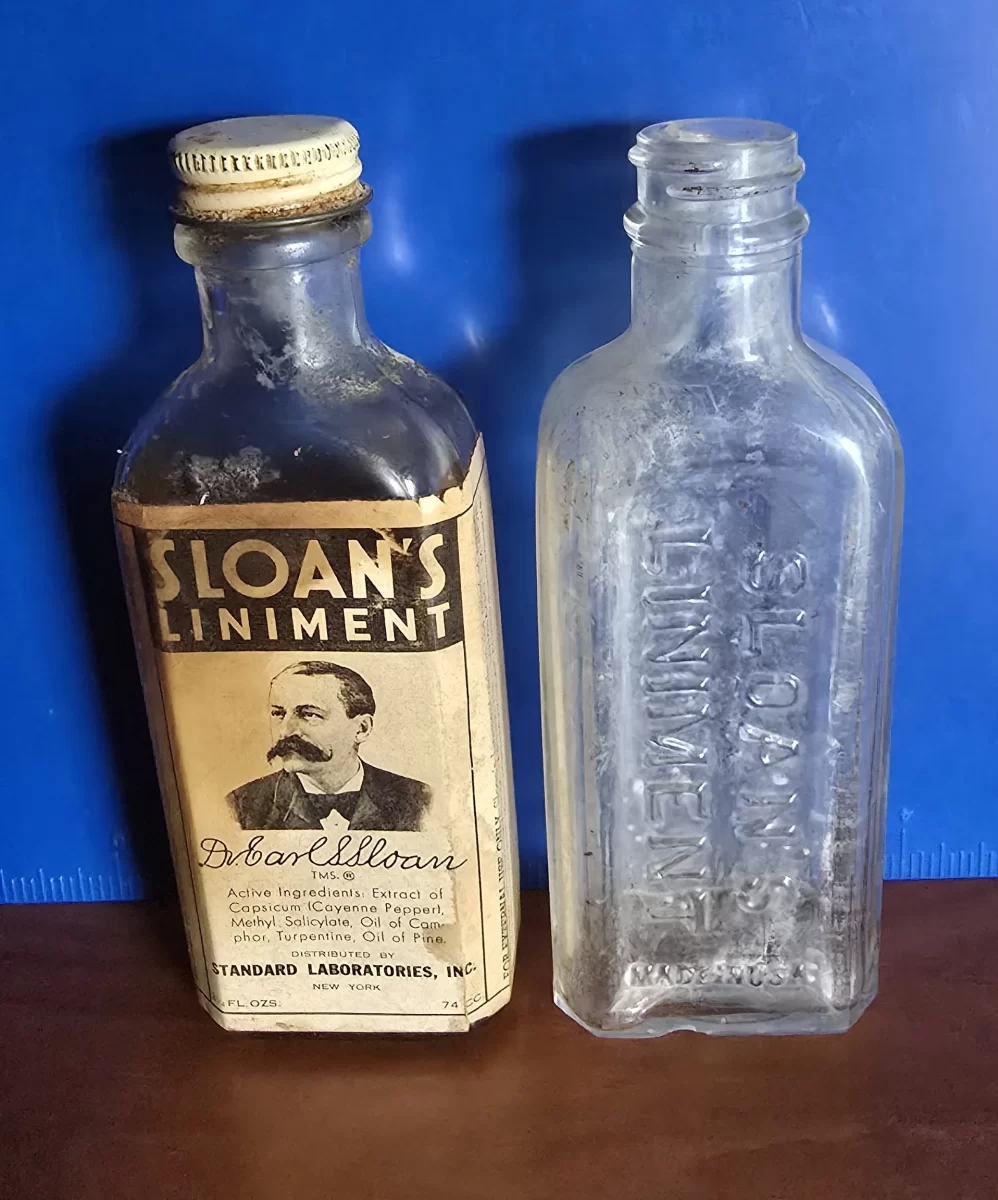
Description
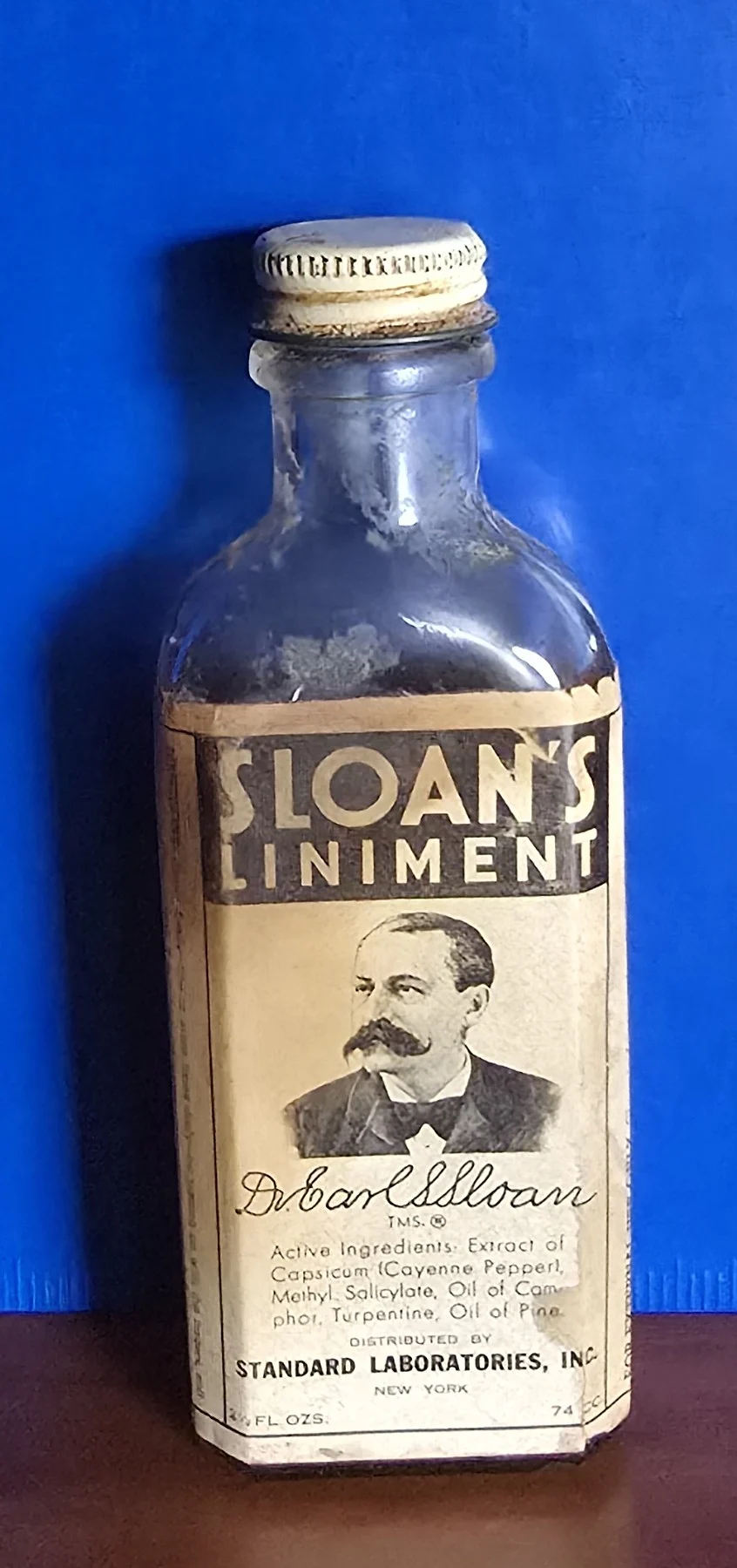
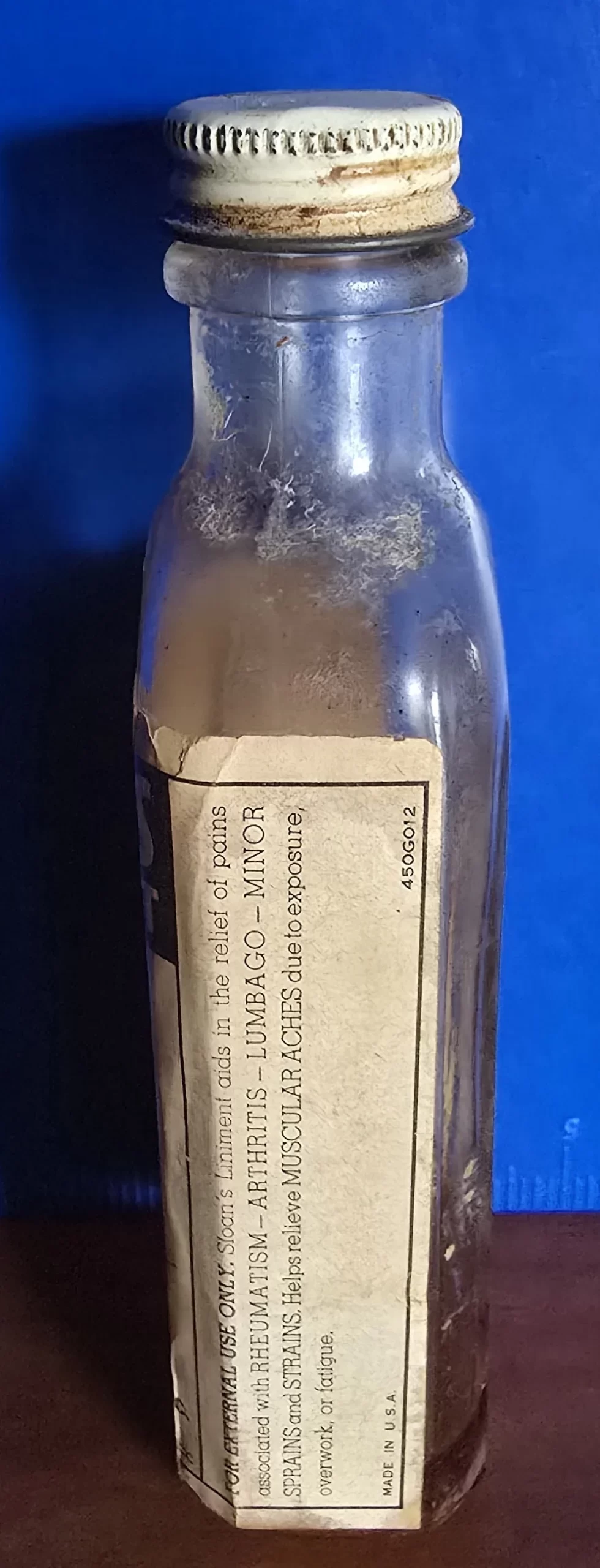
This small glass bottle once held Sloan’s Liniment, a potent topical remedy made famous for its ability to “kill pain”—whether it was on man or beast. The label features bold typography and old-timey charm, but behind it is a concoction of camphor, capsicum, turpentine, and alcohol.
Originally created by Dr. Earl S. Sloan in the late 19th century, the liniment was marketed as effective for everything from muscle pain to rheumatism to bruises, and widely used on horses, mules, and their hardworking owners.
Condition
Left Bottle (Labeled):
Glass: Clear glass with moderate clouding and residue inside; structurally intact.
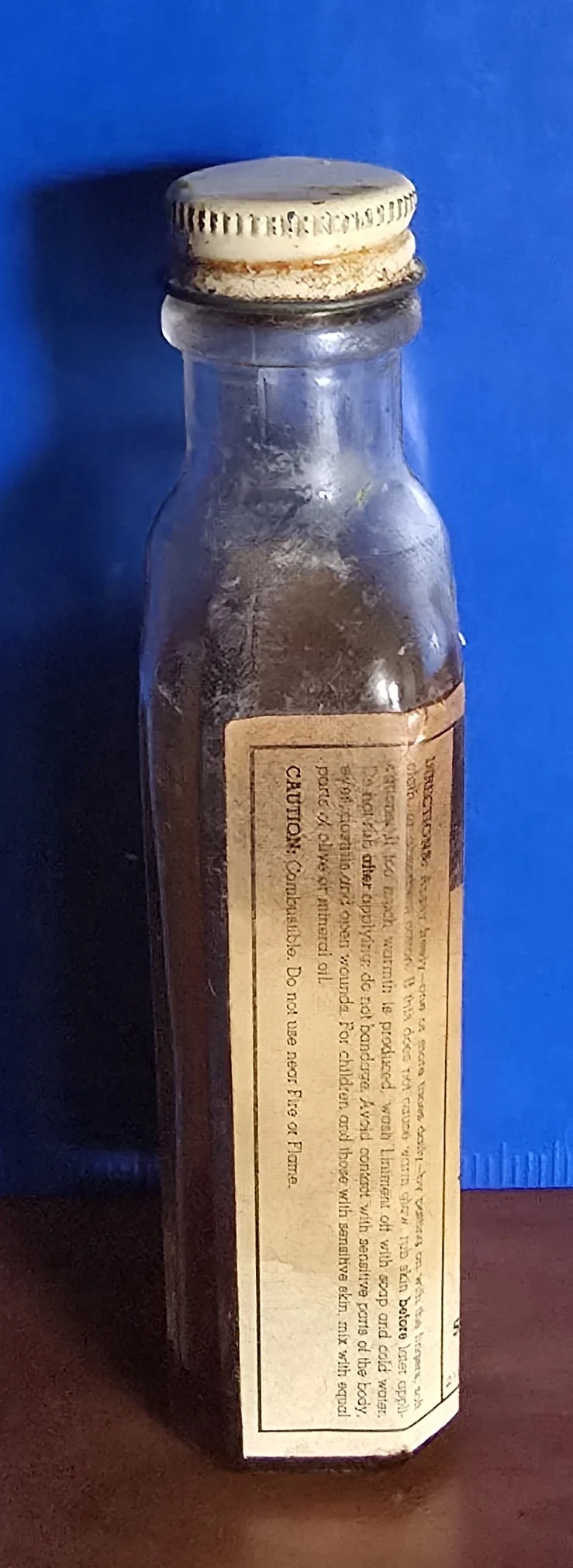
Label: ~90% intact, slightly yellowed with age but legible; minor tearing along edges.
Cap: Original metal cap present, with mild corrosion visible.
Contents: Empty.
Right Bottle (Embossed Only):
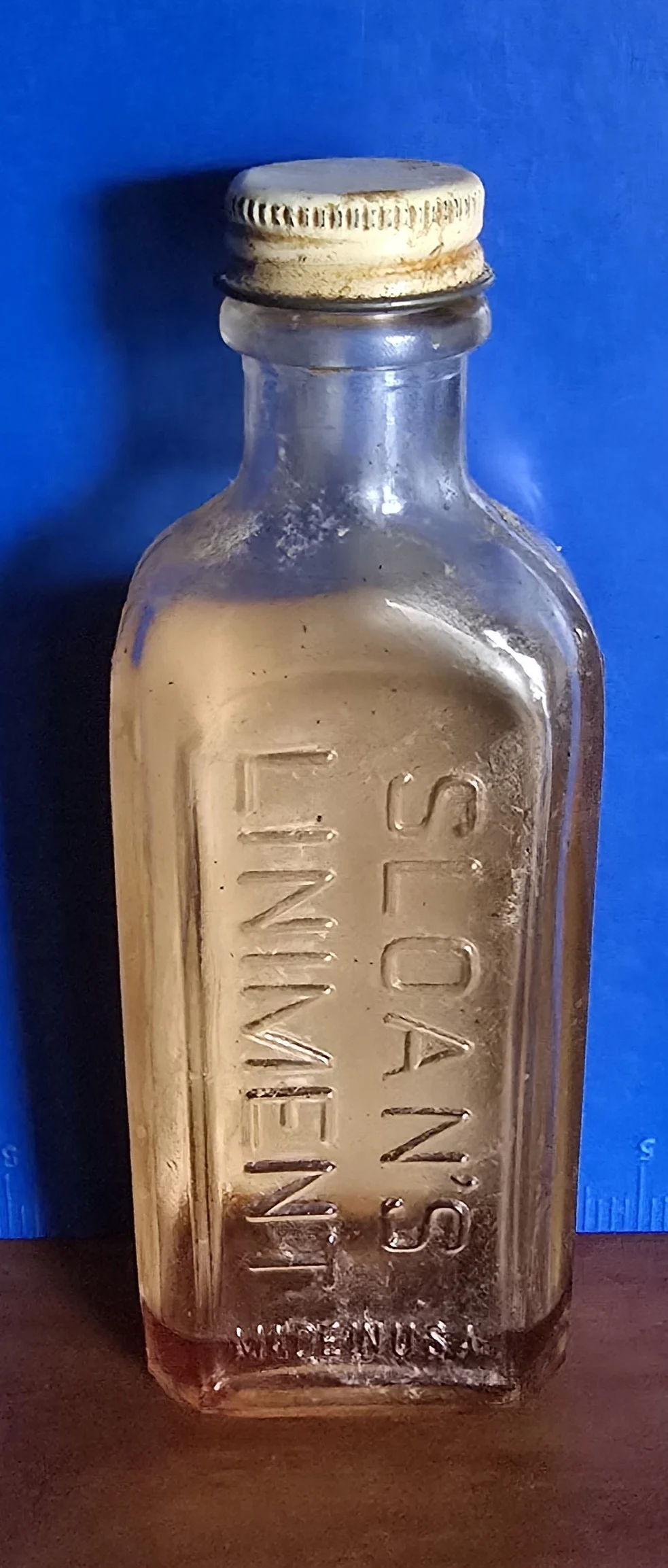
Glass: Clear, thick-walled glass with vertical embossed “SLOAN’S LINIMENT” and “MADE IN USA.” Moderate interior staining; no chips or cracks.
Label: None remains.
Cap: Missing.
Contents: Empty.
This pair shows moderate wear consistent with storage and use, offering both the bold branding of a retail shelf bottle and the utilitarian embossed glass of an earlier production run.
Gallery

Historical context
Dr. Sloan learned the formula from his father, a self-taught veterinarian, and began selling the liniment as a patent medicine in the 1880s. It exploded in popularity as a dual-purpose veterinary and human remedy, often found in barns and medicine cabinets alike.
By the early 20th century, Sloan’s Liniment was a household name. Marketing focused on pain relief for laborers, farmers, and horse owners, relying on bold claims, testimonials, and direct mail advertising. Other vintage remedies made similarly questionable claims, such as Glovarian Pills, a supposed female tonic with a mysterious formula.
It was also an early example of cross-species marketing: “Good for your horse? Great for your shoulder.”
Curious Facts, Ephemera, and Trivia
Sloan’s ads frequently claimed it worked “instantly”—a common phrase for early 1900s snake oil-style marketing.
It was often applied using the same bare hands that tended horses, treated human injuries, and ran the farm.
It remained on the market well into the 20th century before being outpaced by more modern, regulated medications.
Excerpt
“Sloan’s Liniment: The great pain killer. For human and animal use. Rub in well.”
Why it is in the Cabinet
As both a family physician and a lifelong Kentuckian, this bottle evokes a time when medicine was as much about belief as it was biology. Sloan’s Liniment was a staple in rural America—applied as often to livestock as it was to aching backs after harvest.
This particular bottle reminds me of the blurred lines between folk remedy, medical practice, and marketing bravado.
Support Dr. Bebout’s Cabinet of Medical Curiosities
If you enjoy the history, the oddities, and the effort, help keep this cabinet open. Every little bit helps preserve and share the strange wonders of medicine's past.
Buy Me a Ko-fi ☕ Buy Me a Coffee ☕ Tip via PayPal 💵
I have an old bottle of this stuff in my medicine cabinet and use it all the time,there are still full bottles of it in antique stores and its still just as good as when they bottled it!
You’re not wrong that many expiration dates are conservative — the military has shown that pretty clearly for modern, sealed medications.
That said, with true antiques the issue isn’t just potency but unknown storage, ingredient stability, and formulations that predate modern controls. So while they’re fascinating from a historical standpoint, they really belong on a shelf, not in use.
That tension between “it worked then” and “we know better now” is exactly why pieces like this are worth preserving.