
Title
Scott’s Emulsion of Pure Cod Liver Oil with Hypophosphites of Lime and Soda
Author
Scott & Bowne (Manufacturers)
Image
Description
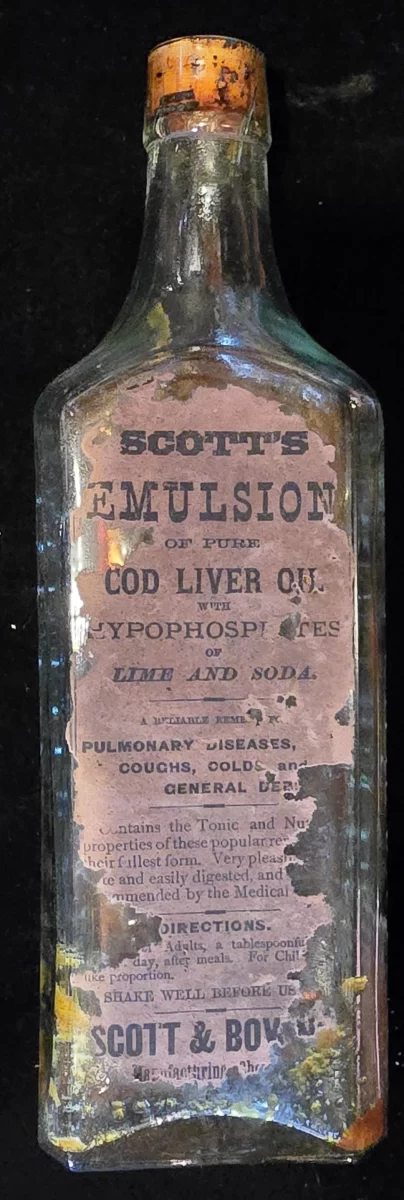
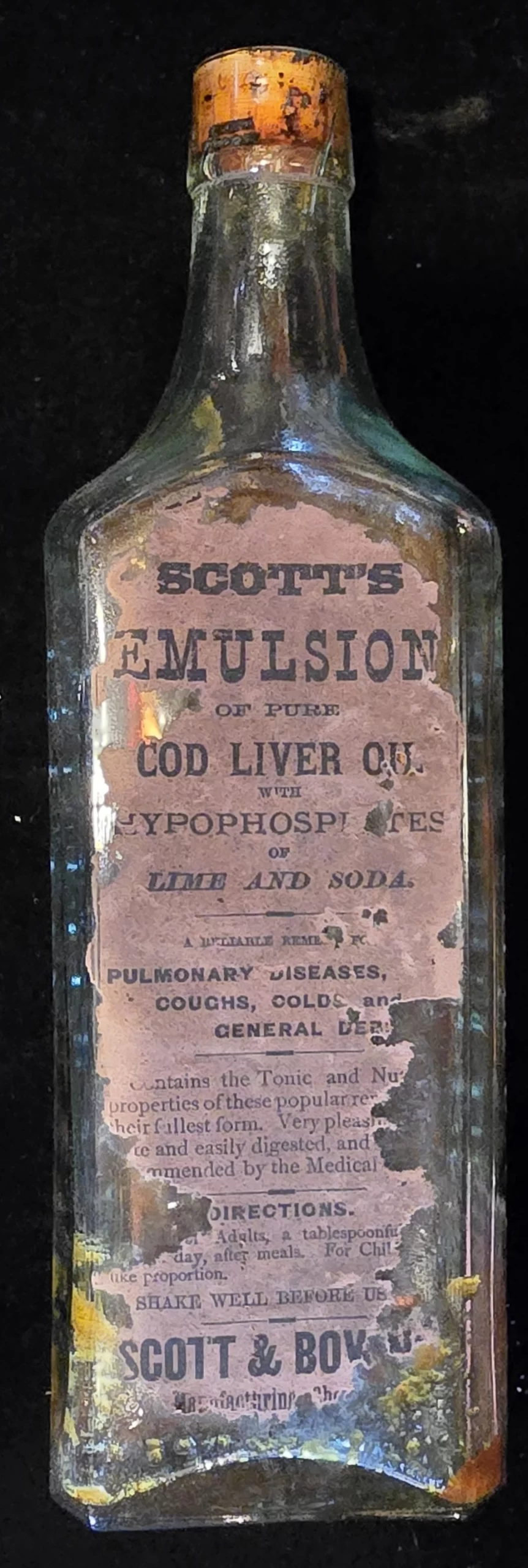
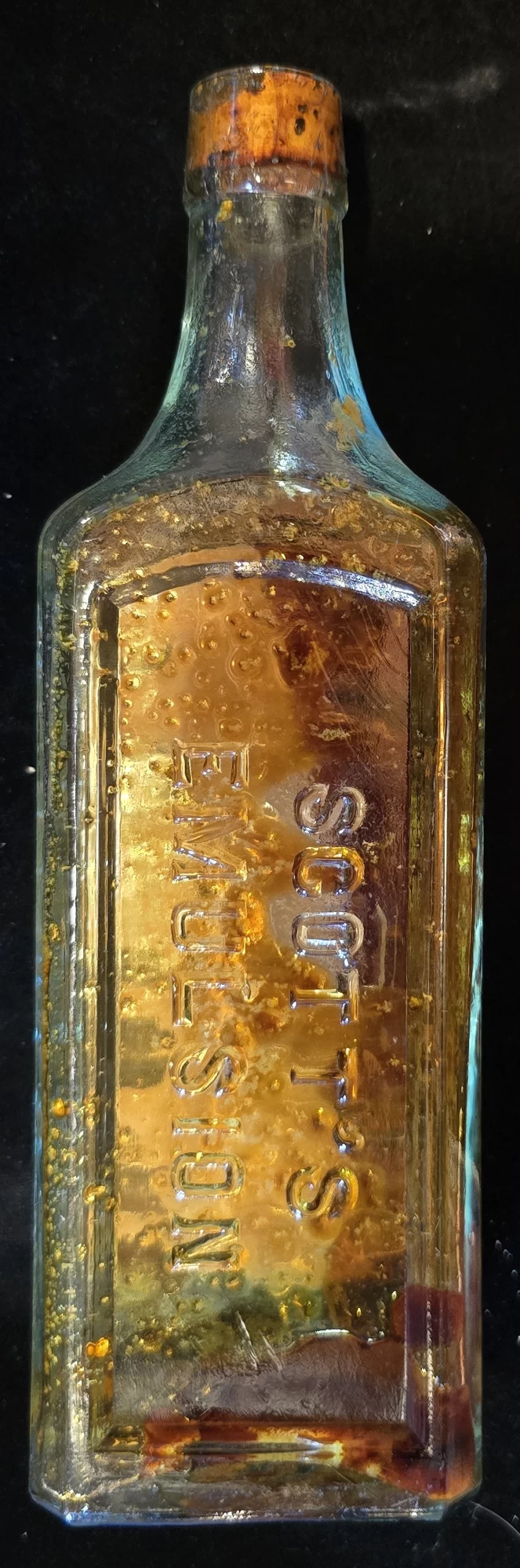
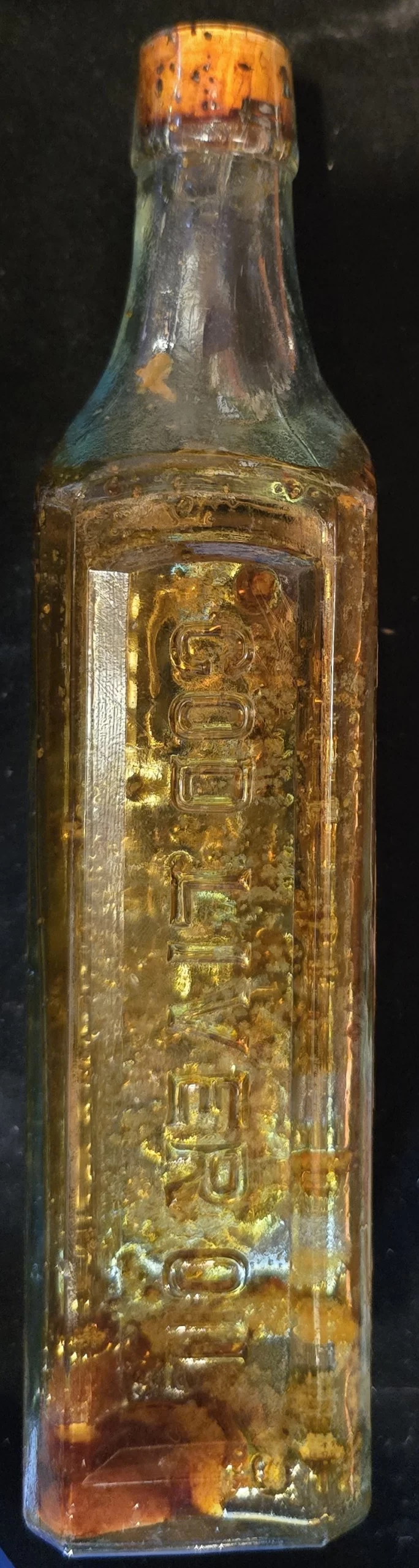
This bottle of Scott’s Emulsion represents one of the most famous late-19th-century patent nutritional remedies, combining cod liver oil with hypophosphites of lime and soda to create a thick, milky tonic marketed as a restorative for pulmonary diseases, chronic coughs, colds, and general debility. The label text emphasizes nourishment, easy digestion, and a strengthening effect on weak or convalescent patients, reflecting a period when cod liver oil was widely promoted as a universal building formula. Its square panel bottle, applied cork, and boldly embossed sides—reading “WITH LIME & SODA” and “SCOTT’S EMULSION”—are characteristic of Scott & Bowne’s heavily branded packaging. Although the contents have long since degraded, the bottle retains its original form and much of its early paper label, making it a strong example of a widely advertised “body-building” remedy from the turn of the century.
Condition
The bottle shows visible interior residue and oxidized remnants of the original contents, scattered mineralization, worn glass surfaces, and a heavily degraded main label with sections missing. Embossed panels remain clear and sharp. The cork is intact but deteriorated and darkened with age. Overall, it is a structurally sound but heavily weathered example with substantial label loss typical of dug or long-stored specimens.
Gallery

Historical context
Scott’s Emulsion was introduced in the 1870s and became one of the best-known proprietary tonics in the United States and abroad. Cod liver oil—rich in vitamin A, vitamin D, and fatty acids—was regarded as a powerful fortifier long before modern nutritional science confirmed any mechanism. Hypophosphites were added to enhance the remedy’s reputation as a nerve- and bone-building agent, despite little real evidence of therapeutic value. Scott & Bowne aggressively marketed the product through national campaigns, elaborate pamphlets, and distinctive embossed bottles, securing a place in both the pharmaceutical marketplace and public memory as a classic “building-up” remedy for weak or undernourished individuals.
Curious Facts, Ephemera, and Trivia
Scott’s Emulsion became so widely recognized that the company used a picture of two fishermen carrying an enormous cod as its trademark—one of the most iconic advertising images of the era. The company also claimed that children preferred the taste, a dubious assertion given cod liver oil’s notorious flavor. By the early 20th century the product was sold globally, with labels translated into multiple languages, often promising improvements in weight, complexion, and vigor.
Excerpt
“A reliable remedy for pulmonary diseases, coughs, colds, and general debility. Contains the tonic and nutritive properties of these popular remedies in their fullest form. Very pleasant and easily digested, and recommended by the Medical Profession.”
Why it is in the Cabinet
This bottle stands as a key example of the period’s nutritional patent medicines—blending partial truth, hopeful marketing, and bold therapeutic claims into a single widely consumed product. As an artifact, it illustrates how cod liver oil became embedded in American medical culture and how companies packaged nutrition as cure. Its embossed panels and surviving label make it a valuable addition to the Cabinet’s pharmaceutical holdings.
Support Dr. Bebout’s Cabinet of Medical Curiosities
If you enjoy the history, the oddities, and the effort, help keep this cabinet open. Every little bit helps preserve and share the strange wonders of medicine's past.
Buy Me a Ko-fi ☕ Buy Me a Coffee ☕ Tip via PayPal 💵