
Title
Rubber Hot Water Bottle (Textured Design)
Image
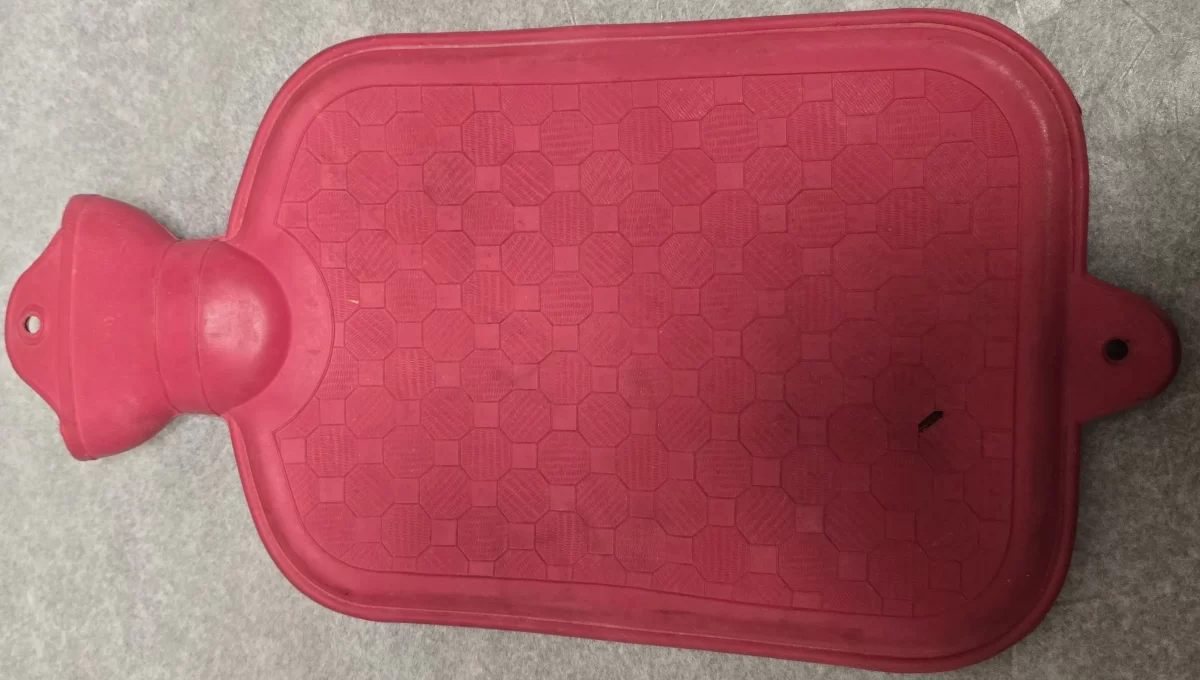
Description
This vintage rubber hot water bottle is a familiar relic of 20th-century bedside care. Flexible, refillable, and often found tucked into bedsheets or wrapped in towels, these bottles were used for soothing muscle aches, menstrual cramps, or general cold relief long before electric heating pads became widespread.
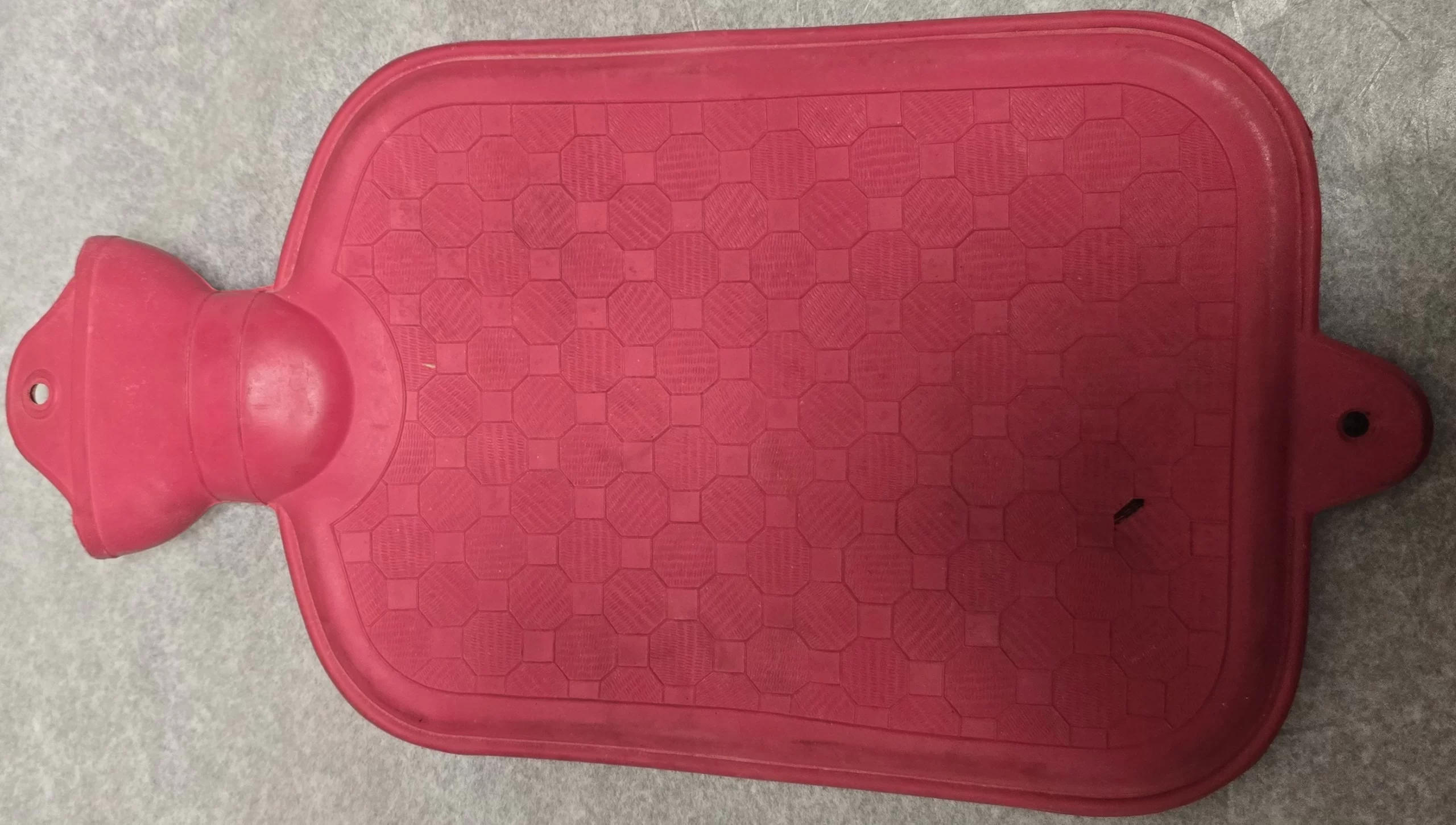
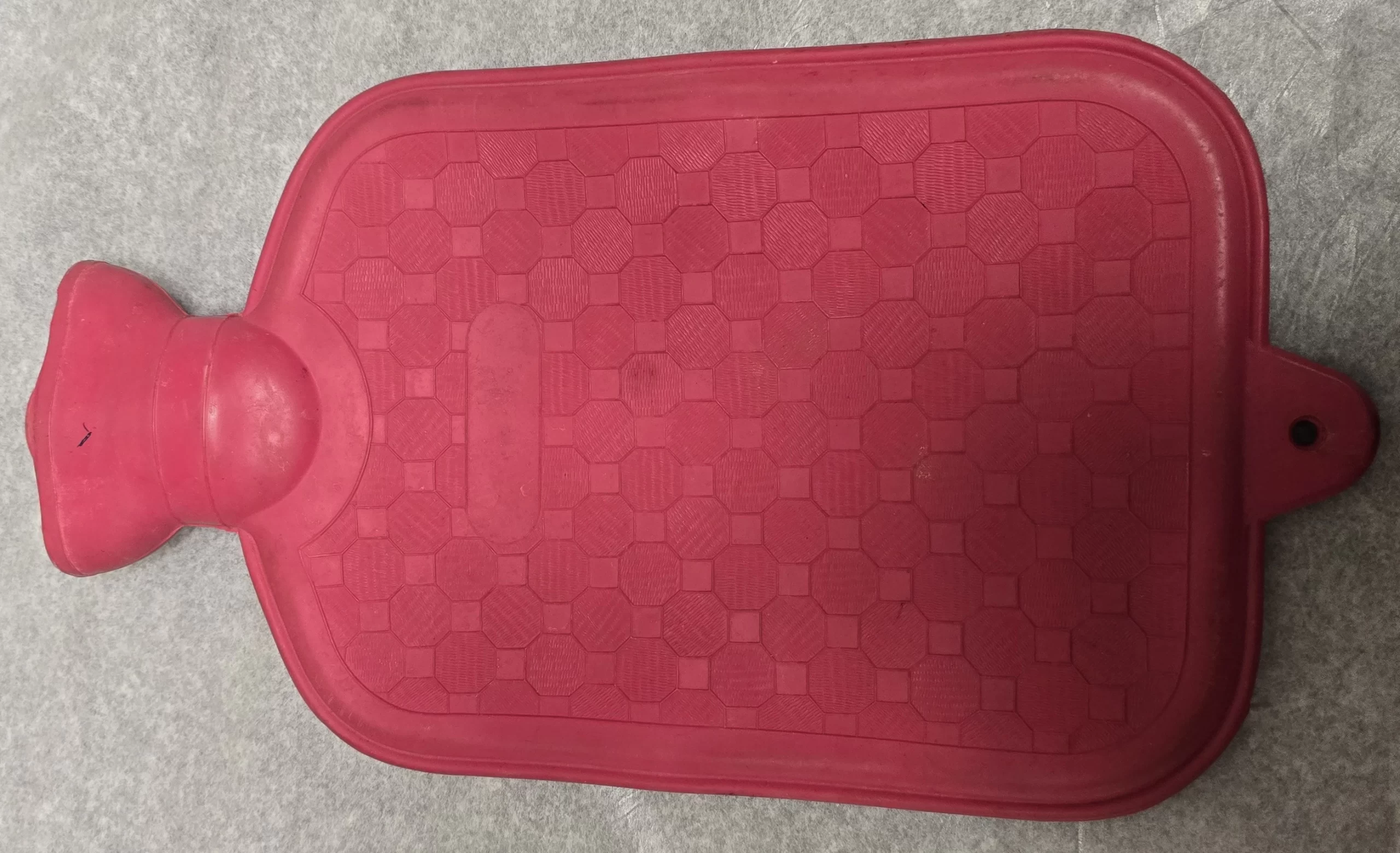
With its raised hex-octagonal texture and red coloration, this design is characteristic of mid-century mass-produced models. It lacks manufacturer branding but was likely a generic drugstore or medical-supply item. The puncture and worn rubber speak to its long use—perhaps in a home medicine cabinet, or tucked beside a loved one on a chilly night.
Condition
Well-worn rubber with:
Visible texturing still intact
Minor softening and surface dust
One puncture or split near lower third
No branding or volume markings
Best preserved as a visual historical artifact—not safe for modern use due to material degradation.
Gallery
Historical context
Hot water bottles became popular in the late 19th and early 20th centuries as an affordable, reusable comfort device. Earlier versions were made of metal or ceramic, but the advent of molded rubber allowed for softer, body-conforming options that didn’t risk burns (unless overfilled).
In hospitals, hot water bottles were sometimes used for rewarming hypothermic patients or as an adjunct to hydrotherapy. At home, they were common in menstrual care, elder care, and during the long, pre-central heating winters of rural America.
Curious Facts, Ephemera, and Trivia
Some hot water bottles were designed to double as enema bags, with screw-on attachments (not applicable to this model).
The raised texture wasn’t just decorative—it helped distribute heat more evenly and prevent skin burns.
These were often part of nursing kits, especially for homebound care.
A popular winter bedtime ritual for generations was warming the sheets with one of these tucked under the covers.
Why it is in the Cabinet
This item may not turn heads, but it represents something deeply human: the pursuit of warmth, relief, and comfort in a world before high-tech medicine. It’s a reminder that healing often begins with the basics, and that even the humblest tools played a role in the long story of care.
Support Dr. Bebout’s Cabinet of Medical Curiosities
If you enjoy the history, the oddities, and the effort, help keep this cabinet open. Every little bit helps preserve and share the strange wonders of medicine's past.
Buy Me a Ko-fi ☕ Buy Me a Coffee ☕ Tip via PayPal 💵