
Title
PERFECT HEALTH: HOW TO GET IT AND HOW TO KEEP IT
Author
Charles Courtney Haskell (listed as “One Who Has It”)
Image
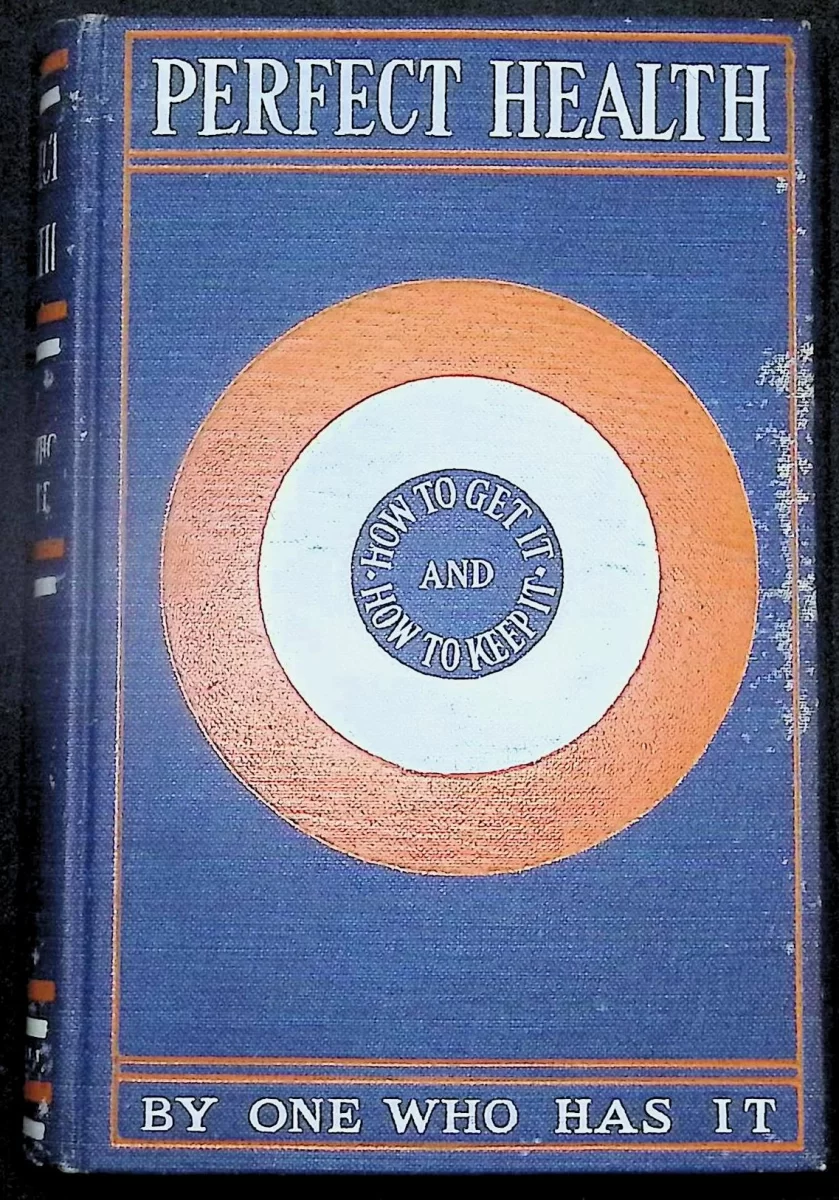
Description
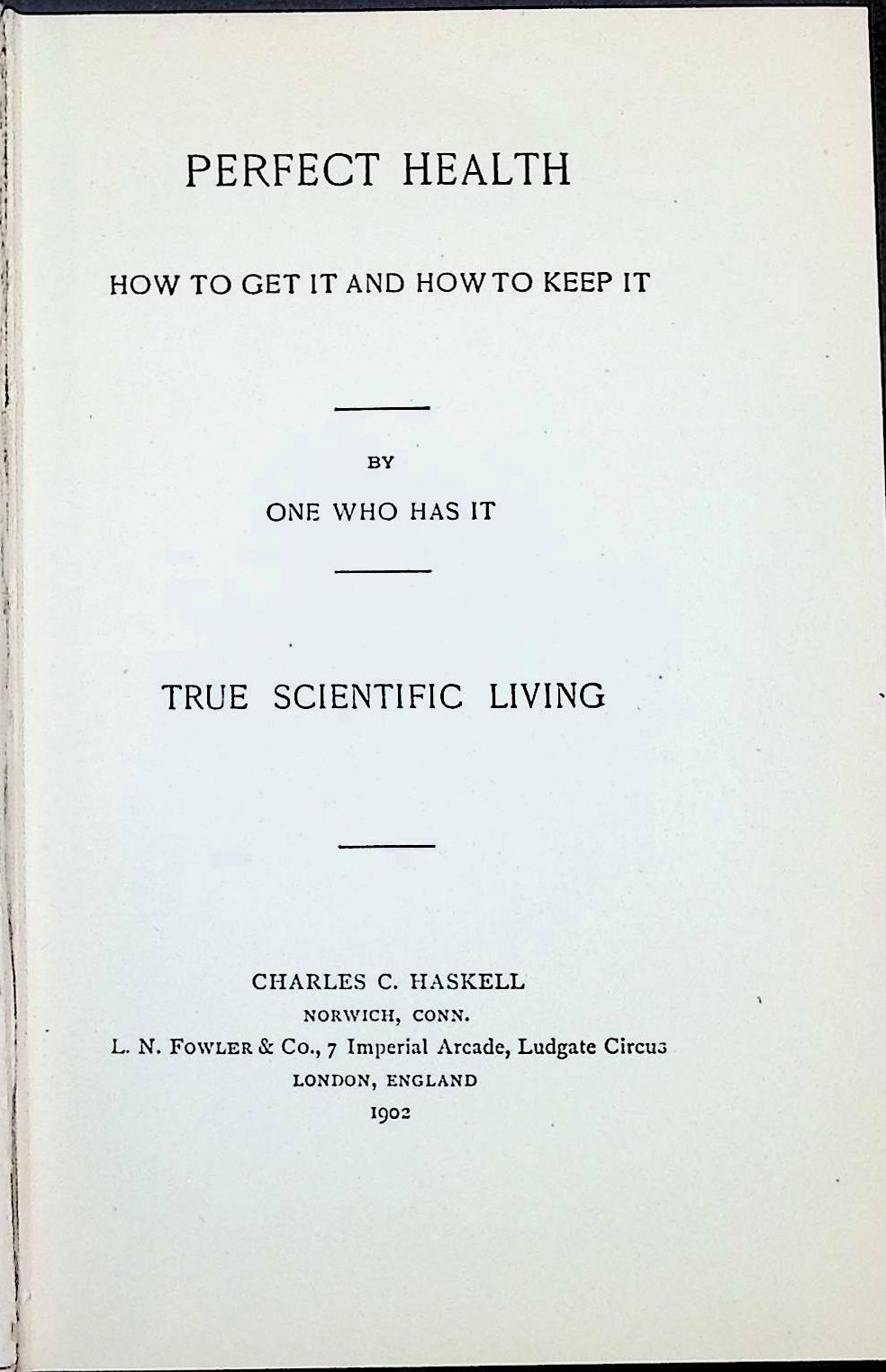
Perfect Health (1902) is a classic specimen of turn-of-the-century self-improvement pseudoscience, written by Charles Courtney Haskell of Norwich, Connecticut. Published by L.N. Fowler & Co. of London—well known for its phrenology and fringe-health titles—the book promises nothing less than “the knowledge of Perfect Health,” taught through what Haskell calls “True Scientific Living.”
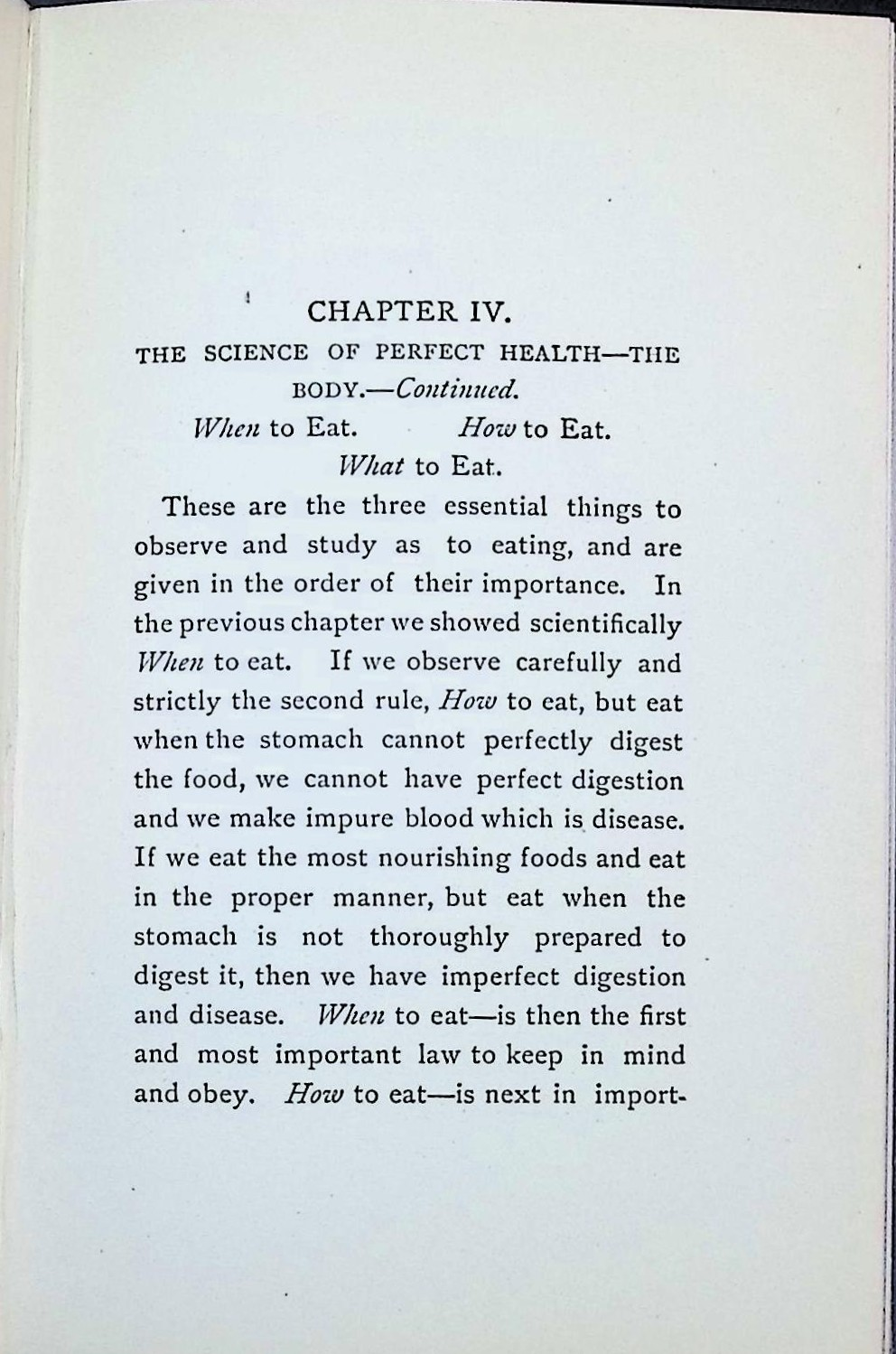
The work blends moral philosophy, dietary rules, quasi-spiritual self-discipline, and the author’s personal convictions. Haskell teaches that disease results from improper eating, impure blood, and failure to follow universal “laws of life.” He asserts that perfect digestion, perfect circulation, and perfect happiness can be achieved by following his strict regimens.
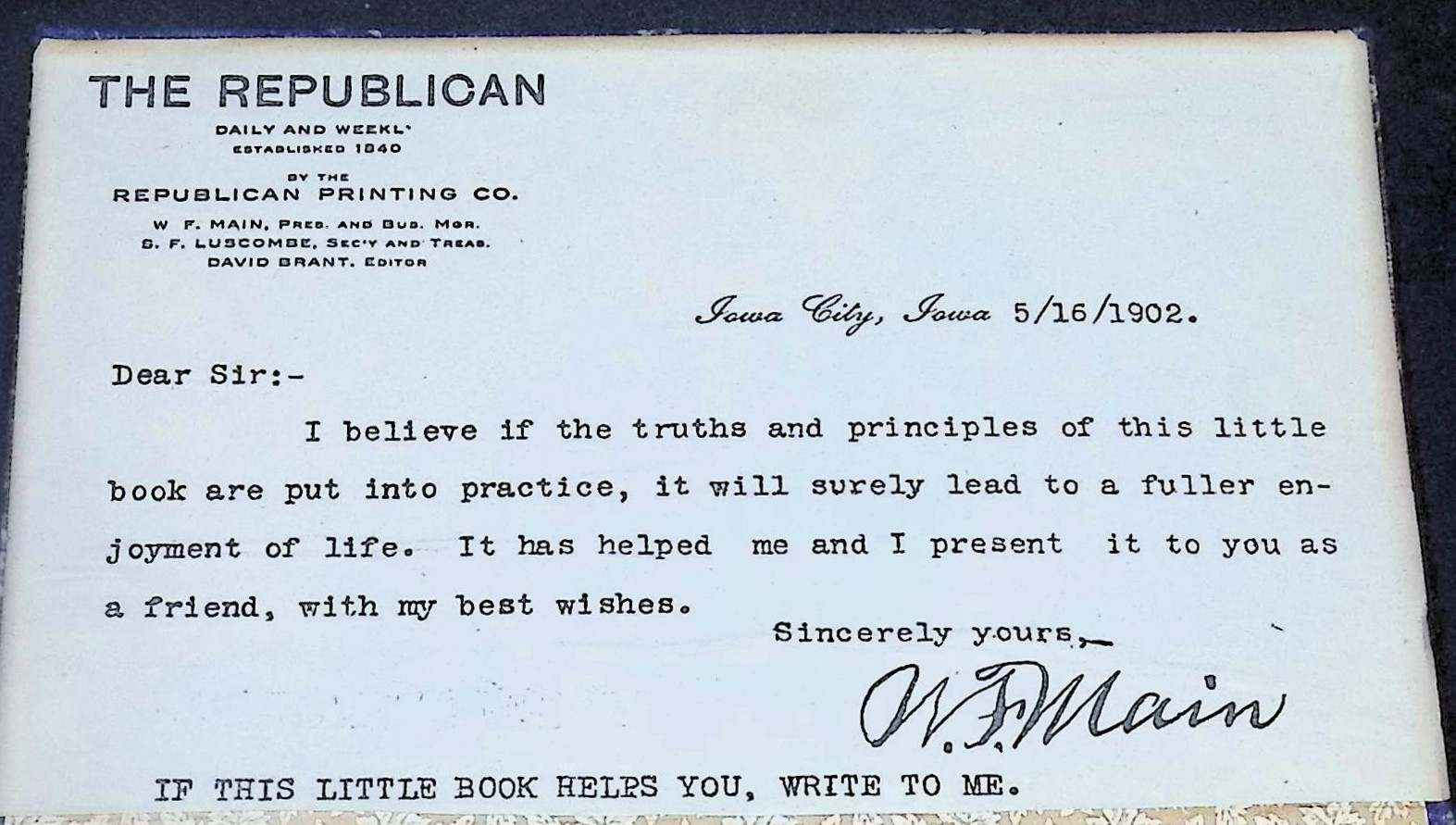
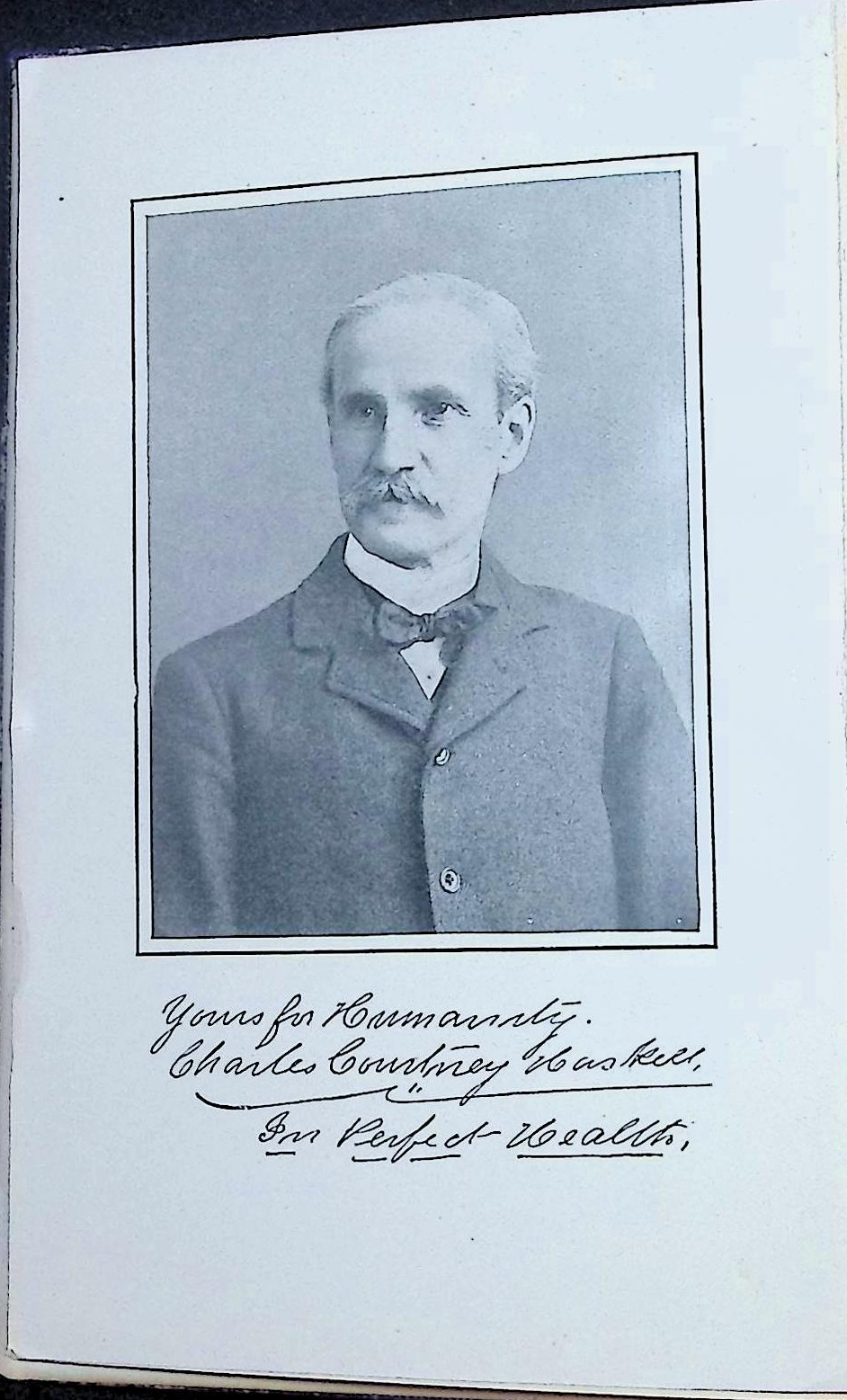
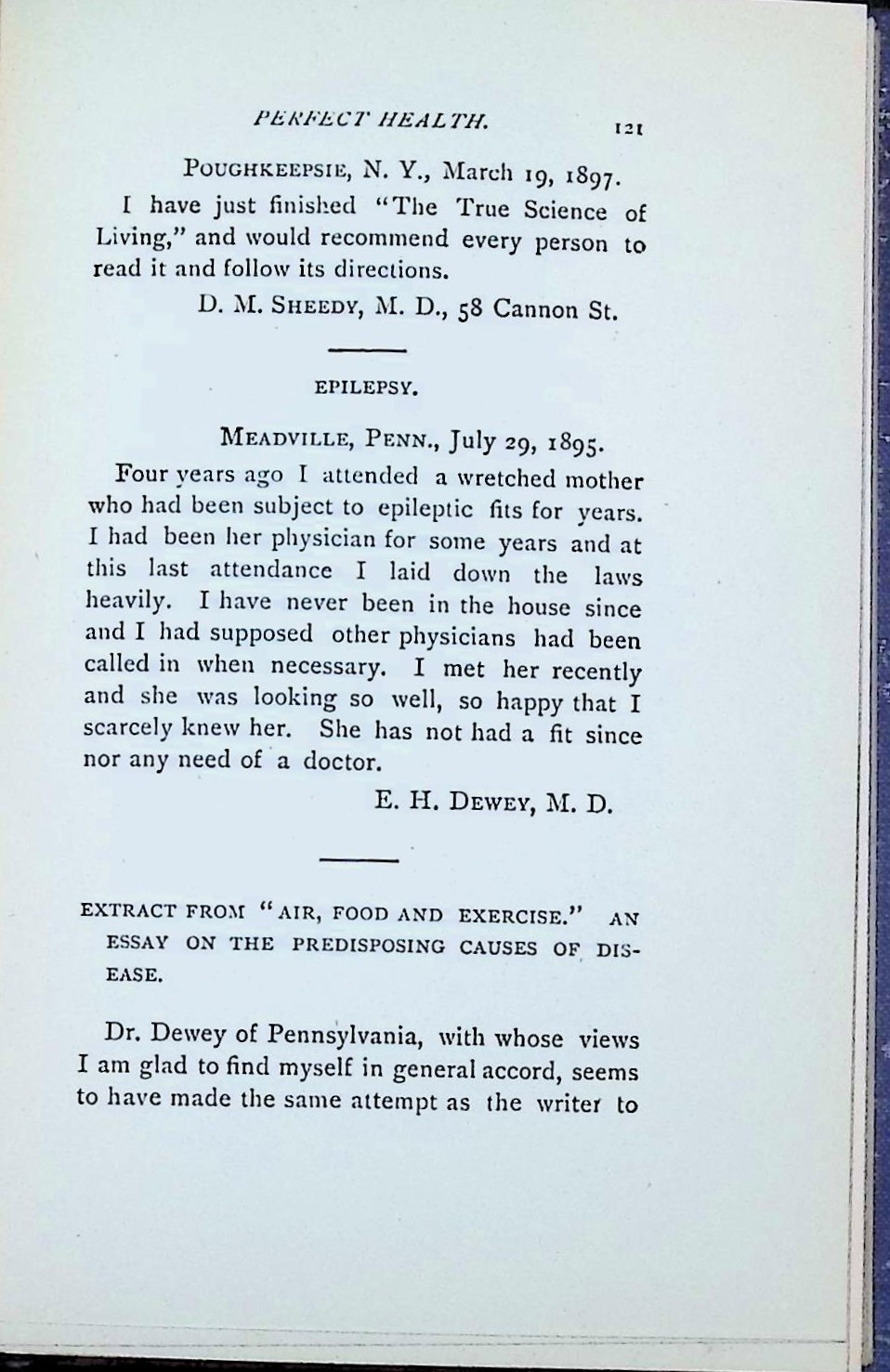
This volume includes a frontispiece portrait of Haskell, early-chapter metaphysical claims, and later testimonials from physicians, including a dubious report of “curing” epilepsy through his dietary rules. A typed 1902 gift slip from W.F. Main of Iowa City is additionally tucked into your copy, enhancing provenance and historical interest.
Condition
Blue cloth boards with decorative target-style gilt and white roundel; moderate edge and corner wear; internally clean, with lightly toned pages. Inserted ephemera (1902 letter slip) is well preserved.
Gallery

Historical context
The early 1900s saw a flourishing of “health reform” literature blending metaphysics, moral uplift, diet, and pseudoscientific claims. Publishers like Fowler & Co. capitalized on public interest in self-cure methods. Haskell’s work belongs to the same cultural moment that embraced fasting cures, New Thought healing, phrenology, and “mental science,” all marketed as enlightened, modern alternatives to conventional medicine.
Despite its scientific pretensions, Perfect Health reflects the era’s recurring themes: disease as moral failure, health as spiritual purity, and the belief that proper lifestyle alone could cure even chronic illnesses such as epilepsy.
Curious Facts, Ephemera, and Trivia
The author intentionally avoided placing his name on the book’s title page, instead using the moniker “One Who Has It.”
Haskell’s approach mirrors the New Thought movement, which claimed illness resulted from incorrect thinking.
Your copy includes a personalized 1902 note from W.F. Main of The Republican newspaper, stating that the book “has helped me” and offering it as a friendly gift—an excellent contextual artifact.
Fowler & Co., the London publisher, was best known for phrenology manuals and fringe scientific texts.
Excerpt
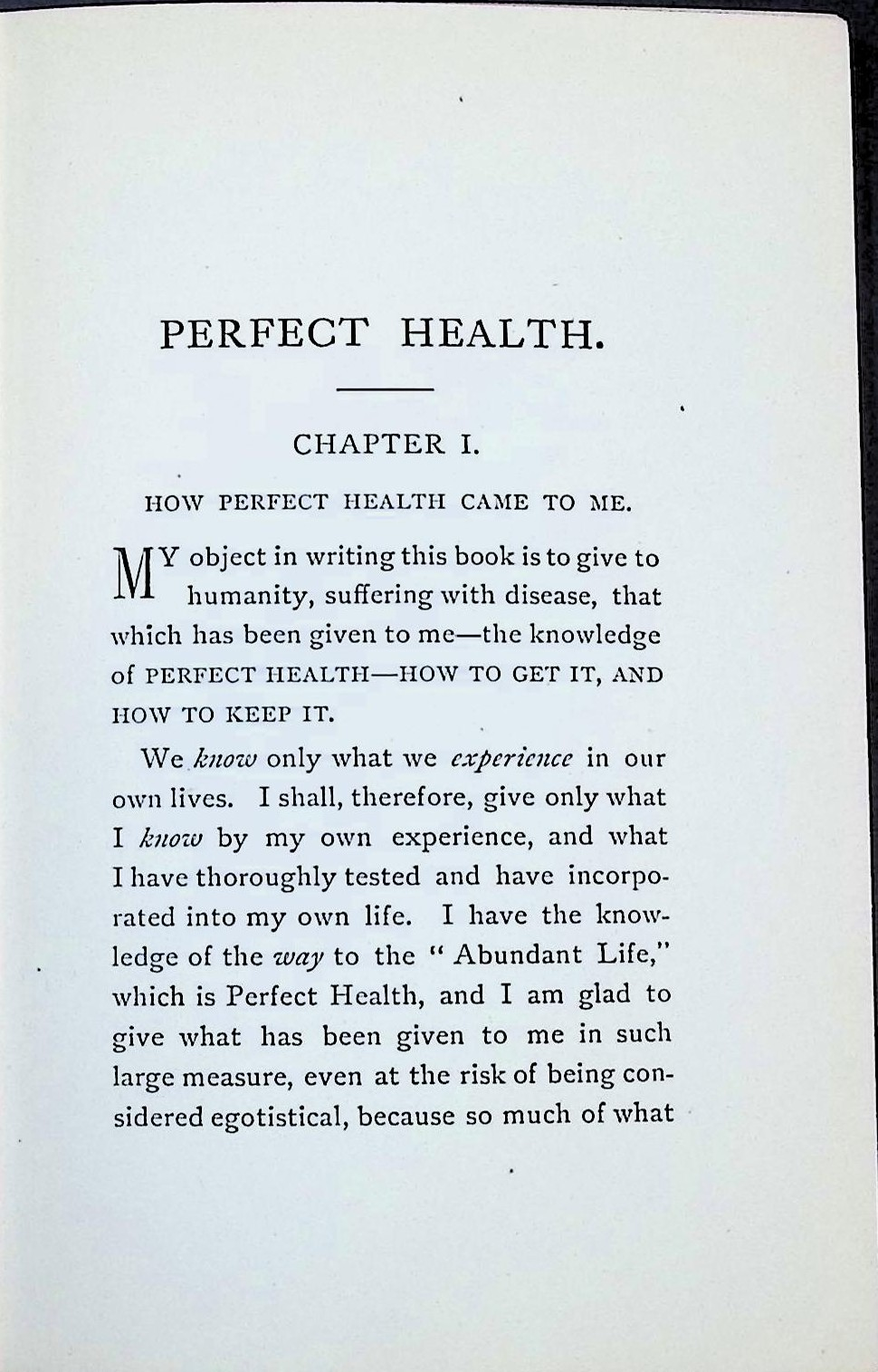
From Chapter I:
“My object in writing this book is to give to humanity, suffering with disease, that which has been given to me—the knowledge of Perfect Health—how to get it, and how to keep it.”
Why it is in the Cabinet
This book stands as a textbook example of early 20th-century fringe-health ideology: confident, moralizing, and wholly unburdened by evidence. It illustrates the historical landscape of self-help medical reformers, the public hunger for “scientific” health claims, and the widespread marketplace for pseudoscientific guidance. With original ephemera and strong visual appeal, it is an ideal addition to the Cabinet’s Quack and Fringe Medicine collection.
Support Dr. Bebout’s Cabinet of Medical Curiosities
If you enjoy the history, the oddities, and the effort, help keep this cabinet open. Every little bit helps preserve and share the strange wonders of medicine's past.
Buy Me a Ko-fi ☕ Buy Me a Coffee ☕ Tip via PayPal 💵