
Title
Parke, Davis & Co. Pills No. 27 – Aloin, Strychnine, and Belladonna
Author
Parke, Davis & Co. (Detroit, Michigan, U.S.A.)
Image
Description
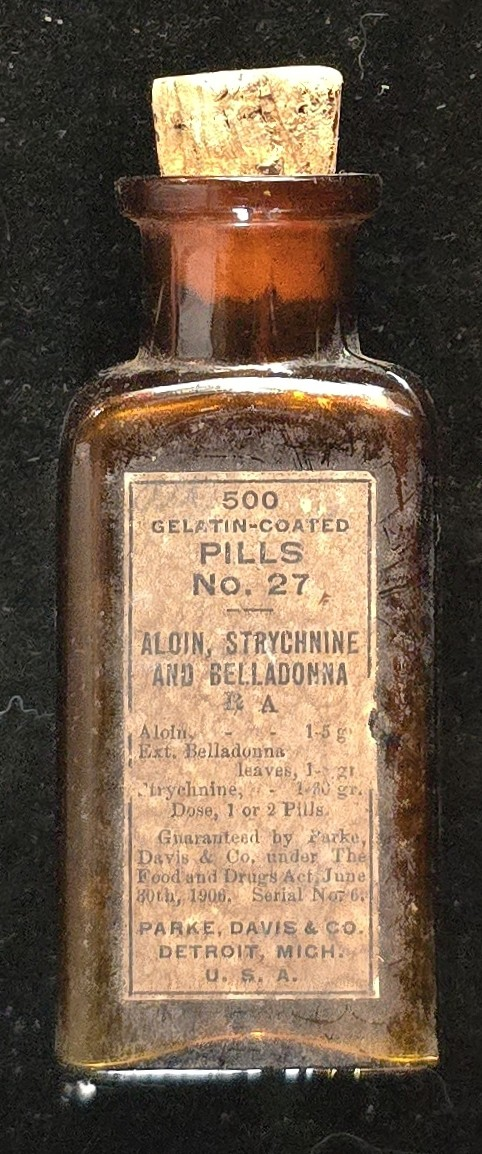
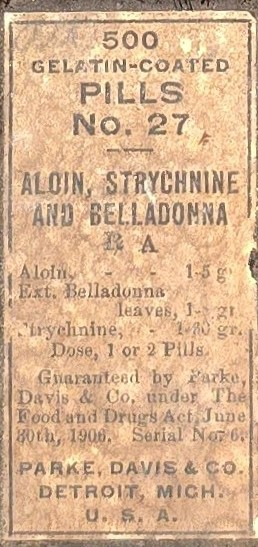
This amber glass bottle with cork stopper once contained 500 gelatin-coated pills (No. 27), manufactured by Parke, Davis & Co. The label lists the active ingredients:
Aloin (derived from aloe, a laxative)
Extract of belladonna leaves (containing atropine, a powerful anticholinergic)
Strychnine (a highly toxic alkaloid, once used in minute doses as a stimulant)
The dosage recommended on the label: “1 or 2 pills.”
Parke, Davis & Co. guaranteed the contents under the 1906 Pure Food and Drugs Act, one of the earliest U.S. laws requiring labeling and accuracy in pharmaceutical products.
Condition
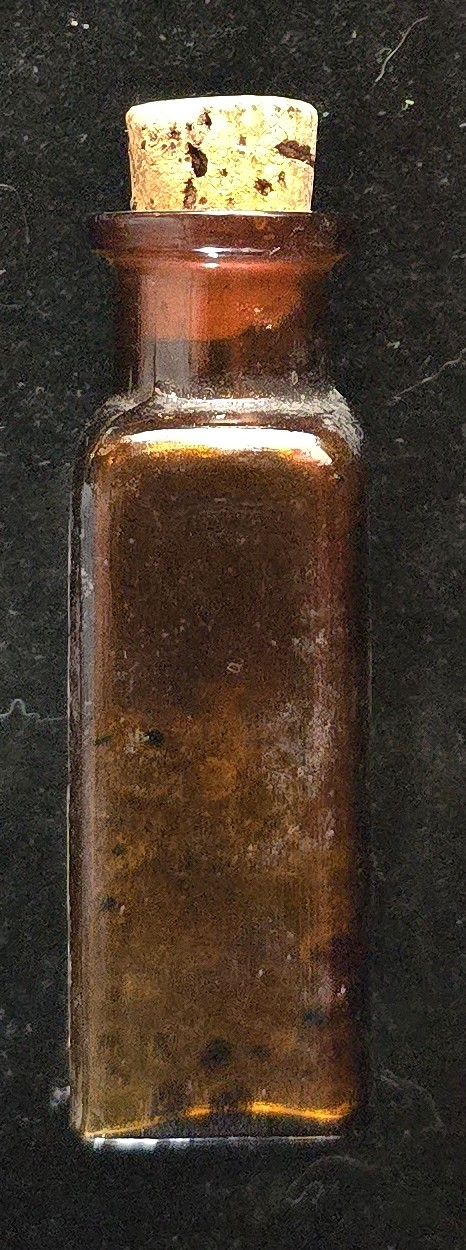
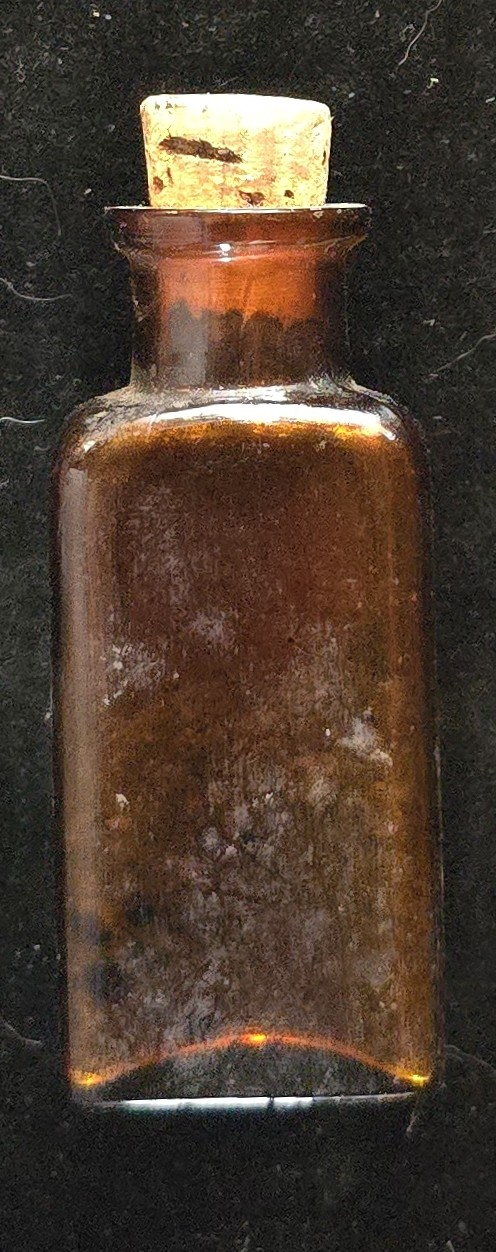
Bottle intact, amber glass shows light haze and residue.
Cork stopper original but dried and slightly degraded.
Label present, though faded, stained, and partially abraded. Legible overall.
Gallery
Historical context
Parke, Davis & Co., founded in Detroit in 1866, became one of the largest and most influential American pharmaceutical manufacturers. Their numbered pill series reflected the growing trend toward standardized, mass-produced medicine in the early 20th century.
The ingredients in Pills No. 27 reflect both medical practice and risk of the period: aloin for constipation, belladonna for muscle spasm and secretions, and strychnine as a supposed “tonic” and circulatory stimulant. Today, this combination would be considered dangerous, with serious risk of poisoning.
Curious Facts, Ephemera, and Trivia
Strychnine, infamous as a rat poison, was once sold in tiny doses as a heart and nerve stimulant.
Belladonna (“deadly nightshade”) was used historically to dilate pupils — a fashionable look in Renaissance Italy.
The presence of the 1906 Food and Drug Act guarantee places this bottle firmly after that date, when labeling accuracy became a legal requirement.
Gelatin-coated pills were an innovation to mask bitter or unpleasant flavors.
Excerpt
From the label:
“Guaranteed by Parke, Davis & Co. under The Food and Drugs Act June 30th, 1906. Serial No. 6.”
Why it is in the Cabinet
This bottle is a striking example of the dangerous intersection between legitimate pharmaceutical practice and toxic substances. Its contents — a mix of stimulant, laxative, and anticholinergic — reflect a medical era where symptom control often took precedence over patient safety.
Support Dr. Bebout’s Cabinet of Medical Curiosities
If you enjoy the history, the oddities, and the effort, help keep this cabinet open. Every little bit helps preserve and share the strange wonders of medicine's past.
Buy Me a Ko-fi ☕ Buy Me a Coffee ☕ Tip via PayPal 💵