
Title
Packer’s Tar Soap Tin
Image
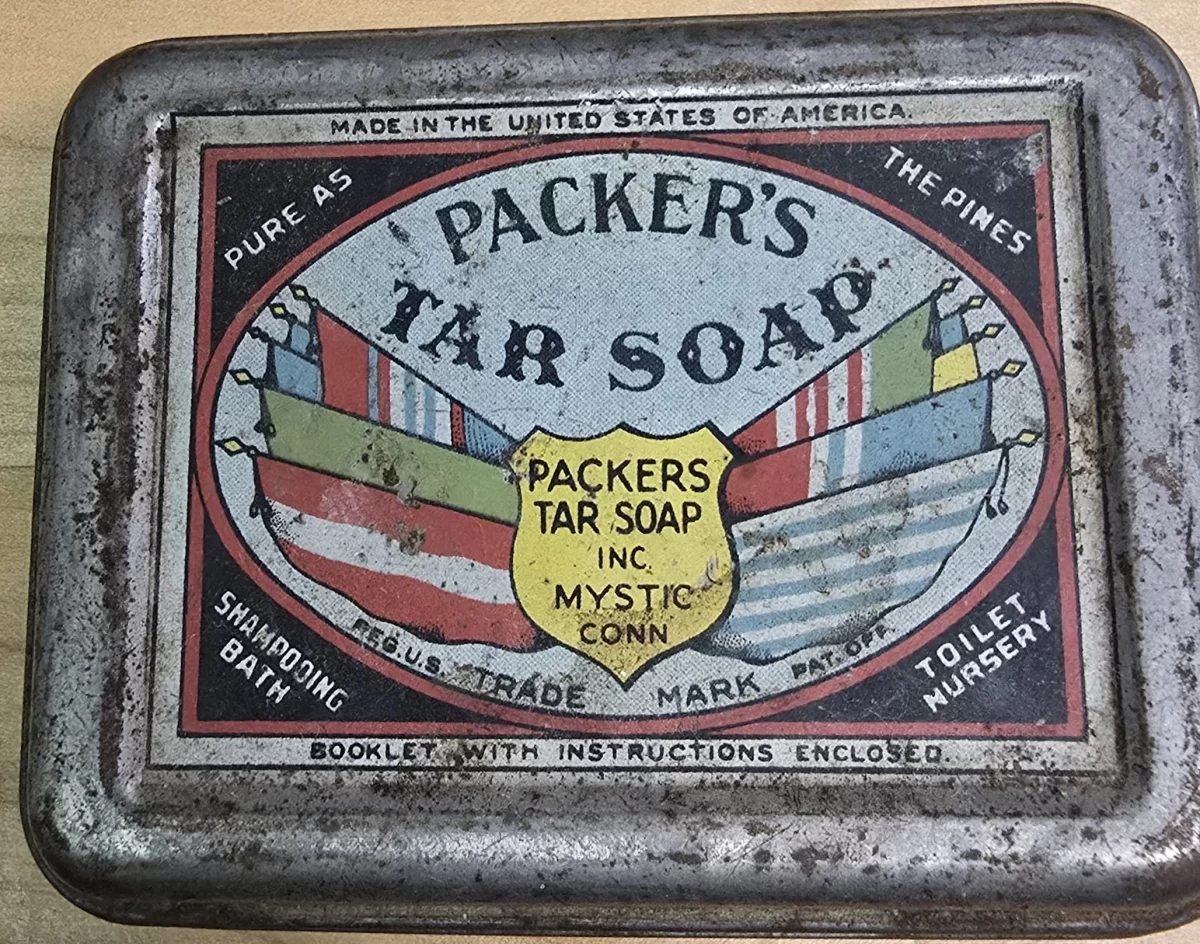
Description
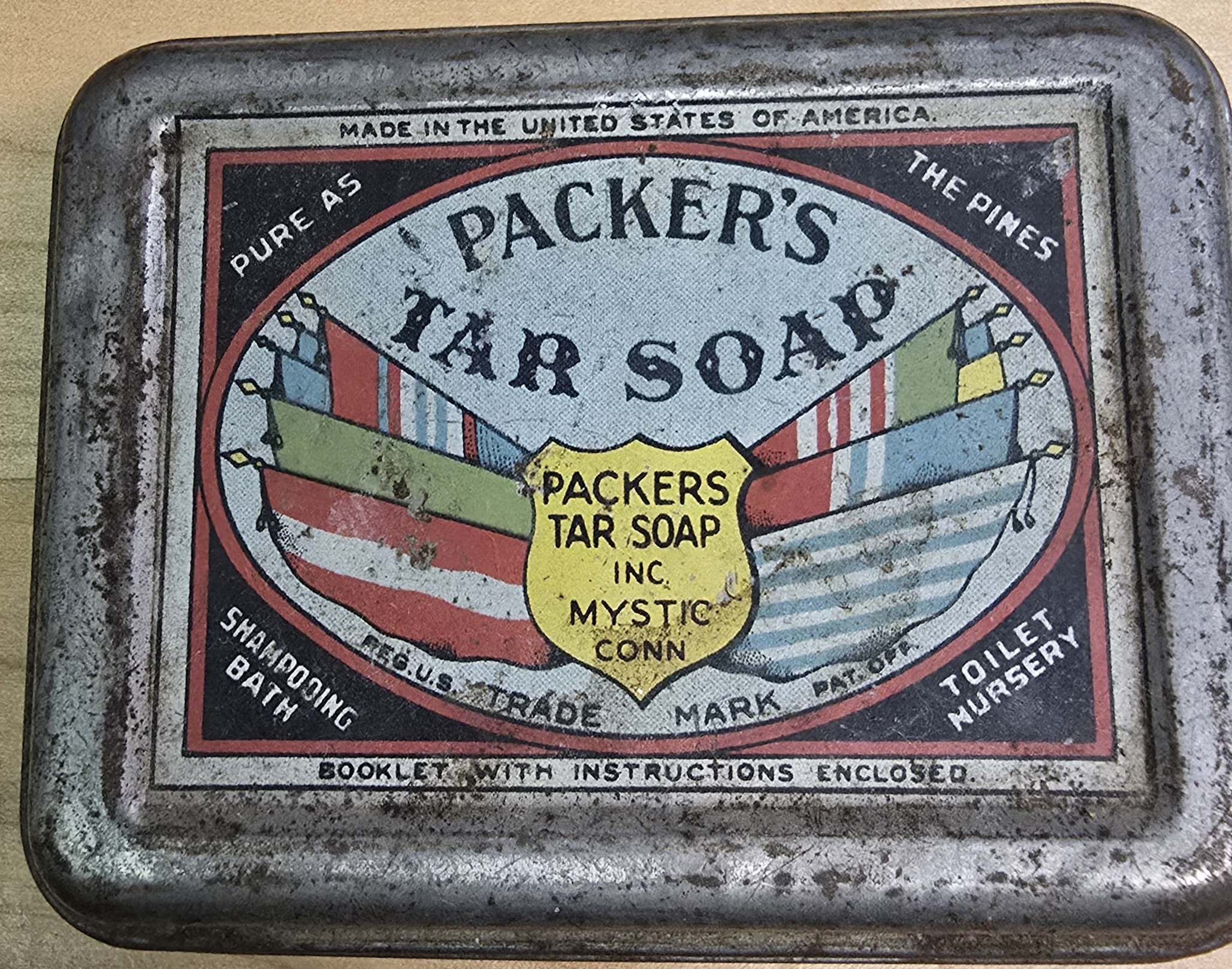
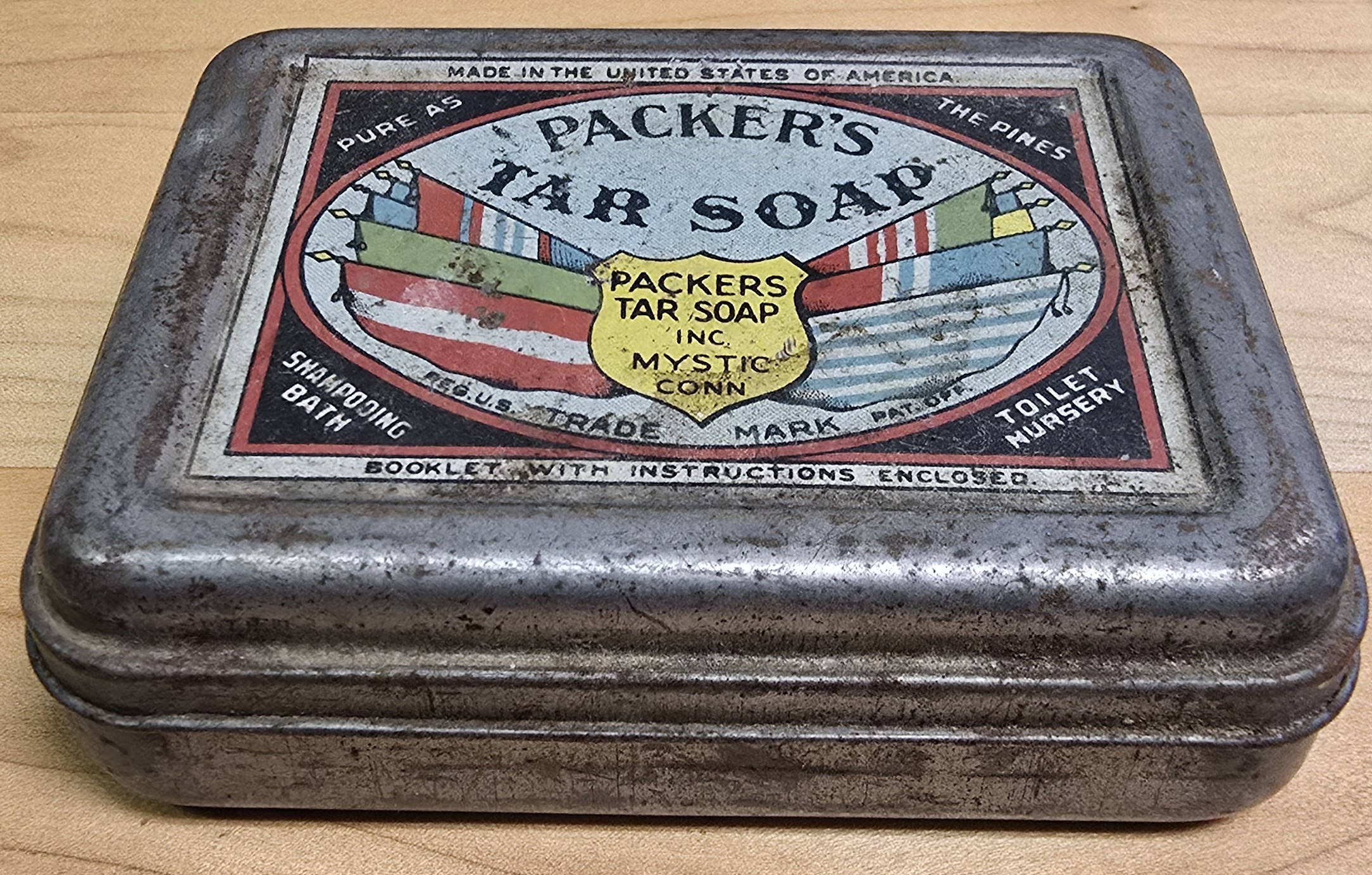
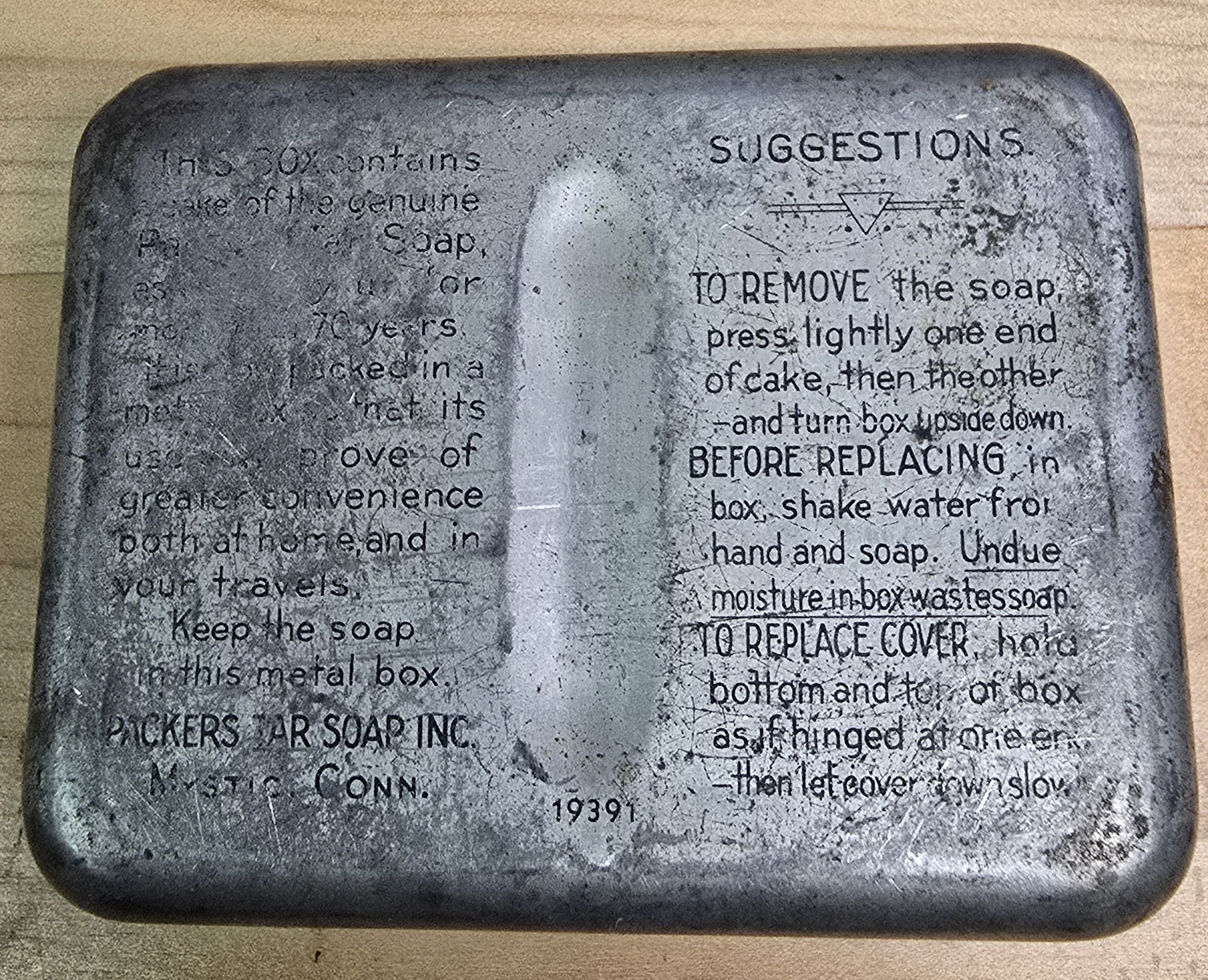
This well-worn rectangular tin once held a bar of Packer’s Tar Soap, manufactured by Packer’s Tar Soap Inc. in Mystic, Connecticut. The lithographed lid features colorful ship imagery with the phrase “Pure as the Pines,” reflecting the natural origins of pine tar. Suggested for use in the bath, nursery, or toilet, the product marketed itself as a versatile and therapeutic hygiene essential. The bottom of the tin offers consumer guidance on removing and replacing the soap bar and touts the convenience of storing it in its metal box for travel or home use.
Condition
The lithographed surface is worn with some oxidation, consistent with age and handling. Graphics are faded but still legible, including the distinctive multi-flag imagery and trademark motto. The underside of the tin remains readable despite pitting and rust. The item is structurally intact, and the hinged lid functions as designed.
Gallery
Historical context
Packer’s Tar Soap dates back to the 19th century and was one of the most popular commercial pine tar soaps in America. Pine tar—an antiseptic and anti-inflammatory byproduct of pine wood distillation—was long believed to treat various skin conditions, including eczema, psoriasis, and dandruff. Tar soap had widespread use in both domestic and clinical settings before gentler synthetic cleansers and corticosteroids became common in dermatological care. The company marketed this soap as “medicated,” bridging the gap between personal hygiene and pharmaceutical care.
Curious Facts, Ephemera, and Trivia
Packer’s Tar Soap was advertised in the early 1900s for conditions ranging from cradle cap to shaving rash to scalp infections.
Early ads emphasized its purity, claiming it was “pure as the pines,” and targeted both mothers and barbers as ideal customers.
This tin’s inclusion of detailed usage instructions on the underside reflects the era’s emphasis on hygienic practice as part of everyday health maintenance.
Despite its medicinal claims, the soap was widely available over-the-counter and was often sold alongside toiletries rather than medications.
Excerpt
“Keep the soap in this metal box. Its use proves of greater convenience both at home and in your travels.”
This modest instruction hints at a world where soap was valuable enough to protect—and carry—carefully. In an era before hotel shampoo or disposable travel kits, this tin was a statement of both hygiene and preparedness.
Why it is in the Cabinet
This artifact represents the convergence of medicine, marketing, and personal care at a time when hygiene was increasingly medicalized. While not a prescription drug, Packer’s Tar Soap straddled the line between everyday consumer good and therapeutic remedy—an important trend in early 20th-century health culture. The tin is also an excellent example of functional packaging design, marrying industrial aesthetics with utility.
Support Dr. Bebout’s Cabinet of Medical Curiosities
If you enjoy the history, the oddities, and the effort, help keep this cabinet open. Every little bit helps preserve and share the strange wonders of medicine's past.
Buy Me a Ko-fi ☕ Buy Me a Coffee ☕ Tip via PayPal 💵