
Title
Open-Drop Sponge Chloroform/Ether Anesthesia Mask
(Schimmelbusch-Era Variant)
Author
Not Applicable – Surgical Instrument
Image
Description
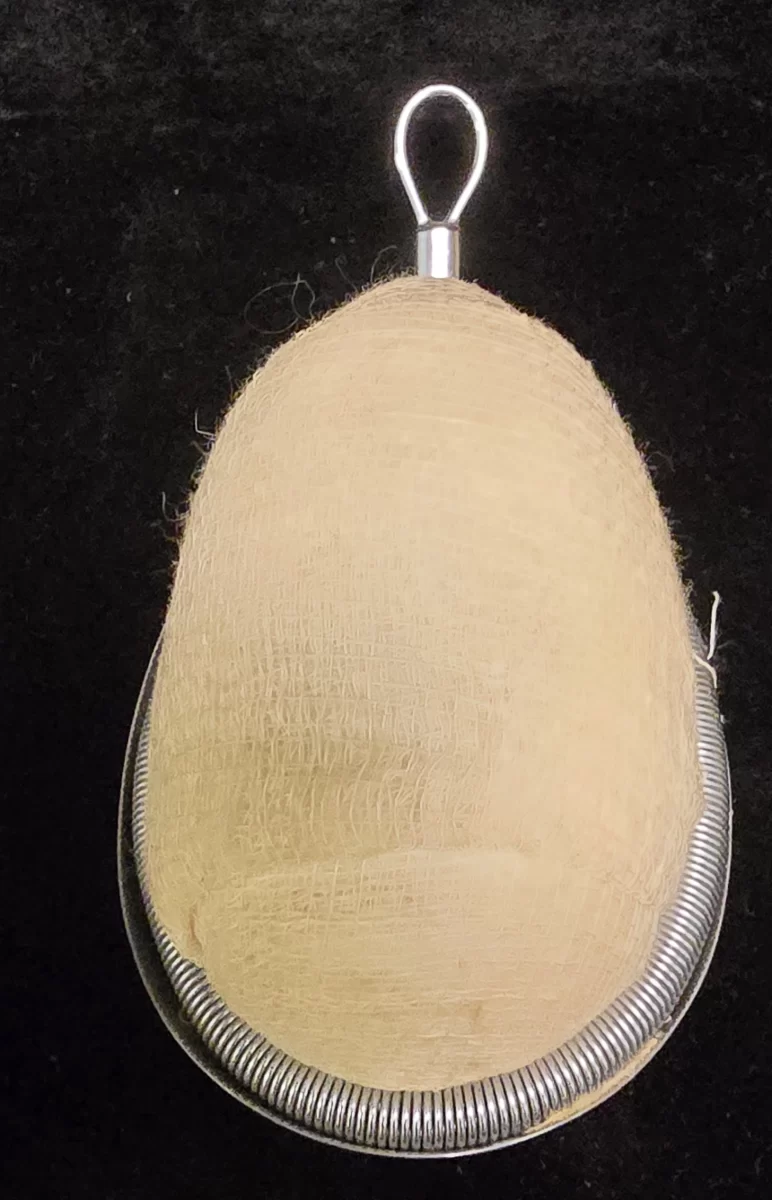
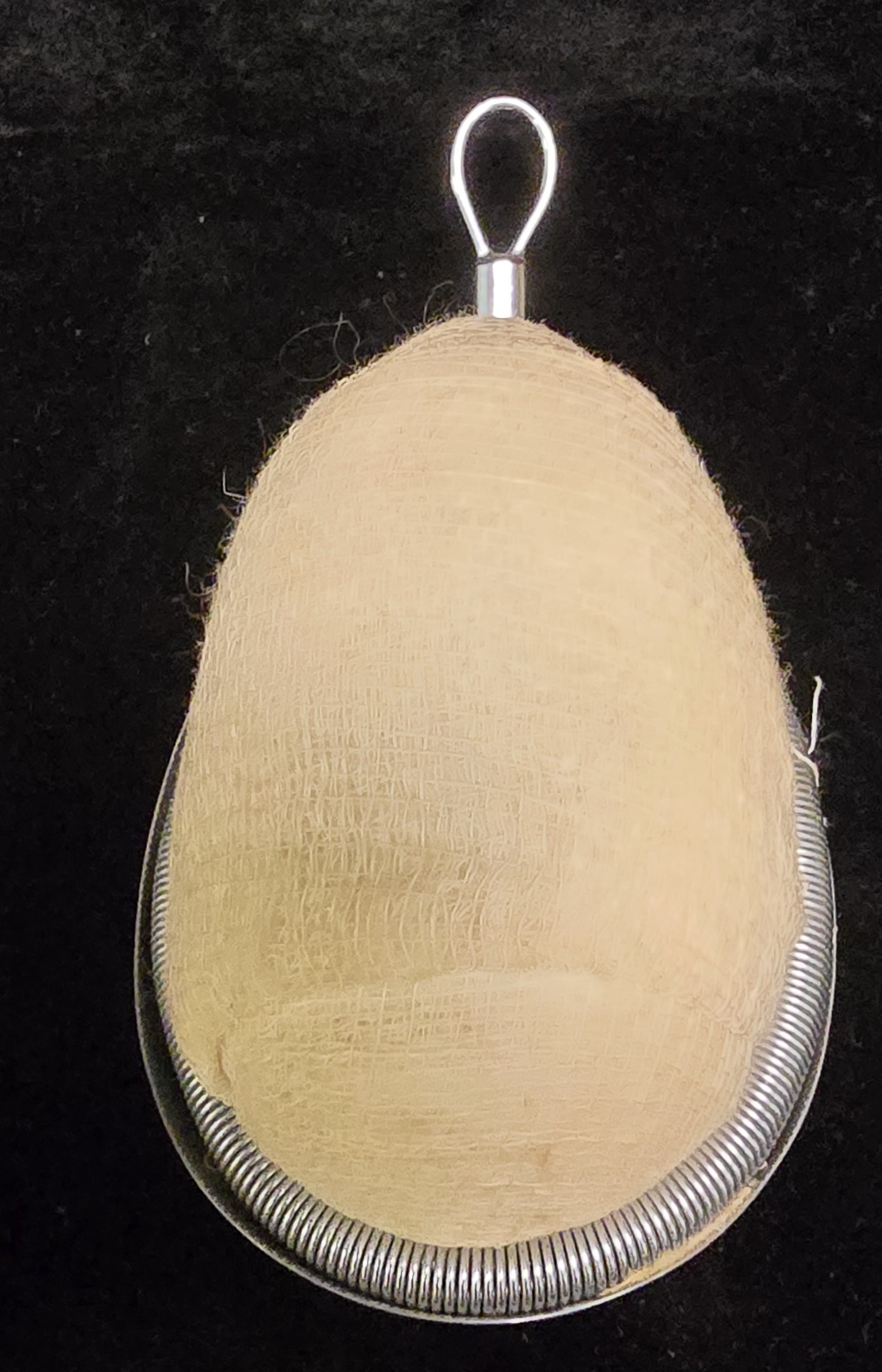
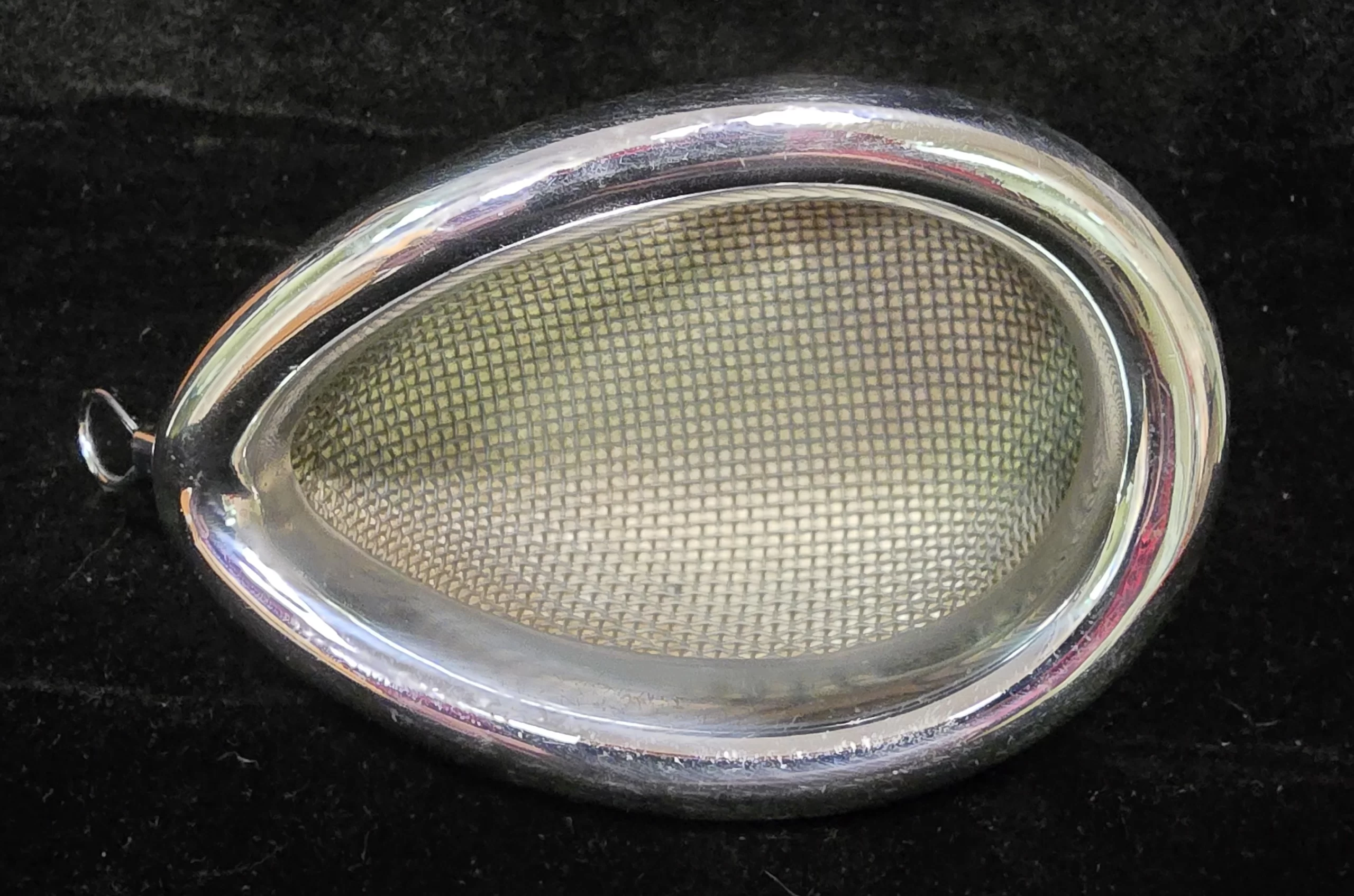
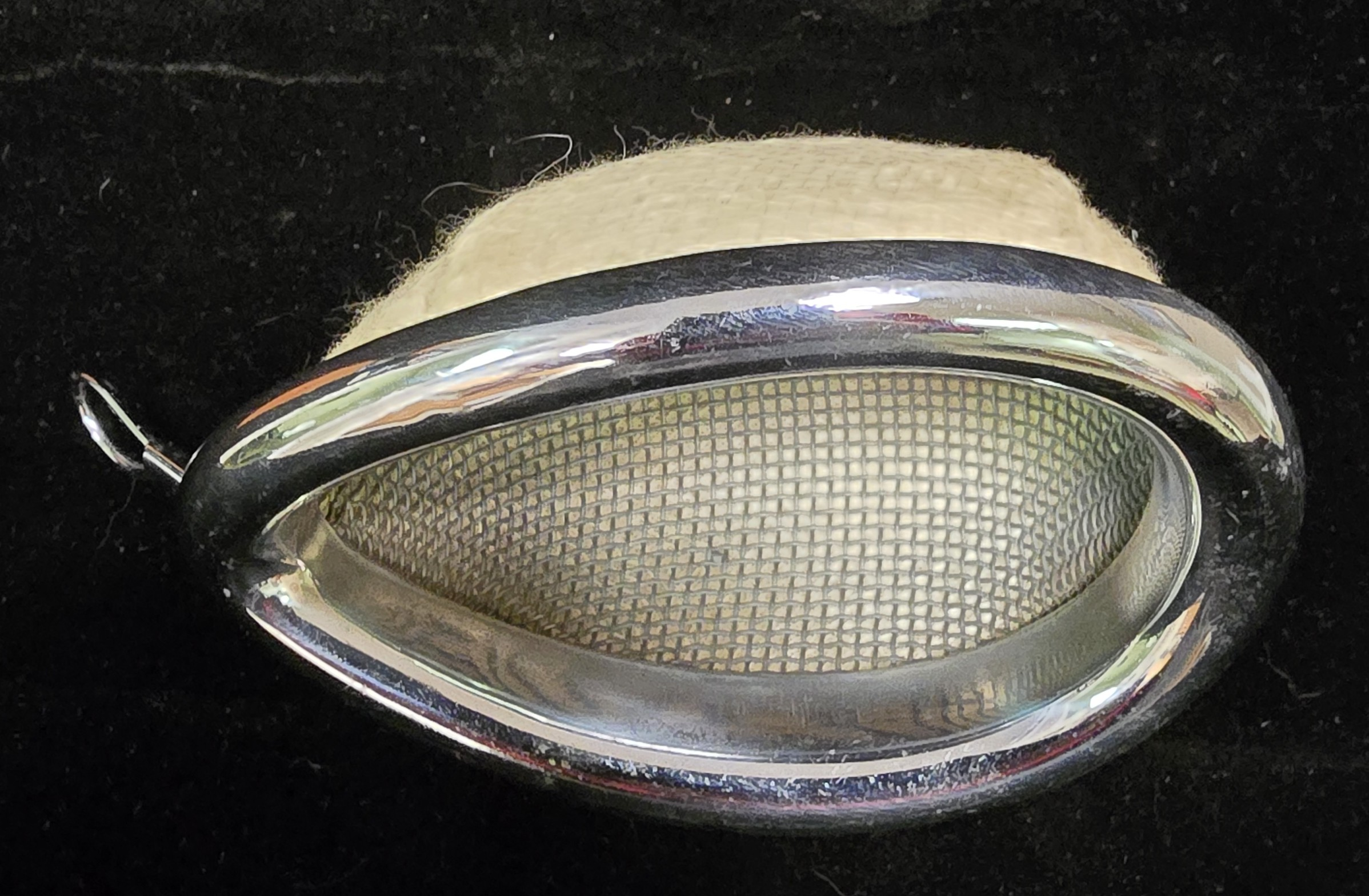
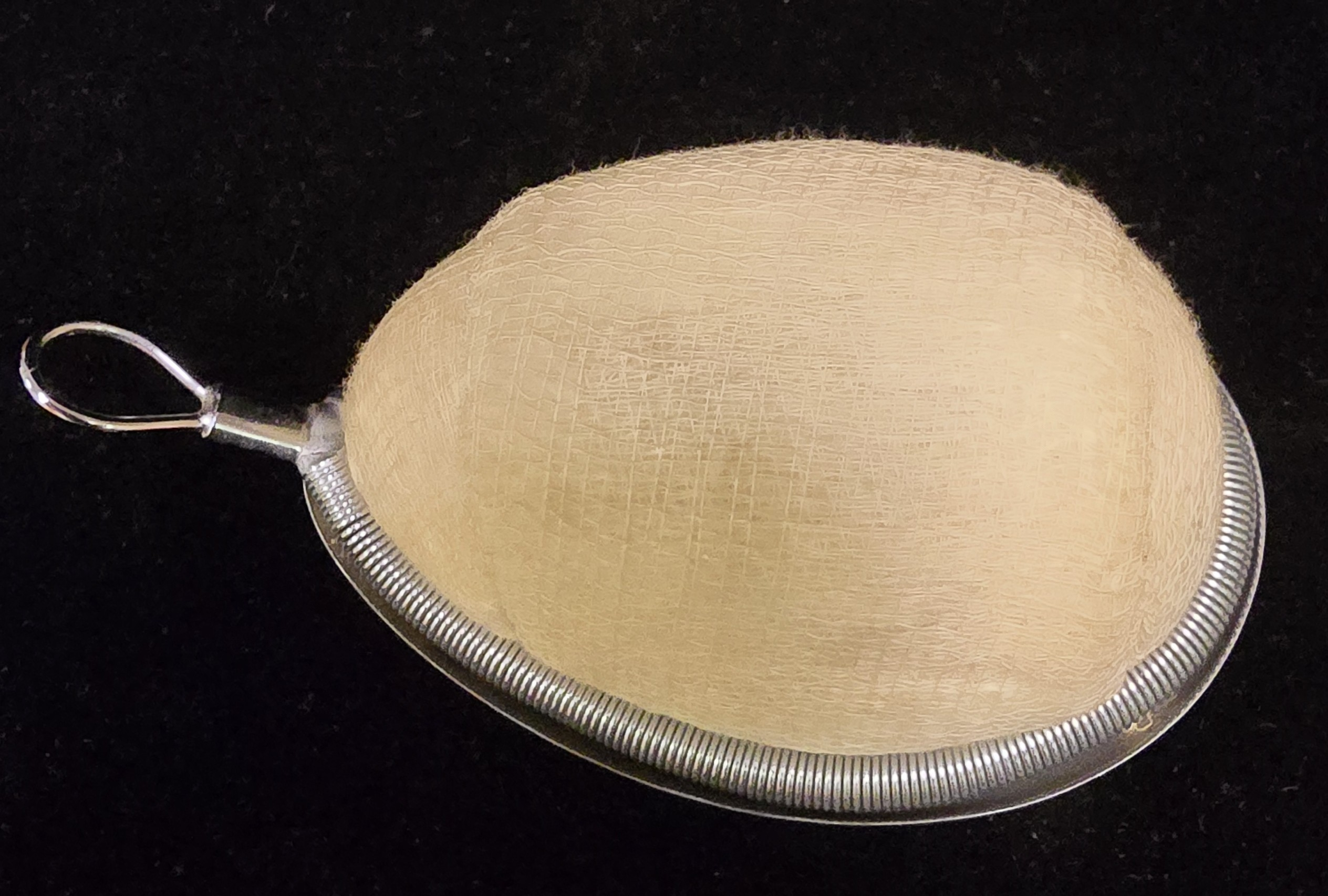
This open-drop sponge anesthesia mask represents early twentieth-century inhalational anesthetic practice. The device consists of a rigid oval metal frame forming the facial rim, a fine wire mesh backing, and a domed sponge core enclosed in gauze. A small metal loop at the superior aspect serves as a handle for positioning and rapid removal.
The mask was designed for administration of volatile anesthetics such as ether or chloroform using the open-drop method. The sponge absorbed the anesthetic agent, which was then vaporized and inhaled by the patient as the mask was held over the nose and mouth. The rigid rim allowed the mask to rest against the face while maintaining airflow around the edges.
Unlike the original 1889 Schimmelbusch bar-frame mask, which used layered gauze over open crossbars, this example incorporates a fixed sponge dome supported by mesh. It represents a commercial adaptation of the same open-drop anesthetic principle.
Estimated date: circa 1900–1925.
Condition
Original metal frame intact and structurally stable. Mesh backing complete. Sponge dome present and well-preserved for age with expected discoloration and fiber wear. No major corrosion or deformation noted. Display-stable condition.
Gallery
Historical context
Open-drop ether and chloroform anesthesia dominated surgical practice in the late nineteenth and early twentieth centuries. Anesthetic was applied in drops onto gauze or sponge material while the mask was held over the patient’s face.
Dr. Curt Schimmelbusch (1860–1895) designed a widely adopted wire-frame mask in 1889 to improve anesthetic control and prevent pooling of caustic chloroform against the skin. Numerous commercial variations followed, including sponge-supported models like this example.
These masks required constant manual control by the anesthetist and provided minimal airway protection by modern standards. Despite their simplicity, they were used in countless surgical procedures worldwide before the development of closed-circuit systems and endotracheal anesthesia.
Curious Facts, Ephemera, and Trivia
Ether and chloroform were often applied by junior surgical staff or assistants.
Chloroform could cause chemical skin irritation and even burns if allowed to pool.
Open-drop anesthesia required careful observation of respiratory rate and pupil size to judge depth of anesthesia.
Variations in mask construction reflected evolving attempts to balance airflow, vapor concentration, and patient comfort.
Excerpt
“To anesthetize a patient, gauze was stretched over the metal bars and the anesthetic applied in drops so that the patient breathed in evaporated anesthetic as well as air.”
(Period descriptions of open-drop technique)
Why it is in the Cabinet
Why It Is in the Cabinet
This mask represents a transitional moment in surgical history when anesthesia was effective but still mechanically simple and manually controlled. It illustrates the practical ingenuity of early anesthetic equipment and the realities of pre-modern operating rooms. It is a tangible reminder of how far airway management and anesthetic safety have progressed.
Support Dr. Bebout’s Cabinet of Medical Curiosities
If you enjoy the history, the oddities, and the effort, help keep this cabinet open. Every little bit helps preserve and share the strange wonders of medicine's past.
Buy Me a Ko-fi ☕ Buy Me a Coffee ☕ Tip via PayPal 💵