
Title
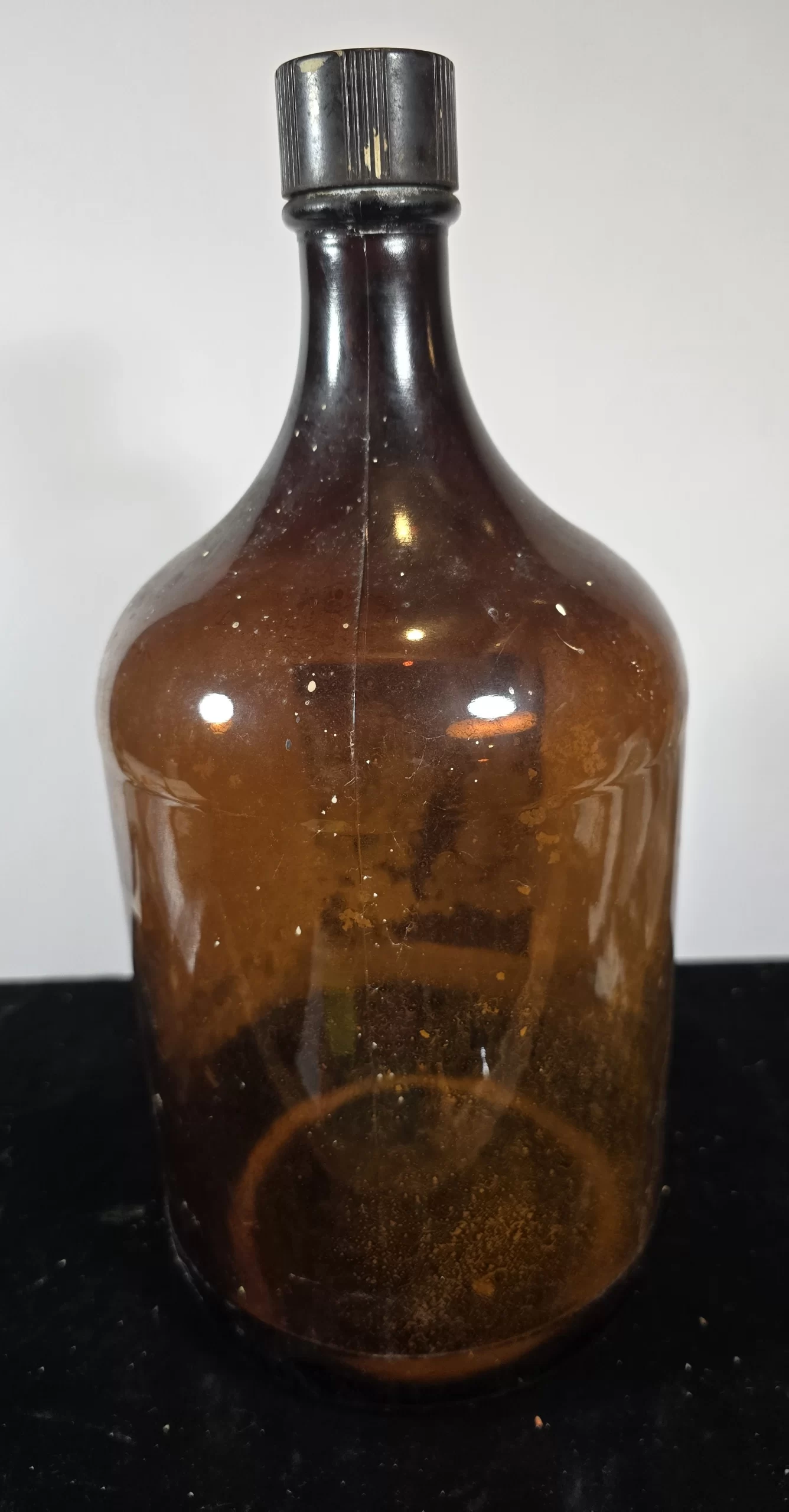
MUL-SED Exempt Narcotic, One-Gallon Amber Glass Bottle
Author
Pitman-Moore Company, Division of The Dow Chemical Company
Image
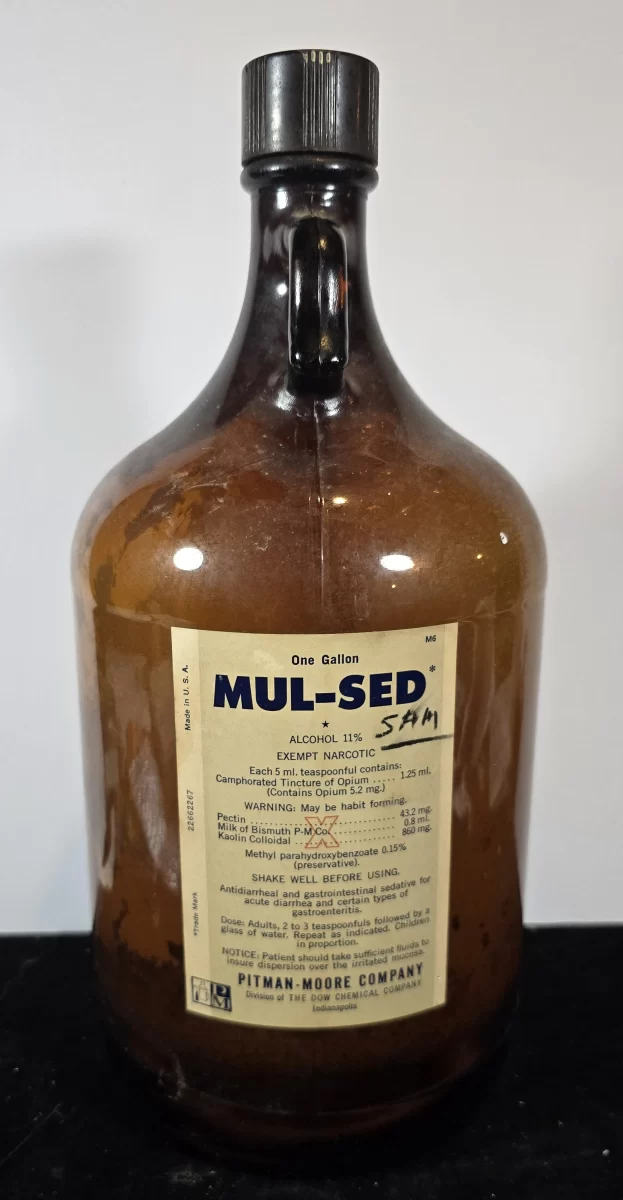
Description
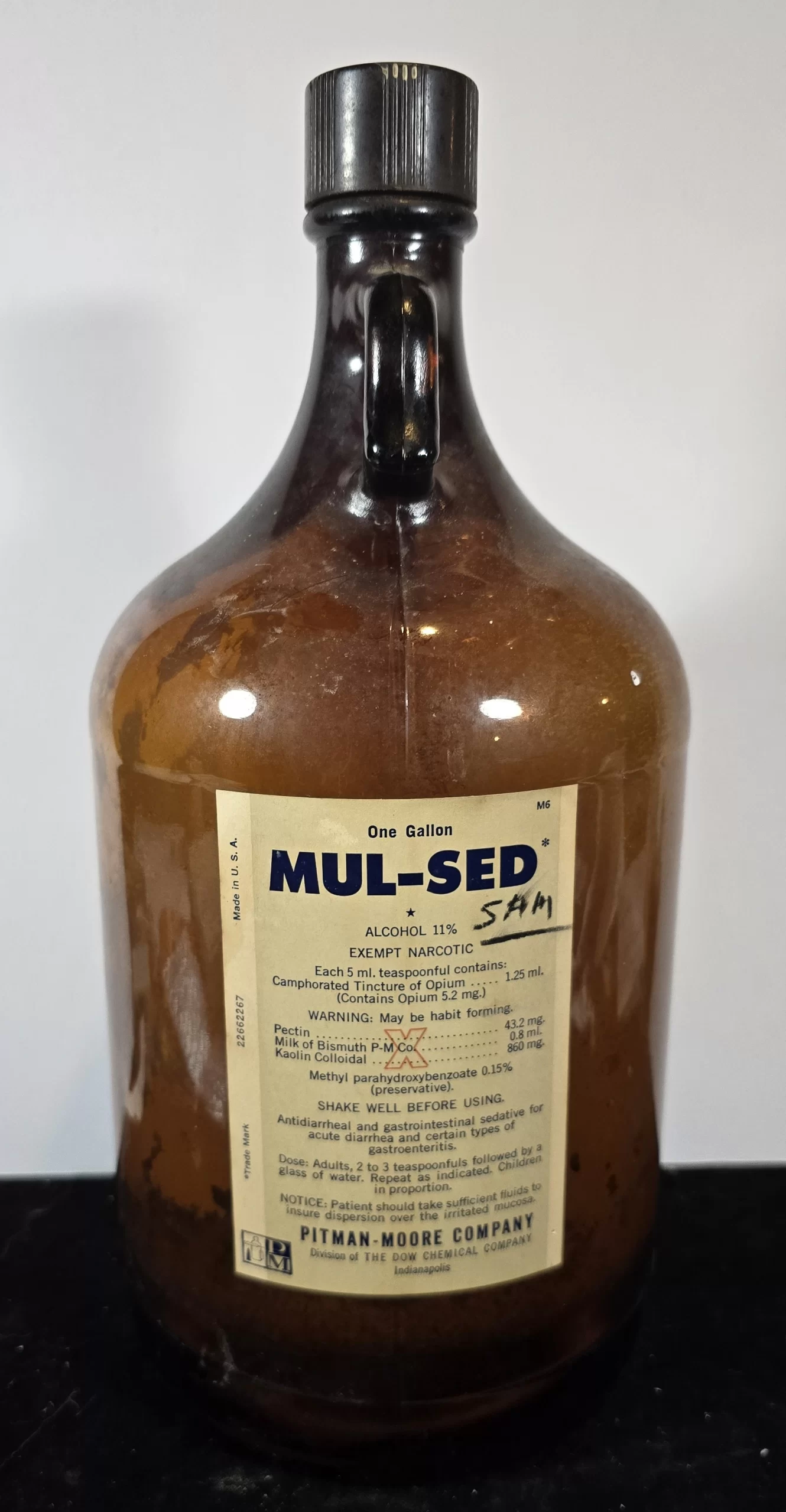
This is an original one-gallon amber glass bottle of MUL-SED, a mid-20th-century antidiarrheal and gastrointestinal sedative produced by the Pitman-Moore Company of Indianapolis. The bottle retains its full printed label, identifying the product as an “Exempt Narcotic” formulation containing Camphorated Tincture of Opium (5.2 mg opium per 5 mL dose), along with pectin, bismuth, kaolin, and methyl parahydroxybenzoate as a preservative.
MUL-SED was marketed for acute diarrhea, mucous colitis, and other nonspecific gastroenteritides. Preparations like this were commonly stocked in both physicians’ offices and rural pharmacies, especially before the regulatory tightening of opioid-containing mixtures in the 1960s–1970s. The intact gallon size suggests bulk clinical use, likely for dispensing into smaller bottles.
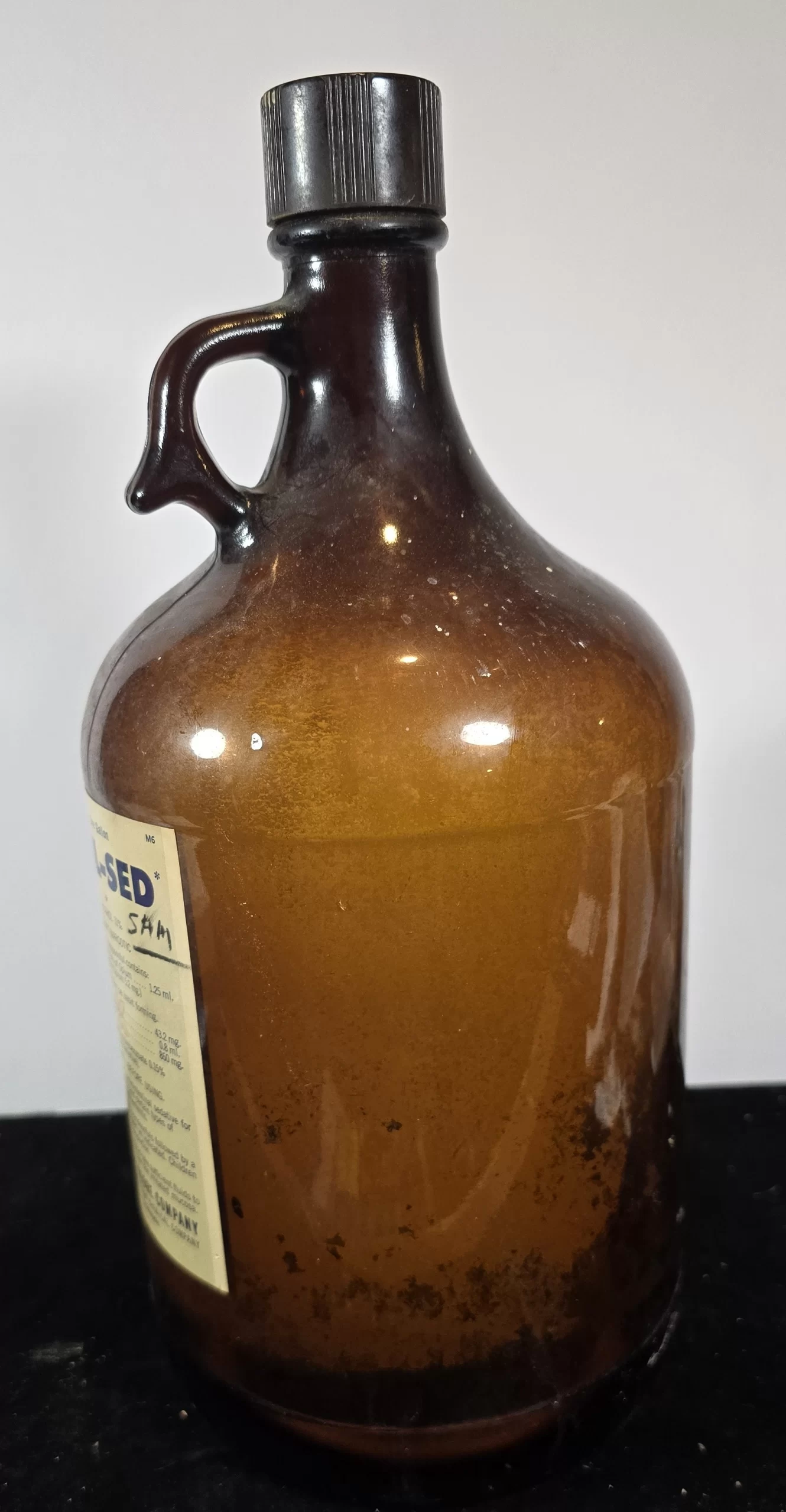
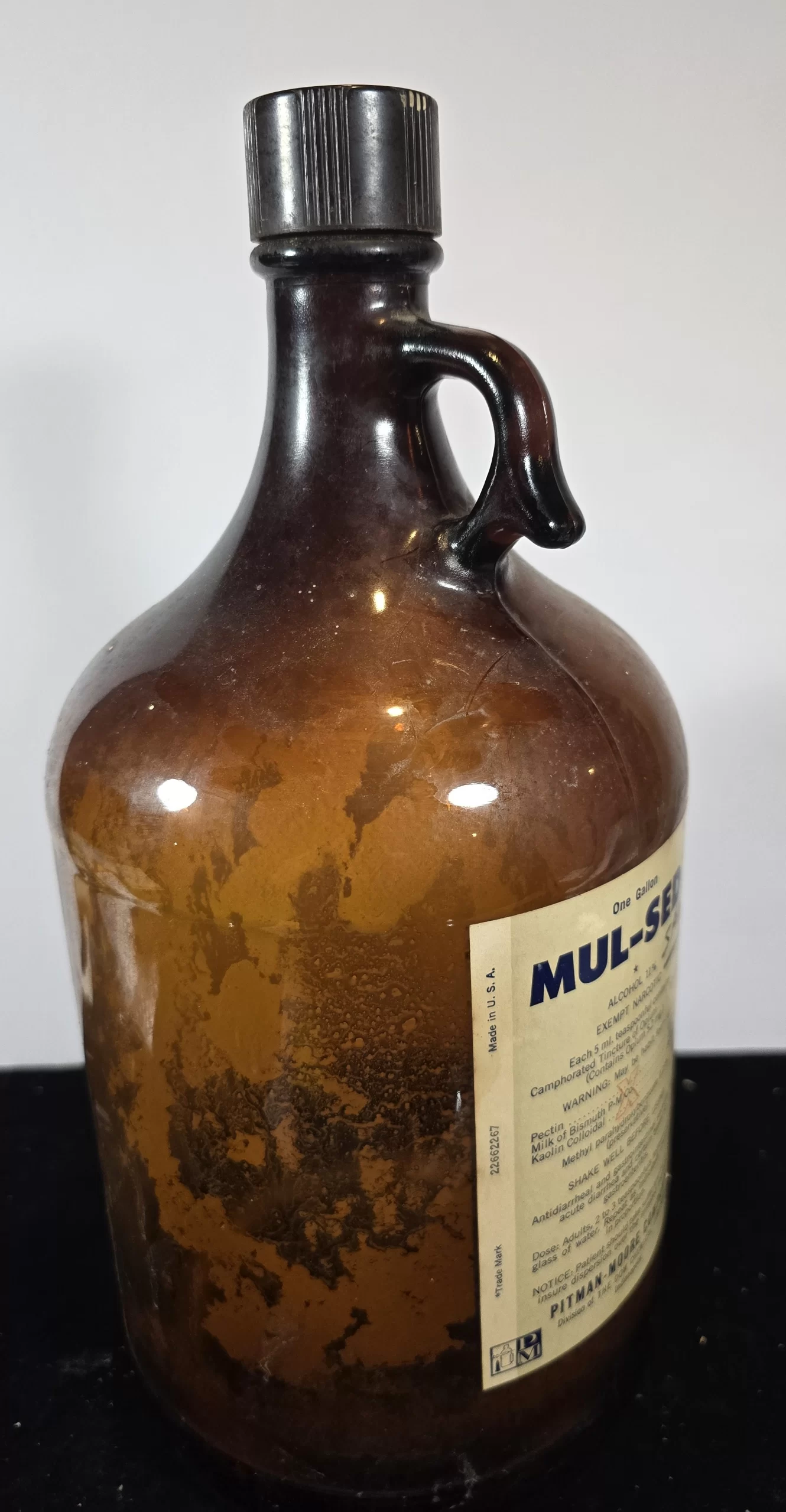
The heavy amber glass reduces light degradation of the opium-based tincture, while the applied-handle jug form is characteristic of mid-century pharmaceutical bulk containers.
Condition
Large amber glass jug in solid, intact condition with expected interior residue, oxidation, and external surface wear. Label remains intact and fully legible with minor age toning.
Gallery
Historical context
“Exempt narcotic” preparations existed in a regulatory loophole created by the Harrison Narcotics Act (1914) and later clarified through the 1938 Food, Drug, and Cosmetic Act. Low-dose opium mixtures under a specific threshold could be sold without the same restrictions as full narcotics — provided they followed exact concentration limits and labeling requirements.
Preparations combining opium with bismuth, kaolin, and pectin were common treatments for diarrhea throughout the early–mid 20th century. MUL-SED is chemically similar to mixtures such as Camphorated Tincture of Opium (Paregoric) and Mixture Kaolin and Pectin with Opium, widely used before modern antidiarrheals like loperamide appeared.
By the late 20th century, exempt narcotics were heavily restricted, removed from OTC use, or discontinued entirely due to abuse concerns and the development of safer alternatives.
Curious Facts, Ephemera, and Trivia
The label’s “Exempt Narcotic” designation was a legal classification, not a safety claim — opium content was still fully active.
The addition of kaolin and pectin was meant to provide stool-forming action, while bismuth offered mild antimicrobial/adsorbent properties.
Many rural doctors kept gallon jugs exactly like this to refill smaller office bottles — a practice that vanished with the rise of unit-dose packaging.
Pitman-Moore, founded in 1885, was later absorbed into The Dow Chemical Company and became known for large-scale pharmaceutical and veterinary preparations.
Excerpt
From the original MUL-SED label:
“SHALL BE SHAKEN WELL BEFORE USING. Antidiarrheal and gastrointestinal sedative for acute diarrhea and certain types of gastroenteritis… WARNING: May be habit forming.”
Why it is in the Cabinet
This is an excellent large-format example of an exempt narcotic gastrointestinal preparation, complete with intact label and classic amber jug form. It represents a transitional era in American pharmaceutical history when opium-based remedies were still routine tools of general practice. The size, label clarity, and preserved condition make it an ideal teaching artifact for the evolution of controlled substances and GI therapeutics.
Support Dr. Bebout’s Cabinet of Medical Curiosities
If you enjoy the history, the oddities, and the effort, help keep this cabinet open. Every little bit helps preserve and share the strange wonders of medicine's past.
Buy Me a Ko-fi ☕ Buy Me a Coffee ☕ Tip via PayPal 💵