
Title
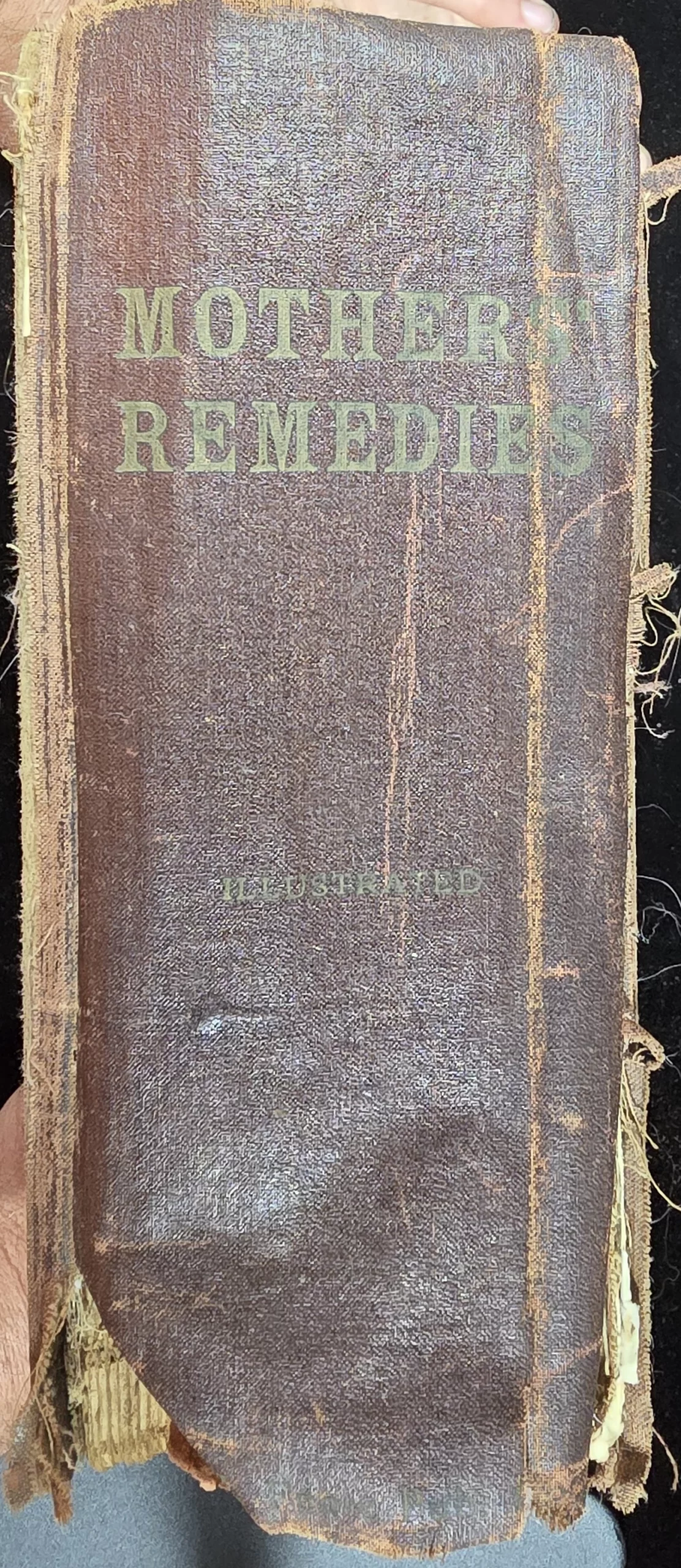
Mother’s Remedies: Over One Thousand Tried and Tested Remedies from Mothers of the United States and Canada
Author
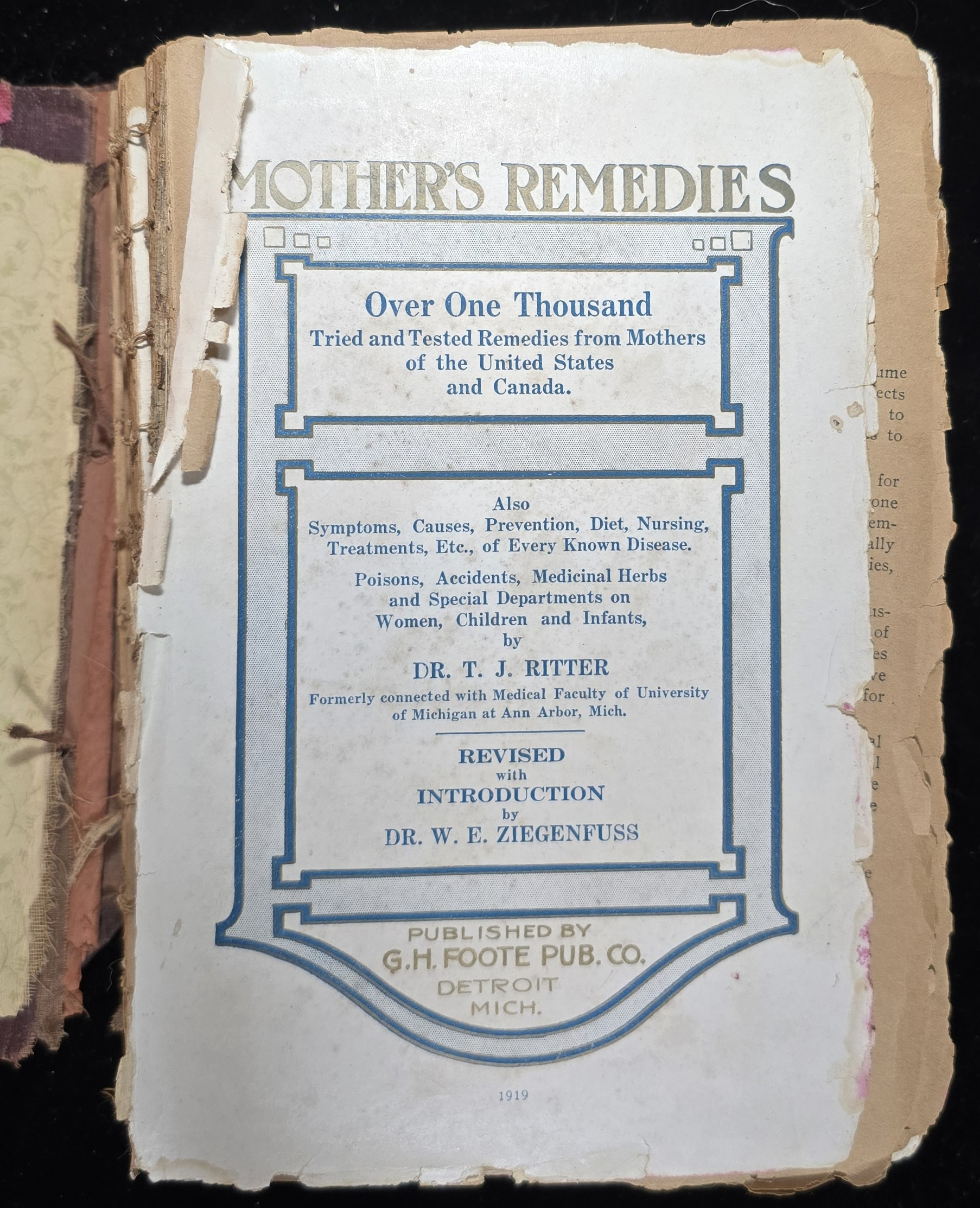
Author: Dr. T. J. Ritter (Revised with Introduction by Dr. W. E. Ziegenfuss)
Published: 1919, G.H. Foote Publishing Co., Detroit, Michigan
Format: Hardcover, 768 pages
Image
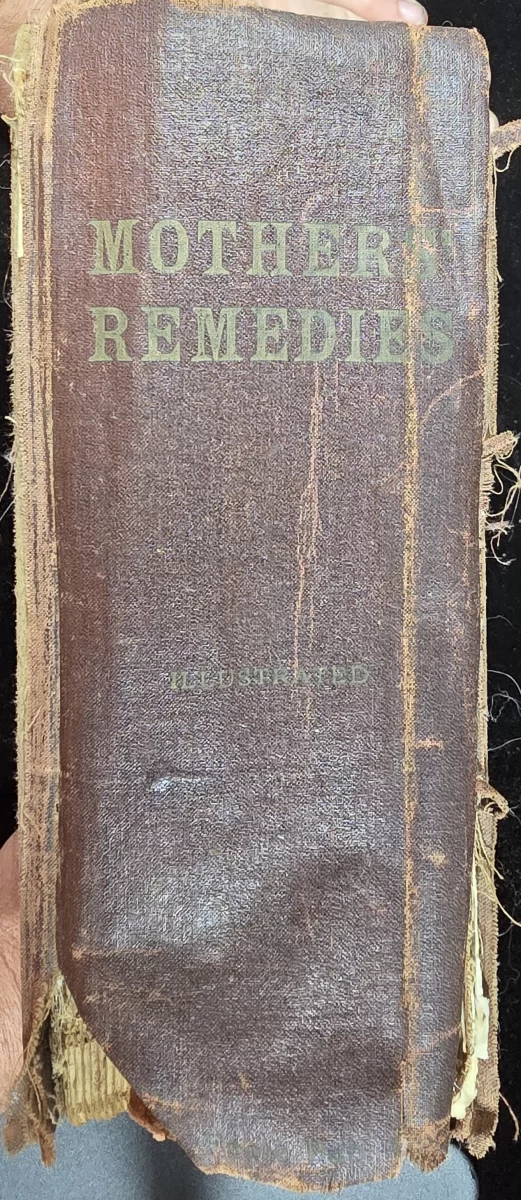
Description
Mother’s Remedies was an early 20th-century household medical manual combining medical advice, home remedies, herbal treatments, and folk wisdom. This 1919 edition claims to contain over 1,000 tested remedies contributed by mothers across the U.S. and Canada, covering everything from coughs and colic to childbirth and syphilitic ulcers.
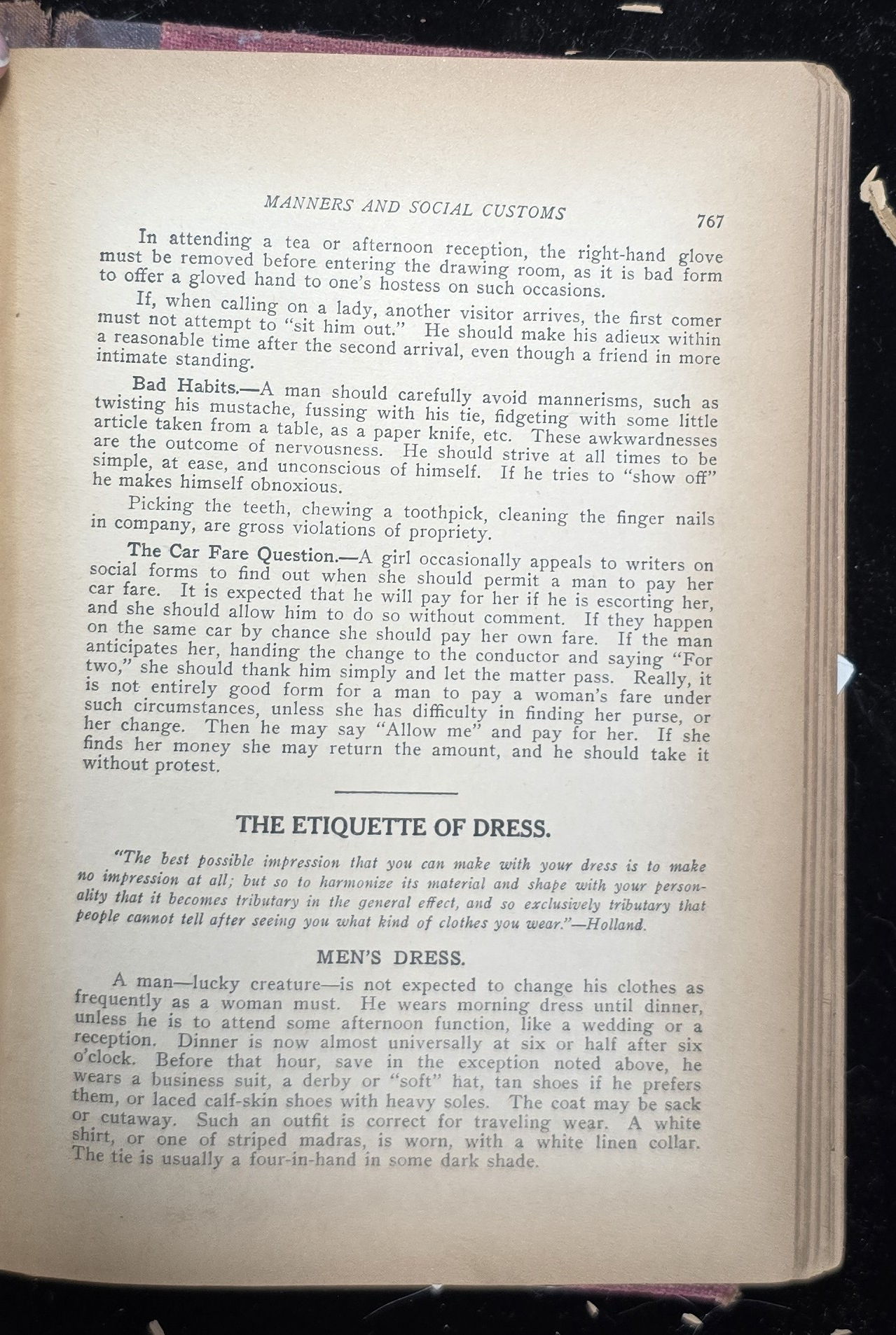
The book is both clinical and conversational. Alongside disease descriptions and treatment formulas are vivid commentaries on manners, household decorum, and social expectations—particularly targeting women as moral and medical custodians of the family.
Condition
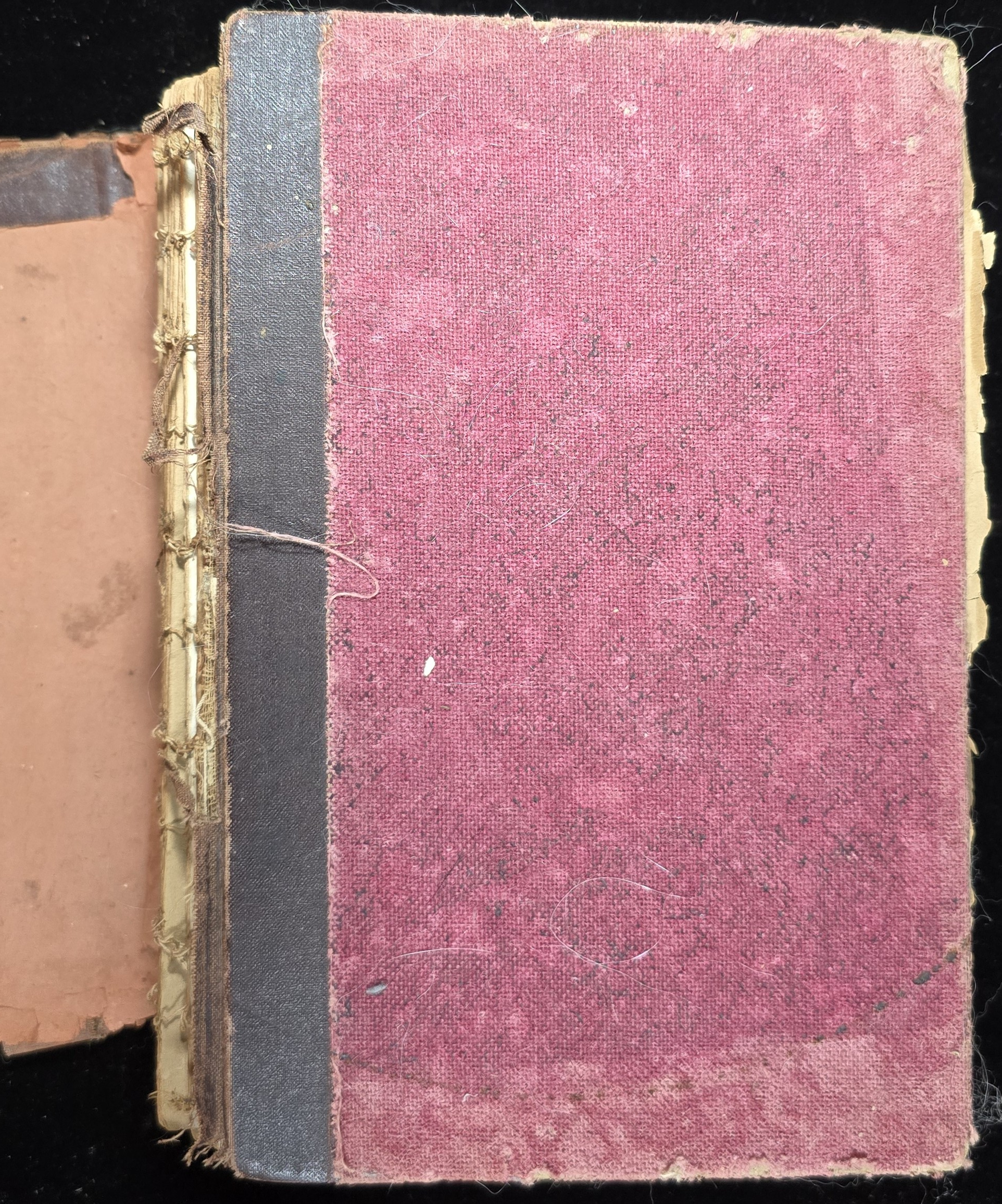
Poor. The spine is heavily frayed, the covers are loose, and the inner binding is exposed. Several pages are detached or fragile. The text remains legible throughout.
Gallery
Historical context
Mother’s Remedies, compiled by Dr. Thomas Jefferson Ritter and revised by Dr. W. E. Ziegenfuss, is a quintessential example of early 20th-century domestic medical literature. Published in 1919 by G.H. Foote Pub. Co. in Detroit, it aimed to be a comprehensive, family-oriented medical guide—offering over a thousand tried-and-tested home remedies contributed by women across the United States and Canada.
This book straddles a unique historical moment:
🩺 Post-Victorian, Pre-Antibiotic Era
By 1919, germ theory had gained broad medical acceptance, but modern antibiotics were still two decades away.
Households often relied on home remedies, patent medicines, and herbal concoctions, with varying levels of scientific backing.
Mother’s Remedies aimed to combine folk wisdom with more “modern” physician-reviewed advice—an uneasy but common blend of maternal folk practice and early clinical rationalism.
👩👦👦 Women as Caregivers and Gatekeepers of Health
The book reflects the cultural assumption that mothers were the default family health authorities.
Its publication came just before women’s suffrage (the 19th Amendment passed in 1920), underscoring a time when women had limited societal power—but maximum domestic responsibility.
🏥 Detroit and the Rise of Popular Health Publishing
Detroit in the 1910s was booming economically and demographically.
G.H. Foote Publishing capitalized on the era’s hunger for self-help medical books, which were often sold door-to-door or by subscription.
This book would’ve been marketed as a practical guide to avoid expensive (or inaccessible) doctor visits—a crucial concern before the widespread development of hospitals and insurance networks.
🔬 Medical Accuracy? Dicey. But Typical.
Remedies range from mildly effective to questionable to outright dangerous by modern standards.
Yet, books like this served an important cultural and practical purpose, empowering families with at least a semblance of medical agency.
Curious Facts, Ephemera, and Trivia
The book includes specific instructions on how a woman should act when a man insists on paying her streetcar fare.
Its advice is filled with references to moral failings as causes of disease—a common belief before germ theory took hold widely in the public mindset.
Remedies include everything from onion poultices to borax-based douches—many of which would be horrifying today.
The author, T. J. Ritter, was once affiliated with the University of Michigan’s medical faculty, lending the book an aura of authority despite its wildly eclectic content.
Excerpt
Excerpt (Page 210 – Meningitis)
“This is an inflammation of the membranes covering the brain alone, and generally commences with fever and severe headaches, with avoidance of light and noise as these are painful. In some cases, we have delirium, stupor, and coma. Treatment must be given by a physician, but cold applications to the head and back are generally good. The bowels must also be kept open.”
In an era before antibiotics or modern intensive care, advice like “cold applications to the head” and “keep the bowels open” was about as much as the average household—and often the local doctor—could do. The emphasis on bowel function reflects the lingering belief that intestinal stagnation caused systemic illness, a theory with roots in humoral medicine and popular into the 1920s.
Why it is in the Cabinet
This book exemplifies the strange intersection of folk medicine, early allopathy, and societal control through gendered roles. It served as both a treatment manual and a guidebook for women expected to be both doctors and moral compasses within the home. Its casual discussion of serious conditions like syphilis or tuberculosis, juxtaposed with advice on when to remove a glove at tea, perfectly captures the domestic-medical mashup that defines so much of early 20th-century lay medical literature.
It also belongs here for what it tells us about the evolution of trust in medicine. In an era before widespread antibiotics, when snake oil salesmen and licensed doctors sometimes peddled equally dubious treatments, Mother’s Remedies offered a blend of reassurance and empowerment to women trying to keep their families alive—and respectable.
Support Dr. Bebout’s Cabinet of Medical Curiosities
If you enjoy the history, the oddities, and the effort, help keep this cabinet open. Every little bit helps preserve and share the strange wonders of medicine's past.
Buy Me a Ko-fi ☕ Buy Me a Coffee ☕ Tip via PayPal 💵