
Title
Mid-20th Century Pediatric Upper Extremity Prosthetic Arm with Three-Pronged Terminal Device
Author
Unknown Manufacturer
Image
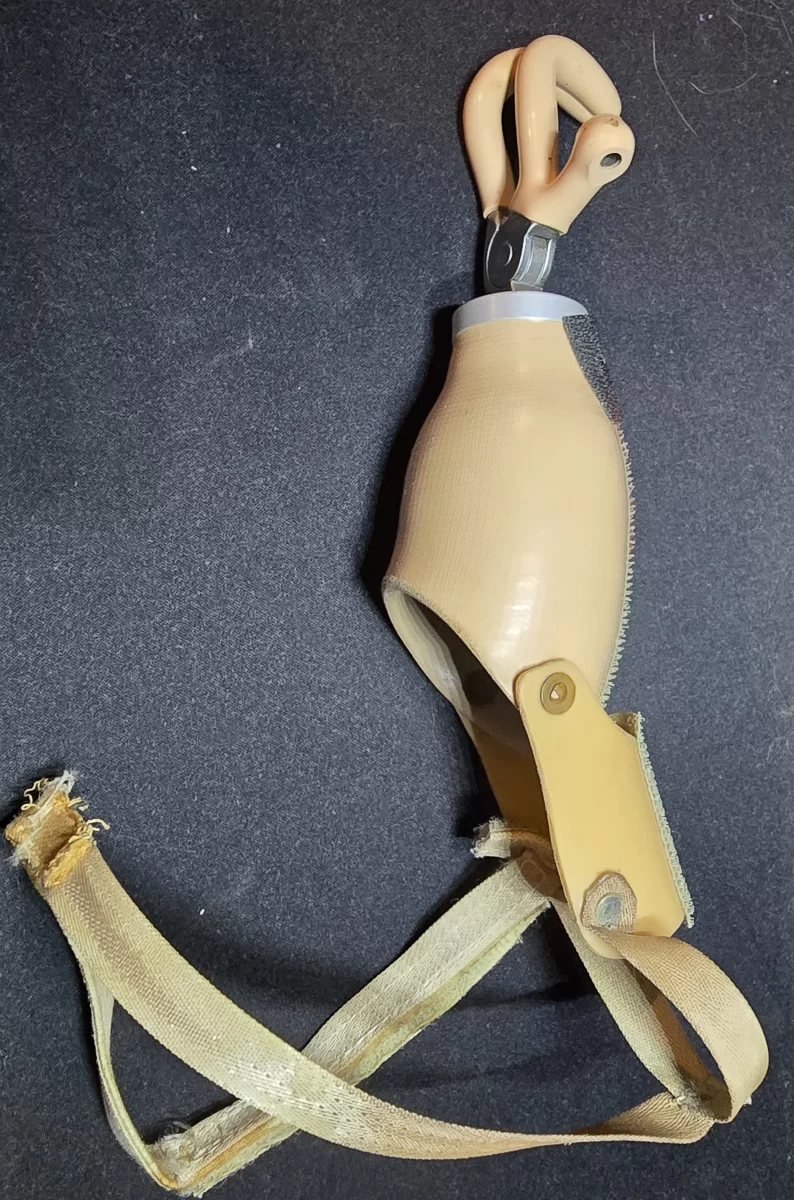
Description
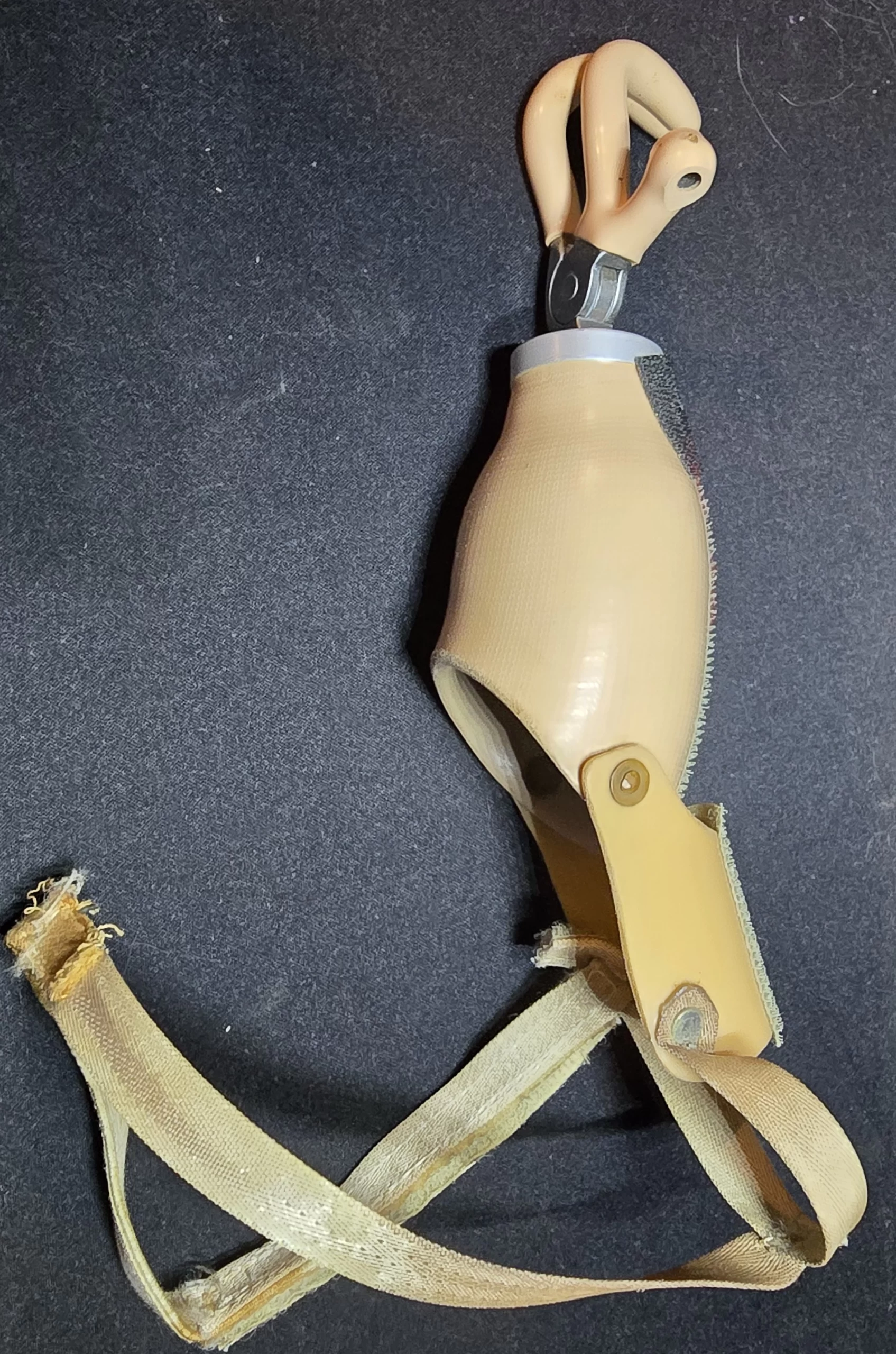
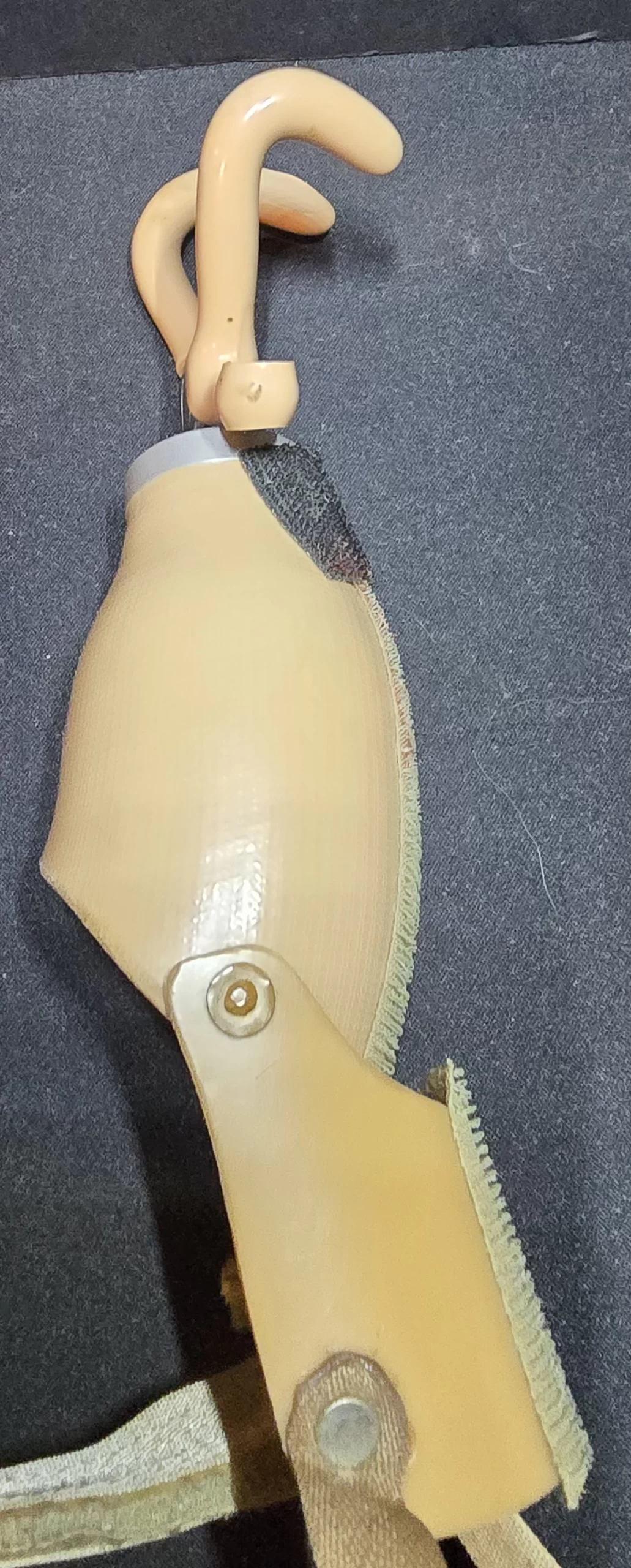
This mid-20th century pediatric upper extremity prosthesis dates approximately from the 1950s–1970s. Constructed from molded plastic with metal articulation and canvas suspension straps, the device was designed for a child amputee.
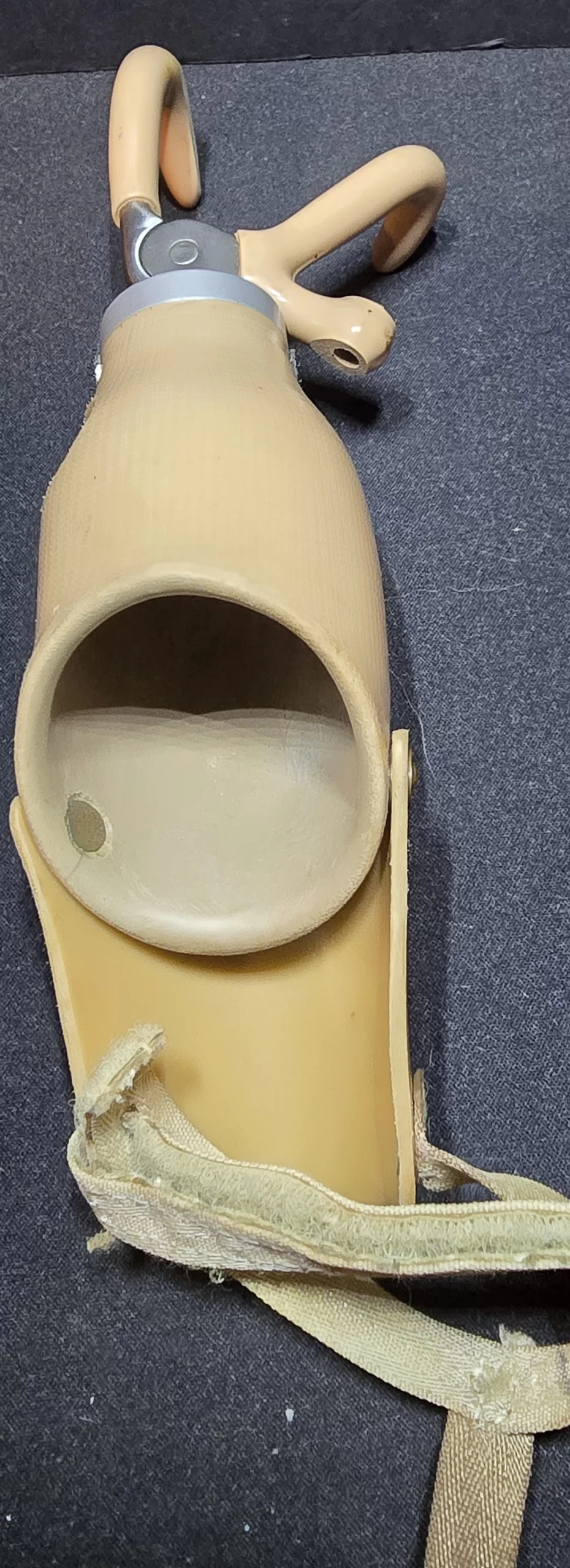
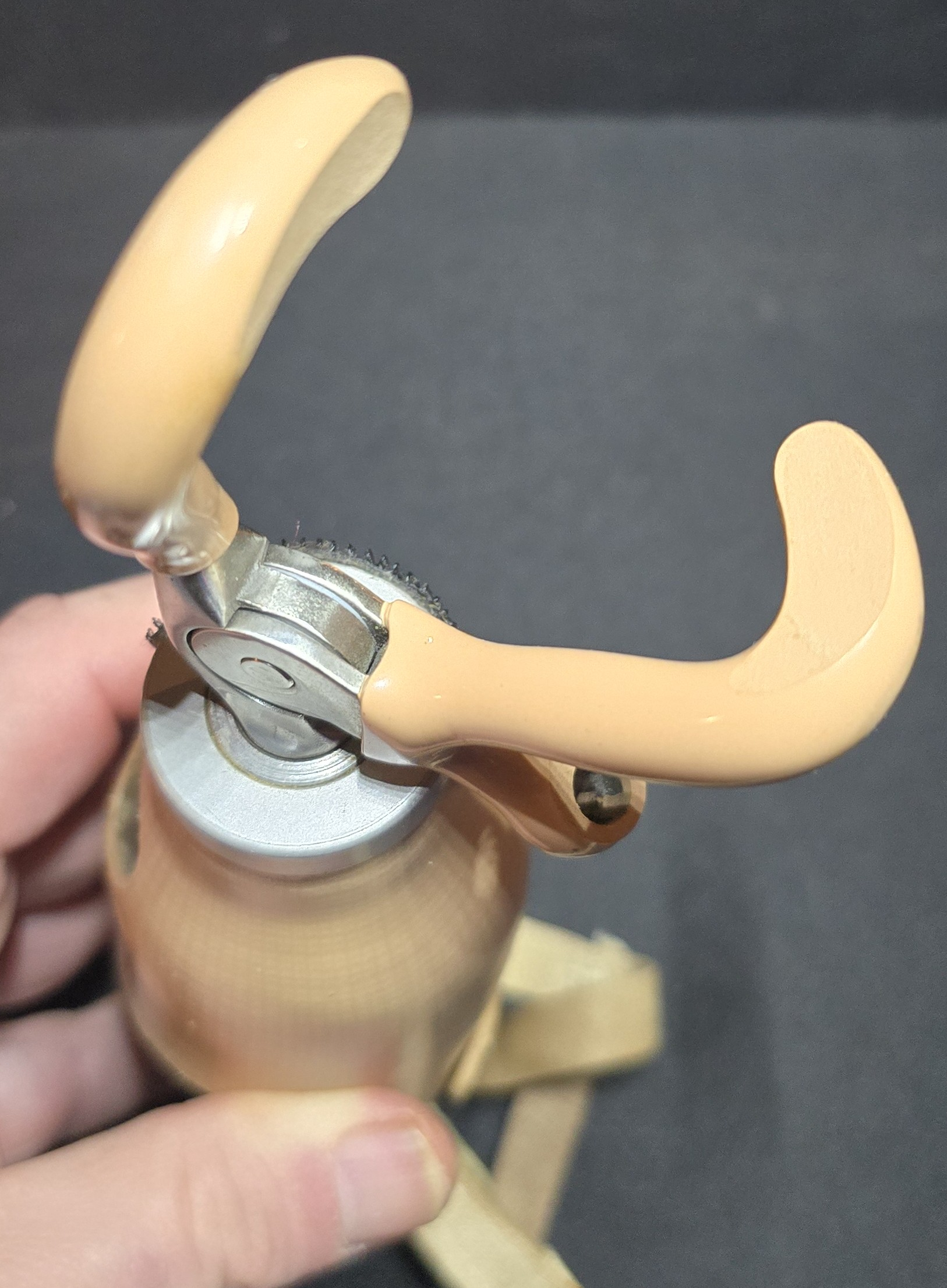
The forearm socket is small in diameter, clearly scaled for pediatric use. The interior cavity is smooth-molded with reinforcement at stress points. The proximal end houses a metal pivot assembly connecting to a three-pronged voluntary-opening terminal device.
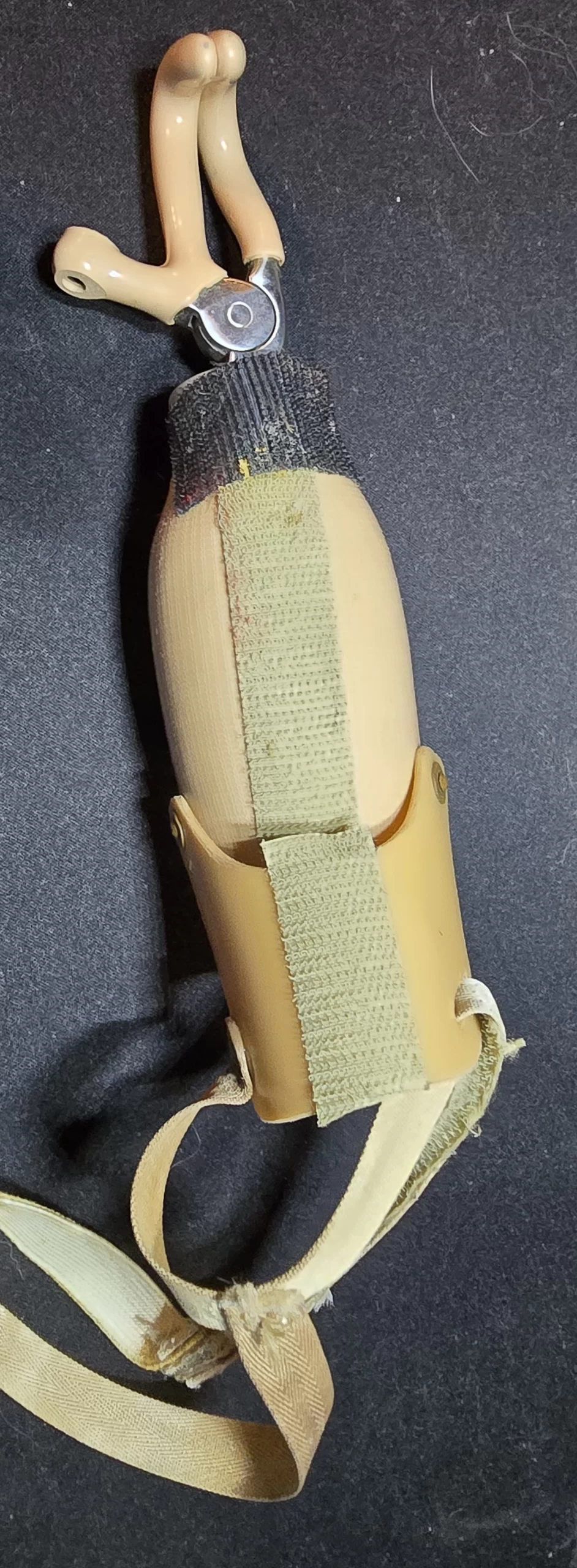
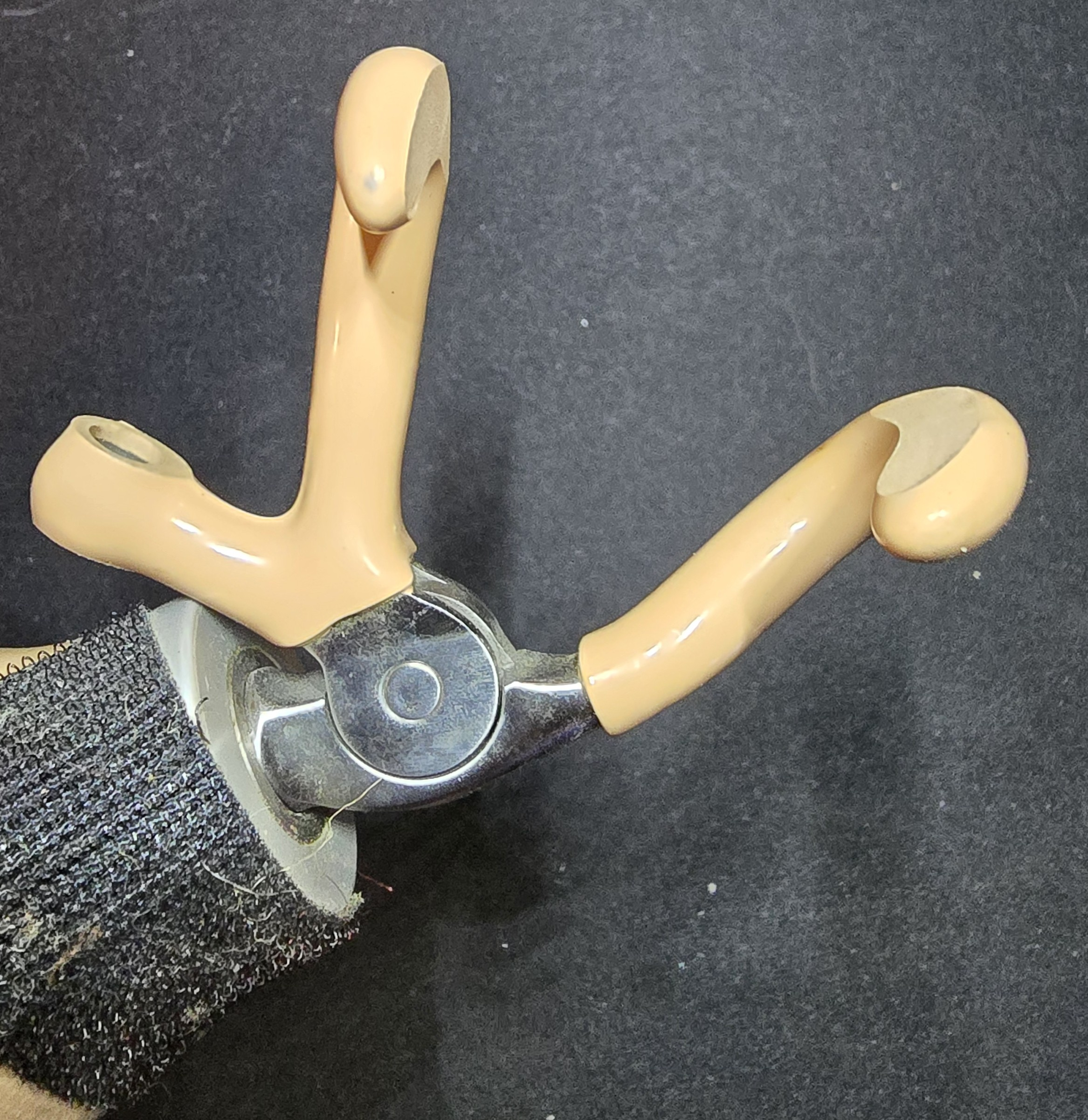
The terminal device consists of three curved, flesh-toned prongs mounted to a metal joint. The mechanism appears cable-driven, designed to open through harness tension and close via spring return. The prongs show wear consistent with functional use.
Canvas and Velcro suspension straps indicate a shoulder harness system would have controlled operation. The compact proportions confirm pediatric sizing rather than adult.
This is a working prosthesis — not cosmetic, not decorative.
Condition
Structurally intact molded forearm shell with original three-pronged terminal device and metal pivot assembly present. The prosthesis is missing its original control cables and associated harness mechanisms. Canvas suspension straps show age-related wear, fraying, and discoloration. Surface scuffing and minor cosmetic wear consistent with age and prior use. Mechanically incomplete but preserved in stable display condition.
Gallery
Historical context
Post–World War II prosthetic innovation accelerated dramatically, influencing both adult and pediatric limb design. Pediatric prosthetics were particularly important in cases of congenital limb difference, traumatic injury, infection, or malignancy.
Mid-century philosophy emphasized early fitting for children to encourage motor development and functional adaptation. Mechanical voluntary-opening hooks and pronged devices were favored because they were durable, lightweight, and more functionally reliable than cosmetic hands.
Unlike modern myoelectric pediatric prosthetics, these devices relied entirely on body-powered cable systems controlled through shoulder and harness motion.
This piece represents early rehabilitative engineering directed at restoring childhood independence.
Curious Facts, Ephemera, and Trivia
Pediatric prosthetics were often replaced frequently as the child grew.
• Many children adapted quickly to hook-style devices due to their mechanical precision.
• Flesh-toned coverings were used even on mechanical devices to soften appearance.
• Early fitting was believed to improve developmental integration of the limb.
Excerpt
Mid-century rehabilitation texts emphasized:
“Early functional fitting improves adaptation and independence.”
Why it is in the Cabinet
This is not just a mechanical device — it represents pediatric resilience.
It is smaller, lighter, and built for a child who had to learn early that function matters more than symmetry. It belongs in the Cabinet as a reminder that medical engineering has always been about restoring capability — especially in the young.
Support Dr. Bebout’s Cabinet of Medical Curiosities
If you enjoy the history, the oddities, and the effort, help keep this cabinet open. Every little bit helps preserve and share the strange wonders of medicine's past.
Buy Me a Ko-fi ☕ Buy Me a Coffee ☕ Tip via PayPal 💵