
Title
Mercuric Chloride Apothecary Bottle (HgCl₂)
Author
N/A
Image
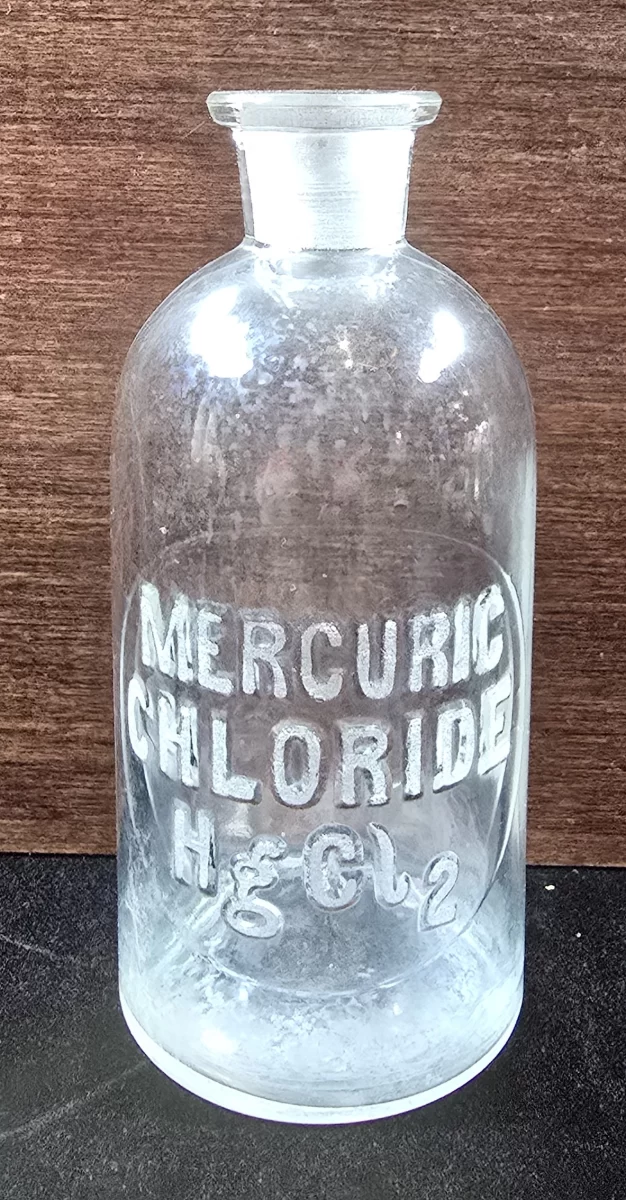
Description
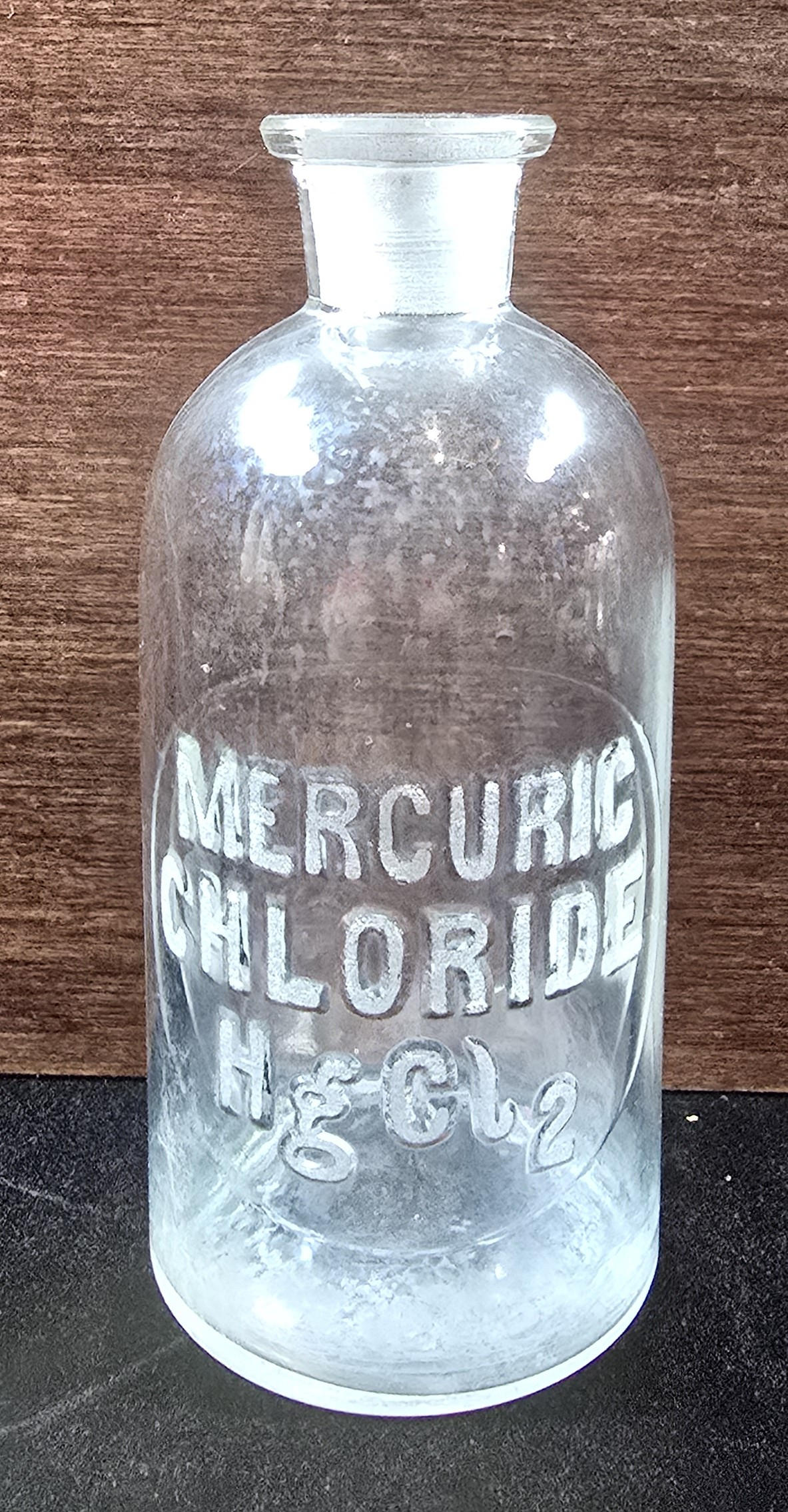
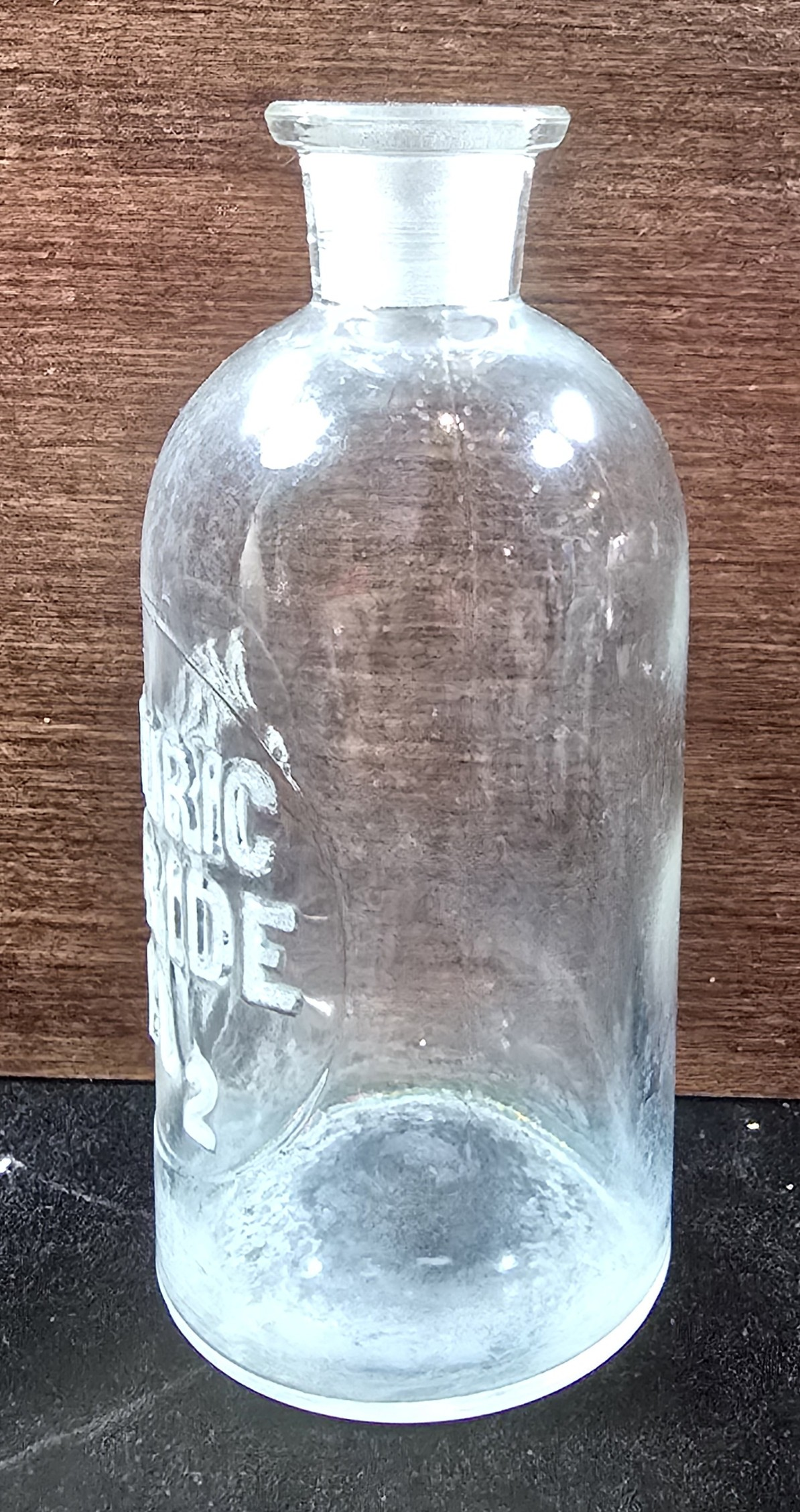
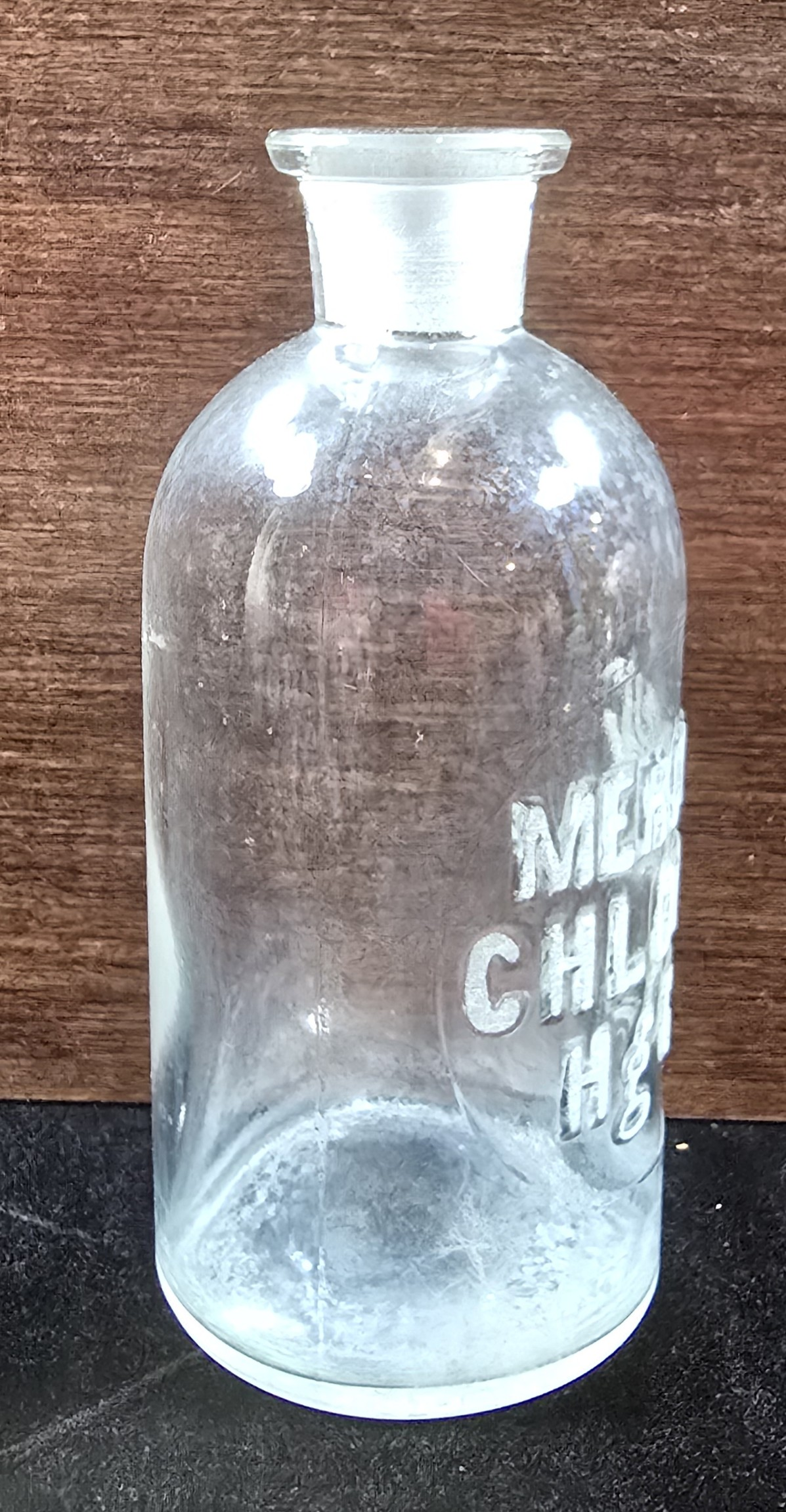
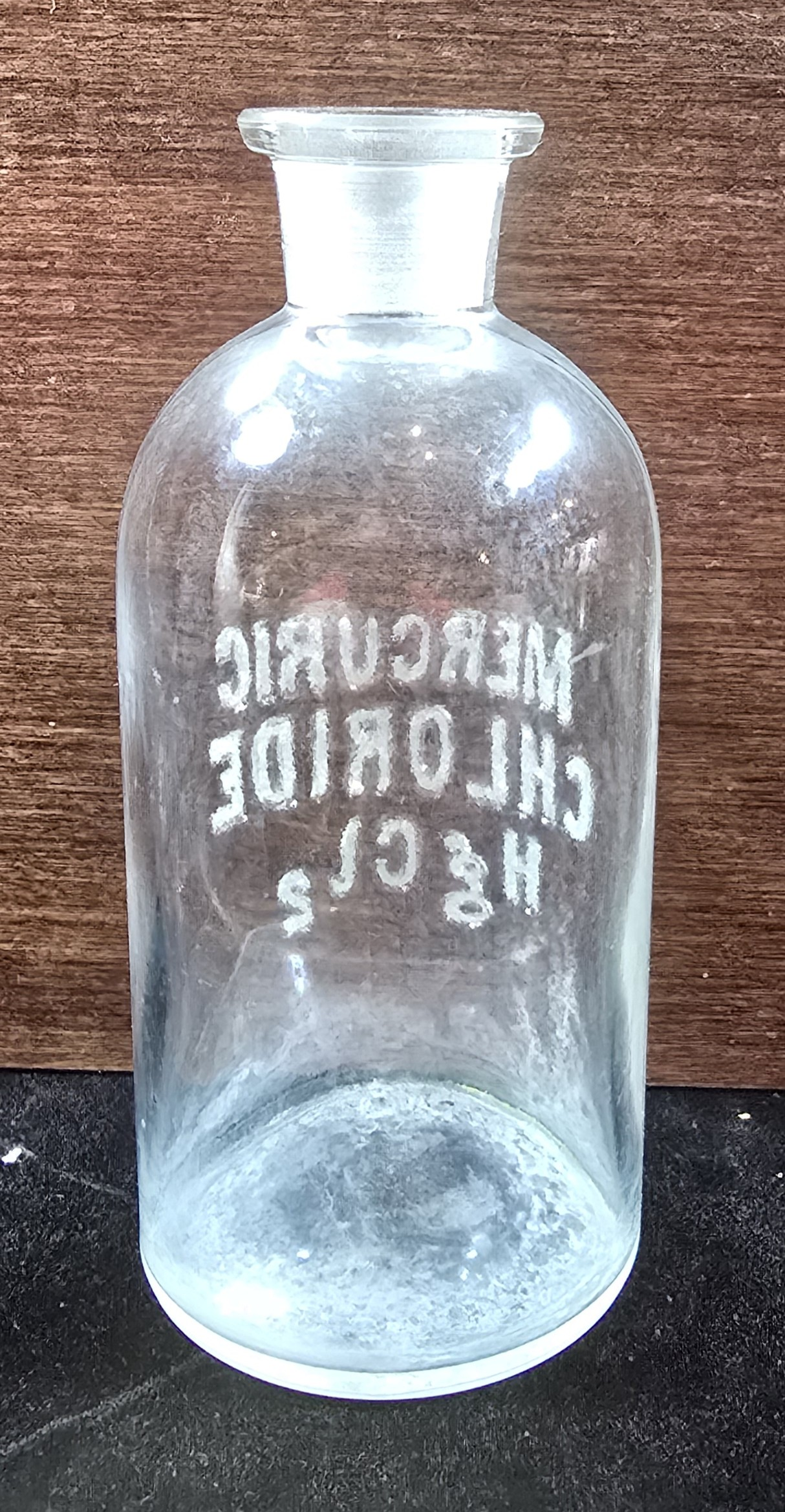
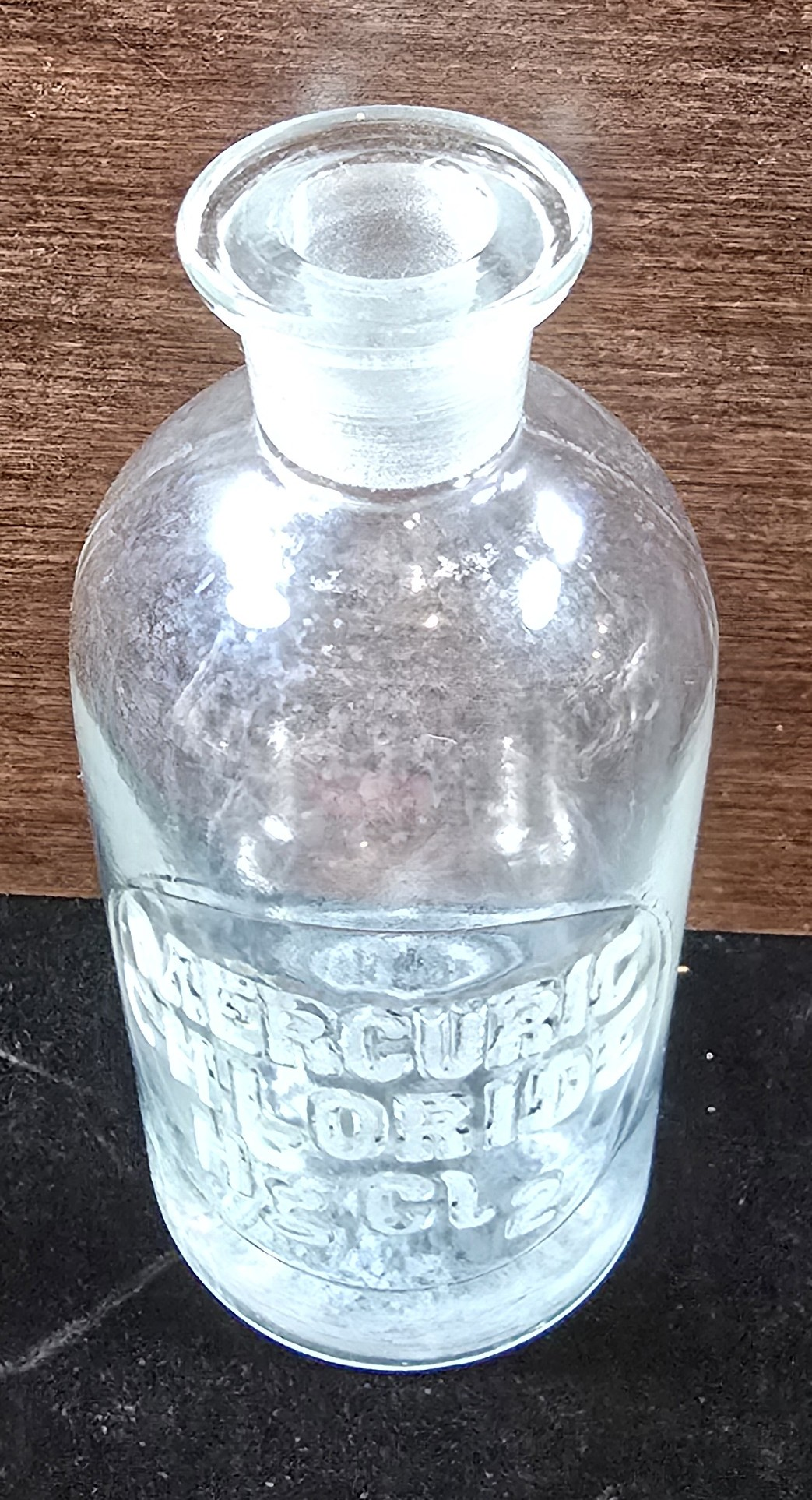
This clear antique glass bottle, marked “Mercuric Chloride HgCl₂”, once housed one of the most toxic substances regularly used in early medicine. The bottle features embossed chemical labeling and a cylindrical form typical of dispensary or institutional use in the early 20th century. The absence of a stopper suggests it may have been part of a larger set or has been separated from its original closure over time.
Mercuric chloride, also known as corrosive sublimate, was commonly used as a disinfectant, antiseptic, and even as a treatment for syphilis, long before the era of antibiotics. Though once considered essential in both pharmacy and lab settings, its use declined rapidly as the compound’s extreme toxicity became widely recognized.
Condition
Fair to good condition.
Interior clouding suggests previous chemical storage
Stopper missing
No major chips or cracks noted
Embossed lettering remains clear and legible
Gallery
Historical context
Mercuric chloride was a standard item in both medical and industrial chemical cabinets. By the late 1800s, it was promoted for treating infectious diseases, cleaning wounds, and sanitizing instruments—ironically, it sometimes did more harm than good. The phrase “corrosive sublimate” reflects its power to burn tissue, even in small doses.
Toxicity led to its replacement by safer compounds by the mid-20th century. Ingestion, skin contact, or inhalation could lead to kidney failure, neurological symptoms, or death.
Curious Facts, Ephemera, and Trivia
Was used in embalming solutions
Part of some early photographic chemical kits
Sold under names like “Bichloride of Mercury Tablets” (often misused)
Appeared in poisoning cases well into the 1940s
Excerpt
“Once praised as a medical marvel, mercuric chloride straddled the line between cure and curse—dispensed to heal, remembered for its harm.”
Why it is in the Cabinet
This bottle is a chilling reminder of a time when deadly substances were dispensed with authority and optimism. It represents the delicate boundary between medicine and poison—a recurring theme in medical history. A stark and elegant artifact, it earns its place in the Cabinet as a testament to the risks of early pharmacology.
Support Dr. Bebout’s Cabinet of Medical Curiosities
If you enjoy the history, the oddities, and the effort, help keep this cabinet open. Every little bit helps preserve and share the strange wonders of medicine's past.
Buy Me a Ko-fi ☕ Buy Me a Coffee ☕ Tip via PayPal 💵