
Title
Merck Antipyrine (4 ozs., N.F.) – Manufacturing Chemists, Rahway, N.J.
Author
Merck & Co., Inc
Image
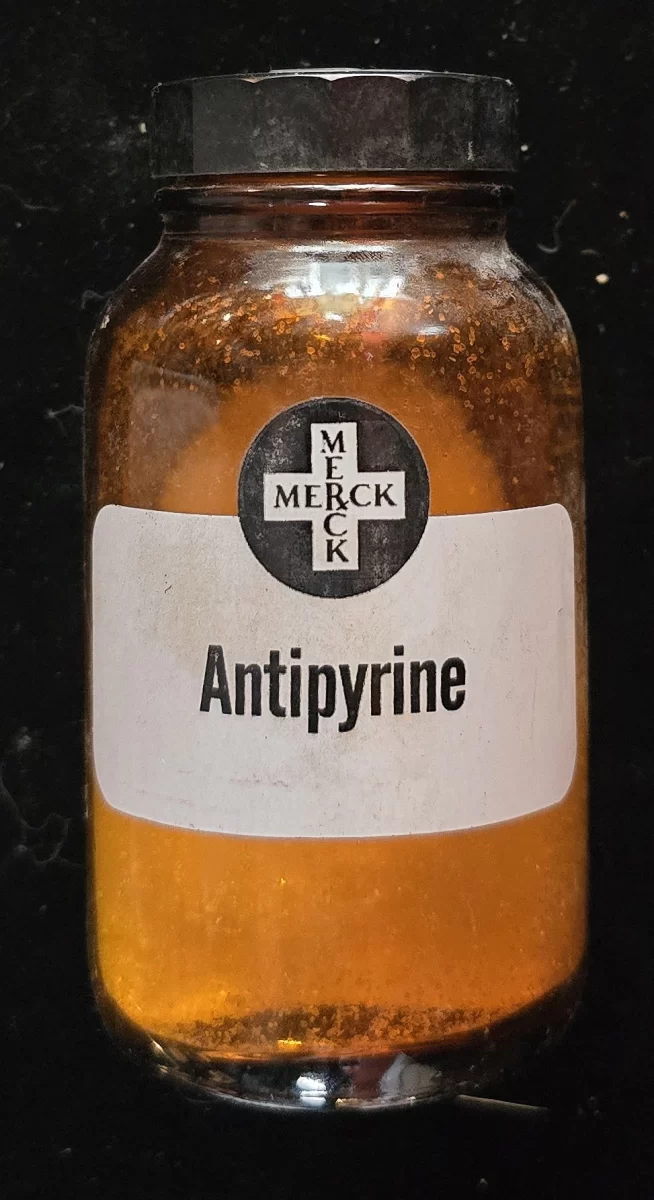
Description
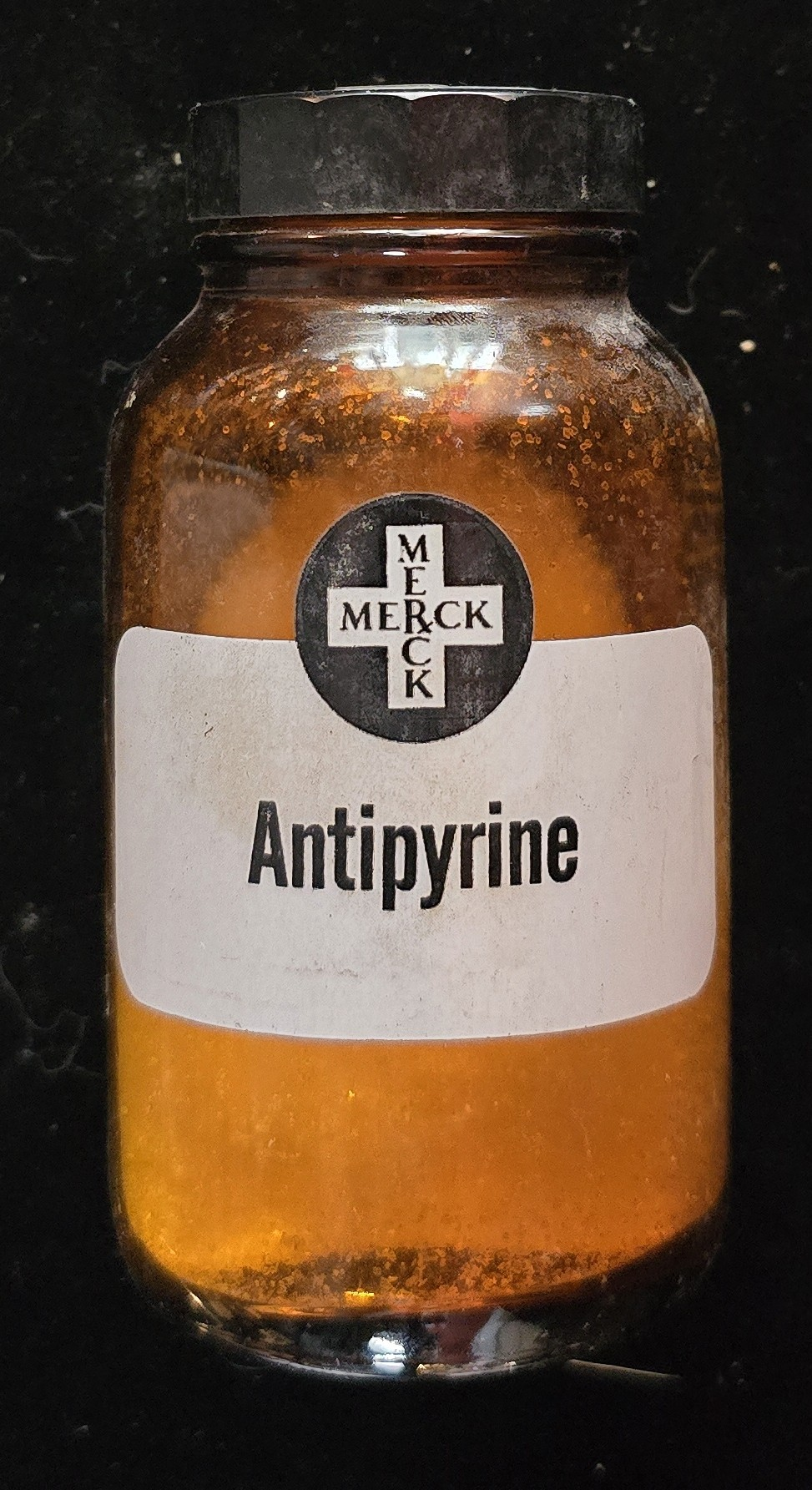
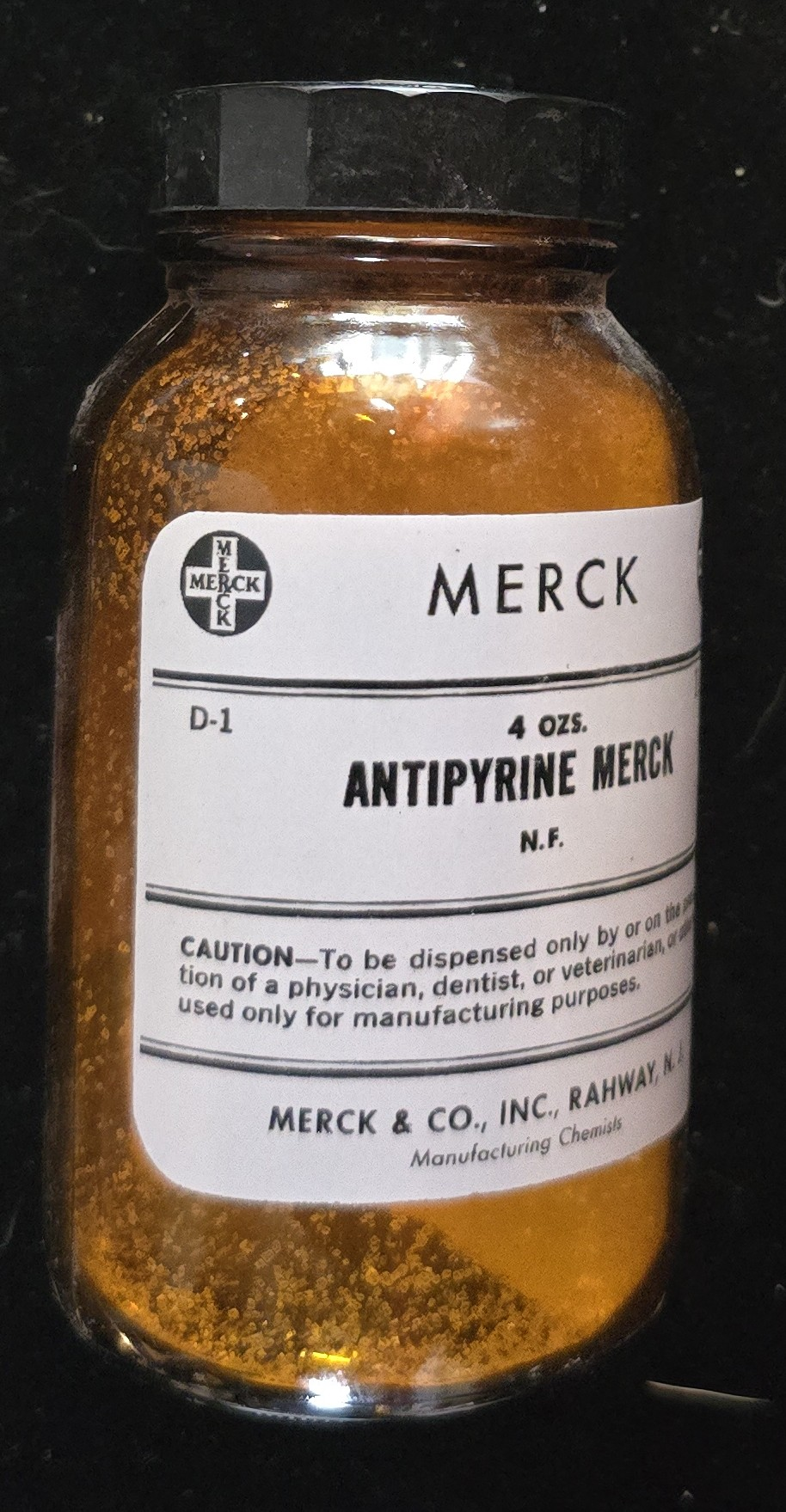
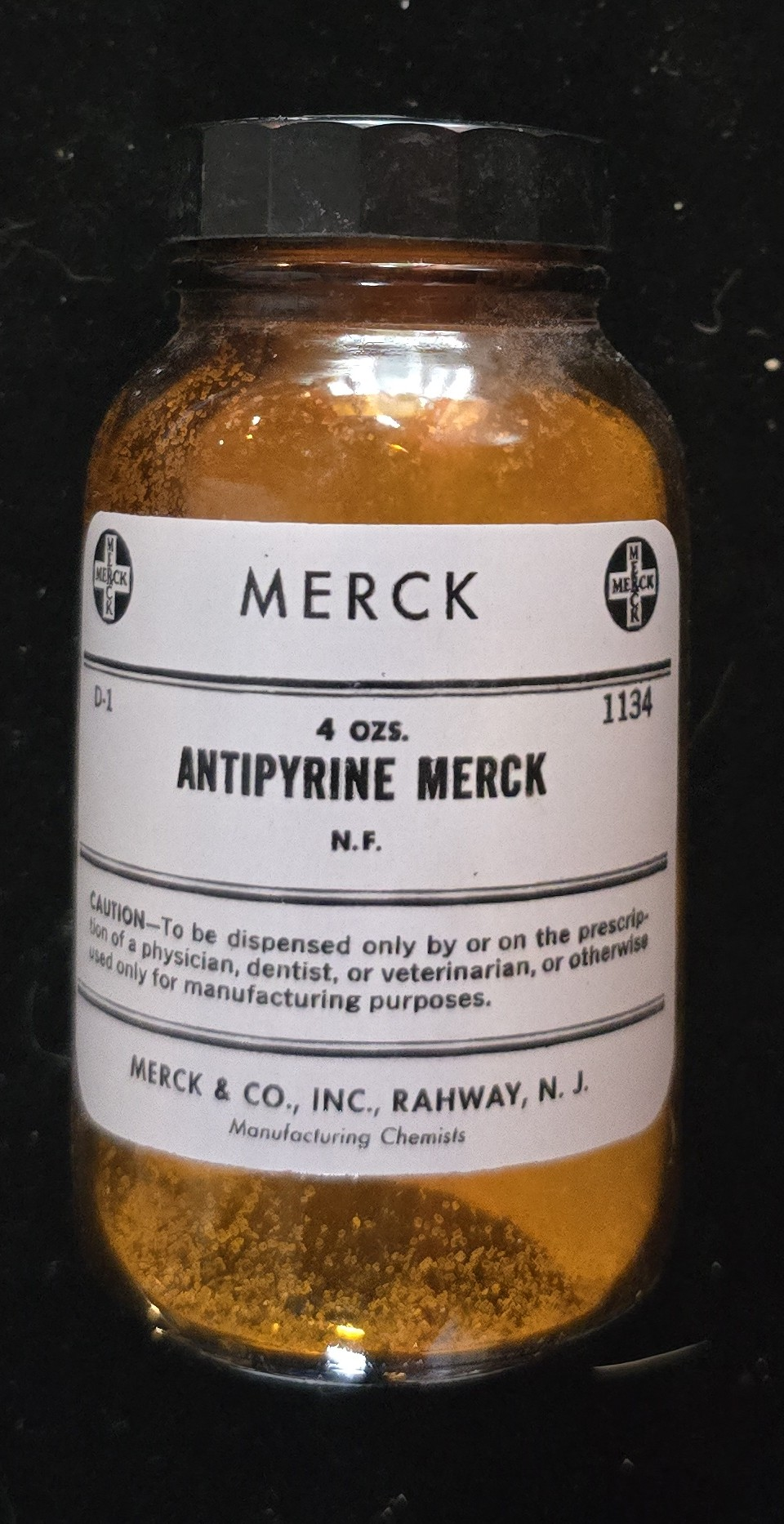
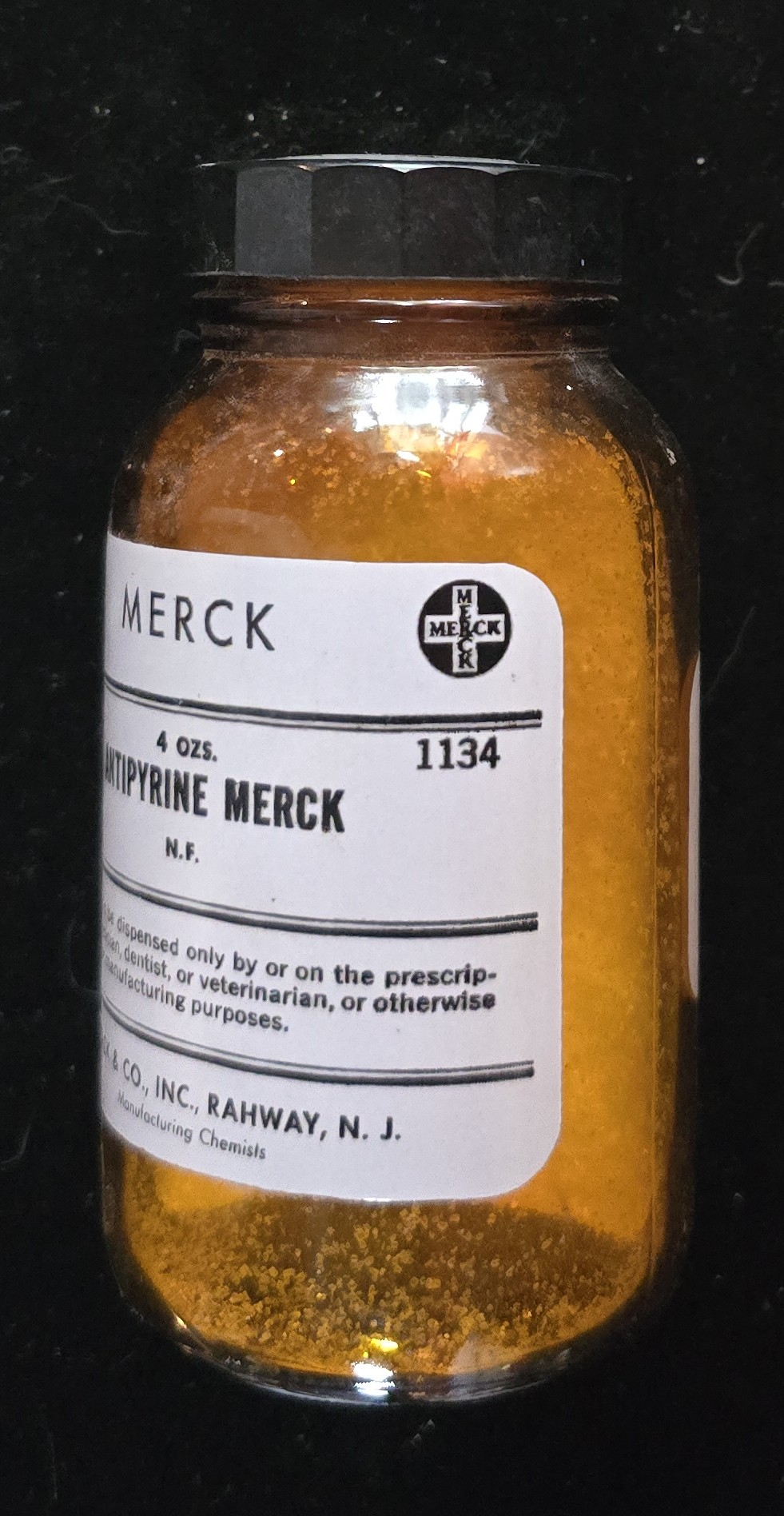
This amber glass bottle with black screw cap and intact paper labels once contained 4 ounces of Antipyrine (Phenazone) manufactured by Merck & Co., Inc., Rahway, New Jersey. The main label reads:
“Antipyrine Merck, N.F. Caution — To be dispensed only by or on the prescription of a physician, dentist, or veterinarian, or otherwise used only for manufacturing purposes.”
Antipyrine was one of the earliest synthetic fever-reducing and pain-relieving agents, introduced in the 1880s. Though effective, it was largely replaced in the mid-20th century by safer alternatives such as acetaminophen and aspirin, due to side effects including agranulocytosis (dangerous suppression of white blood cells).
Condition
Bottle intact; amber glass free of chips.
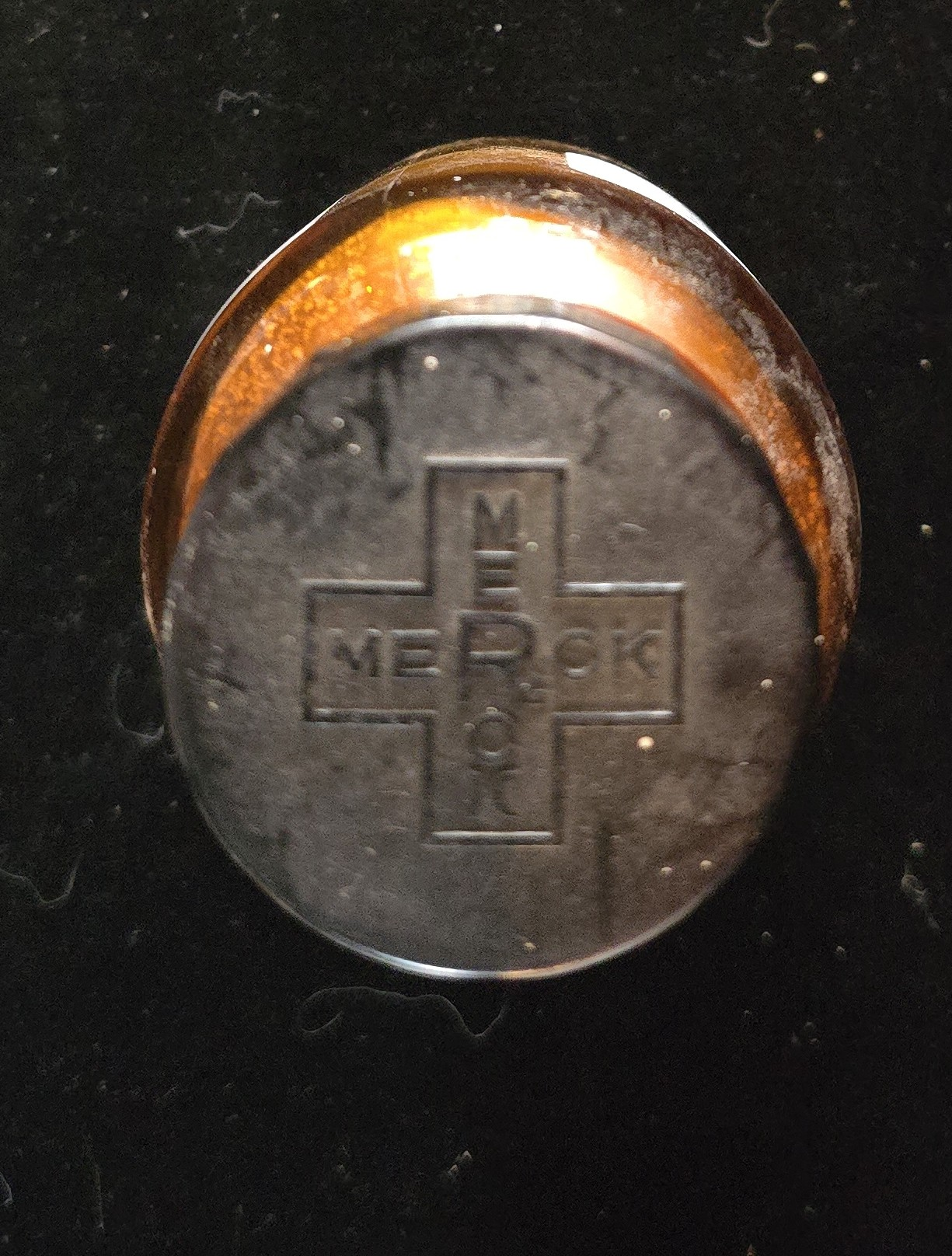
Original black screw cap embossed with Merck logo cross.
Paper labels legible, though showing light age discoloration.
Some crystalline residue of Antipyrine visible inside.
Gallery
Historical context
Antipyrine, discovered in 1883 by German chemist Ludwig Knorr, was one of the first widely used synthetic drugs, heralding the transition from botanical-based remedies to laboratory-manufactured pharmaceuticals.
Merck, already a major global manufacturer by the early 20th century, distributed bulk Antipyrine to pharmacies and hospitals, where it was compounded into capsules, powders, and syrups. Its decline began in the 1930s–1950s as safer analgesics gained popularity.
Curious Facts, Ephemera, and Trivia
Antipyrine was sometimes combined with caffeine, codeine, or phenacetin in compound headache powders.
The embossed black screw cap with Merck’s cross is distinctive and helps date this packaging to mid-20th century.
Merck’s Rahway, N.J. facility was its U.S. headquarters and primary manufacturing center for decades.
Excerpt
From the label:
“Caution — To be dispensed only by or on the prescription of a physician, dentist, or veterinarian, or otherwise used only for manufacturing purposes.”
Why it is in the Cabinet
This bottle represents the early age of industrial pharmaceutical chemistry. Antipyrine’s once widespread use — and its later decline due to toxicity — highlights both the progress and risks of synthetic drug development in the first half of the 20th century.
Support Dr. Bebout’s Cabinet of Medical Curiosities
If you enjoy the history, the oddities, and the effort, help keep this cabinet open. Every little bit helps preserve and share the strange wonders of medicine's past.
Buy Me a Ko-fi ☕ Buy Me a Coffee ☕ Tip via PayPal 💵