
Title
McKesson & Robbins Oil Origanum (Imitation)
Author
McKesson & Robbins, Incorporated — New York, Bridgeport, Montreal
Image
Description
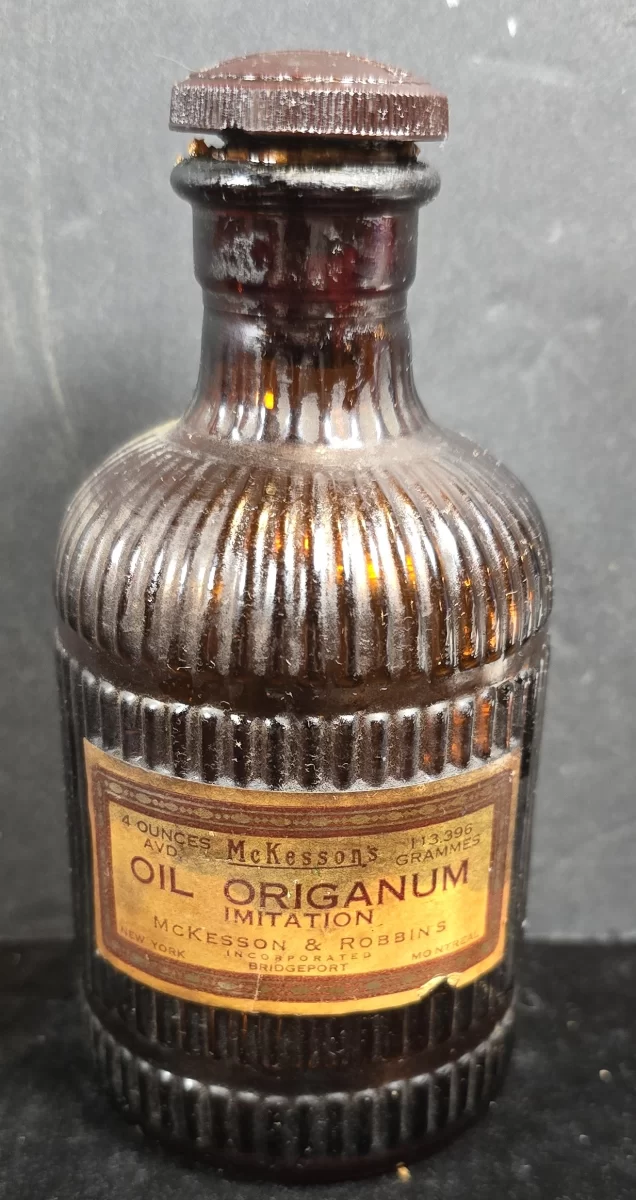
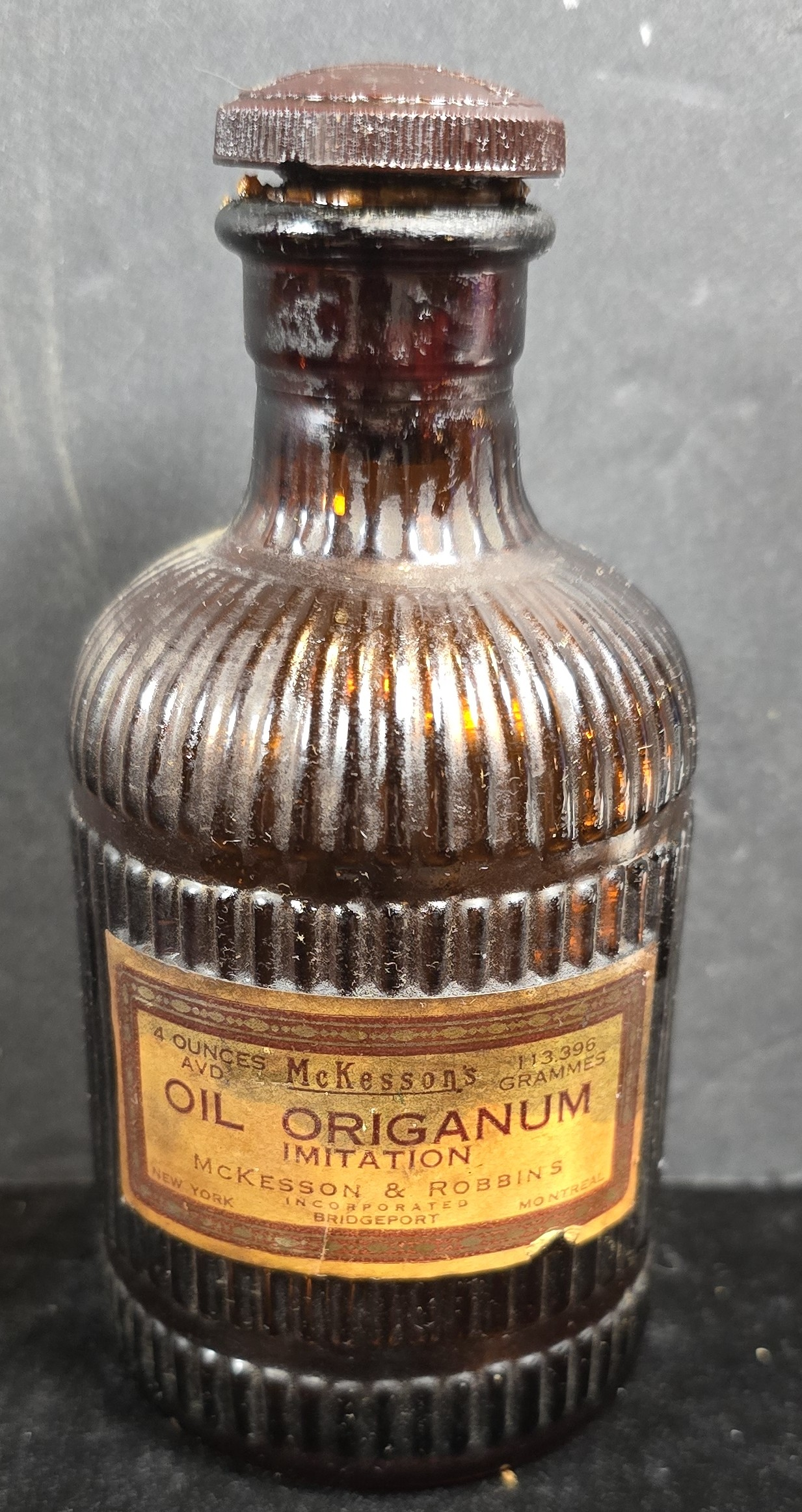
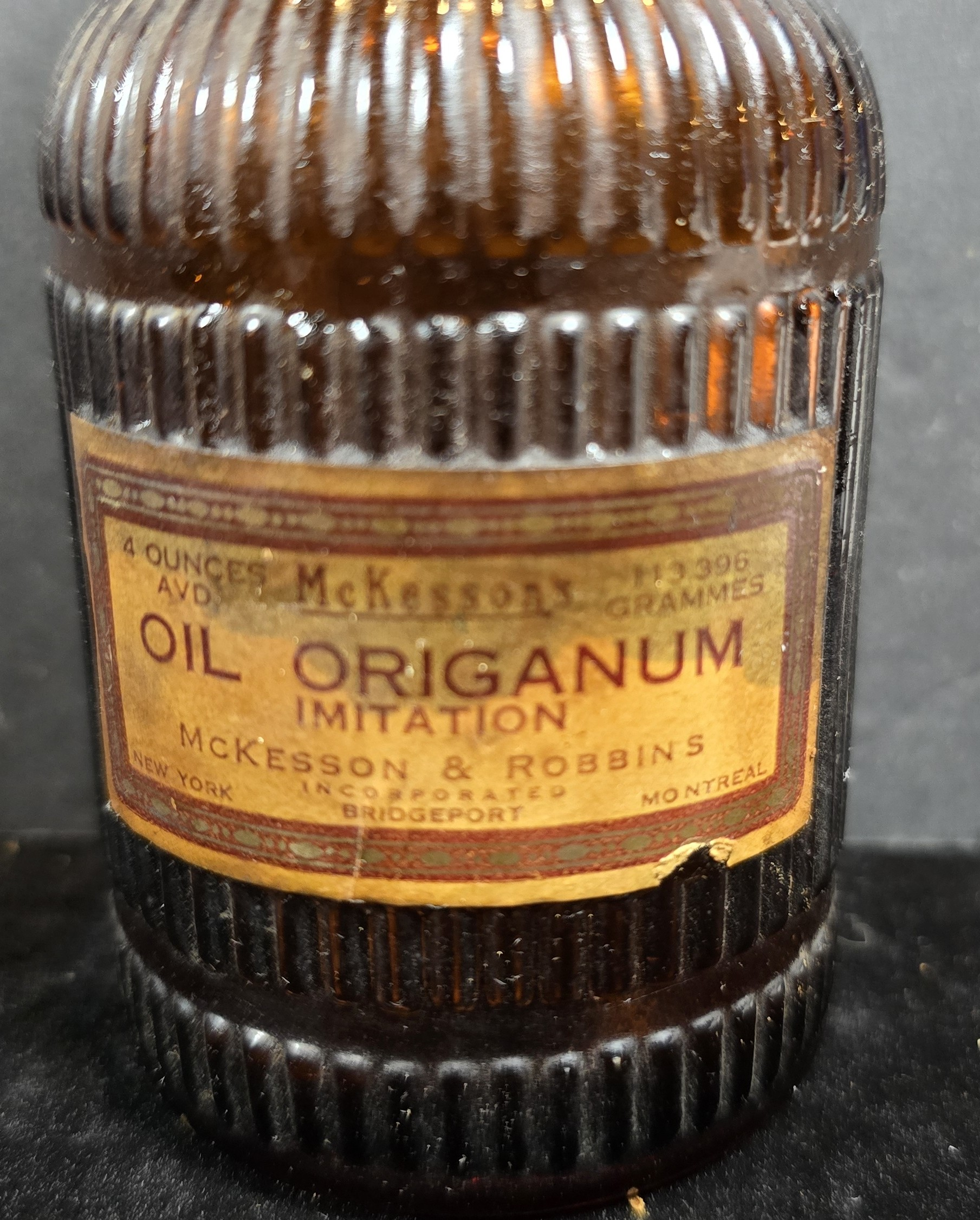
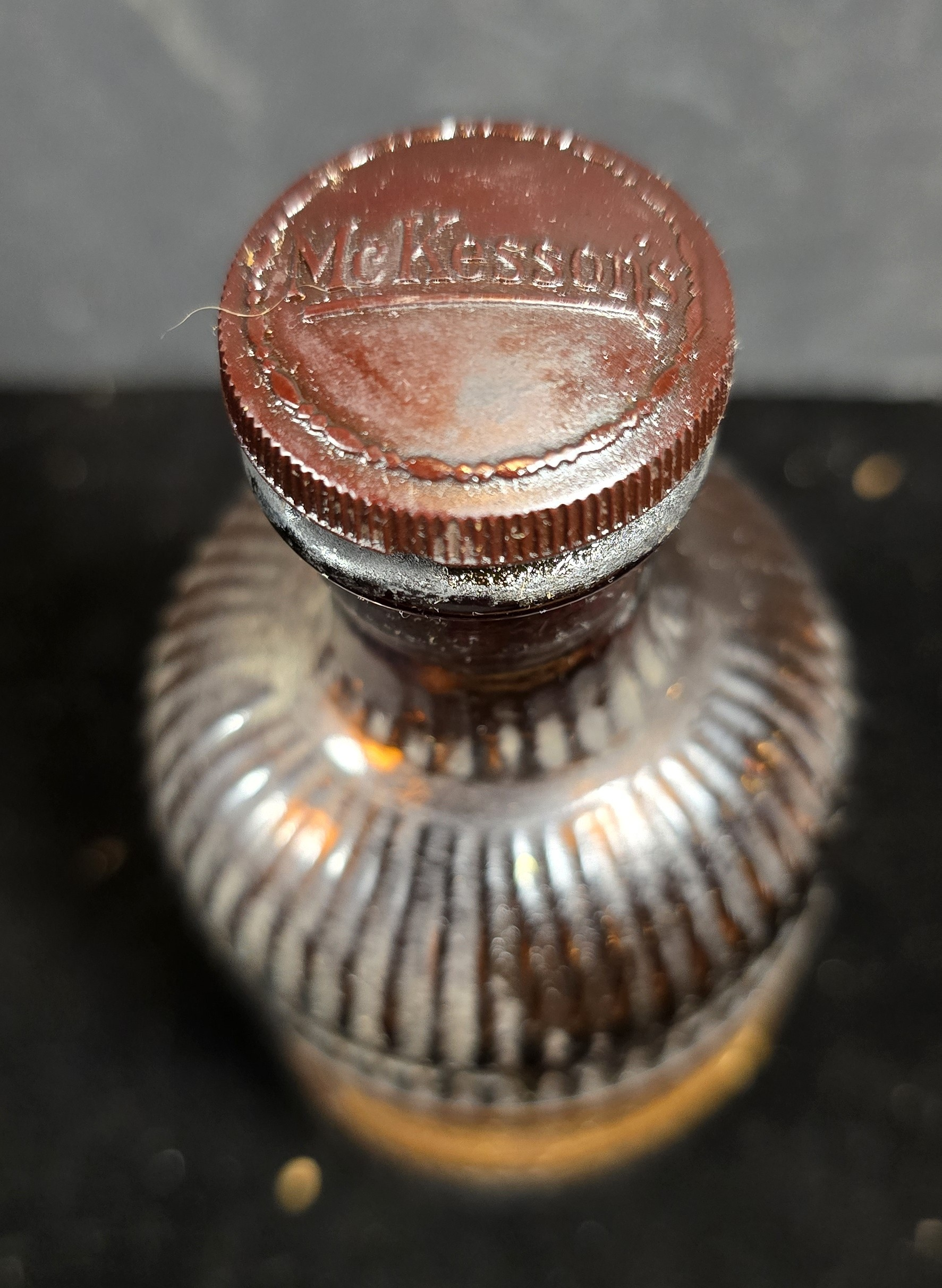
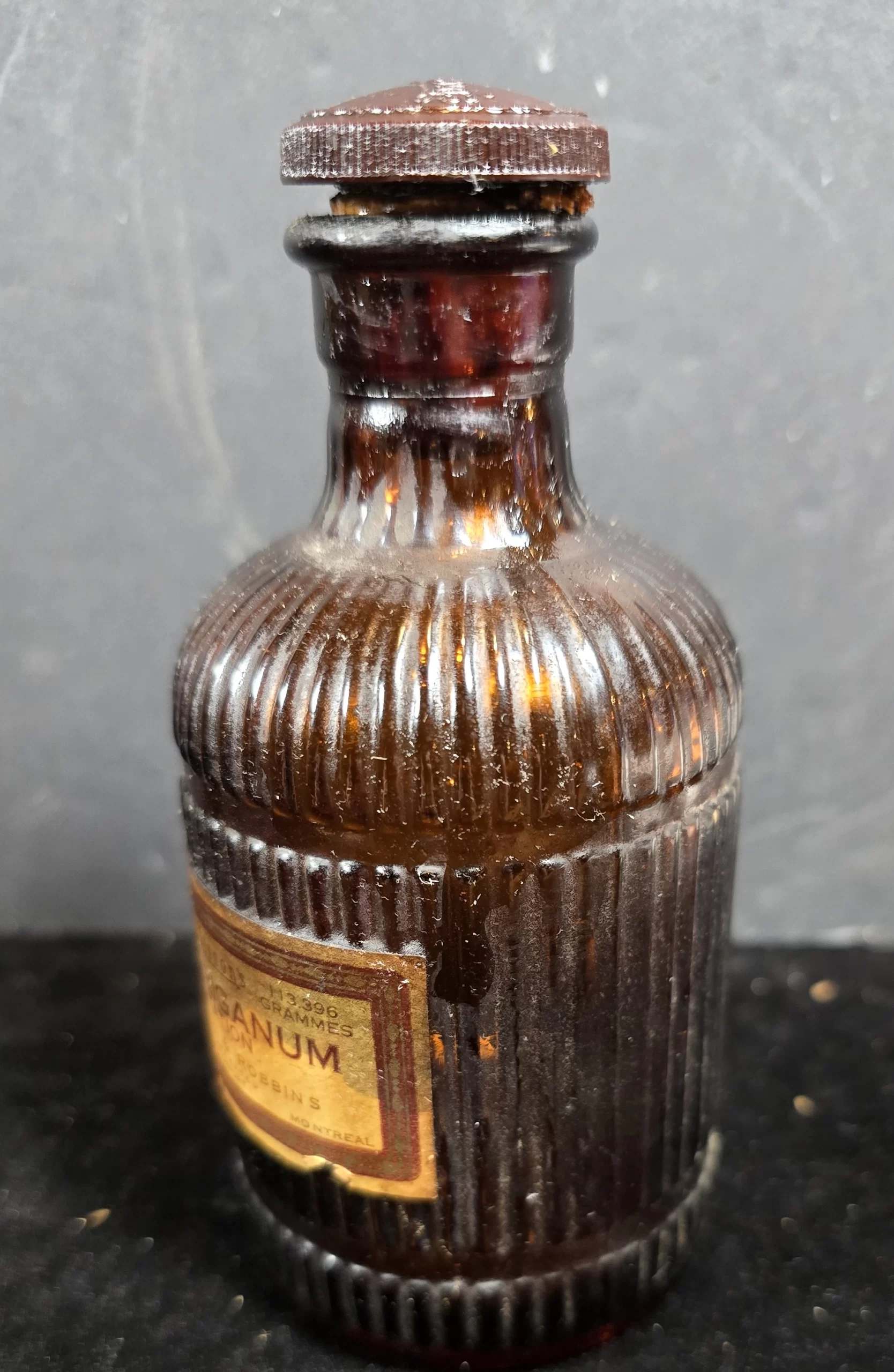
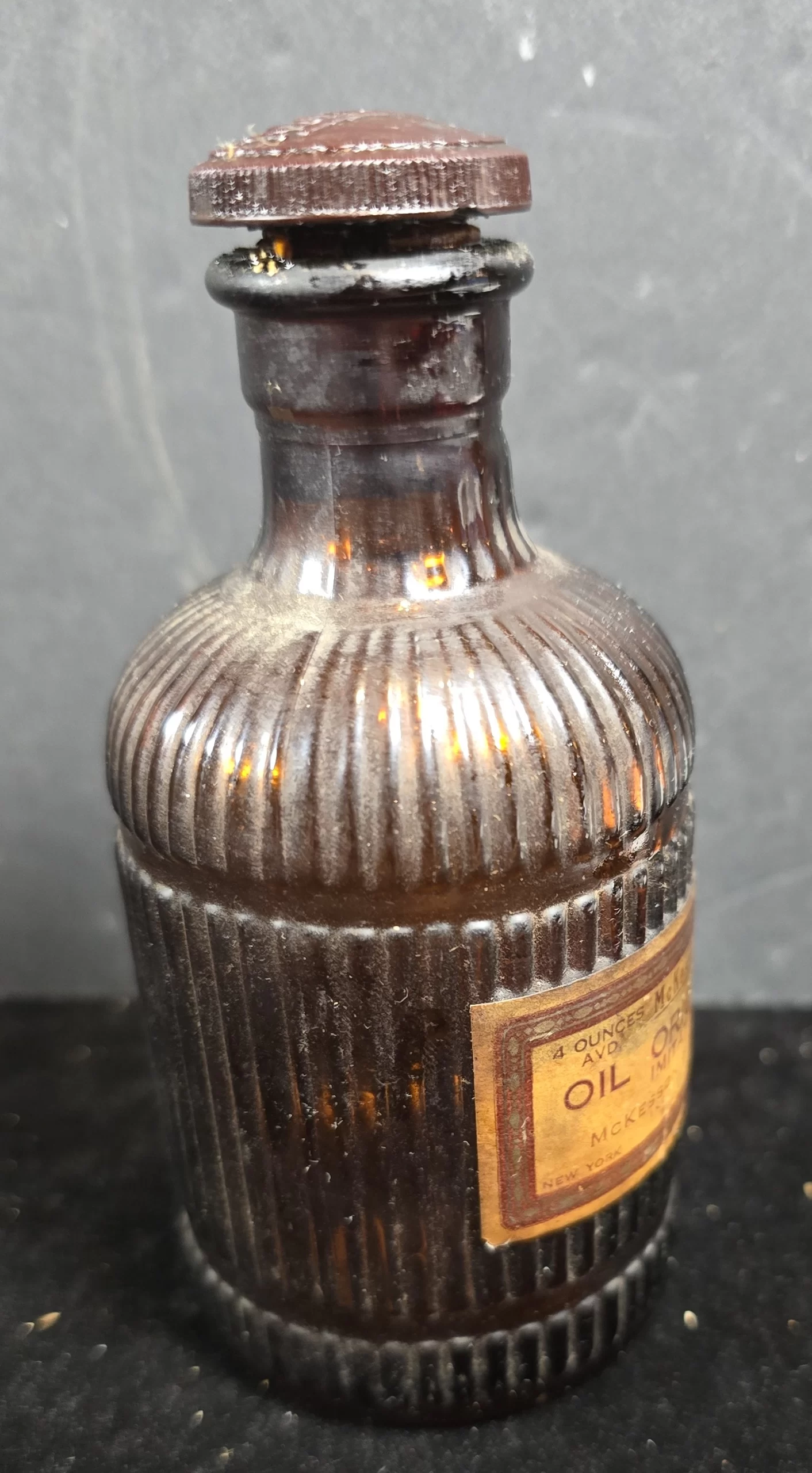
This is a 4-ounce ribbed amber glass bottle of “Oil Origanum — Imitation” produced by McKesson & Robbins. The bottle carries the company’s signature dark amber glass, molded vertical ribs for grip, and a brown metal screw cap embossed with “McKesson’s.” The front label includes weight markings in both ounces and grammes, typical for pharmaceutical trade packaging of the early 20th century. The label also shows the distinctive McKesson color palette of maroon, gold, and olive.
“Oil Origanum” was a widely used medicinal oil in American pharmacy, though the true botanical origin of the name is historically messy. Genuine origanum oil traditionally derives from Origanum heracleoticum or Origanum vulgare, but commercial products frequently substituted or entirely replaced it with more accessible essential oils such as red thyme oil or synthetic thymol. McKesson’s “imitation” designation acknowledges this substitution openly — a practice that became more common as federal and state labeling laws tightened after 1906.
Condition
Excellent structural integrity with no chips or cracks. Label retains strong color with moderate edge wear and minor abrasions. The screw cap is intact but shows oxidation and residue around the threads. Bottle surface shows dust and typical storage wear.
Gallery
Historical context
Oil of origanum was one of the classic “counterirritant” remedies in late 19th- and early 20th-century American medicine. It appeared in liniments, chest rubs, and topical preparations designed to create warmth and stimulate circulation. The active components — chiefly carvacrol and thymol — were valued for their aromatic and antiseptic properties.
McKesson & Robbins, one of the oldest pharmaceutical distributors in the United States, operated a vast network of branches, including major hubs in New York, Bridgeport, and Montreal. Their bottles are recognizable in both pharmacy and general medical collections for their distinctive ribbed molds and standardized labeling.
The term “imitation” in pharmaceutical labeling emerged as an early compliance measure under the Pure Food and Drug Act. It was used when a product did not contain the genuine botanical oil but instead an acceptable substitute that mimicked odor, flavor, or medicinal profile.
Curious Facts, Ephemera, and Trivia
“Oil Origanum” was a staple ingredient in liniments for horses, making it common in both human and veterinary pharmacy catalogs.
Many “Origanum” preparations in the U.S. actually contained oil of thyme, which smelled similar but was cheaper to produce.
McKesson’s ribbed amber bottles are highly recognizable to collectors and were used for dozens of volatile or aromatic products.
Surviving examples with intact caps and labels are becoming increasingly scarce due to heavy use and the tendency of these oils to degrade paper labeling.
Excerpt
“OIL ORIGANUM — IMITATION. McKesson & Robbins, Incorporated, New York, Bridgeport, Montreal.”
Why it is in the Cabinet
This bottle represents the practical, everyday side of American pharmacy — the sort of ingredient used constantly in compounding rooms, liniment formulas, and veterinary mixtures. The “imitation” label adds historical interest as a reflection of early regulatory pressure and honest disclosure in medicinal manufacturing. The ribbed amber bottle, intact cap, and legible label make this an excellent example of McKesson’s workhorse packaging style.
Support Dr. Bebout’s Cabinet of Medical Curiosities
If you enjoy the history, the oddities, and the effort, help keep this cabinet open. Every little bit helps preserve and share the strange wonders of medicine's past.
Buy Me a Ko-fi ☕ Buy Me a Coffee ☕ Tip via PayPal 💵