
Title
Maltine with Phosphate of Iron, Quinia, and Strychnia (Maltine Manufacturing Co., ca. 1905–1915)
Author
Manufacturer: Maltine Manufacturing Company, New York
Contents: Malt extract fortified with phosphate of iron, quinine, and strychnine
Image
Description
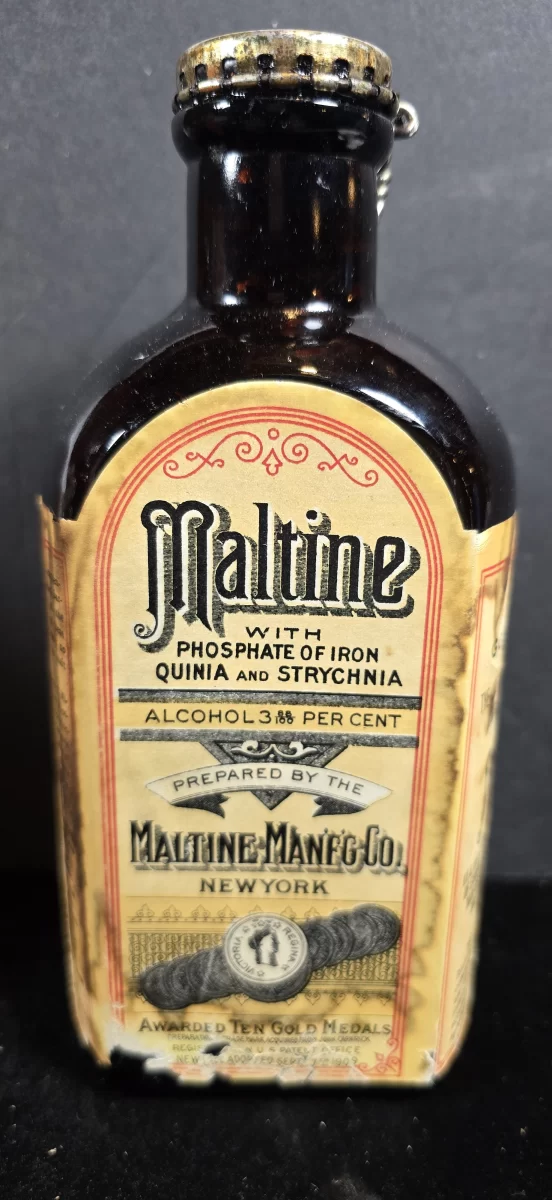
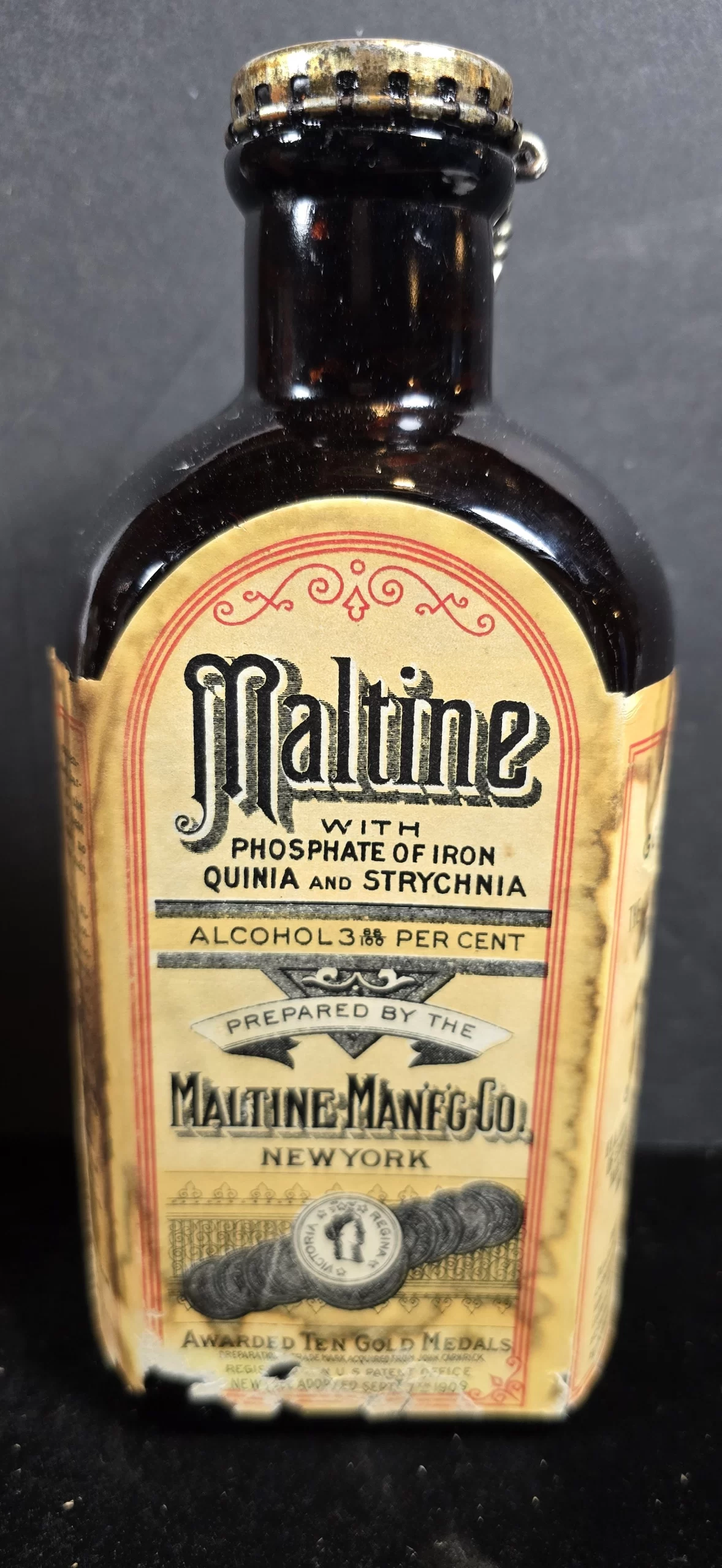
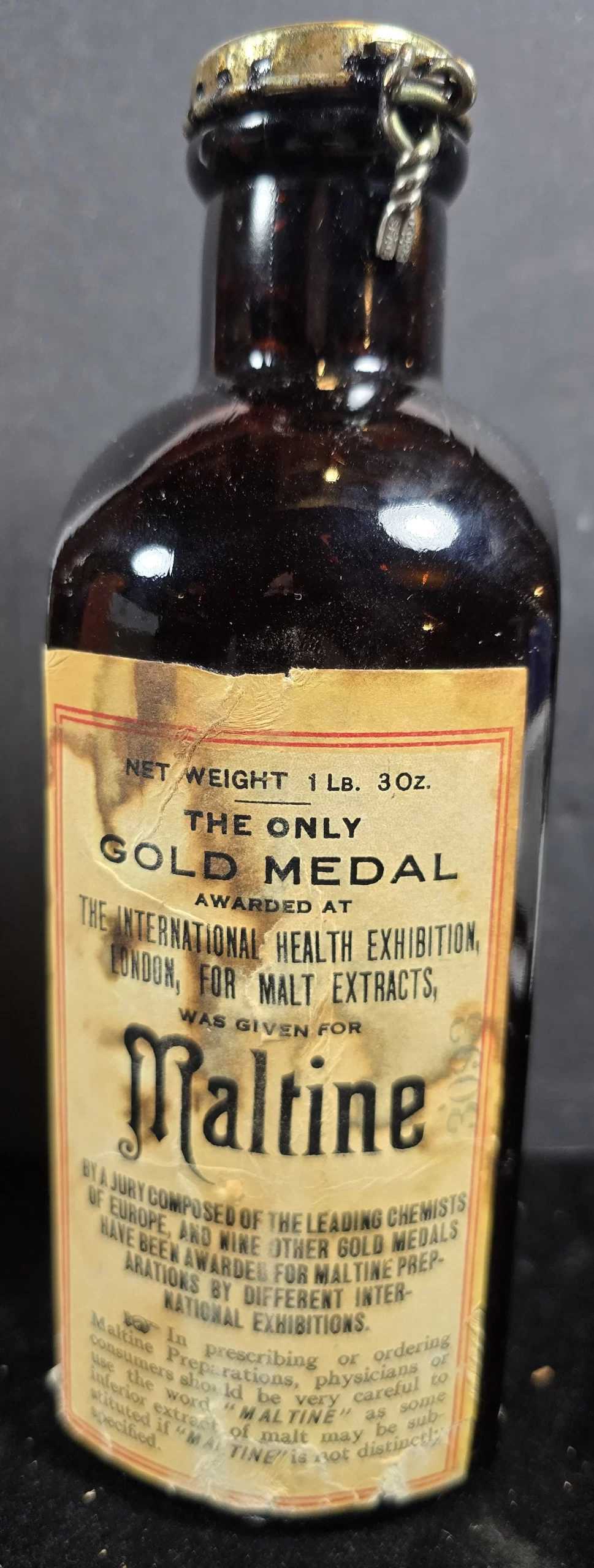
This amber glass bottle from the Maltine Manufacturing Company of New York contains the once-famous tonic Maltine with Phosphate of Iron, Quinia, and Strychnia, one of the most widely prescribed “nutritive restoratives” of the early 20th century. The label proudly declares its award of the only gold medal for malt extracts at the International Health Exhibition in London, a claim that appeared on Maltine products for decades as a mark of prestige.
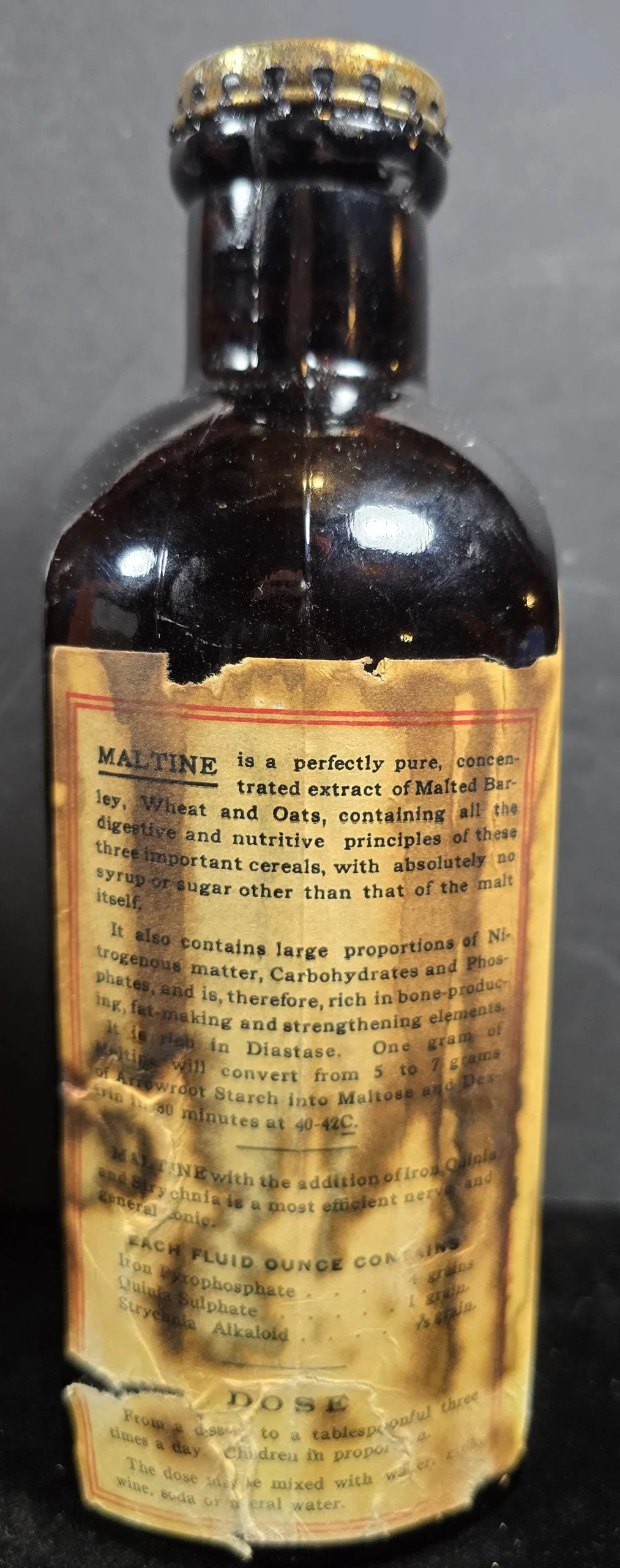
Maltine was marketed as a concentrated malt extract derived from barley, wheat, and oats, containing all the nutritive principles of these cereals “with absolutely no sugar other than that of the malt itself.” The fortified version seen here added iron for anemia, quinine for vitality, and strychnine—a powerful central nervous system stimulant then thought to “invigorate the heart and nerves.”
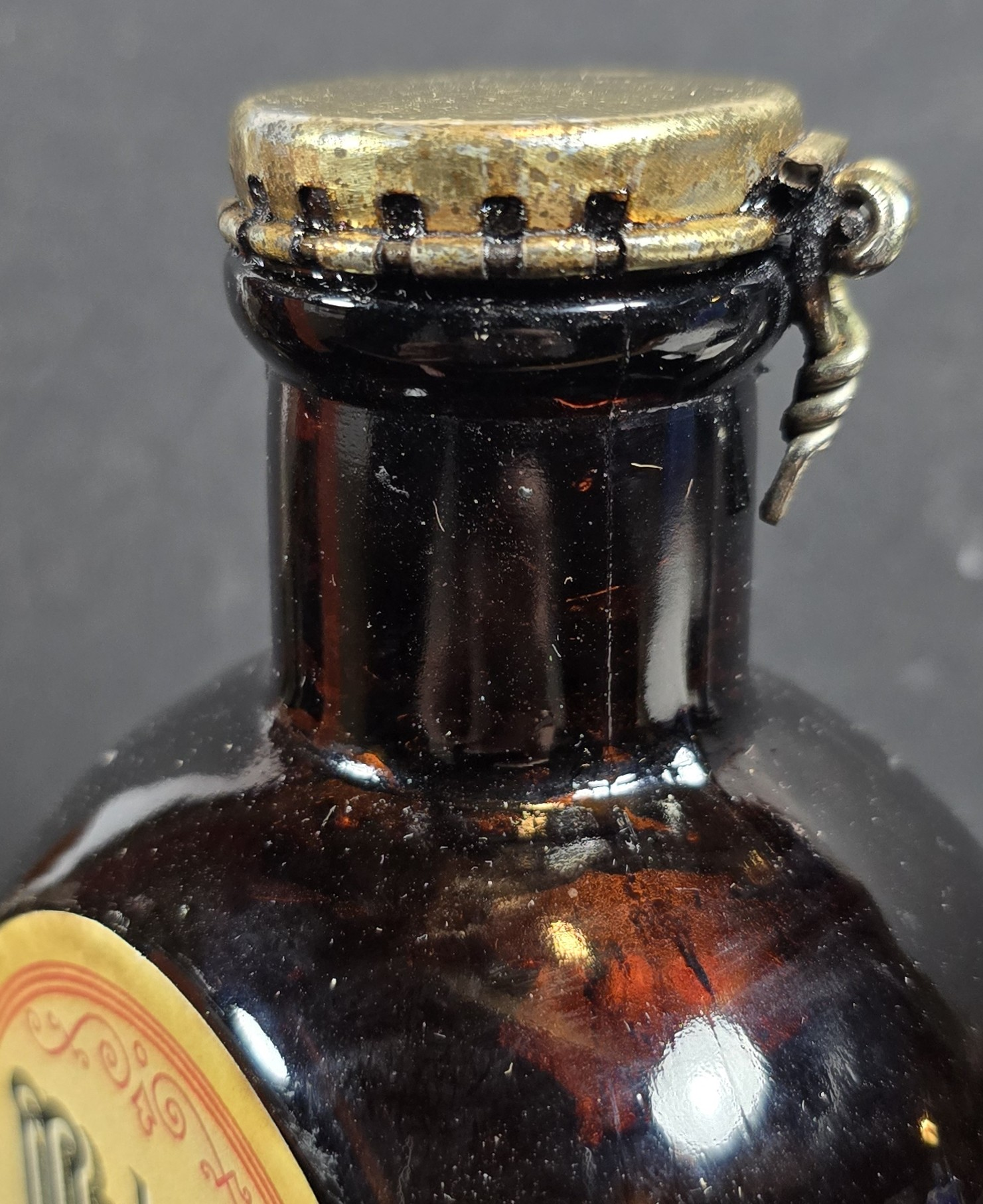
The bottle’s distinctive hinged tin cap with wire latch is an early 20th-century pharmaceutical closure designed to be resealed for multiple doses. The bold Gothic “Maltine” logo and ornate medal design reflect the company’s confidence in the product’s medical legitimacy and international acclaim.
Condition
Very good overall condition with full front and side labels intact, showing moderate staining and aging consistent with malt residue. Metal cap retains its hinge and chain. Paper label remains legible with minor abrasions near base and edges. Bottle glass clean and free of cracks.
Gallery
Historical context
Founded in New York in the 1870s, the Maltine Manufacturing Company specialized in malt-based nutritional tonics intended for patients with wasting diseases, anemia, and fatigue. The original Maltine extract was introduced as a digestible carbohydrate and protein source for invalids. By the early 1900s, the company offered multiple fortified variants combining malt extract with iron, cod liver oil, pepsin, strychnine, or wine.
The combination of quinine and strychnine—while shocking by modern standards—was once viewed as a tonic for exhaustion and neurasthenia. Small doses of strychnine were prescribed as a nerve stimulant, while quinine served as an antimalarial and bitter appetite enhancer. Maltine’s marketing heavily emphasized its endorsement by physicians, its medals from international exhibitions, and its supposed scientific purity.
Curious Facts, Ephemera, and Trivia
The product’s alcohol content (3%) was highlighted as a selling point for appetite and digestion.
Maltine bottles often featured hinged metal caps—a rare feature for patent tonics—allowing pharmacists to pour and reseal repeatedly.
The International Health Exhibition medal claim dates to 1884 and was reused in advertising well into the 1920s.
Despite containing strychnine, Maltine was marketed as safe for children in small doses, illustrating how fluid toxicology standards were at the time.
The Maltine Company also produced “Maltine with Hypophosphites” and “Maltine with Cod Liver Oil,” catering to tuberculosis and convalescent patients.
Excerpt
“Maltine is a perfectly pure, concentrated extract of Malted Barley, Wheat, and Oats… With the addition of Iron, Quinia, and Strychnia, it is a most efficient nerve and general tonic.”
— Maltine Company Circular, ca. 1909
Why it is in the Cabinet
This bottle exemplifies the medical optimism of the late Victorian and Edwardian eras, when chemistry and nutrition merged into tonics promising recovery through “scientific nourishment.” Maltine with Phosphate of Iron, Quinia, and Strychnia represents both the ingenuity and audacity of early pharmaceutical marketing—a bridge between the apothecary tradition and the emerging industrial drug trade.
Support Dr. Bebout’s Cabinet of Medical Curiosities
If you enjoy the history, the oddities, and the effort, help keep this cabinet open. Every little bit helps preserve and share the strange wonders of medicine's past.
Buy Me a Ko-fi ☕ Buy Me a Coffee ☕ Tip via PayPal 💵