
Title
Mallinckrodt Phenobarbital Bottle
Author
Mallinckrodt Chemical Works — St. Louis / New York
Image
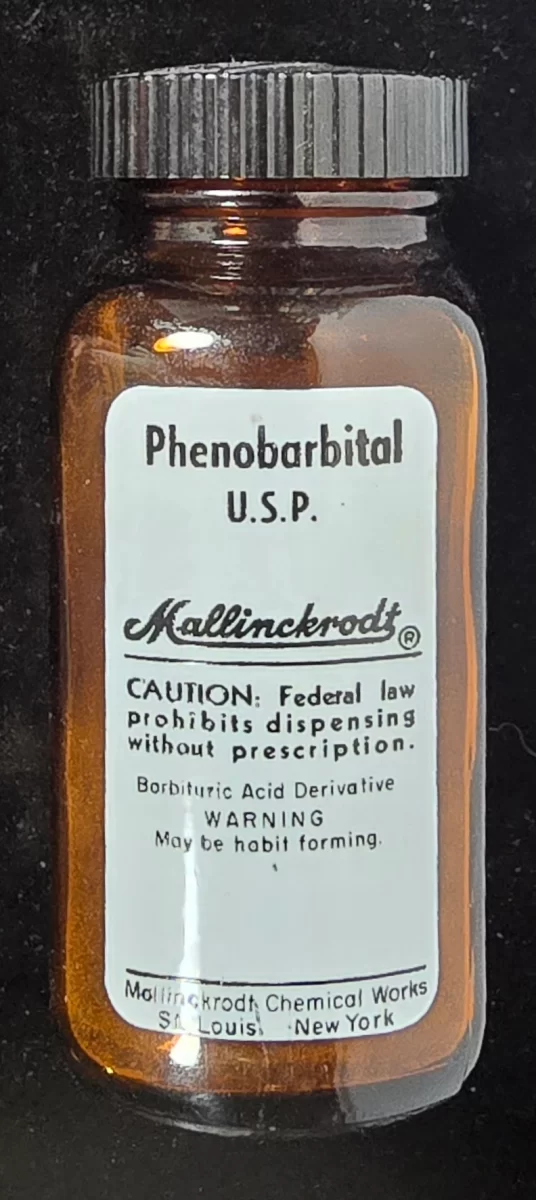
Description
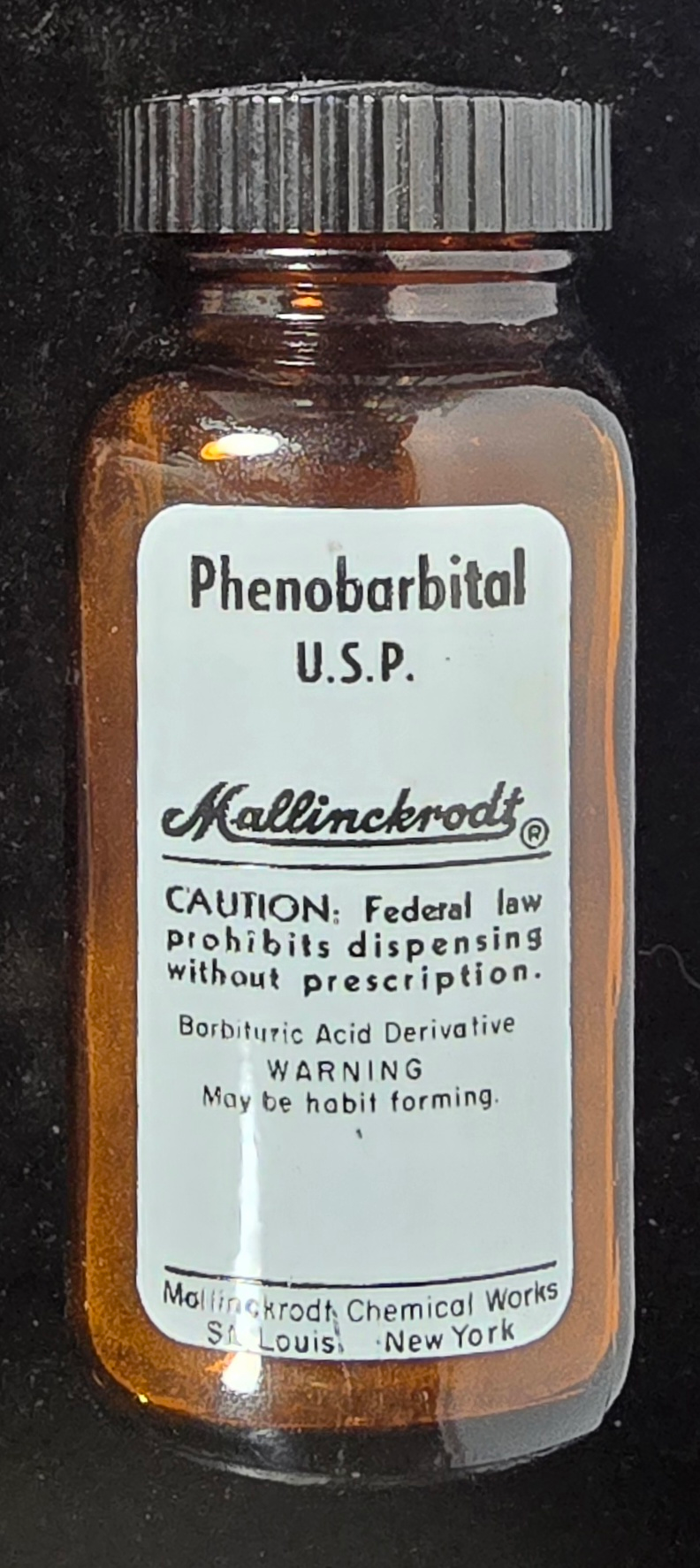
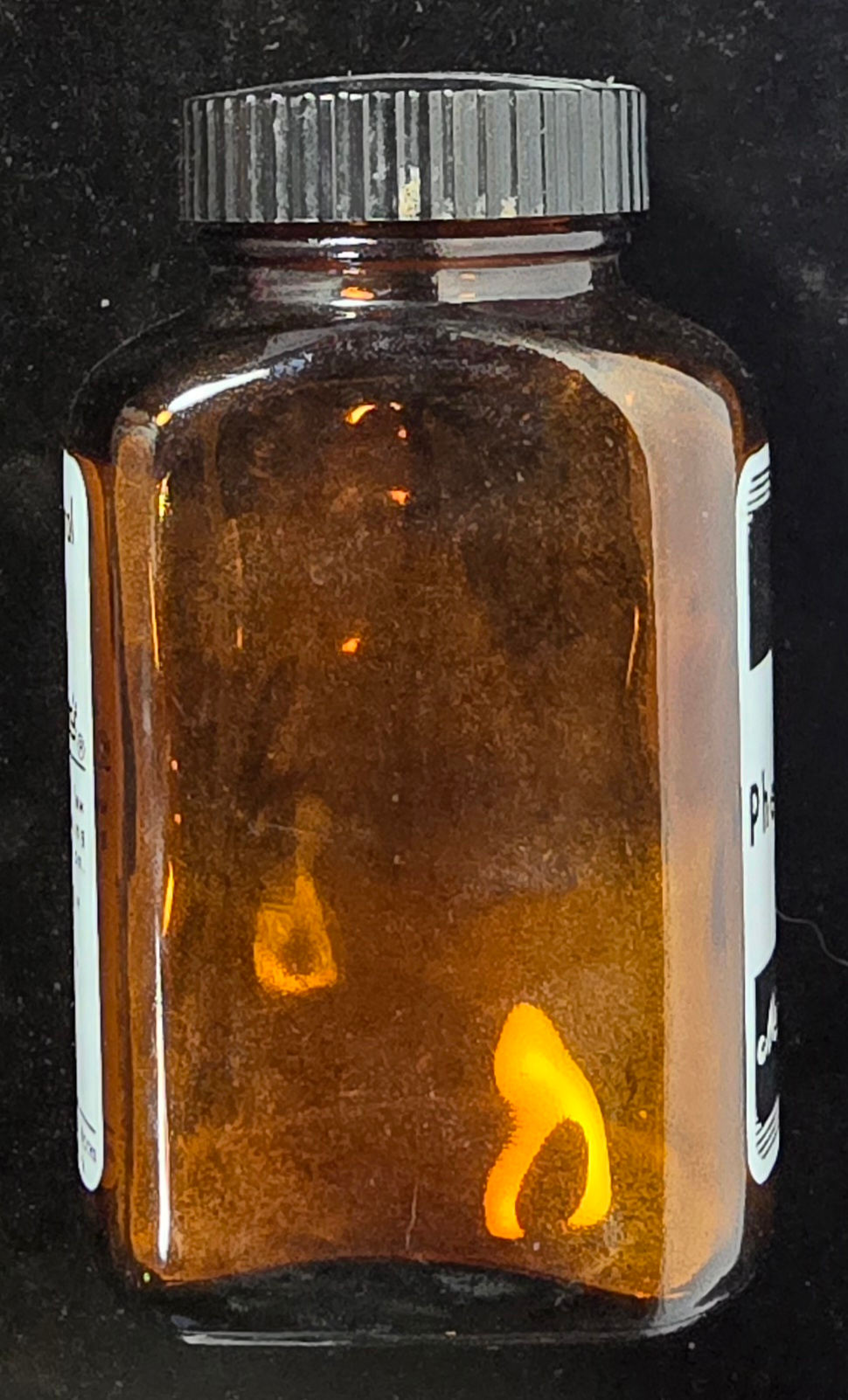
An amber glass pharmacy bottle labeled “Phenobarbital U.S.P.”, produced by Mallinckrodt Chemical Works.
Front label reads:
CAUTION: Federal law prohibits dispensing without prescription. Barbituric Acid Derivative. WARNING: May be habit forming.
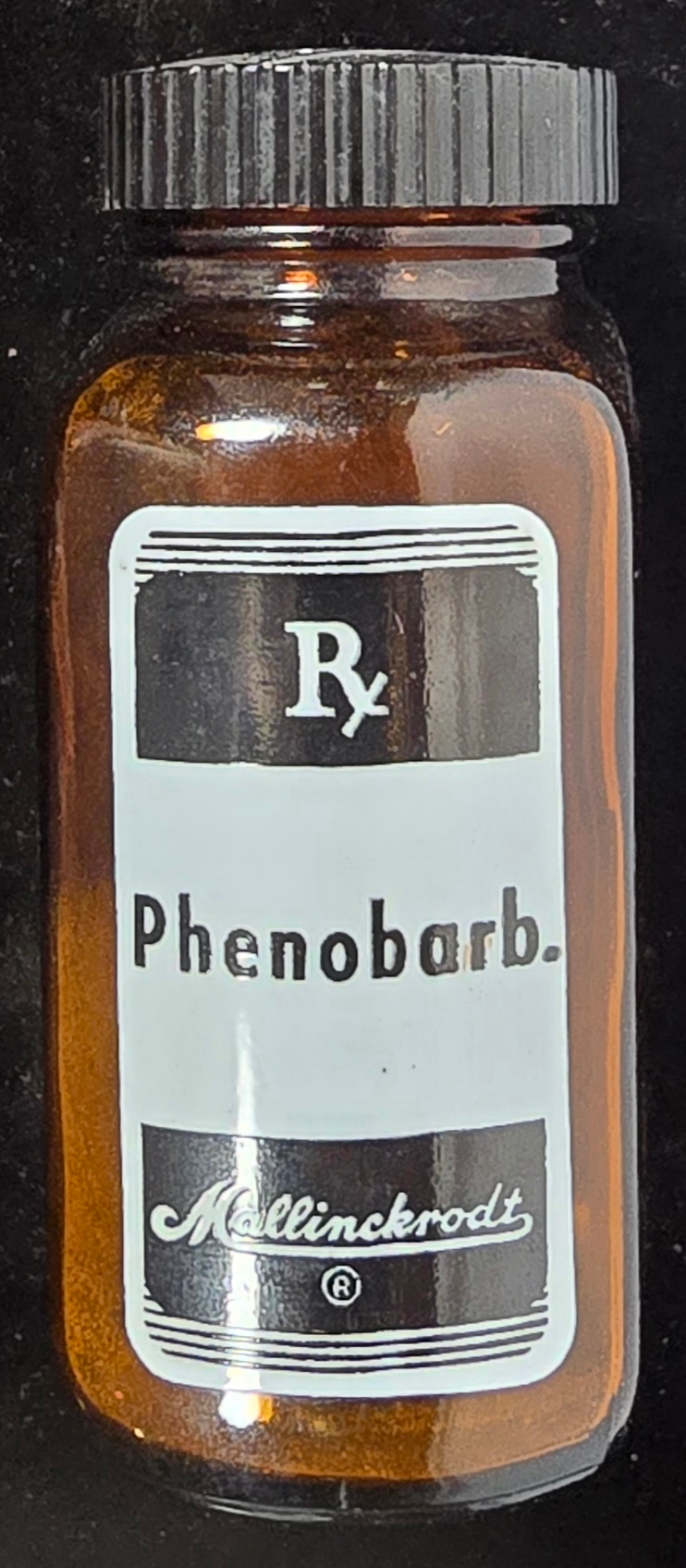
The opposing label, marked simply “Rx Phenobarb.”, reflects a mid-century prescription packaging style.
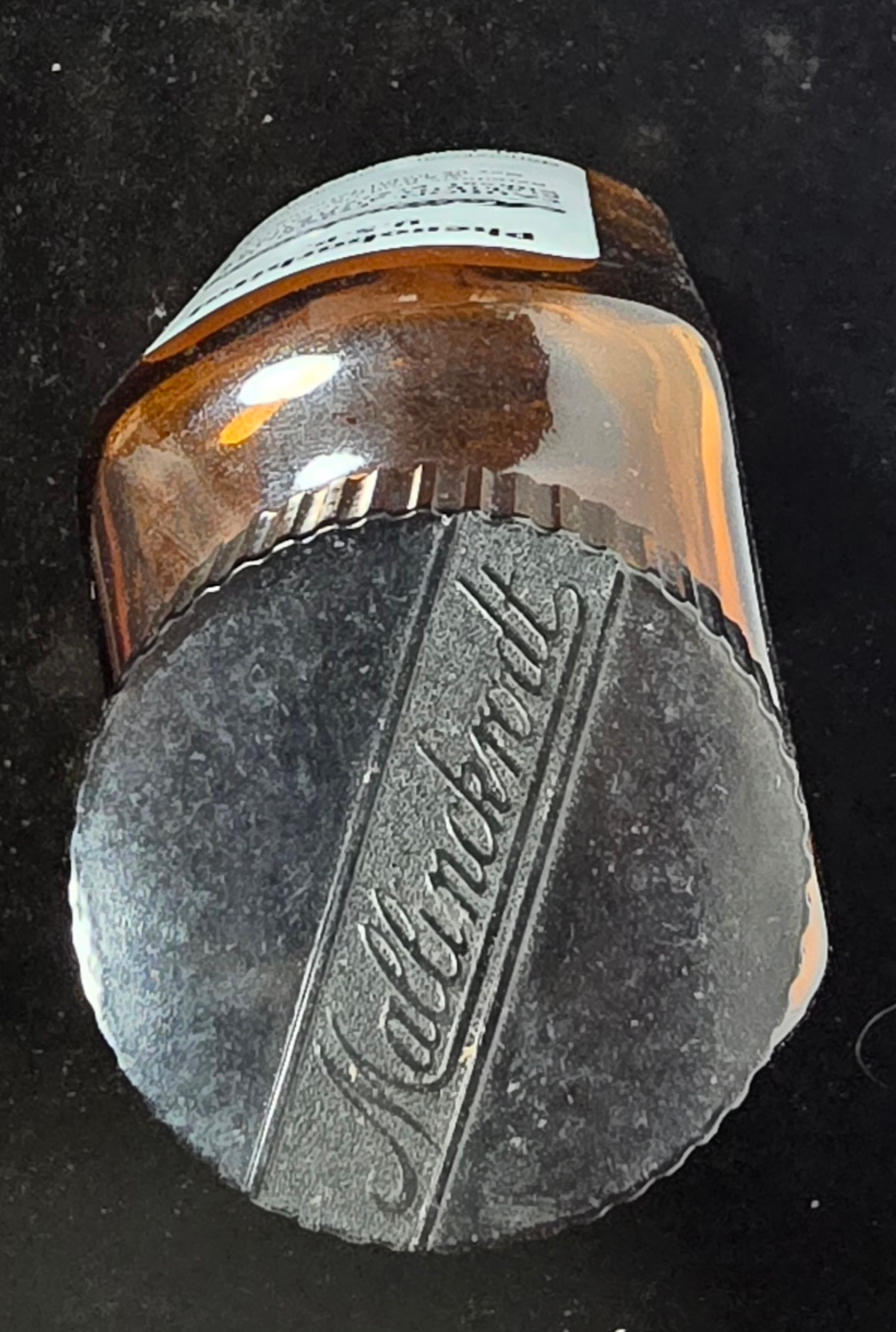
The black plastic cap is embossed with the Mallinckrodt name in script and diagonal line detail.
This bottle would have contained powdered or tablet phenobarbital for compounding or dispensing.
Condition
Excellent vintage condition with intact labels and minimal surface wear. Amber glass remains clear; no chips or cracks.
Gallery
Historical context
Phenobarbital, first synthesized in 1912 by Emil Fischer and Joseph von Mering, became one of the earliest barbiturate sedatives to gain wide clinical use.
Throughout the 1930s–1970s it was prescribed for anxiety, insomnia, and seizure control.
Mallinckrodt Chemical Works was a leading American pharmaceutical manufacturer known for producing narcotics, anesthetics, and laboratory reagents.
Curious Facts, Ephemera, and Trivia
Phenobarbital remains on the WHO List of Essential Medicines for epilepsy treatment.
During the 1950s–60s, many small amber bottles like this were issued to pharmacies for in-house dispensing before the dominance of factory-filled vials.
“Barbituric Acid Derivative” labeling and the caution against dispensing without prescription mark the transition era after the 1938 Food, Drug, and Cosmetic Act.
Excerpt
“Caution: Federal law prohibits dispensing without prescription.” — Standardized FDA language adopted following the Durham–Humphrey Amendment of 1951, seen here on Mallinckrodt’s packaging.
Why it is in the Cabinet
This bottle represents the controlled-substance era’s intersection of pharmacology and regulation—when sedative medications were both breakthrough therapies and public-health concerns.
It is a classic artifact illustrating the professional packaging of prescription-only barbiturates before the rise of modern benzodiazepines.
Support Dr. Bebout’s Cabinet of Medical Curiosities
If you enjoy the history, the oddities, and the effort, help keep this cabinet open. Every little bit helps preserve and share the strange wonders of medicine's past.
Buy Me a Ko-fi ☕ Buy Me a Coffee ☕ Tip via PayPal 💵