
Title
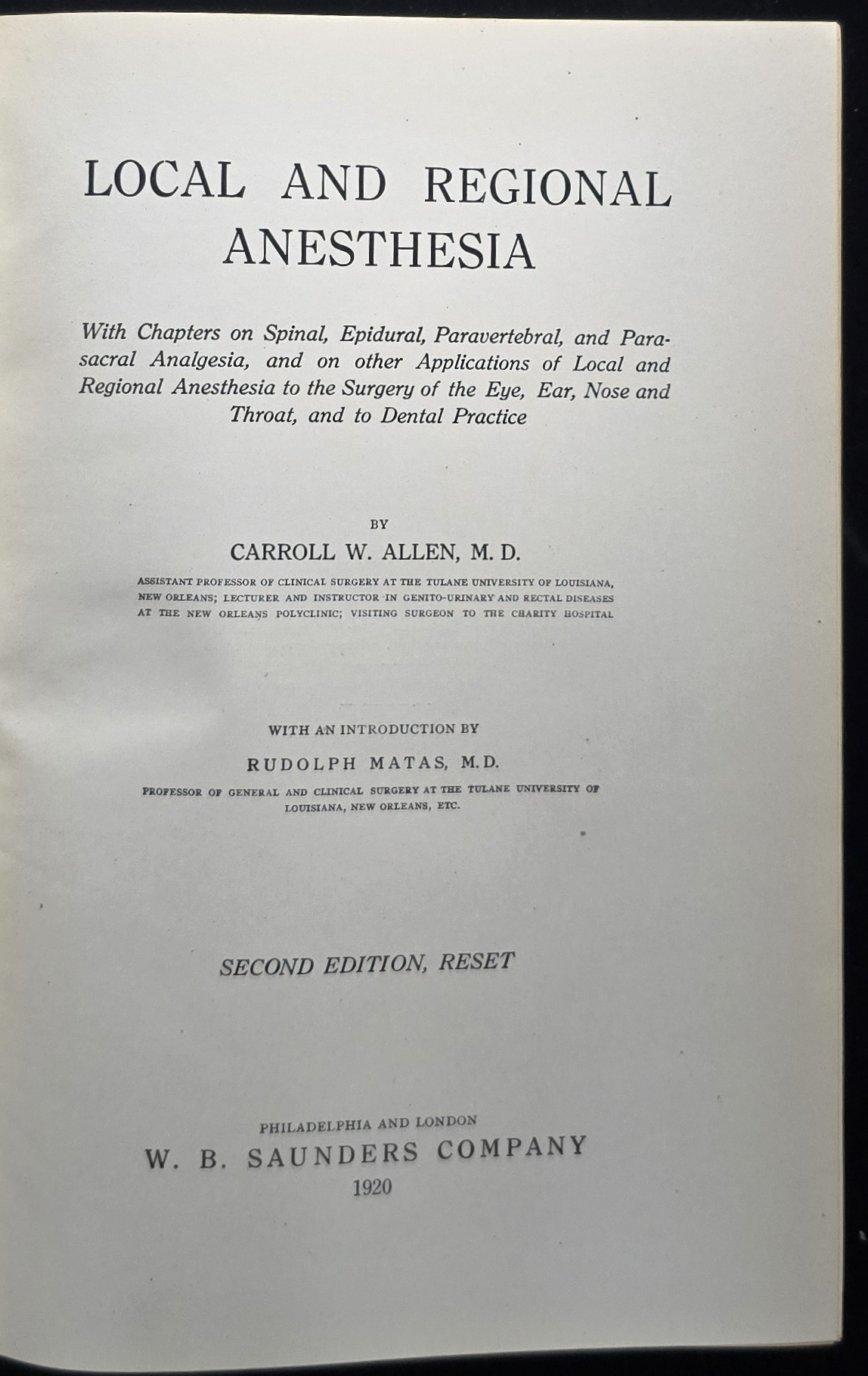
Local and Regional Anesthesia
Author
Author: Carroll W. Allen, M.D.
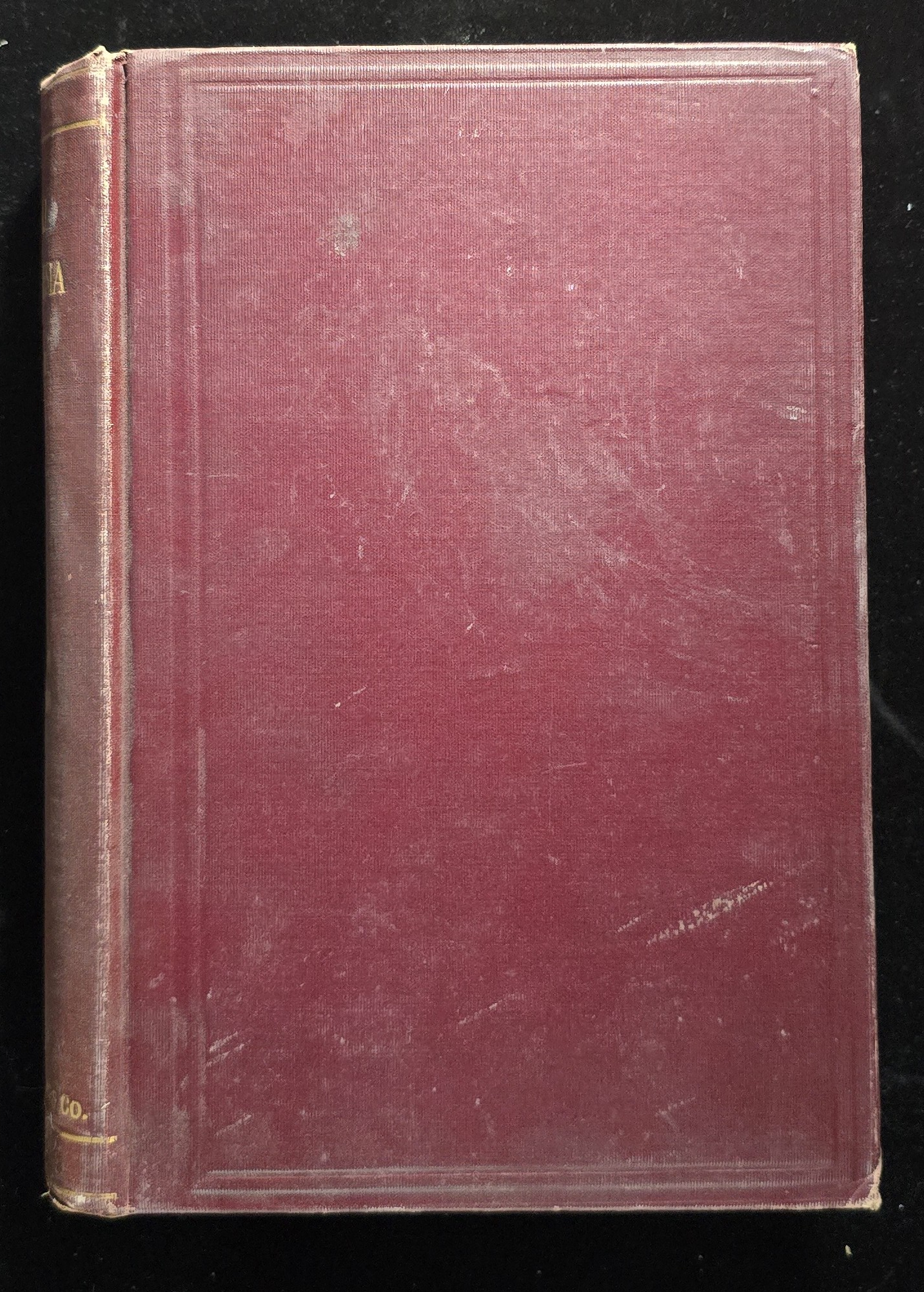
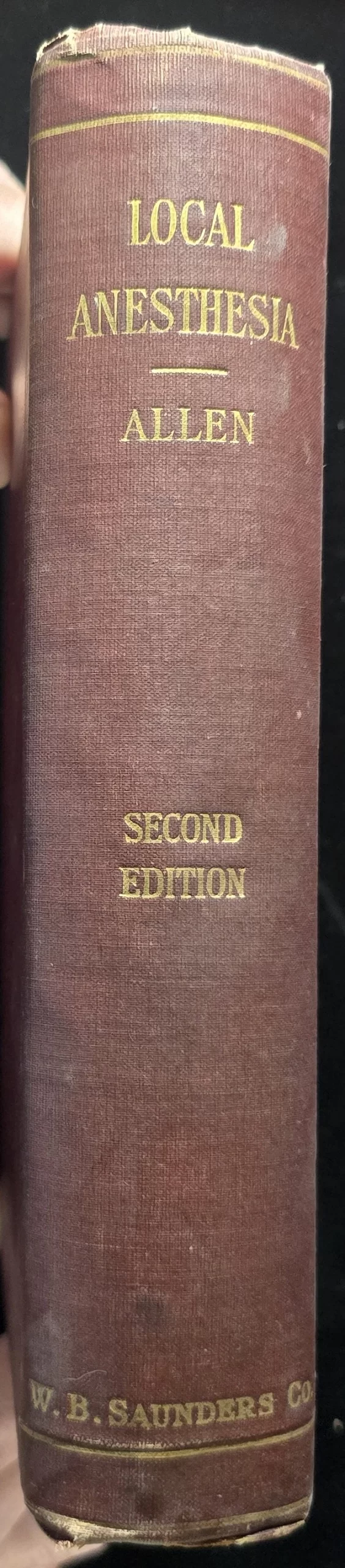
Publisher & Date: W. B. Saunders Company, 1920, Second Edition, Reset
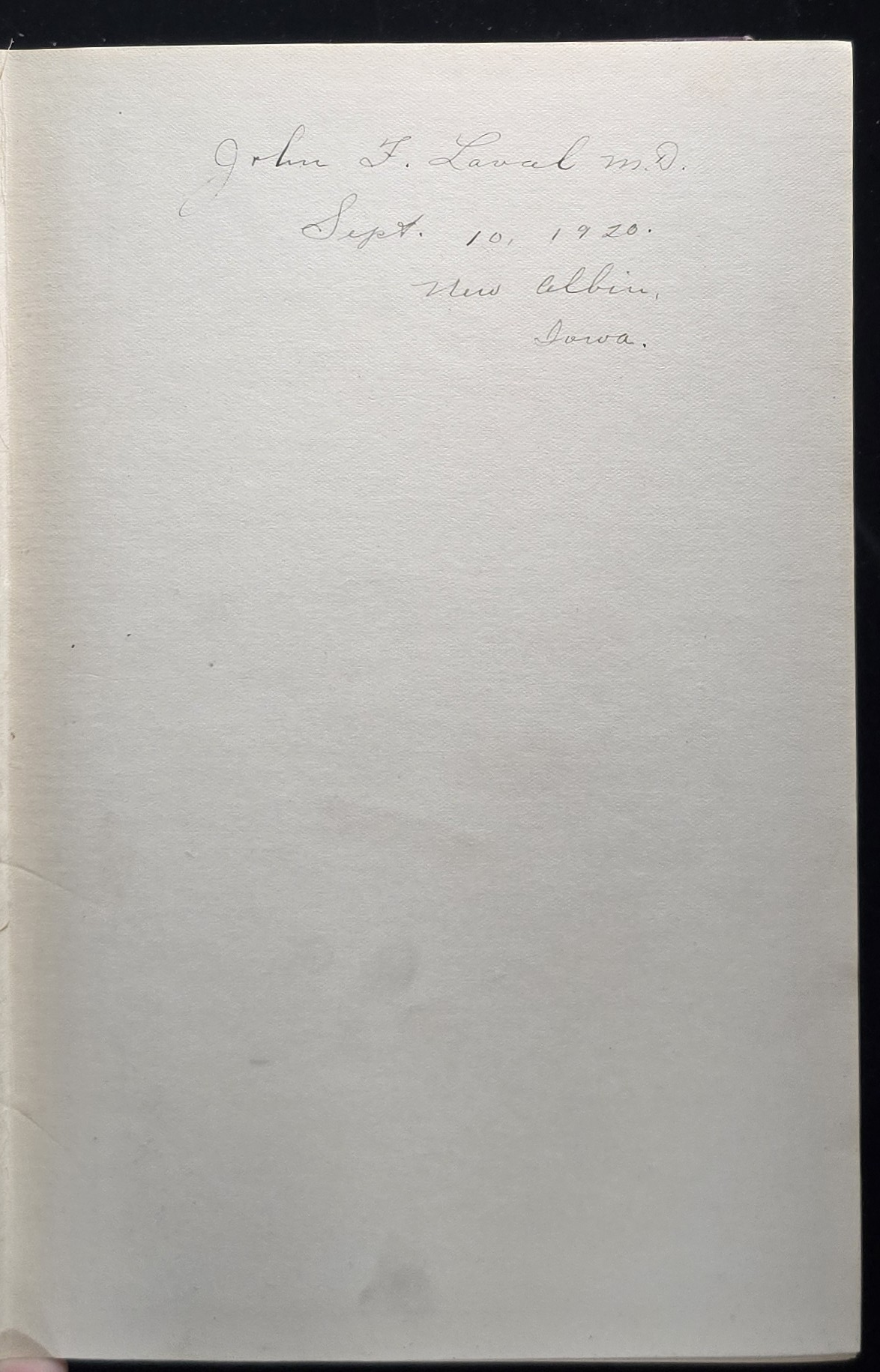
Owner’s Inscription: John F. Laval, M.D., Sept. 10, 1920 – New Albin, Iowa
Image
Description
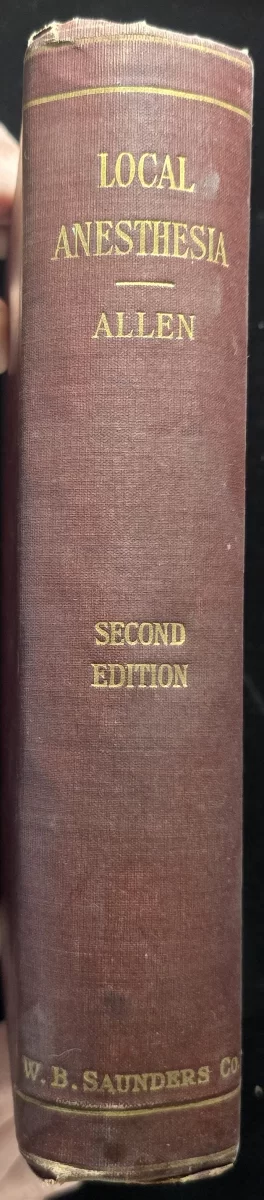
This is a 1920 second edition of Local and Regional Anesthesia by Carroll W. Allen, M.D., an authoritative text on the emerging medical techniques of anesthesia during the early 20th century. Allen, an assistant professor at Tulane University, writes in detail about infiltration methods, spinal, epidural, paravertebral, and parasacral anesthesia. The book includes chapters specifically tailored to dental, ENT, and surgical applications, reflecting the rapid development and specialization of anesthetic technique.
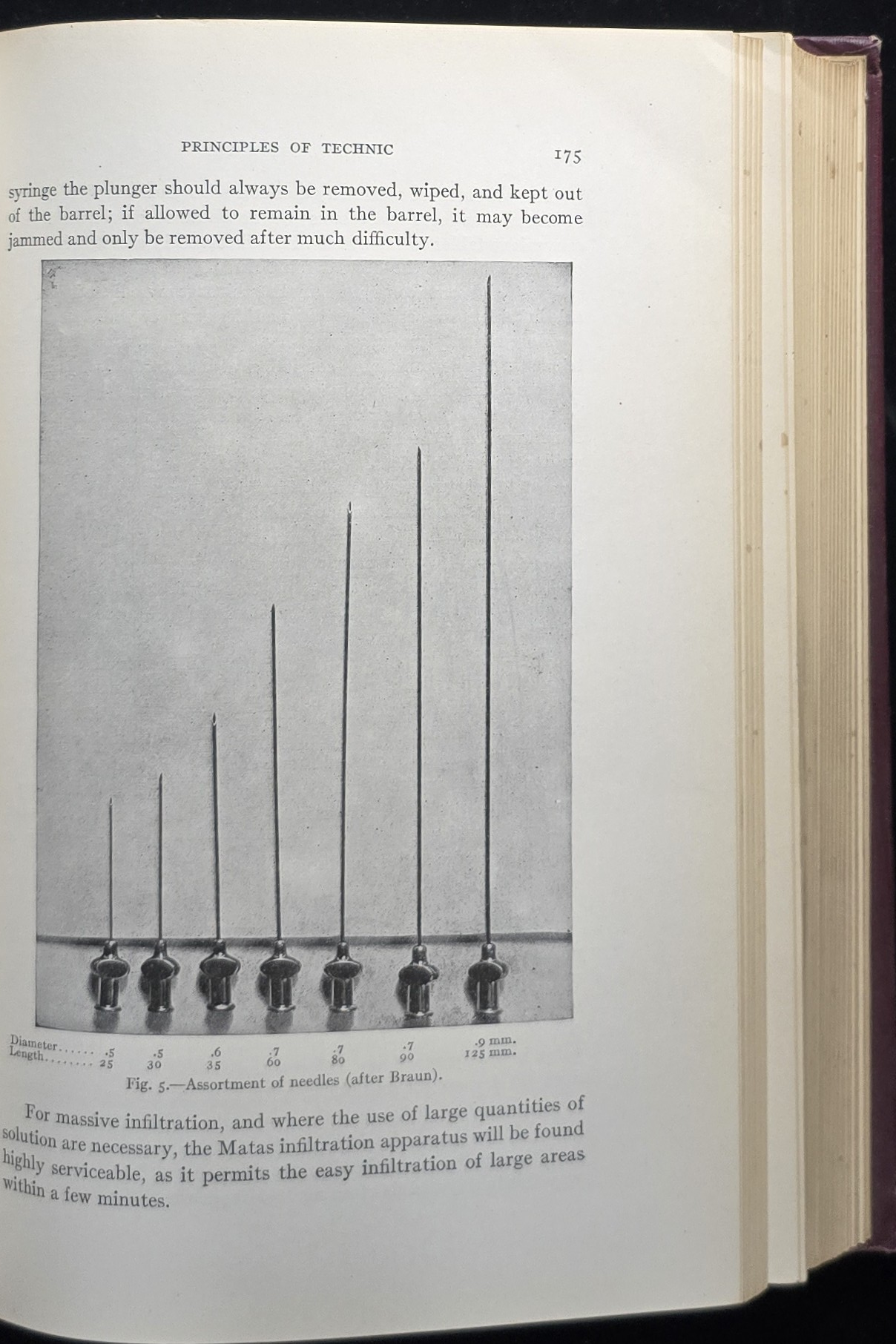
Illustrations throughout the book—such as the assortment of long steel needles for infiltration and injection points for thyroidectomy—highlight the tools and procedures in practice at the time. This copy also bears a dated inscription from Dr. John F. Laval of New Albin, Iowa, providing a personal connection to a rural practitioner of the period.
Condition
Cloth hardcover shows moderate shelf wear with rubbing and edge softening, especially at spine ends and corners. The spine is slightly frayed at the crown. Pages are clean and well-bound, with only light toning from age. Owner inscription is clearly legible on the front endpaper. All anatomical diagrams and photographic plates are intact.
Gallery
Historical context
By 1920, anesthesia had transitioned from crude general techniques to more refined and localized approaches. This era saw increasing emphasis on regional blocks and infiltration anesthesia, particularly useful for field surgery during World War I. Dr. Rudolph Matas, who wrote the introduction, was a key figure in promoting safe and effective local anesthetic techniques. His influence is evident throughout the text.
Curious Facts, Ephemera, and Trivia
The diagram on p. 175 showcases a range of early infiltration needles, from 25 mm to a striking 125 mm in length—designed for delivering anesthesia across large tissue areas.
Dr. Rudolph Matas, who introduced the book, is considered the father of intravenous regional anesthesia (“Bier block”) in America.
The inclusion of photographic diagrams in textbooks like this was still relatively novel in 1920 and marked a shift toward visual instruction in surgical training.
Excerpt
“For massive infiltration… the Matas infiltration apparatus will be found highly serviceable, as it permits the easy infiltration of large areas within a few minutes.” (p. 175)
Why it is in the Cabinet
This textbook bridges a pivotal moment in medical history, when anesthetic practices became safer, more localized, and standardized across surgical disciplines. It embodies a shift from battlefield necessity to academic science, and its physical connection to Dr. Laval makes it a treasured part of the Cabinet’s collection.
Support Dr. Bebout’s Cabinet of Medical Curiosities
If you enjoy the history, the oddities, and the effort, help keep this cabinet open. Every little bit helps preserve and share the strange wonders of medicine's past.
Buy Me a Ko-fi ☕ Buy Me a Coffee ☕ Tip via PayPal 💵