
Title
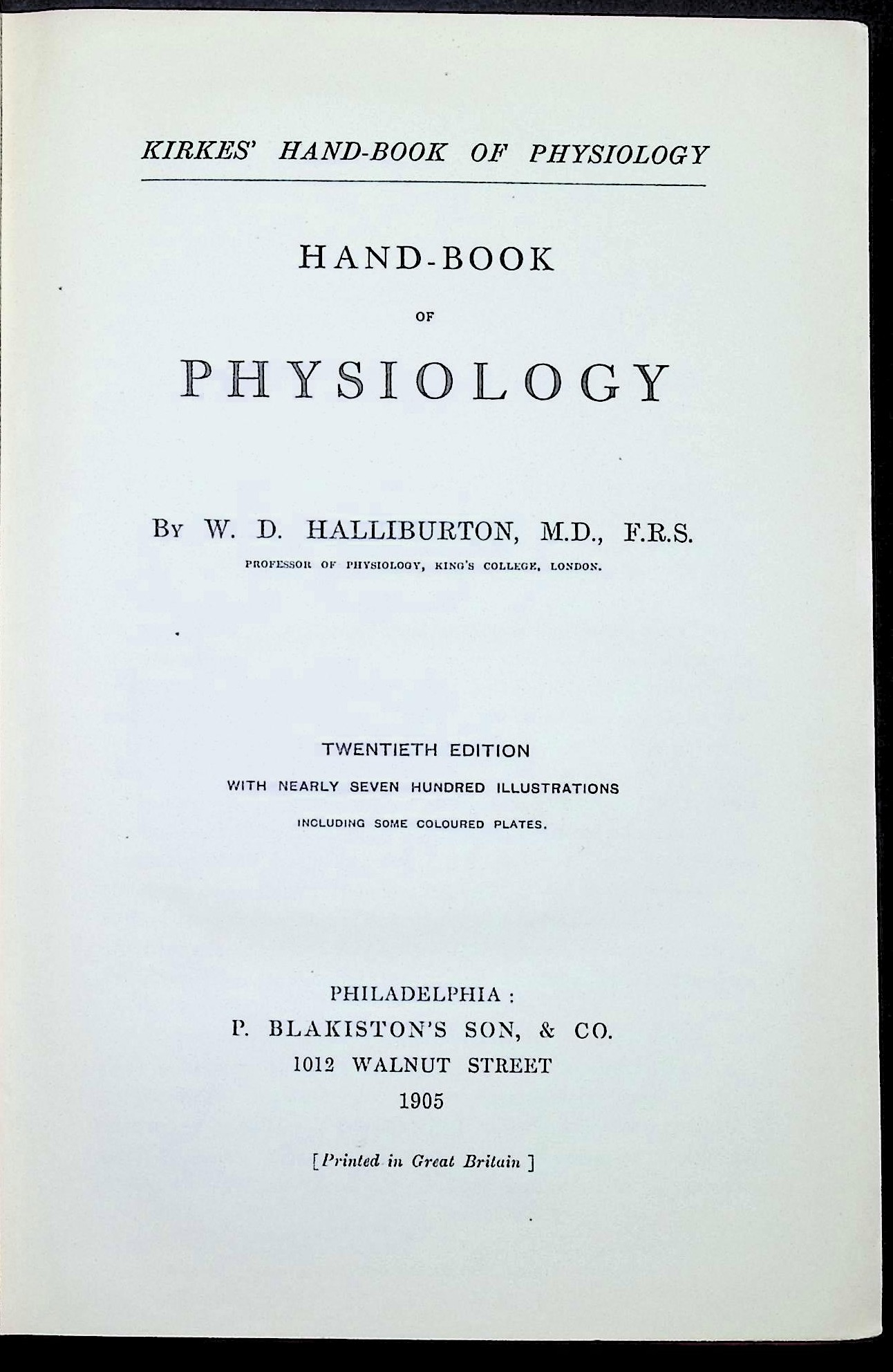
Kirke’s Hand-Book of Physiology (Twentieth Edition, 1905)
Author
W. D. Halliburton, M.D., F.R.S.
Professor of Physiology, King’s College, London
Image
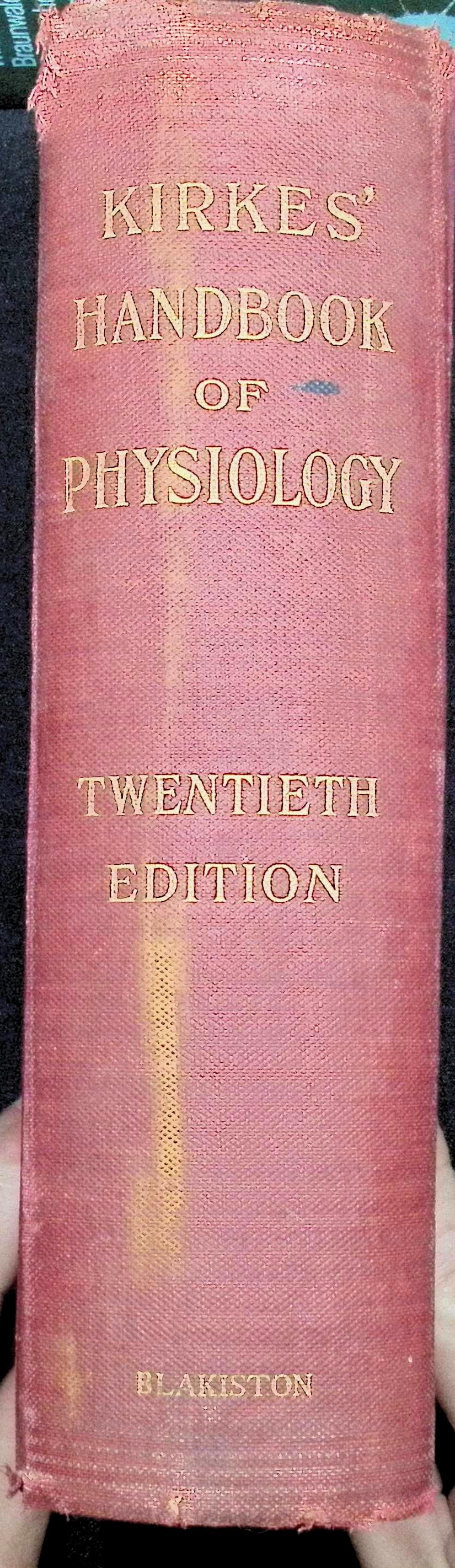
Description
This is the Twentieth Edition (1905) of Kirke’s Hand-Book of Physiology, one of the most widely used and long-standing physiology textbooks of the late 19th and early 20th centuries. Originally developed from the work of William Senhouse Kirkes and later extensively revised by W. D. Halliburton, the book served as a foundational teaching text for medical students in Britain and the United States for decades.
By this edition, physiology had largely transitioned from speculative theory into a laboratory-driven discipline. The text reflects that shift clearly, presenting experimental findings on nerve conduction, muscle physiology, glandular function, metabolism, circulation, and respiration with a rigor that feels surprisingly modern. The volume is heavily illustrated, containing nearly seven hundred illustrations, including colored plates, which were intended to support microscopic and experimental instruction.
Published in Philadelphia by P. Blakiston’s Son & Co., with printing carried out in Great Britain, this edition represents the mature, standardized form of the text as it was taught to turn-of-the-century medical students.
Condition
Original cloth binding with gilt spine lettering. Noticeable fading and surface wear consistent with age and use. Spine cloth shows fraying at the head and tail. Interior pages are clean and legible, with expected toning but no significant damage noted. Binding remains intact and functional.
Gallery
Historical context
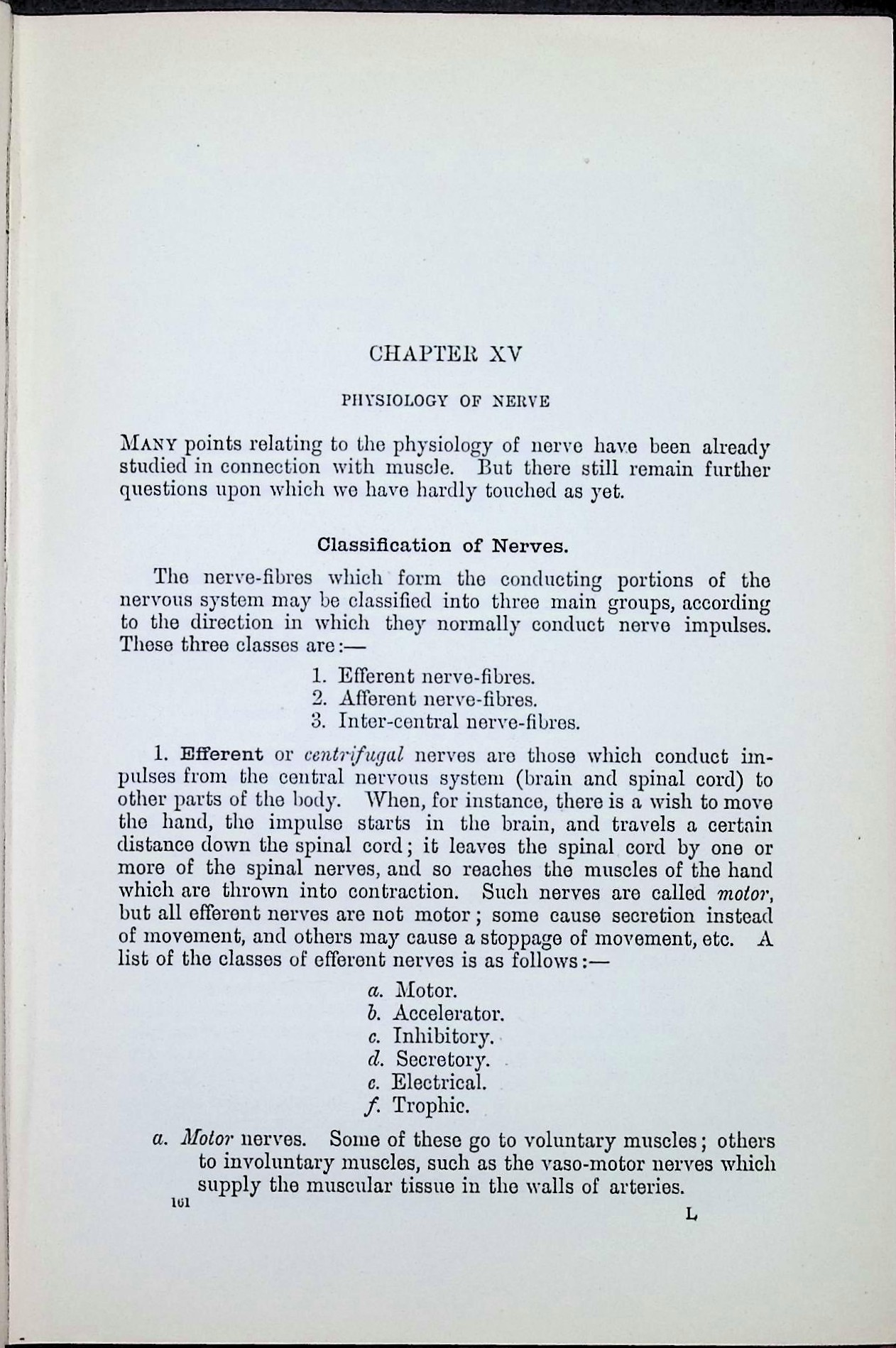
By 1905, physiology had become the backbone of scientific medicine. Texts like Kirke’s Hand-Book of Physiology helped formalize concepts such as afferent and efferent nerve fibers, internal secretions (early endocrinology), and spectroscopic analysis of blood, which appear prominently in this edition. The book sits squarely in the era when medicine was abandoning purely descriptive anatomy in favor of measurable biological processes.
This volume reflects a transitional moment: modern enough to recognize internal secretions and biochemical processes, yet still cautious and methodical in interpreting them.
Curious Facts, Ephemera, and Trivia
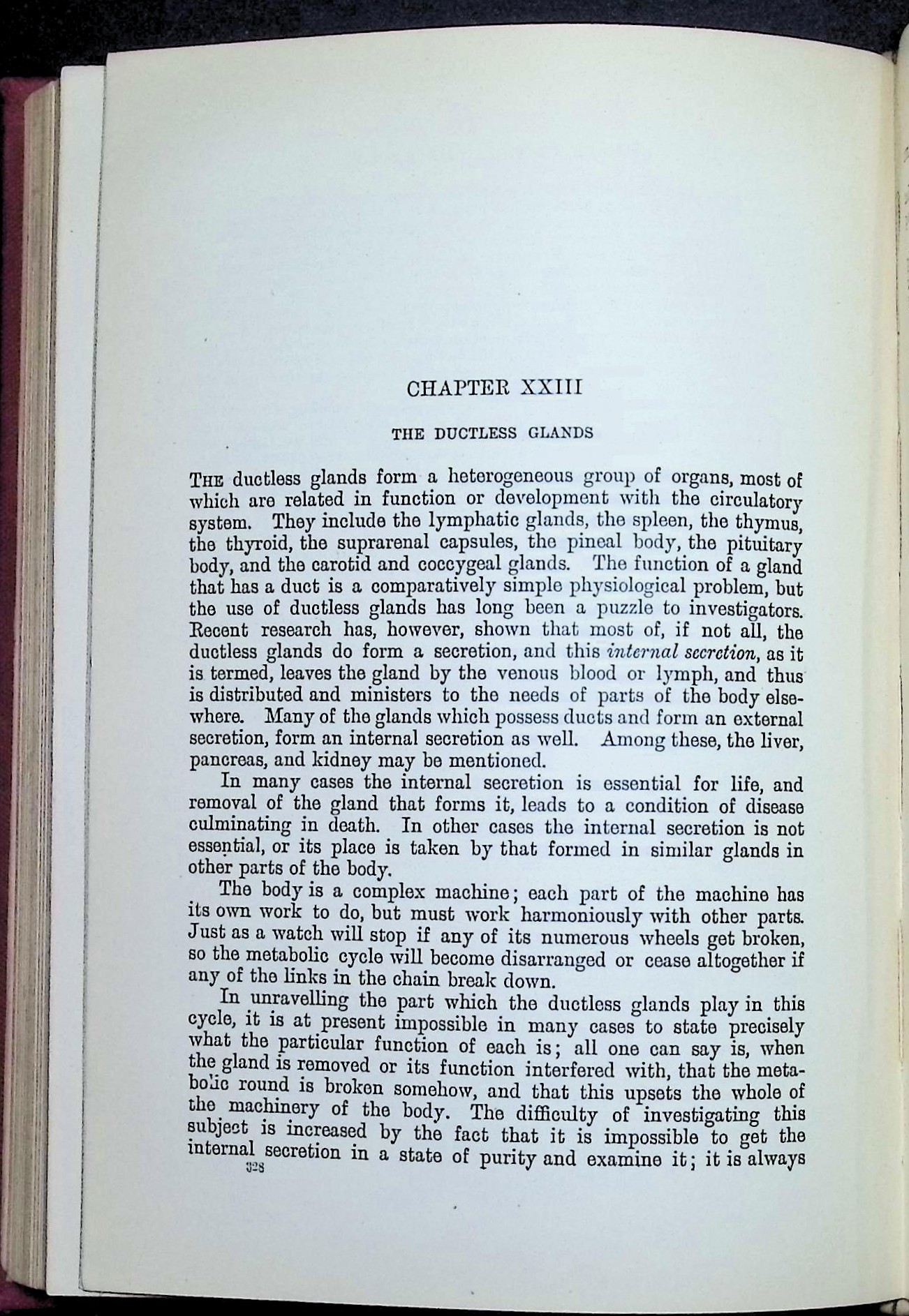
The chapter on “ductless glands” predates the widespread use of the word endocrine, yet clearly describes hormone-like internal secretions.
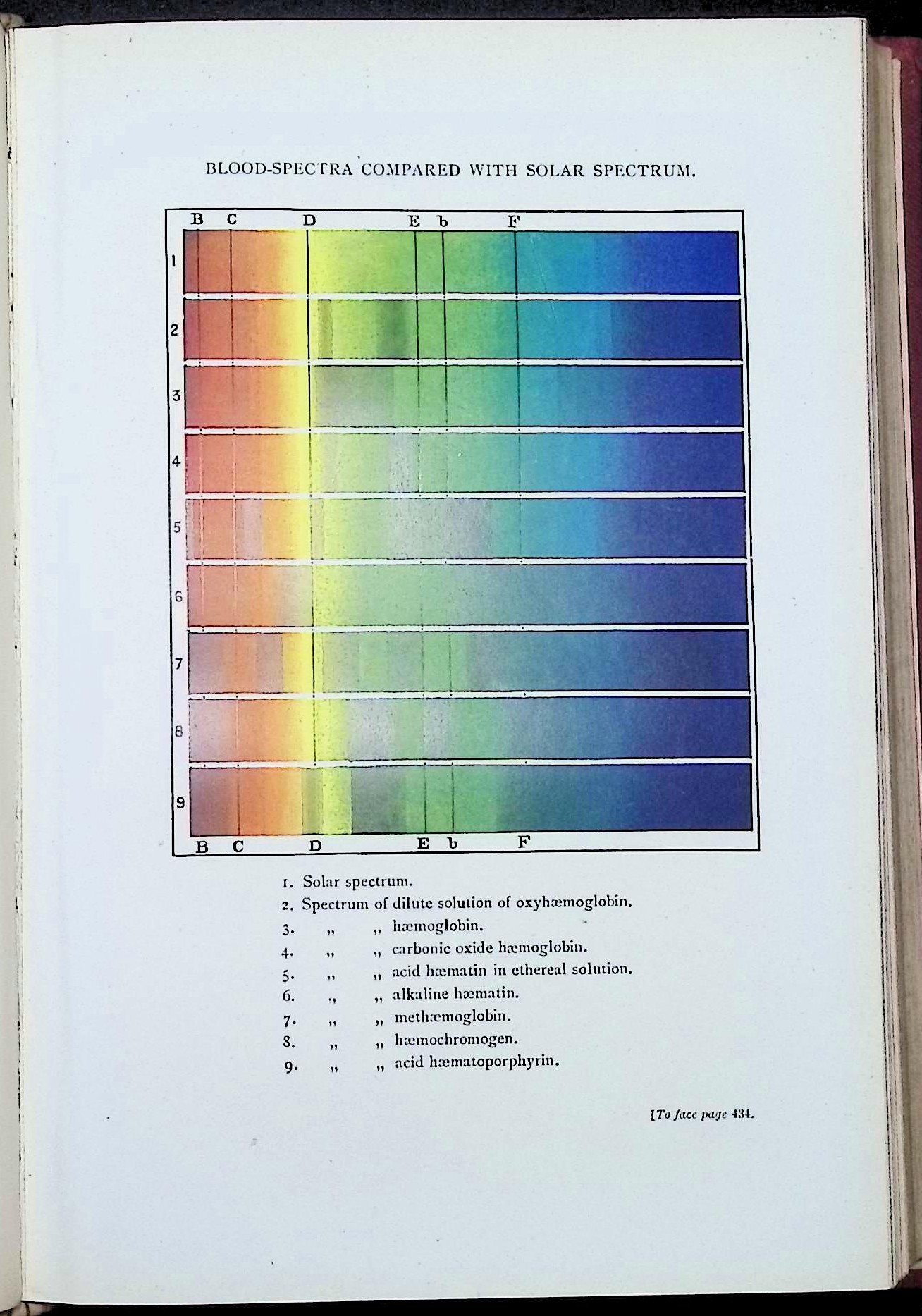
The blood spectroscopy plates compare hemoglobin variants with the solar spectrum — a teaching method that feels oddly elegant by modern standards.
Kirke’s name remained on the title long after his death, functioning more as a brand of trust than a literal authorship claim.
Many physicians trained on this book would later practice through World War I, carrying its teachings into battlefield medicine.
Excerpt
“The body is a complex machine; each part of the machine has its own work to do, but must work harmoniously with other parts.”
A line that quietly signals the mechanistic worldview medicine was embracing at the dawn of the 20th century.
Why it is in the Cabinet
This book represents physiology at the moment it became truly modern. It bridges anatomy, chemistry, and experimental medicine in a way that shaped how physicians thought for generations. As a teaching text rather than a reference curiosity, it shows how medical knowledge was actually transmitted — not sensational, not fringe, just quietly foundational.
Physical Copy and Digital Reference
The Cabinet holds an original physical copy of Kirke’s Hand-Book of Physiology (Twentieth Edition, 1905). The digitized pages referenced in this entry were obtained from Archive.org and are used here for research, citation, and readability purposes.
The physical volume in the collection was not disbound or scanned. Its inclusion reflects the preservation of the original object, while the linked digital edition provides access to the text without placing further handling stress on the book itself.
Support Dr. Bebout’s Cabinet of Medical Curiosities
If you enjoy the history, the oddities, and the effort, help keep this cabinet open. Every little bit helps preserve and share the strange wonders of medicine's past.
Buy Me a Ko-fi ☕ Buy Me a Coffee ☕ Tip via PayPal 💵